
Residents pepper Verizon with questions

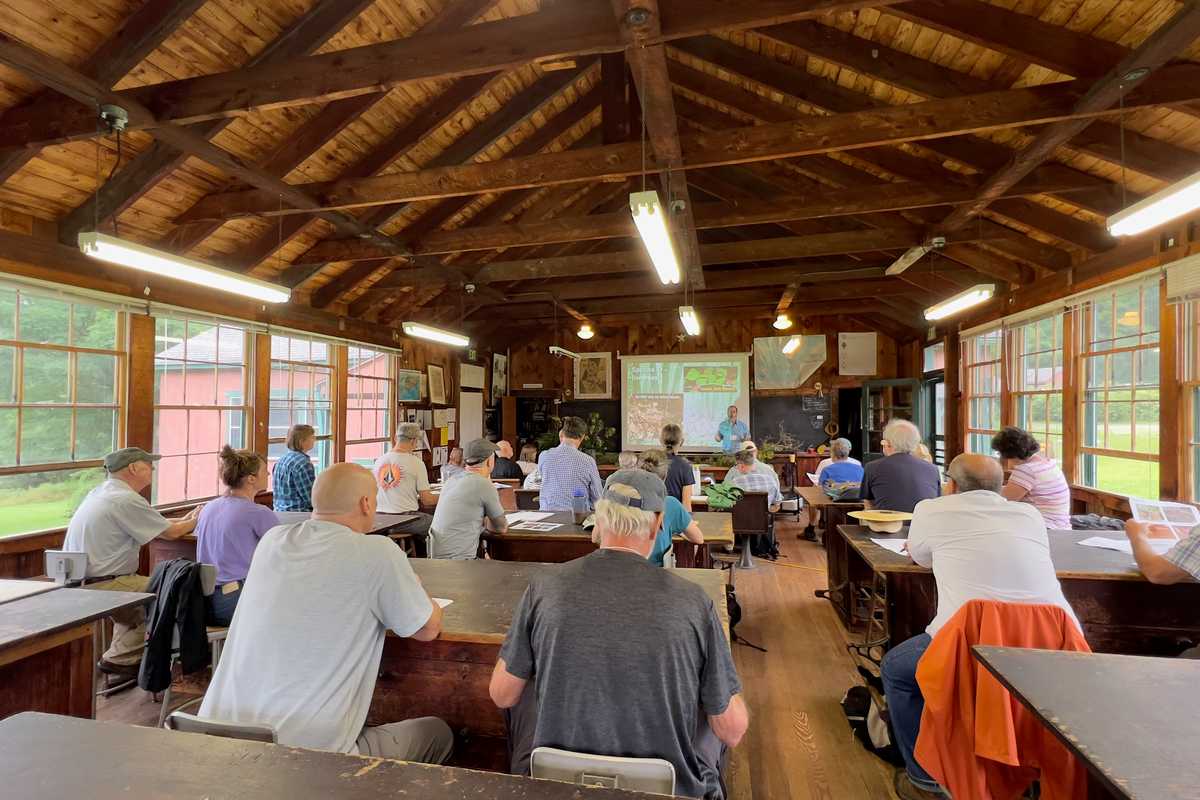
CORNWALL — Verizon Wireless began the process of siting a cellular communications tower here in Cornwall at a special meeting of the Board of Selectmen at Town Hall Aug. 20. The two sites under consideration are on Bell Road Extension and Popple Swamp Road.

About 30 people attended.

Ultimately, it is the Connecticut Siting Council that will decide whether Verizon can build a tower, where the company can build a tower and whether another tower can be added after the first one is completed.

The first step in the Siting Council’s procedure: the plans have to be submitted to the town, which Verizon did on July 21. The company is required to wait at least 60 days before applying to the Siting Council. Verizon representatives said they plan to apply as soon as that period is up, in late September.

Verizon’s goal is to provide cellular coverage for Route 7 between West Cornwall and Cornwall Bridge.

The 30 people who attended were anxious to present their questions to the Verizon representatives during the 40-minute long PowerPoint presentation by a team of experts working on the plans for tower siting and construction.

There were also some tense moments toward the end of the two-and-a-half hour session, when residents faced off against each other. It began when one man stood up and implored his neighbors to accept the “bonanza� of an improvement to communications technology that will cost taxpayers nothing.

He was advised, in response, that not everyone comes to such meetings because they are opposed; many were there because they want to learn more. But there were also accusations of over-simplifying the matter, and a barrage of concerns was expressed about potential health and environmental impacts.

First Selectman Gordon Ridgway had to step in and advise the audience members not to try to tell each other how to think.

Monopine to monopole

One major change in plans was announced by Kenneth Baldwin, an attorney representing Verizon: The “monopine� design (a tower covered with fake pine tree boughs so it looks like a massive evergreen) has been scrapped in favor of a plain monopole.

Baldwin said balloon tests showed the fake pine design is inappropriate to this site.

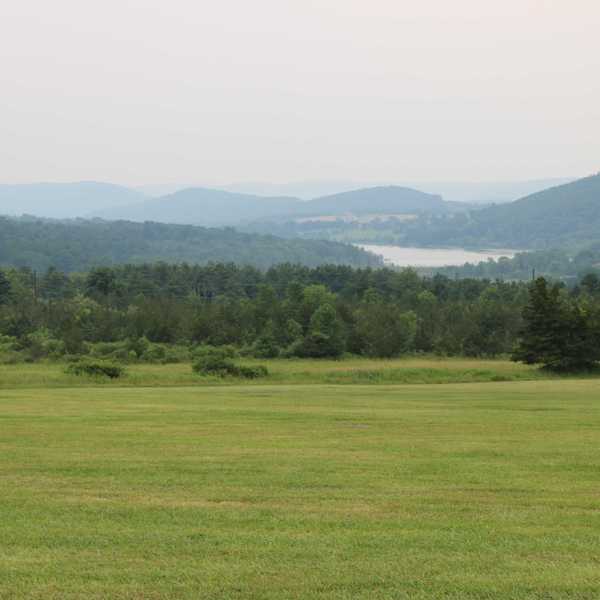
Mike Libertine, a spokesman for VHB Engineering, which conducted two days of balloon-float tests earlier this month,  said the decision was made because research showed the tower will not be visible from close range. That research included driving all Cornwall roads and scrutinizing photos of the test balloons snapped from numerous locations, including hiking trails.

“Most of the places from which it would be visible are fairly remote from the site,� Libertine said. “We confirmed our initial thought that the heavy tree cover at the site conceals close views. The balloons were the most visible a mile or more away, at higher elevations in open fields.�

What he called a “stealth design,� or monopine, is designed to make the tower blend in with near views, which Libertine said don’t exist here.

The tower will extend far above the average 65-foot tree canopy. It was decided that the dark green boughs of a monopine spread out would be more noticeable than a 13-foot-wide gray pole.

Many of the questions from the audience were about documents and plans. Several people said they had trouble deciphering site plans. Others asked why there wasn’t a presentation on wetlands impacts (the answer:  There are no wetlands on the property and only a minor impact on wetlands below).

Photos from the balloon tests were only produced when the audience asked for them.  In the photos, the monopine tower is fairly noticeable from parts of the Appalachian Trail, as well as some high and/or open spots, including Foote Fields on Route 4, Pierce Lane, School and Jewell streets in the village and Upper Ridge Road.

What’s the future impact?

Residents were told the tower site would be leased for 25 years, with an option to renew. The Siting Council requires that towers not in service for six months be removed and the property restored to as close as possible to its original condition.

Construction time is expected to be four to eight weeks. After that, traffic to the site will be limited, under normal conditions, to a technician who will drive there, in a car, once a month.

They said the 12-foot-wide access road, the 100-by-100 foot compound and equipment shelter should not be visible off-site.

Some trees will have to be cleared to make way for the pole and equipment. At the Bell Road Extension site, about 93 trees (6 inches or more in diameter) would have to be cut down; at the Popple Swamp Road site, about 140 trees would have to be cut down.

The Verizon representatives also talked about colocation on area towers. The Siting Council encourages communication companies to share space on towers, to minimize the number that need to be built. Verizon already colocates on some local AT&T towers, but those towers do not offer coverage of this particular stretch of Route 7. In fact,  AT&T is considering colocating on the Cornwall Verizon tower.

Colocation can have one negative impact: New tenants can request that the tower be made taller to suit their needs.

Baldwin said that a company can not request extra tower height from the Siting Council in anticipation of potential tenants.

“We can only submit to the siting council the maximum height we can justify at that time,� Baldwin said. “I can tell you that AT&T has expressed an interest in this tower. Preliminary estimates put their needs at 160 to 170 feet.�

Health impacts, alternative systems

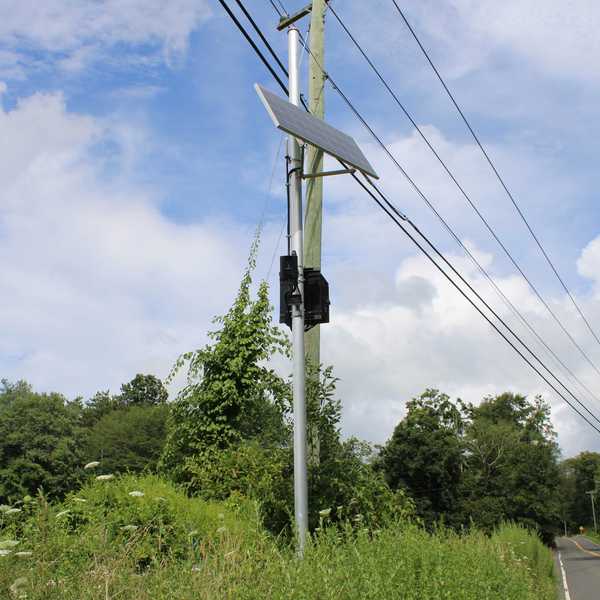
Someone asked about repeater systems, and was told they are not suitable for this area. Coverage is limited to the road, for one thing. If existing poles are unavailable, new poles have to be installed. Wires would have to be strung across the road. The transmitters were described as big, unsightly boxes set on top of the poles. If one box malfunctions, it can shut down the entire system; there is no backup generator in case of a power outage, as there is with a tower.

Concerns about radio emissions were pressed, with the suggestion that other countries have done more research to come up with better standards.

Baldwin said that emissions from the Verizon towers would be lower than the standard set by the Federal Communications Commission.

He said it would be a very low power facility, at 400 watts. To put that in perspective, he said the Channel 61 tower in Farmington transmits at 5 million watts.

What about other sites?

Ridgway said his board is having trouble responding to a request from Verizon for input because the selectmen believe other sites should be explored.

Baldwin and Sandy Carter, a manager in Verizon’s real estate/zoning office, offered a lengthy explanation about the effort that goes into a site search.

They said they would be happy to look at any additional sites but that it is not always the best site that ends up being home to a tower.

“It’s a continuing process,â€� Carter said.  “It has happened at hearings that someone offers us a better site. We are always open to suggestions.â€�

The next balloon test will be done when the Siting Council opens its public hearing process with an initial session in Cornwall. By then, it will be winter and the balloons will indicate the view of the tower when trees are bare.

Latest News

Kent unveils two new 'smart bins' to boost composting efforts

Rick Osborne, manager of the Kent Transfer Station, deposits the first bag of food scraps into a new organics “smart bin.” HRRA Executive Director Jennifer Heaton-Jones stands at right, with Transfer Station staff member Rob Hayes at left.

By Ruth Epstein

KENT — Residents now have access to around-the-clock food-scrap composting thanks to two newly installed organics “smart bins,” unveiled during a ribbon-cutting ceremony Monday morning, Dec. 1.

Rick Osborne, manager of the Kent Transfer Station, placed the first bag of food scraps into the smart bin located at 3 Railroad St. A second bin has been installed outside the Transfer Station gate, allowing 24/7 public access even when the facility is closed.

Keep ReadingShow less
Cornwall selectmen prioritize housing, healthcare in new two-year goals

Cornwall First Selectman Gordon Ridgway

File photo

CORNWALL — Housing and healthcare topped the list of 15 goals the Board of Selectmen set for the next two years, reflecting the board’s view that both areas warrant continued attention.

First Selectman Gordon Ridgway and Selectmen Rocco Botto and John Brown outlined their priorities during the board’s regular meeting on Tuesday, Dec. 2. On housing, the board discussed supporting organizations working to create affordable options in town, and Botto said the town should also pursue additional land acquisitions for future housing.

Keep ReadingShow less
Classifieds - December 4, 2025

Help Wanted

CARE GIVER NEEDED: Part Time. Sharon. 407-620-7777.

SNOW PLOWER NEEDED: Sharon Mountain. 407-620-7777.

Keep ReadingShow less
Legal Notices - December 4, 2025

LEGAL NOTICE

TOWN OF CANAAN/FALLS VILLAGE

Keep ReadingShow less