Golf anyone? Did you know that at one time Salisbury had four golf courses? Here is a little information about each one.
Golden Gate Golf Links was the earliest. If you read the article written by Bernard Drew in The Lakeville Journal of Sept. 18, 2014, about Judge William Travers Jerome, you know the judge was an avid golfer. He had won the Amateur Golf Association Title at least four times. He created the nine-hole golf links behind the Wake Robin Inn around 1899, perhaps as a rich man’s whim. The entrance was from Wells Hill Road.
Golden Gate was probably very popular during Prohibition because that clubhouse had a bar; one could play a few holes and then refresh oneself at the 19th hole. The clubhouse later became a private residence.
Next came the Hotchkiss Golf Course. This course was designed in 1924 by Charles Banks, who was an English teacher at The Hotchkiss School at the time. He later became a legendary architect of other American golf courses.
He designed his course here based on the natural terrain of the school campus. Local boys would ride their bikes to Hotchkiss to be caddies and perhaps pick up a few tips from the golf pro.
Since it was built, only two greens have been moved; the seventh green was moved in 1930 when the school entrance was changed, and the fourth green was moved when the Esther Eastman Music Center was erected in 2004.
The prettiest hole is the par 3 fifth hole, which has an elevated tee. Lake Wononscopomuc is in full view behind the putting surface. Jim Kennedy was the golf pro there for 19 years. Bill Fox, a PGA pro, ran the course for eight years during the 1980s. There was no clubhouse or 19th hole here.
Hob Nob Hill was built as a philanthropic works project during the Depression Years.
I. Kent Fulton took it upon himself to provide this means of making a livelihood to the townspeople.
He built one of the “best courses in New England,” according to Salisbury resident Crosby Wells.
The course ran up the hillside and into the woods, with his home sited near one of the holes. Fulton built it at his own expense and maintained it. This course was located about one mile north of Salisbury, to the left off Undermountain Road. You played there by invitation only. If you did not play at least once a season, you were not invited back.
It was in operation from 1933 until 1942. Young boys from Salisbury often acted as caddies there, and Alice Gustafson worked there in 1942 — the last year of its operation.
When Fulton died in 1944, more than 300 people attended his funeral. The pall bearers were the people who had been his workers, not bankers or directors. One of the town fathers remarked, “This could have been a rich man’s whim, a personal WPA project for his own benefit. Instead, it became the average man’s boon he shared for the pleasure of all.”
Finally we come to the last golf course, which was located off Long Pond Road at the resort called The Cedars. This eventually became the largest resort in Connecticut, with more than 90 buildings and outstanding sport facilities that included seven tennis courts and handball, basketball and volleyball courts, a soft ball diamond, riding stables and the 18-hole golf course.
Many people from New York City and other metropolitan areas enjoyed stays here. Herb Duntz remembers being a caddy from about age 9. He used to shag balls and teach people how to hold a golf club when the pro was having his lunch. He loved the place, and the Oshman sisters (daughters of owner Louis Oshman) still remember him fondly.
When golf pro Mike Merig joined up in World War 2, Clarence Booth took his place. The resort was destroyed by the 1955 flood and never rebuilt.
Jean McMillen is the historian for the town of Salisbury.

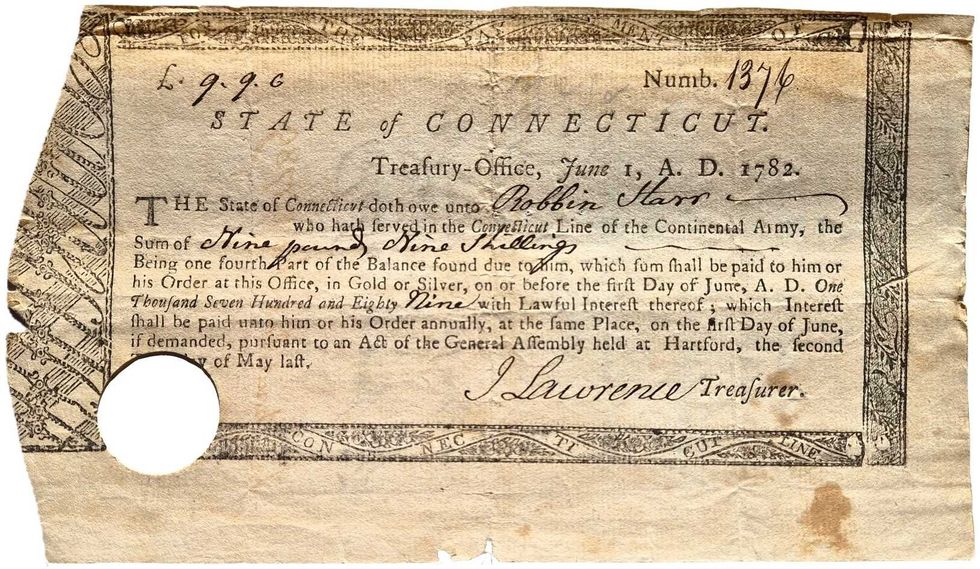 Pay Bill for Robin Starr’s service in the Continental Army.Courtesy the Alex Breanne Corporation
 John Mills speaking at Quinnipiac University.Courtesy the Alex Breanne Corporation
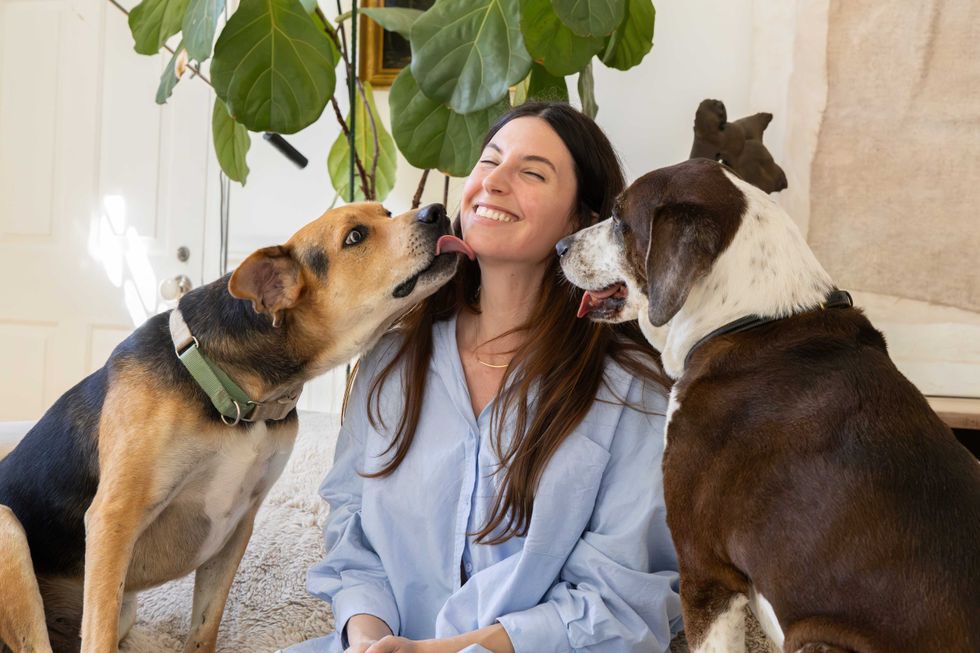 Stephanie Saetta,with her rescue dog George and Blue (left), a shepherd mix awaiting his forever home.Madi Long
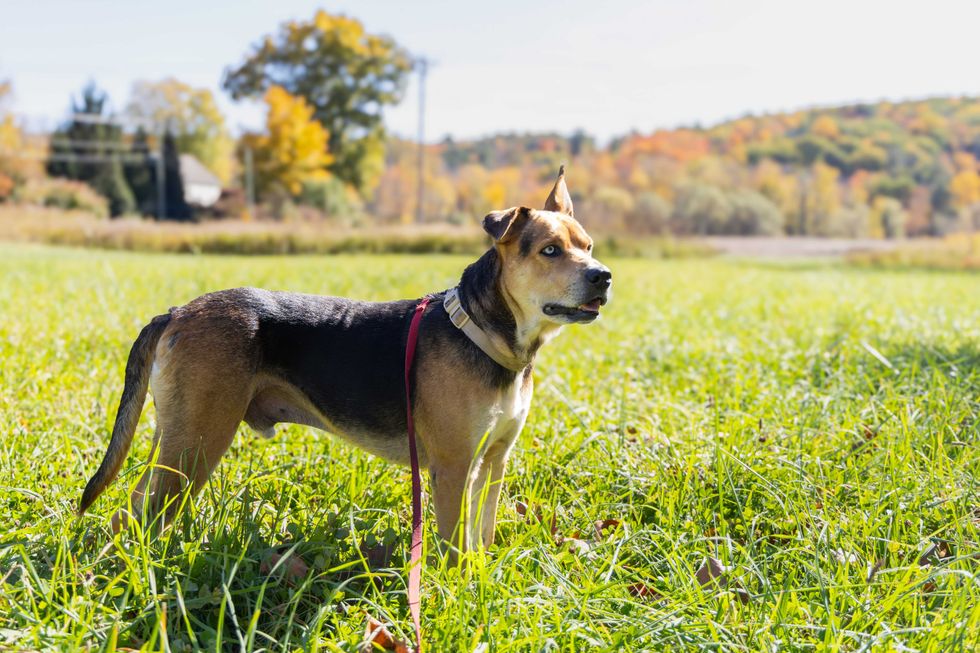 Blue, a 7 year-old Shepard mix, is waiting for his forever home. Madi Long