The Appalachian Trail & how it created Billy’s View

The Appalachian Trail & how it created Billy’s View
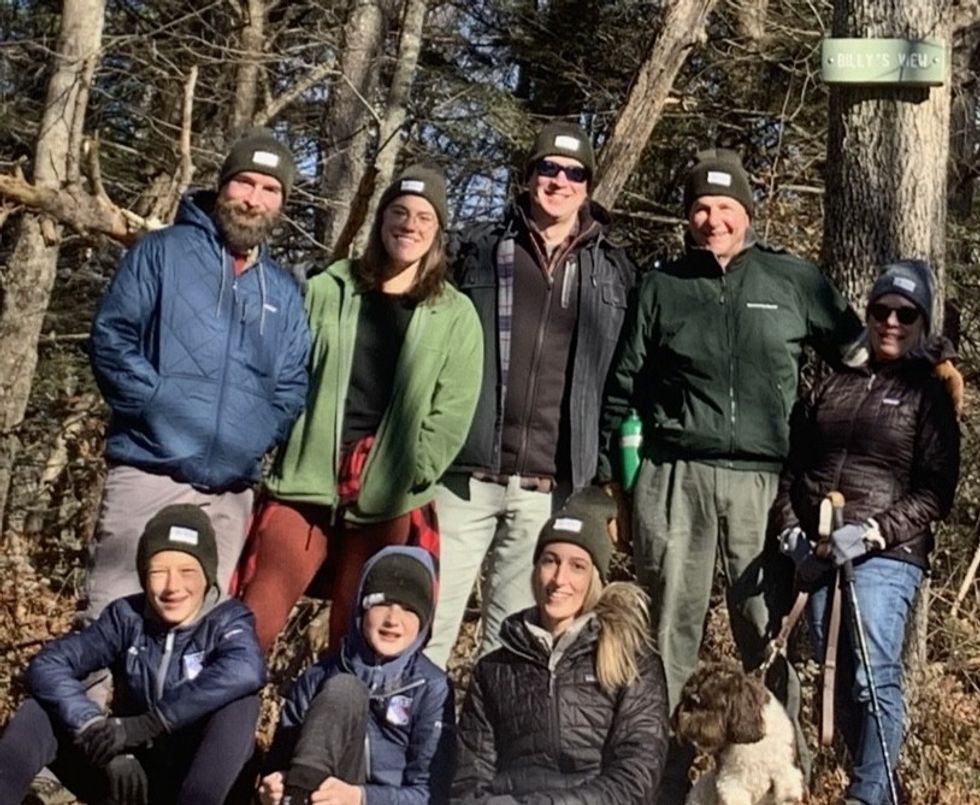
The Forsyth family hiked up to visit “Billy’s View” last month, which was named for Bill Forsyth, far right back row. To his right are his son Henry (the oldest of the three Forsyth sons), his daughter-in-law Jody and Jody’s husband, Gilbert. In the front row are Henry’s wife, Kristine, and their sons, Ryan and Casey. To Bill’s left is his wife, Lesleigh (stepmother to Henry and mother of Gilbert). Photo submitted

This is part two of a two-part story. The first part can be found here.

SALISBURY — In our issue of Dec. 16, we started the story of Bill Forsyth, who is now a 77-year-old retired attorney with deep roots in Salisbury. He has been sharing his time between this part of the Northwest Corner and New York City since he was a child.

As a young man, he often went deep into the woods and up the hillside behind his home on Prospect Mountain Road and spent summers at a campsite he built for himself there.

The site later became known as Billy’s View. The story of Bill and his family and the Salisbury resident and Appalachian Trail expert named Norm Sills continues in this issue.

Norm Sills and the AT route

Norm Sills was the head farmer for Hamlet Hill, a property that was connected to property owned by the Forsyths and their cousins the McClintocks.

Norm was a fascinating and lovely man. Born in New York City in 1922, he had come to the University of Connecticut to study agriculture and then ended up as a tenant farmer on the Miles estate in the Twin Lakes section of Salisbury and then at Hamlet Hill.

Sills had always been an active and enthusiastic hiker and woodsman, and after 24 years of farming, he sold his farm gear in the late 1970s and went to work for the Appalachian Mountain Club (AMC).

The AMC was formed in the early 1920s — simultaneous with the beginning of plans for a national north-south hiking trail, from Georgia to Maine, that would become known as the Appalachian Trail. The AMC manages the Connecticut sections of the trail.

In a history interview with Sills by the Salisbury Association Historical Society (www.salisburyassociation.org/archives/oral-history/sills-norm-2), Sills explains that the trail did not yet have a formal route through this part of the state when he started working for AMC; part of his job was to “create” the trail, and negotiate with private landowners to sell sections of their land or allow hikers to pass through.

This was far from an easy process but Sills managed to move through it and remain an important and respected member of the Salisbury community. In addition to his work for the AMC, he was also the Salisbury town historian from 1999 to 2005.

He wrote trail guides to the AT sections in New York, New Jersey, Connecticut and Massachusetts and was elected to the Board of Managers for the Appalachian Trail Conference, which oversees the entire 2,200-mile trail.

Sills died in 2016 but was still active in the region and at Hamlet Hill in the 1970s, when Bill Forsyth was seeking peace and clarity in his woodland campsite. Like all great outdoorsmen, Sills quietly observed everything around him — and that included the activities of the McClintock and Forsyth offspring.

“I was ‘Billy’ to Norm when I was growing up,” Forsyth recalled. “He knew everything that happened around Hamlet Hill and he knew I had a campsite up there.”

Sills was hired to lock in the AT route through the Northwest Corner in 1979. Part of the trail passes through the woods behind Hamlet Hill (it travels down on the other side to Sugar Hill Road on the Amesville side of Salisbury, near the Housatonic River).

Rand’s View and Billy’s View

At two points on the property, there are marked views. One is called Rand’s View. Curtis Rand said he isn’t certain who named it or which family member it was named for, but it was long known as “Rand’s View.”

Billy’s View is less known, although you can find a thorough description of it on the website of the Interlaken Inn in Lakeville, at www.interlakeninn.com/hiking-trails-in-lakeville-and-salisbury-ct.

Forsyth recalls the often-acrimonious process of negotiating the trail route with landowners in multiple towns. The AT is still gently rerouted from time to time every few years, but in Salisbury it still comes out at Rand’s View and the nearby Billy’s View.

“Norm used to call it Billy’s Campsite,” Forsyth recalled, “but he told me he wanted to officially name it Billy’s View because they didn’t want people camping there.”

It’s been many years now since any Rands or the Forsyths and McClintocks have owned Hamlet Hill. When they sold the farming portion of the property to the Findlay family, they gave 350 acres of woods to the Nature Conservancy, with the understanding that it would be passed on to the Salisbury Association, with a route carved out of it to be owned by the federal government for the trail.

But the Forsyth and McClintock families continue to own abutting or nearby property on Prospect Mountain Road.  Bill’s and Lesleigh’s property is known as the Grey Cottage, “named after a family called Grey who owned it in the 19th century,” Forsyth recalled, although the original cottage was built in 1731.

Like many New York City residents, Forsyth and his wife, Lesleigh, left the city at the beginning of the pandemic.

“We’ve mostly been up here for the past 18 months.”

And of course the woods have been calling to him. One of the stated goals of the Appalachian Trail is that hikers should be able to feel as though they’ve traveled back in time while they are hiking, that there should be large sections of the trail where you can’t see or hear cars or modern life.

Forsyth can travel back in time on those hikes into the woods, but he’s also looking forward toward the next generation. Over the Thanksgiving weekend, he took two of his grandsons (Ryan, 12, and Casey, 10) up to see “his” view. The boys did very well on the roughly 45-minute ascent, Forsyth reported.

The view has been obscured by new tree growth in the last 50 years, but, “They tell me that they’re going to clear it again soon.”

The woods are also more wild than when Forsyth used to go bushwhacking through there. There are many more bears now, and (sadly) many more ticks, some of which now carry Lyme disease. There are more coyotes now.

“There weren’t wild turkeys when I was a boy. There were porcupines and birds. You’d sometimes see a fox.”

Of course Forsyth took his own sons to Billy’s View as they were growing up.

“This was our first trip up there with these two grandsons.”

They seem to have understood the significance of having a spot in one’s name on a major trail: “As we were on the trail coming back, 12-year-old Ryan scrambled up on a rock and said, ‘I name this Ryan’s Rock!’ and Casey claimed his own rock. Ryan said he’s going to bring a sign next time we come up.”

A century from now, when hikers wonder how Ryan’s Rock got its name,  they can find the true story in the archive of The Lakeville Journal, along with the history of the local Appalachian Trail and information on the Rands, the McClintocks, the Forsyths, Norm Sills and the many other people who have helped make Salisbury so much more than simply a place where people own houses.

The online archive can be found through Salisbury’s Scoville Memorial Library at https://scoville.advantage-preservation.com.

A Rand family member emailed with some corrections to the Rand family history that was included in the first part of this article, in the Dec. 16 issue of The Lakeville Journal.

Latest News

‘Vulnerable Earth’ opens at the Tremaine Gallery

Tremaine Gallery exhibit ‘Vulnerable Earth’ explores climate change in the High Arctic.

Photo by Greg Lock

“Vulnerable Earth,” on view through June 14 at the Tremaine Gallery at Hotchkiss, brings together artists who have traveled to one of the most remote regions on Earth and returned with work shaped by first-hand experience of a fragile, rapidly shifting planet, inviting viewers to sit with the tension between awe and loss, beauty and vulnerability.

Curated by Greg Lock, director of the Photography, Film and Related Media program at The Hotchkiss School, the exhibition centers on participants in The Arctic Circle, an expeditionary residency that sends artists and scientists into the High Arctic aboard a research vessel twice a year. The result is a show documenting their lived experience and what it means to stand in a place where climate change is not theoretical but visible, immediate and accelerating.

Keep ReadingShow less
Beyond Hammertown: Joan Osofsky designs what comes next

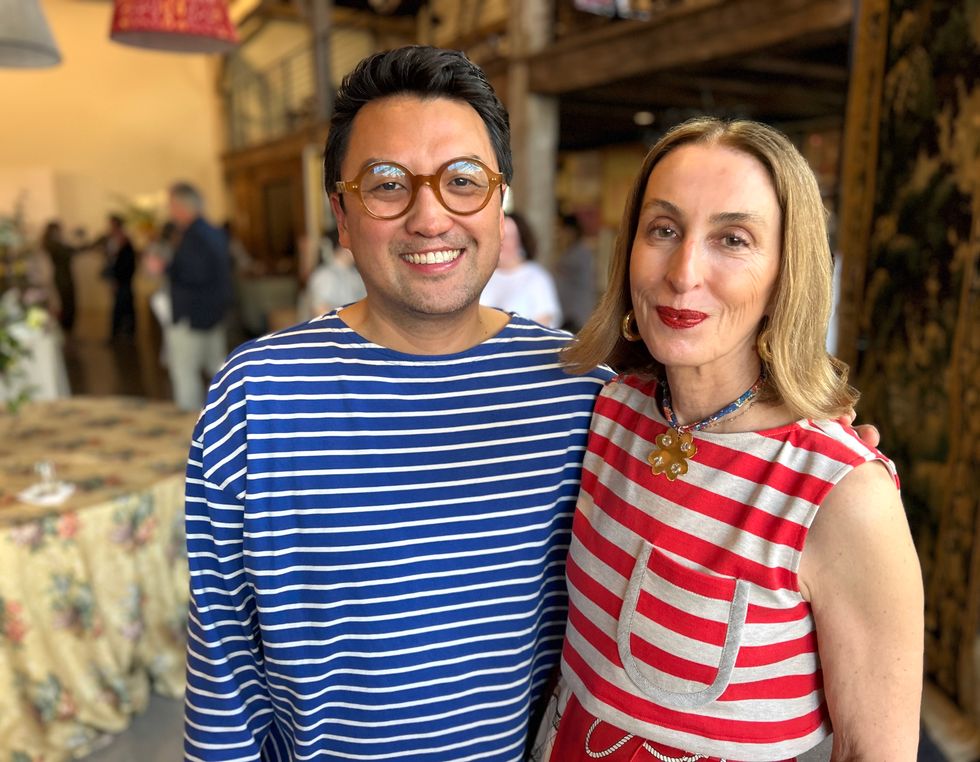
Joan Osofsky and Sharon Marston

Provided

Joan Osofsky is closing the doors on Hammertown, one of the region’s most beloved home furnishings and lifestyle destinations, after 40 years, but she is not calling it an ending.

“I put my baby to bed,” she said, describing the decision with clarity and calm. “It felt like the right time.”

Keep ReadingShow less
A celebratory season of American classics and new works at Barrington Stage Company
Playwright Keelay Gipson’s “Estate Sale” will have its world premier this summer at Barrington Stage Company.
Provided

Amid the many cultural attractions in the region, the Barrington Stage Company in Pittsfield, Massachusetts, stands out for its award-winning productions and comprehensive educational and community-based programming. The theater’s 2026 season is one of its most ambitious; it includes two Pulitzer Prize-winning modern classics, one of the greatest theatrical farces ever written, and new works that speak directly to who we are right now as a society.

“Our 2026 season is a celebration of extraordinary storytelling in all its forms — timeless, uproarious and boldly new,” said Artistic Director Alan Paul. “This season features works that have shaped the American theater, as well as world premieres that reflect the company’s deep commitment to developing new voices and new stories. Together, these productions embody what BSC does best: entertain, challenge and connect our audiences through theater that feels both essential and alive.”

Keep ReadingShow less
google preferred source

Want more of our stories on Google? Click here to make us a Preferred Source.

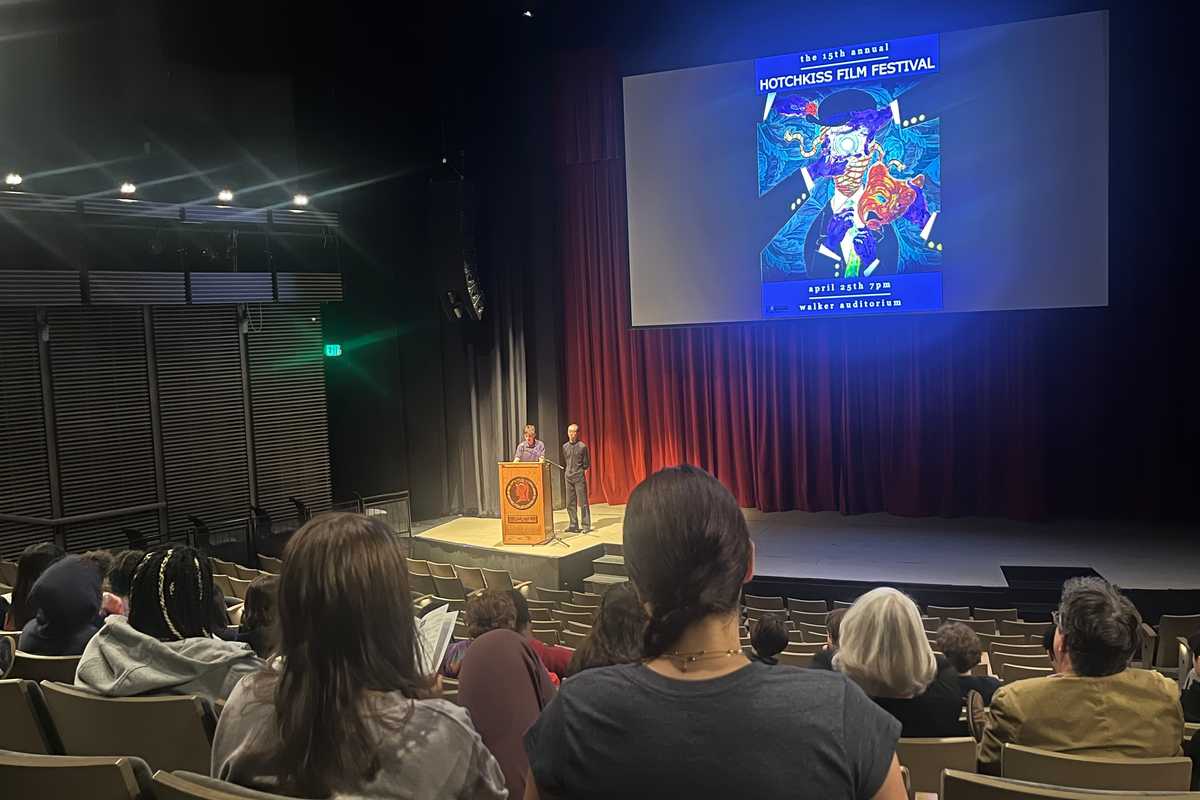
Hotchkiss Film Festival celebrates 15th year of emerging filmmakers

Student festival directors Trey Ramirez (at the mic) and Leon Li introducing the Hotchkiss Film Festival.

Brian Gersten

The 15th annual Hotchkiss Film Festival took place Saturday, April 25, marking a milestone year for a student-driven event that continues to grow in ambition, reach and artistic scope. The festival was founded in 2012 by Hotchkiss alumnus and Emmy-nominated filmmaker Brian Ryu. Ryu served as a festival juror for this year’s installment, which showcased a selection of emerging filmmakers from around the region. The audience was treated to 17 films spanning drama, horror, comedy, documentary and experimental forms — each reflecting a distinct voice and perspective.

This year’s program was curated by student festival directors Trey Ramirez and Leon Li, working alongside faculty adviser Ann Villano. With more than 52 submissions received, the selection process was both rigorous and rewarding. The final lineup included six films from Hotchkiss students.

Keep ReadingShow less
Artist Maira Kalman curates ‘Shaker Outpost’ in Chatham

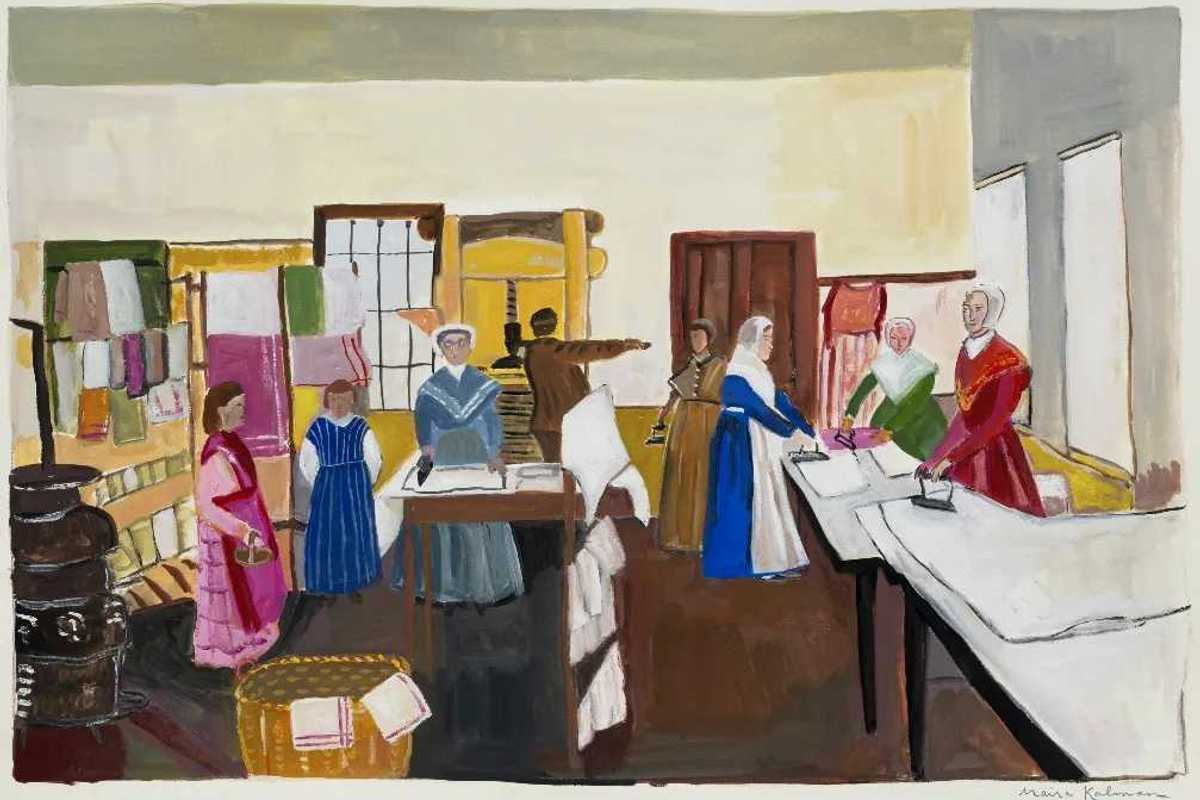
The Laundry Room, a painting by Maira Kalman from the exhibition “Shaker Outpost: Design, Commerce, and Culture” at the Shaker Museum’s pop-up space in Chatham.

Photo by Maira Kalman; Courtesy of the artist and Mary Ryan Gallery, New York

With “Shaker Outpost: Design, Commerce, and Culture,” opening May 2, the Shaker Museum in Chatham invites artist and writer Maira Kalman to pair her own new paintings with objects from the museum’s vast holdings, and, in the process, reintroduce the Shakers not as relic, but as a living argument for clarity, usefulness and grace.

Born in Tel Aviv, Maira Kalman is a New York–based artist and writer known for her illustrated books, wide-ranging collaborations and distinctive work spanning publishing, design and fine art.

Keep ReadingShow less

Ticking Tent spring market returns

Ticking Tent spring market returns

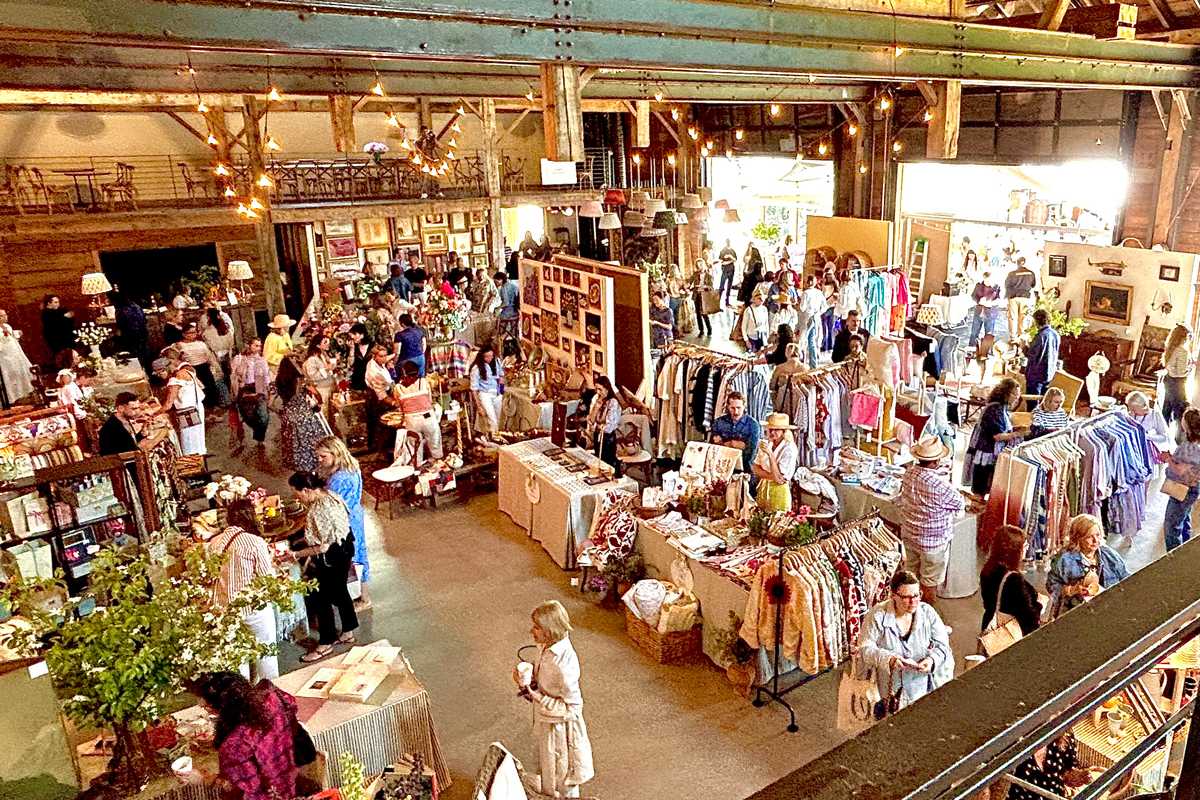
The Ticking Tent Spring Market returns to Spring Hill Vineyards in New Preston on May 2.

Jennifer Almquist

The Ticking Tent Spring Market returns to New Preston Saturday, May 2, bringing more than 60 antiques dealers, artisans and design brands to Spring Hill Vineyards for a one-day, brocante-style shopping event from 9 a.m. to 4 p.m.

Co-founders Christina Juarez and Benjamin Reynaert invite visitors to the outdoor market at 292 Bee Brook Road, where curated vendors will offer home goods, fashion, tabletop and collectible design. Guests can browse while enjoying Spring Hill Vineyards’ wines and seasonal fare.

Keep ReadingShow less
google preferred source

Want more of our stories on Google? Click here to make us a Preferred Source.

google preferred source

Want more of our stories on Google? Click here to make us a Preferred Source.