Thank you!
Your support is sustaining the future of local news in our communities.

Sen. Rand Paul’s call: reality v. rigidity

Two contemporary stories about Sen. Rand Paul (R- Ky.) illustrate the disconnect between one’s ideology and personal experiences. Imagine a fierce opponent of regulation being saved in a crash by government-mandated seat belts and air bags and the ensuing cognitive dissonance.

In the case of Rand Paul, MD (ophthalmology), the two experiences came almost at the same time. Last month, Sen. Paul went to the Shouldice Hernia Centre, the world-famous hernia repair institution located just outside of Toronto, Ont.

Before he departed for his surgery, some in the media recollected his virulent opposition to any government health insurance programs, including Medicare and Obamacare. 

Explaining why he chose Shouldice — a hospital in a country where single-payer covers everyone and gives them free choice of  physician and hospital, averaging half the price per person of the U.S. system (which still leaves over 27 million people without any insurance and millions more underinsured) — Paul replied that Shouldice is a private hospital that “accepts Americans who pay cash.”

But as any Canadian knows, there are many private hospitals in Canada. The single-payer system means that the governments (the Provinces assisted by Ottawa) are the payer while the delivery is mostly private. Shouldice operates under the Canadian single-payer system.

In any event, Rand Paul chose the best place for hernia repair — Shouldice uses tissue repair, not the risky mesh insertion used in U.S. hospitals that has bred so much tort law litigation (see Jane Akre’s recent column). Shouldice, as reported in peer-reviewed medical journals, has the lowest infection and recurrence rate in North America. It also conducts its operations, including a four-day stay at their hotel-like premises replete with gardens, at about 40 percent of the price charged for the in-and-out-in-one-day surgery prevalent at many U.S. hospitals.

By all accounts, Sen. Paul was pleased with how his operation turned out and enjoyed the food and company of his fellow patients over his four-day stay.

So has Sen. Paul changed his mind about single-payer, clearly the more efficient, humane system? Canada does not have socialized medicine like the U.K. Our Canadian neighbors have a public funding, private delivery system that hugely reduces the kind of anxiety, dread and fear afflicting Americans (see my recent column, “25 Ways the Canadian Health Care System is Better than Obamacare”). Moreover, Canadians are not subjected to arbitrary denials of care, maddening fine print complexity, co-pays, inscrutable bills often larded with fraud and sometimes a “pay or die” drug pricing or surgery confrontation. Then there are those choice-destroying narrow networks. Americans would benefit substantially in a single-payer system.

Apparently, Dr. Paul has not budged. He was unavailable for comment to this writer.

The other experience Sen. Paul had was with the tort law or personal-injury civil justice system. While piling brush near the property boundary with his neighbor, Sen. Paul was violently blind-sided and tackled by the neighbor, Rene Boucher. Later, Boucher pleaded guilty to a criminal charge and served a 30-day prison sentence.

The assault left Sen. Paul with several broken ribs and other injuries. “I went through horrendous pain,” he said, adding that his traumas resulted in two bouts of pneumonia and fluid buildup in his lungs.

As a physician and a U.S Senator, Rand Paul stands with the “tort deformers,” those lobbyists and lawmakers who push for legislation to restrict wrongfully injured people from adequate awards, their full day in court with trial by jury. Sen. Paul specifically favored a $250,000 lifetime cap on pain and suffering no matter how serious were the injuries to the victims of medical malpractice.

Yet when wrongfully injured, Rand Paul sued Rene Boucher under the law of torts and asked for far more money than the caps he has favored for others allow. After two hours of deliberation, a Bowling Green Kentucky jury awarded the senator $200,000 for pain and suffering, $375,000 in punitive damages and $7,834 for medical expenses.

Rand Paul sought justice in Kentucky’s state court and received justice for his painful wounds.

Now let’s see whether Sen.  Paul opposes Kentucky Senate Bill 11, filed by state Sen. Ralph Alvarado, which would amend the state Constitution and repeal the present ban on the state Legislature limiting jury awards.

It is a recurring question as to whether Sen. Paul, a libertarian conservative, is willing to modify his ideology due to his real-life experiences. Our civil justice system and the Canadian health care system have provided him with significant benefits. Don’t Americans deserve the same?


Ralph Nader is the founder of the American Museum of Tort Law in Winsted, Conn.

Latest News

Doug Tallamy’s work in progress: saving the planet one backyard at a time

Windacre, a 25-acre property in Millerton will be the site of “Work in Progress,” an afternoon with acclaimed entomologist, New York Times bestselling author and Homegrown National Park co-founder Doug Tallamy.

Provided

For nearly three decades, Doug Tallamy, a professor at the University of Delaware and co-founder of Homegrown National Park, has studied the intricate relationships between native plants, insects, birds and the ecosystems that sustain them. His books, including “Bringing Nature Home” and “Nature’s Best Hope,” have helped shift the conversation about conservation from something that happens primarily in parks and preserves to something ordinary people can practice on the land around them.

On Sunday, Oct. 4, Tallamy will bring that conversation to Windacre in Millerton for “Work in Progress: Toward Native Fields,” an outdoor gathering exploring both the possibilities and the complications of restoring private land for biodiversity.

Keep ReadingShow less
Celebrating Dick Hermans’ life built around community

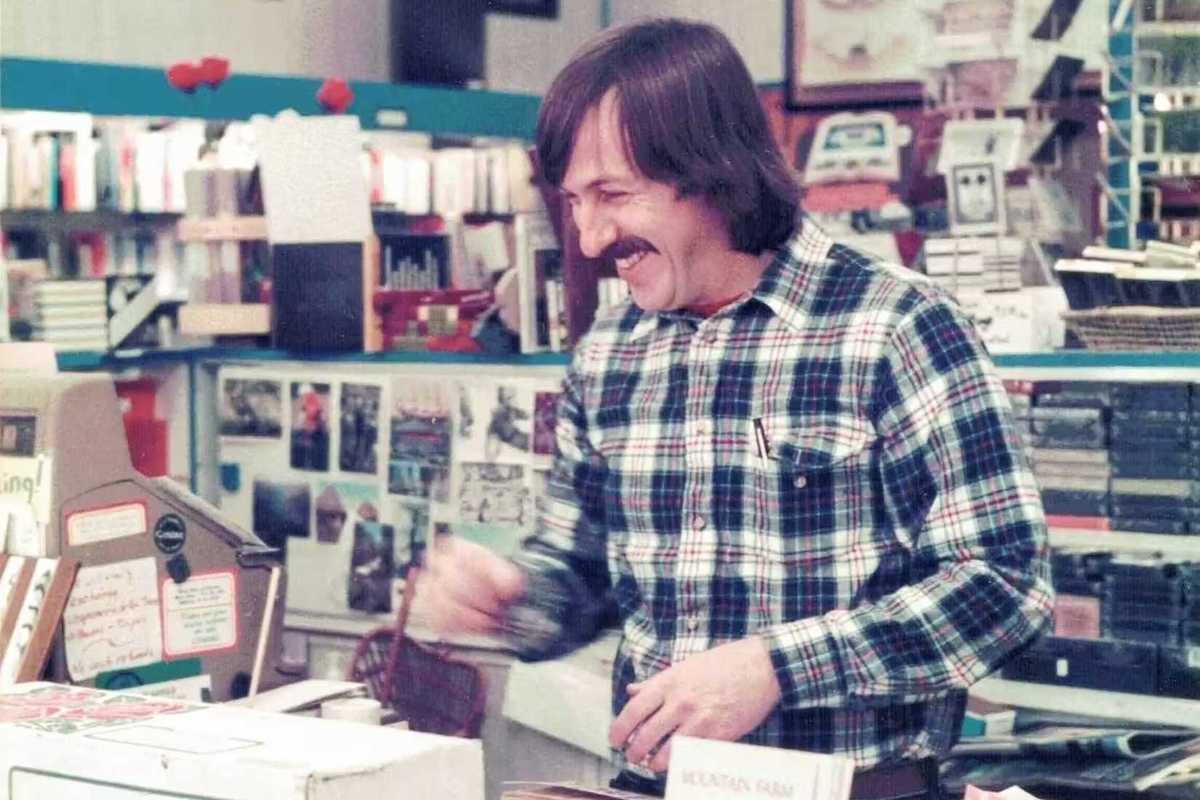
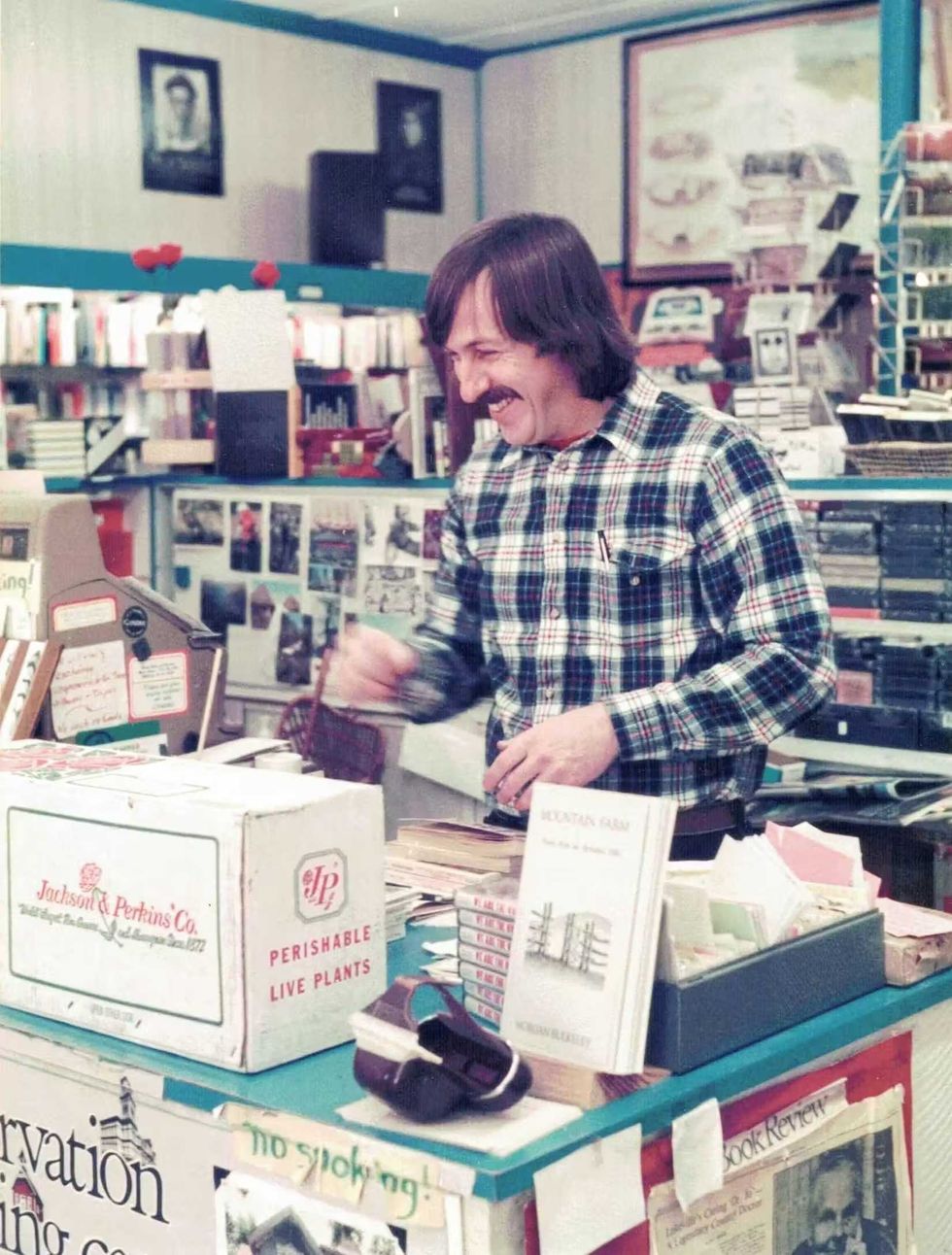
Dick Hermans in the Oblong Bookstore on Millerton\u2019s Main Street in 1985.

Provided
No matter what I’ve done, I’m trying to be useful to the communities I’m associated with.
— Dick Hermans

When Dick Hermans receives the Estabrook Community Leadership Award on Oct. 11, he will accept it for a lifetime of work that has taken many forms: bookseller, radio host, school board member, advocate for the Harlem Valley Rail Trail, business owner, volunteer and, perhaps most importantly, a person who has consistently looked for ways to be useful to the communities around him.

The Lakeville Journal and The Millerton News will present Hermans with the 2026 award at the annual Jubilee celebration at the Sharon Playhouse. The award honors outstanding leadership in community service and was inspired by Mary Lou and Robert Estabrook, former owners of the newspapers who believed that strengthening a community extended well beyond the work of publishing a newspaper.

Keep ReadingShow less
Tending the Fire: Homelands PowWow brings Mohican culture home to the Berkshires

Members of the Stockbridge-Munsee tribe at Homelands PowWow in 2025.

Joeseph Plante New Media Storytellers
Our goal is to continue building an annual gathering that honors the history, culture and traditions of the Stockbridge-Munsee Band of Mohicans in their original Homelands.


For the Stockbridge-Munsee Mohican people, the Berkshires are not simply a place to visit. They are ancestral homelands.

Keep ReadingShow less
google preferred source

Want more of our stories on Google? Click here to make us a Preferred Source.

Ancram Center’s “A Number” doubles questions of identity
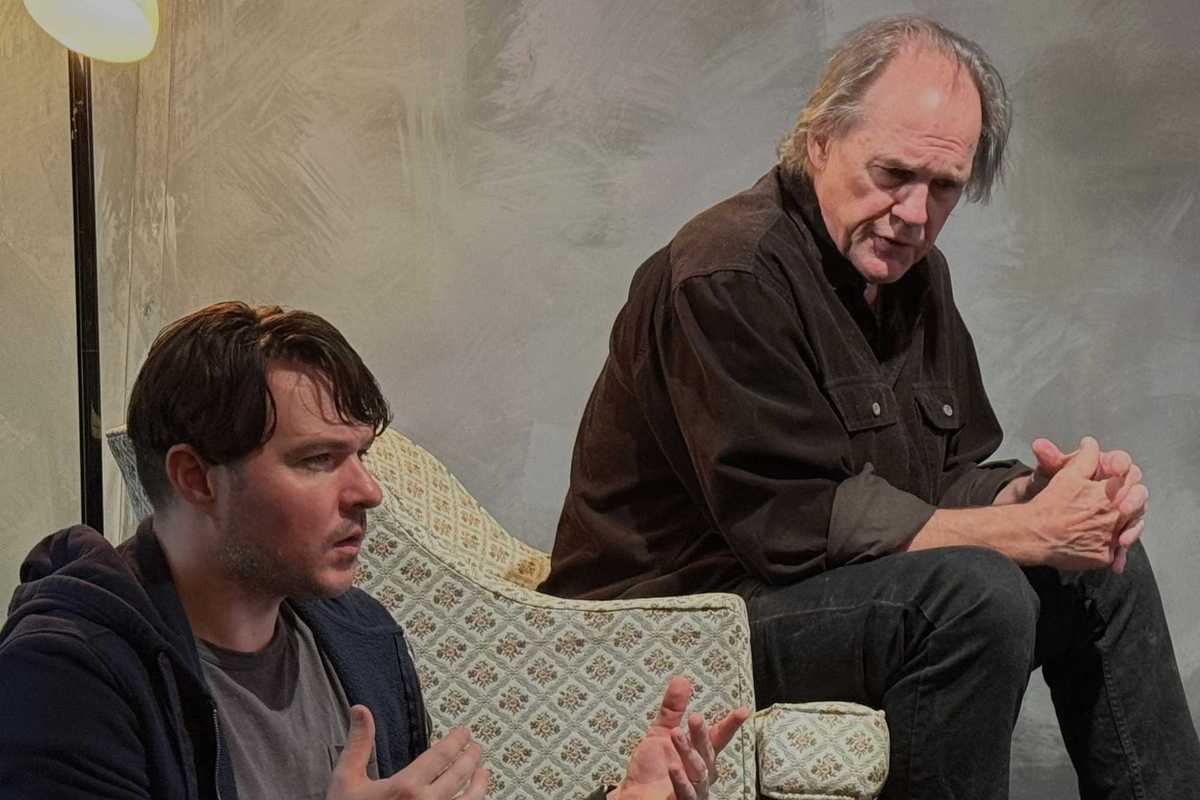
Ledbetter (left) and Wojda (right) on the set of “A Number” at Ancram Center for the Arts.
Jeff Mousseau

How would you feel if you found out you weren’t the only you — if there was an exact replica of you? What if you found out that you’d been cloned? Would you believe that you’re the real you? Would you suspect you might be a copy of the original? How could you be sure anything about your life was real? These are some of the questions posed in Caryl Churchill’s play “A Number,” opening at the Ancram Center for the Artson Oct. 1.

Churchill was born in London in 1938 and has been hailed by the theaterl world as one of the strongest voices of her time to take on sexual politics and feminist themes. Her works garner pointedly considered analysis from the highest levels of theatrical intellectualism. Basically, it’s about as far from “The Lion King” as you can get. While she’s experimented with dance theater in the past, “A Number” is much more stripped down, highlighting Churchill’s chosen themes and the skills of both actors on stage.

Keep ReadingShow less

Dispatches from the Farm

Dispatches from the Farm

Adamah Farm crew members planning out the day’s tasks on a late September day.

Janna Siller

“Dispatches from the farm” is a new, periodic column offering a firsthand look at the rhythms, challenges and rewards of farming through the eyes of a local farmer.

The thing about plants is that they can’t get up and move. When a storm like last weekend’s nor’easter threatens to roll through, you can’t just round everybody up and settle them safely on the sofa for movie night.

Keep ReadingShow less
Pinchas Zukerman brings an all-Beethoven program to Hotchkiss

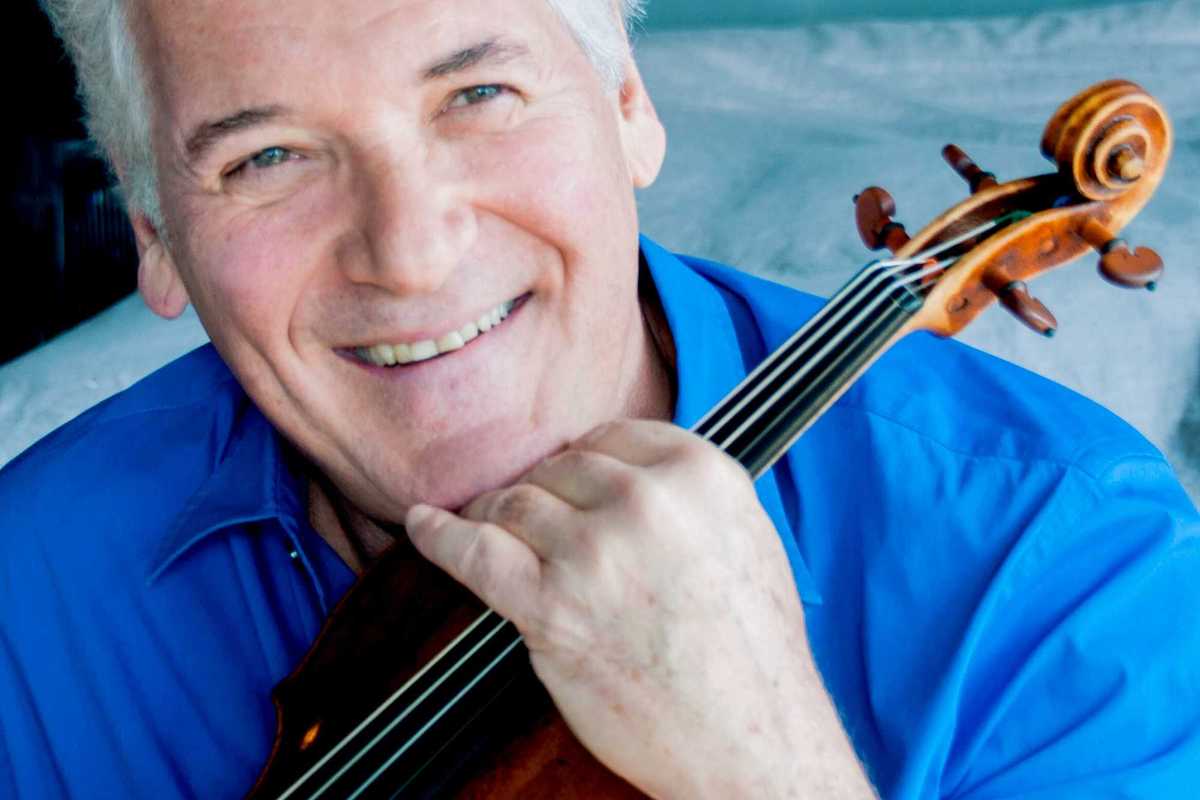
Pinchas Zukerman to perform at Hotchkiss Oct. 4

Cheryl Mazak

The passion, drama and energy of Beethoven will fill Katherine M. Elfers Hall at The Hotchkiss School on Oct. 4, when world-renowned violinist Pinchas Zukerman is joined by pianist Shai Wosner for a special recital.

The 4:30 p.m. program at the Esther Eastman Music Center will feature three of Beethoven’s celebrated violin sonatas: Violin Sonata No. 4 in A minor, Op. 23; Violin Sonata No. 5 in F major, Op. 24, “Spring”; and Violin Sonata No. 7 in C minor, Op. 30.

Keep ReadingShow less
google preferred source

Want more of our stories on Google? Click here to make us a Preferred Source.

google preferred source

Want more of our stories on Google? Click here to make us a Preferred Source.