SALISBURY — The beginning of the school year also signals the arrival of a list of after-school classes, offered at Salisbury Central School through a program called SOAR, which got it start through the generosity of Salisbury resident Zenas Block.
Block, who died in 2008 at the age of 91, had achieved success throughout his long life through several business ventures. In retirement, such as it was, he taught courses in entrepreneurship at New York University, commuting to the city from his home in Salisbury.
He also turned his attention to Salisbury Central School, where he felt that students would benefit from an after-school program that offered quality classes. Not basket weaving, he used to say, but science and math and other academic subjects.
The program he helped fund and create in 2000 got its name from a community-wide contest. The winning acronym, SOAR, stands for Seek, Originate, Aim, Reach.
The program lives on and grows stronger every year. It continues to evolve not only through the courses it offers (this autumn’s course offerings include Chinese, fencing and farming) but also through its governance structure.
SOAR has a new director now in Weezie Fallon. Keith Marks is now the head of the board. In an interview with The Lakeville Journal, they explained their organization’s evolution.
Started with endowment
SOAR’s earliest workshops were held in 2000, with funds from an endowment created by Block called the Salisbury Central School Educational Enrichment Endowment Fund at the Berkshire Taconic Community Foundation (BTCF). BTCF is a nonprofit based in Great Barrington that helps and supports other nonprofits.
Funds came to SOAR through the endowment, which remains at BTCF and which is the program’s largest single source of revenue.
With the guidance of BTCF, according to Marks and Fallon, the SOAR directors have moved toward a more formal and independent structure. They were able, this year on July 1, to leave BTCF and “become our own independent not for profit,” Marks said.
The change is largely administrative, he said. Primarily it means that invoices no longer have to go up to the office in Massachusetts in order to get paid.
“We have activities going on all year,” Marks said, “so it’s easier for us to manage our budget in house.”
More than enrichment
A more complex transformation was the change to the more formal structure.
“Originally, this was just an enrichment fund at Salisbury Central,” Fallon explained. “SOAR originated with a program committee. “SOAR’s been extremely fortunate to have had a solid partnership with SCS from the beginning as well as several previous directors, all who poured their heart and souls into the growth and development of SOAR.”
Many schools in the area have after-school programs that are run by volunteers and funded from a variety of sources.
Even though SOAR had the funds from Block to provide a sense of continuity and longevity, the organization was, said Fallon, “and there were a lot of volunteers in and out. We wanted to make it more sustainable, have our own governance and have more continuity.”
A board of directors was created a few years ago, and Fallon said that it was Block’s widow, Janet Andre Block, who originally invited her to join.
“As one of the first members, we were beneficiaries of BTCF’s Nonprofit Learning Program,” she recalled.
BTCF offers training through its Center for Nonprofit Excellence, which offers a variety of seminars and workshops in addition to advising and guiding groups and volunteers.
“It was a really good, concentrated lesson on, for example,the difference between governance and management,” Fallon said. “Good governance is worrying about fundraising but staying out of the day-to-day operations; and to network within the community as board members.
“Our board has nine members. We have a fund development chair. We have a person who directs board development, and we have a finance committee. Our Program Committee, comprised of educators and members of the SCS and broader communities, continues to steer the development of program offerings.”
Fallon moved recently from being on the board to being the director, and overseeing the programs themselves in addition to helping with fundraising.
This year, she said, new course catalogs will go home with students after school begins on Aug. 31. The SOAR classes will be offered in fall, winter and spring (the first fall classes will be held Sept. 28).
Lots of participation
Participation levels are very high, she said, with about 65 percent of students taking classes.
“They’re after school so there is a scheduling conflict for students who take part in sports, but we make accommodations for them, particularly with the annual drama/musical,” she said.
Classes are all designed to be fun and to help spark the imagination of the students in all grades (classes are offered for students in every age range). Everything also has an academic component.
“Even when we do things like knitting, it has dexterity, patterns, counting,” Fallon said. “We provide a balance of new offerings and old and we make them sequential learning experiences.”
Although the Salisbury Central School Educational Enrichment Endowment Fund helps pay for the basic budgetary needs of the program, additional fundraising has helped SOAR expand. Originally it was offered twice a year, for example; now there are three terms.
“We are committed to not denying access to anyone who can’t pay the fees for classes,” Marks said. “We can waive the fees, and we do so fairly regularly.”
SOAR also funds and organizes the school’s annual drama production.
While many of the classes are taught by community members, the program also brings in traveling workshops, “and grade-specific experiences enabling us to reach every student in the school.
“I’d love to bring in more people to do workshops and assemblies like the Museum of Mathematics, a group we hosted last spring that makes math fun.”
The SOAR board is “looking for a single-source fundraising event,” Marks said, not only to augment its resources but also to help community members learn more about the program.
For now, SOAR depends on donations. An annual appeal fundraising letter will go out in October.
“People donate anywhere from $25 to thousands of dollars,” Fallon said. “We hope they will give what they can.”

 Pay Bill for Robin Starr’s service in the Continental Army.Courtesy the Alex Breanne Corporation
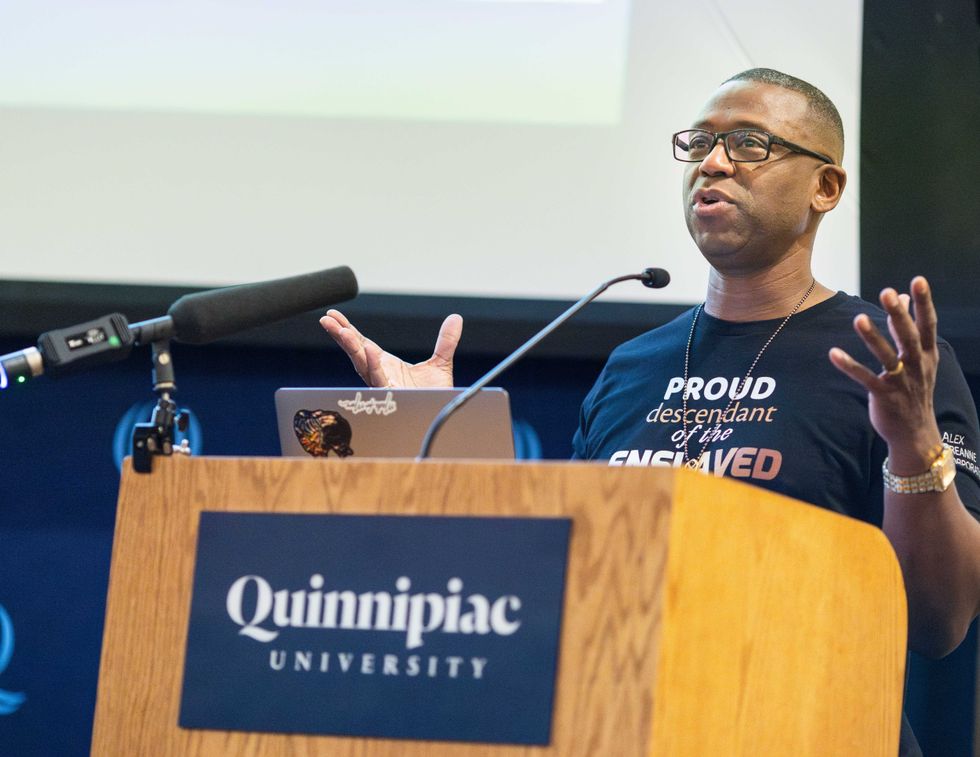 John Mills speaking at Quinnipiac University.Courtesy the Alex Breanne Corporation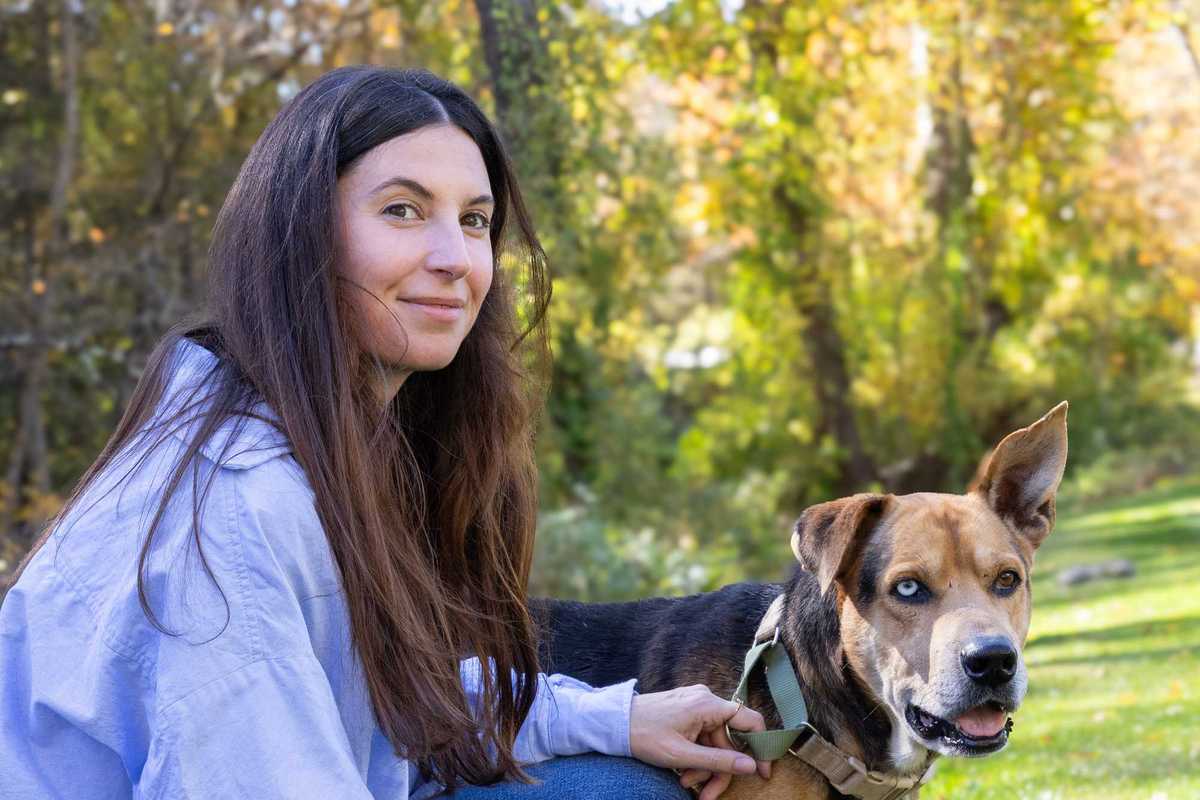
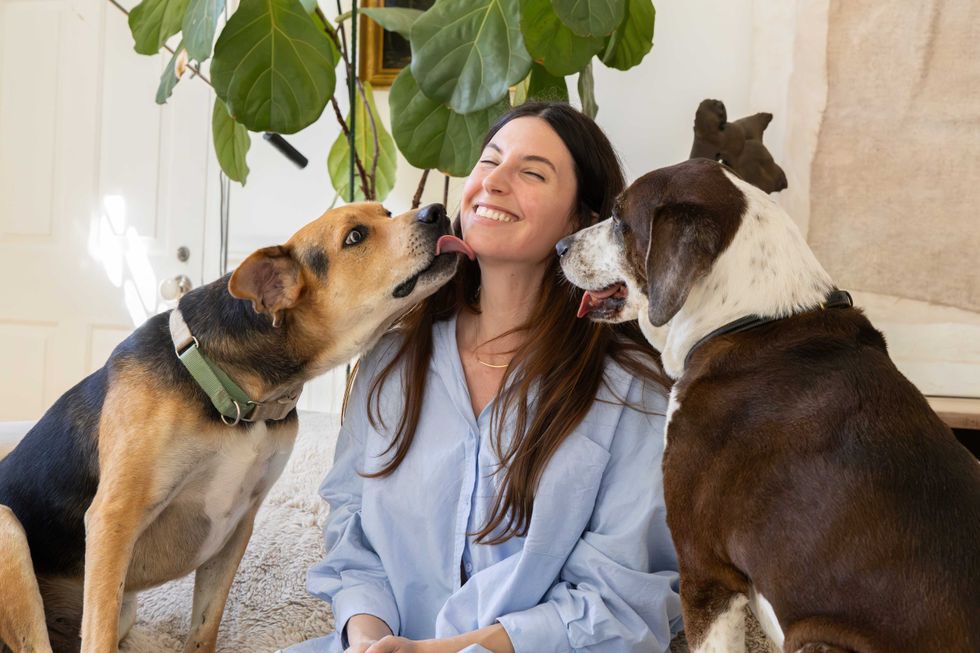 Stephanie Saetta,with her rescue dog George and Blue (left), a shepherd mix awaiting his forever home.Madi Long
 Blue, a 7 year-old Shepard mix, is waiting for his forever home. Madi Long