Latest News

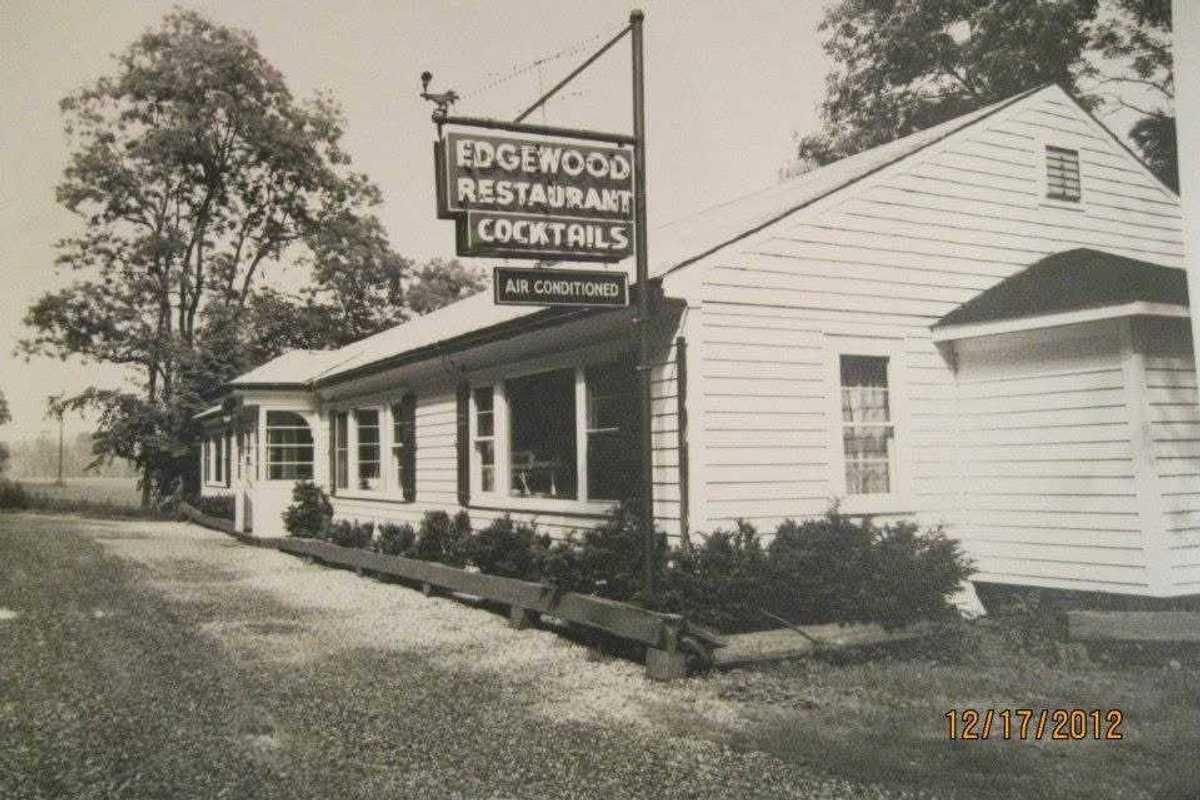
The Edgewood Restaurant, a beloved Amenia roadside restaurant run by George and Anne Phillips, pictured during its peak years in the 1950s and ’60s.
Provided
It began as a former gas station and tavern called The Narrows, on the road to Sharon, around a switchback east of Troutbeck. It became a roadhouse restaurant for weddings, bar mitzvahs, proms, graduations, birthdays and holidays with relatives. At Easter, New Year’s and Christmas, George and Anne served the food free — customers only paid for drinks as a thank-you for another good year.
It was a different time. Amenia was an isolated dairy farming community, and two large state psychiatric hospitals employed 4,000 potential diners. People needed a friendly neighborhood restaurant run by a local couple who knew everybody. They offered special-occasion favorites: fried chicken, meatloaf, sliced turkey with gravy, pork chops from nearby farms, and fresh white bread baked at 4 a.m. by George.
There was no maître d’. Waitresses, many still teenagers, greeted guests and helped them find a table. Cloth napkins and sturdy white plates sat in a knotty pine dining room that felt more like a family home than a formal restaurant. Large tables down the center accommodated families. George and Anne fed the staff before opening, and everyone ate the same meals served to customers. Everything was homemade classics of the 1950s and ’60s: cold shrimp and cocktail sauce, stuffed mushrooms, veal parmesan, King crab, clams and oysters on the half shell, chopped hamburger steak, French onion soup, fried chicken and pumpkin pie.
George was a tough but fair boss with a quirky sense of humor. Former employee Kevin Rooney, who worked there as a teenager, recalled being served a hot fudge sundae on a sweltering day — only to discover the “ice cream” was Crisco. Revenge came later in the form of a Coke spiked with Tabasco sauce.
George also kept a series of German shepherds — Rinny, Schultz and Dooley — named after a Jonathan Winters routine featuring talking beer steins. The dogs were locked inside at night for security. Tony Robert, another former employee, remembered coming in one day to find Schultz with the seat of someone’s pants in her jaws. When kids tried to sneak into a dance through the bathroom window after the fire marshal had closed the overcrowded place, George put Rinny in the restroom. Problem solved.
Anne also ran a no-nonsense operation. She marked liquor bottles at night so no one would sneak a drink, though the cleanup crew found ways around it, sipping the blackberry liquer instead. Along with cooking and baking everything from scratch, she raised their children in a life closely tied to the restaurant. The bus dropped their daughters off there after school, and one recalled doing homework while the family spent more time in the restaurant than in their nearby home.
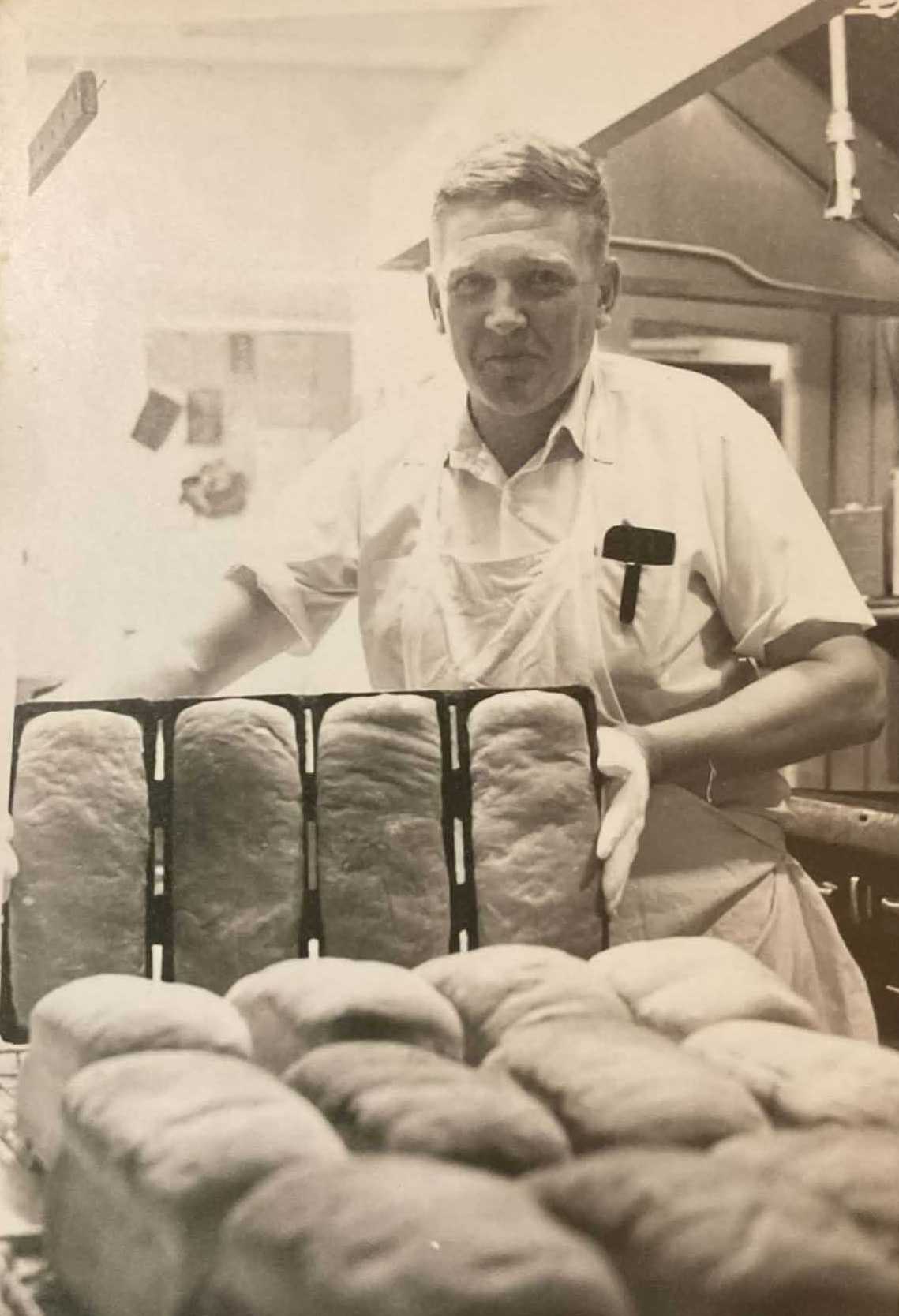 George Phillips bakes fresh bread in the early morning hours at the Edgewood Restaurant.Provided
After 23 years of long hours — often more than 100 a week — George began stepping back, at times closing the restaurant to recover. He later moved into real estate and Anne opened a successful craft store.
George sold the place in 1972. At one point, it became a lively beer joint and concert venue, featuring local bands, such as Random Concept, Little Village and Good Friend Coyote. When New York lowered its drinking age to 18 — while it remained 21 just across the state line — it drew crowds from Connecticut. Locals called them “Connecticut Rags,” kids with fancy cars who came to dance, drink and sometimes fight, rocking the floors so hard they bounced like a trampoline and shook dust from the rafters.
At closing time, they had to dodge police waiting across the state line. Sometimes Jack Rooney, Kevin’s father and the bartender, drove them home. One morning, Betty Rooney got a call from a worried mother asking if her son was there. “If he’s wearing red tennis shoes,” she said, “he’s asleep on my front lawn.”
The Edgewood also drew actors from the Sharon Playhouse and notable visitors, including Paul Newman, Cole Porter and even Supreme Court justices. George showed silent movies on a sheet in the dining room, and guests could dance to the Les Schulman Orchestra or to George and his brothers, who had their own band.
It served as a gathering place for groups such as the Eastern Artificial Insemination Cooperative and for events like the Knights of Columbus Communion breakfast. Families marked milestones there — including one that celebrated five birthdays at a Palm Sunday brunch in 1970.
Christmas dinner cost $3 and included stuffed olives, roast pig, prime rib, Virginia ham, deep-sea scallops, Long Island duck, creamed onions and, of course, crème de menthe parfait. On New Year’s Eve 1959, dinner was $15 a couple — $7.50 each for all the champagne you could drink.
The venue came to an end when the building burned to the ground in 1985.
The building is gone, but not the memories — the laughter, the music, the meals, and George carving steaks by hand. He lived a century, but the Edgewood, for those who knew it, was timeless.
Next time you’re driving to Sharon and pass the empty, weedy lot with a rusty electric meter, imagine calling George’s old number to make a reservation for a place that lives on in memory.

Want more of our stories on Google? Click here to make us a Preferred Source.

Minimalist works by Agnes Martin on display at Dia:Beacon.
D.H. Callahan
Martin, the Canadian-born New York and New Mexico resident who died in 2004, made the kind of ambiguous abstract art that inspires countless imitators and interpreters.
At first glance, most of the pieces in the new show, “Painting Is Not the Act of Painting,” (on display until June 22) are variations on simple lines and grids painstakingly applied by the artist’s own hand using paint and pencil.
Despite their relative simplicity, it took Martin years of rejecting her own artwork to reach this level of pure abstraction. She would often take knives to paintings she didn’t like, literally slashing work that didn’t live up to her expectations. It wasn’t until she was in her 50s that she began making the work she would become known for.
That evolution is reflected in the exhibition’s 24 works.
Dia:Beacon seems like a perfect place for them. The museum is a monument to simplicity. Even the most complicated pieces are abstractions in their own ways. A straight, unpainted plywood wall with diagonal backing by Donald Judd suggests a room under construction. Michael Heizer’s singular ovoid boulder embedded into a gallery wall strikes unease into visitors.
 Subtle grids and softly layered lines by Agnes Martin draw the eye at Dia:BeaconD.H. Callahan
Martin’s pieces feel at home here. In the context of such visual, if not conceptual, simplicity, her art seems louder than it might in almost any other setting. Faint blue and peach stripes gain vibrancy when compared with the all-white canvases of Robert Ryman or the large gray mirrors of Gerhard Richter, both a few rooms away. By comparison, the visibly human-drawn lines of pencil or etched-out paint seem almost complicated, and technically masterful.
It’s enough to make you ponder the name of the exhibition, “Painting Is Not the Act of Painting,” pulled from a quote by Martin: “Painting is not making paintings; it is a development of awareness. And with this awareness, your work changes, but very slowly.”
In a world where studio assistants and fabricators contribute to the output of many artists, Martin relished the act of painting. She painted nearly every day of her adult life. For her, the process was an integral part of the work, and it’s hard to look at these pieces without appreciating her hand.
This repetitive study is also demonstrated across the hall in a gallery dedicated to a single work by Andy Warhol. The piece, “Shadows,” is a study of variations on a single subject. Warhol took photos of shadows in his office and, using a silkscreen process, painted them 102 times on identically sized canvases.
Walking into the room, it may seem like the same image repeated. On closer inspection, the canvases vary widely in color and composition. The work suggests that repetition can produce unexpected forms.
Agnes Martin has become enshrined as one of the leaders of the minimalist movement of the 1960s and ’70s. Her work and artistic philosophies have inspired countless admirers. This exhibition displays a selection of important pieces from nearly 50 years of practice.

Want more of our stories on Google? Click here to make us a Preferred Source.