PHOENICIA, New York My annual week off in the Catskills in early June got off to a satisfactory start. The first week or so of June usually means a lot of different bugs hatching, which in turn means the angler can sling three or four patterns with a fair bit of confidence.
This time around the isonychia were dominant. This is a big reddish-brown mayfly, sometimes known as a Slate Drake and most frequently imitated on the Esopus Creek with a traditional winged wet fly, the Leadwing Coachman.
I remember as a callow youth of 12 being instructed by an impossibly ancient codger -- hell, he was probably 65 -- that a Leadwing Coachman wet fly, size 10-14, would produce on the Esopus when nothing else would. In the intervening half century I have put this proposition to the test and found it accurate.
What was different this year was the isos were flying around. Usually we see their casings on the rocks, but not the adult mayflies in the air.
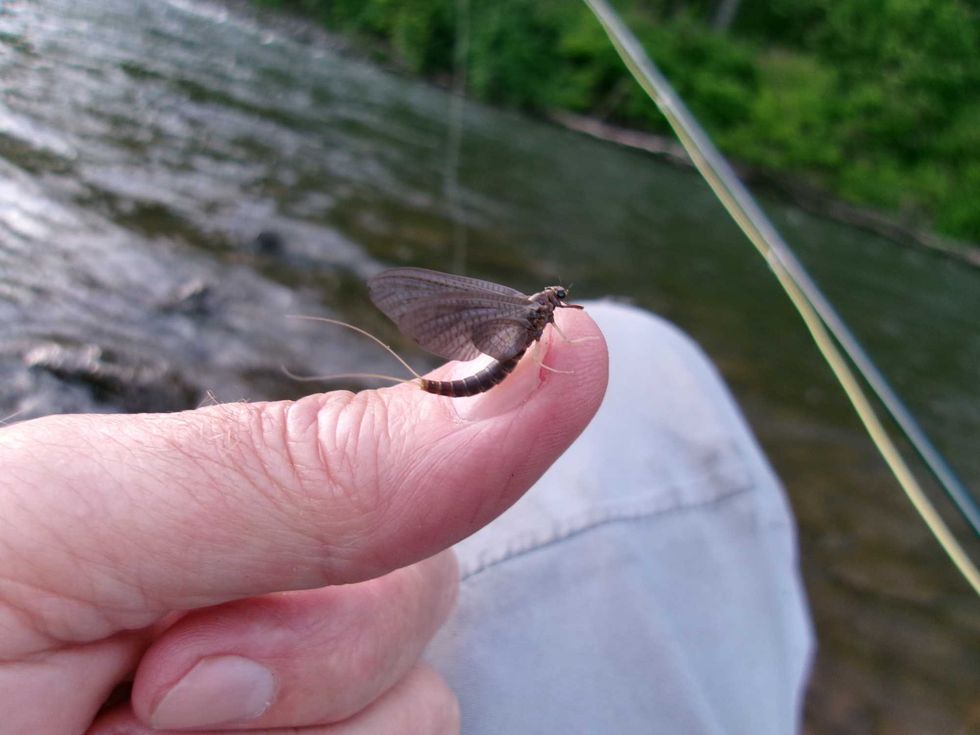 Adult mayfly.Patrick L. Sullivan
The first night it was all browns in the 14-18 range. The second night it was all rainbows in the 10-14 range.
That was early in the trip. Three days in, things warmed up considerably, and without any mitigating rain.
So the range of options was limited, and the preferred time of day was just before dawn. Note I said “preferred.” The actual start time varied depending on how late my attorney, Thos., and I stayed up watching Fu Manchu movies.
I low-crawled up a mountain brook at dawn with a Tenkara rod and did okay with wild browns. On the scramble out I had a brief and alarming encounter with a descendant of the Hound of the Baskervilles, whose owner helpfully said “Don’t make any sudden moves.”
“Any chance of a leash here?” I said in what I hoped was a cheerful, non-threatening tone of voice.
So there’s that.
Gary Dodson alerted us that the Spot That Must Not Be Named was in play. This is a cold mountain brook that enters one of the New York City reservoirs and depending on how full the latter is, forms a channel of cold water that mixes in with the warmer reservoir water. If the timing is right, the angler can latch into some decent trout and whatever else has fins and an inquisitive nature.
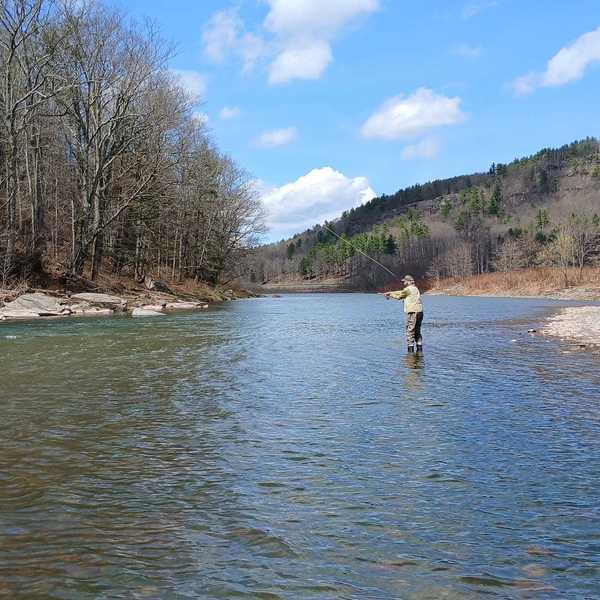
So one morning, while the boys worked the big deep cold pool by the bridge, I made my way downstream, deploying the stream thermometer frequently to try and figure out the magic spot where trout would be comfortable enough to hang out and nosh.
I used a favorite tactic: a dry/dropper rig, with a Chubby Chernobyl as the top fly and de facto bobber, and a series of nymphs and wet flies on an 18-24 inch fluorocarbon tipper dropper, 4X or 5X, tied directly to the bend of the Chubby’s hook.
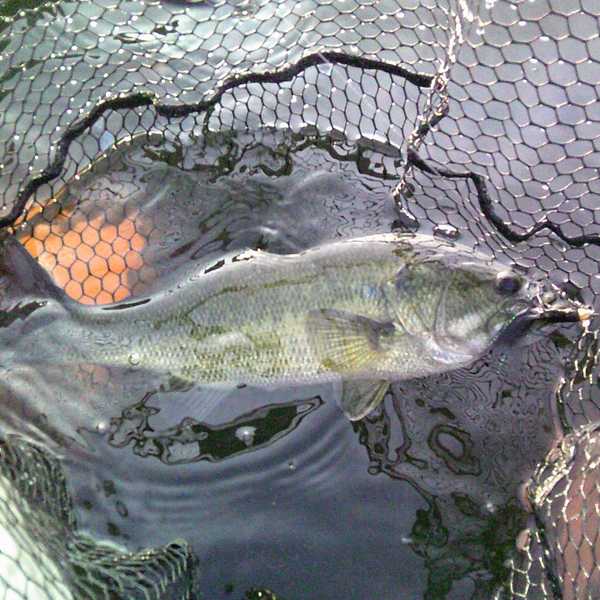
This worked immediately, with good browns in the 16-18 inch range hitting the nymphs and a Jerry Shillcock isonychia wet fly pattern.
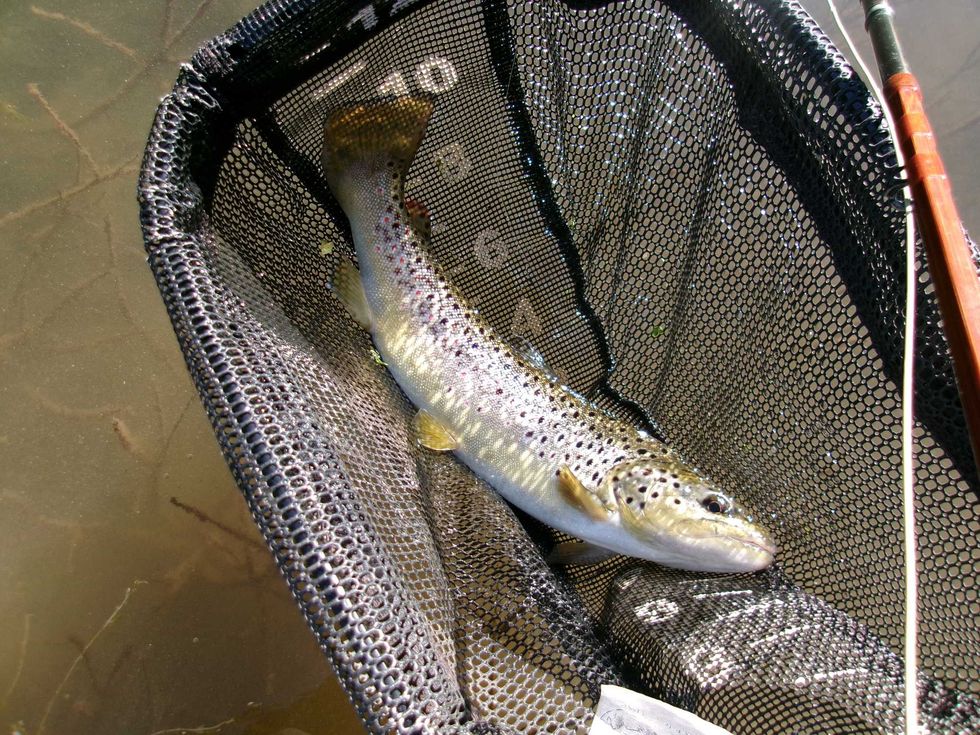 Trout.Patrick L. Sullivan
In a nod to tradition, I used one of my late father’s Orvis Battenkill bamboo rods for the purpose. It is eight feet long in three sections and weighs about 100 pounds. At least that’s how it feels after using graphite rods.
On the last morning the cold to warm water ratio was getting less favorable at the Spot. It was now or never.
Thos. was chucking dries up the big pool.
I waved him down, rerigged him with the dry-dropper combo and gave highly technical instructions.
“Walk around the left of that clump of vegetation, slowly so you don’t make a huge wake, and when the waves die down heave this in there and let it sit, and count to 30. Then twitch it a bit.”
Lo and behold, it worked.
On the medical front, my new right hip didn’t give me any trouble. I didn’t push it either.

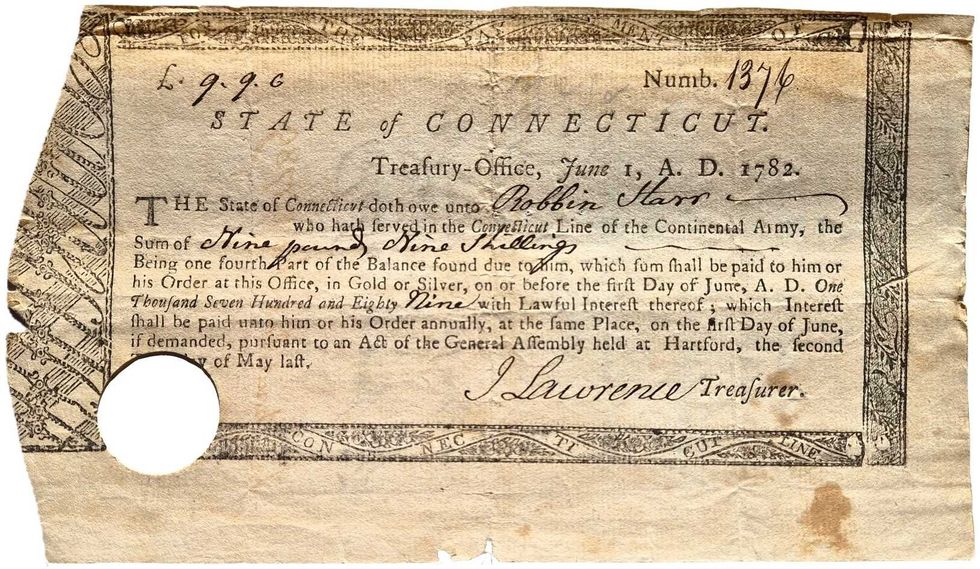 Pay Bill for Robin Starr’s service in the Continental Army.Courtesy the Alex Breanne Corporation
 John Mills speaking at Quinnipiac University.Courtesy the Alex Breanne Corporation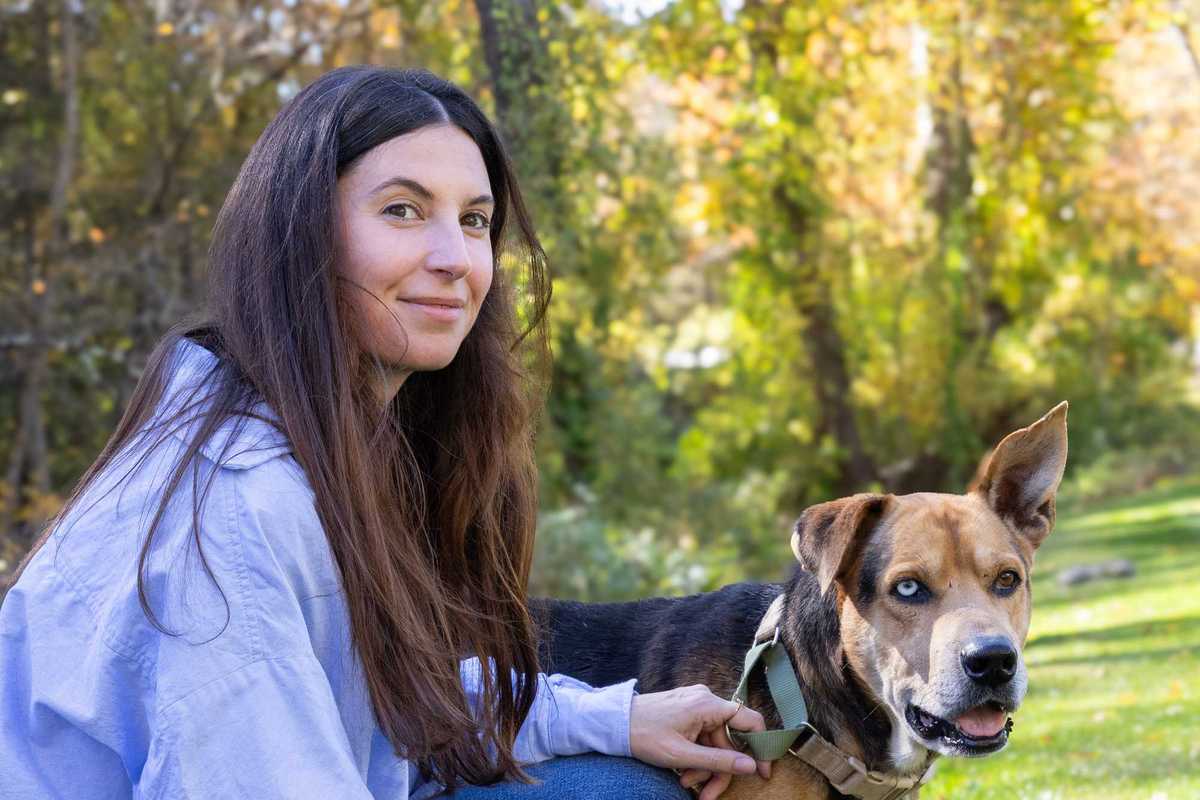
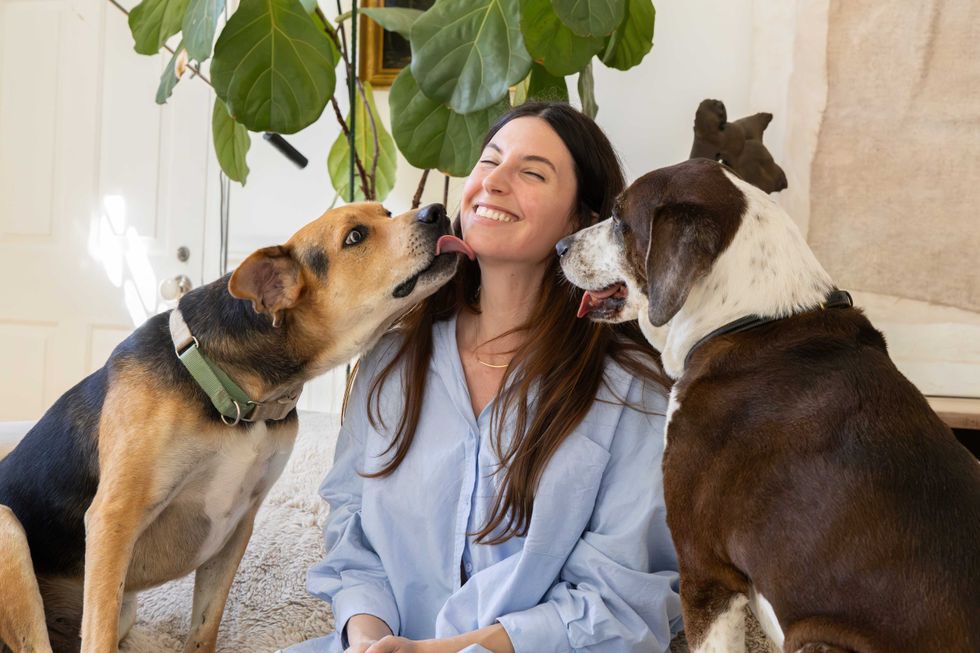 Stephanie Saetta,with her rescue dog George and Blue (left), a shepherd mix awaiting his forever home.Madi Long
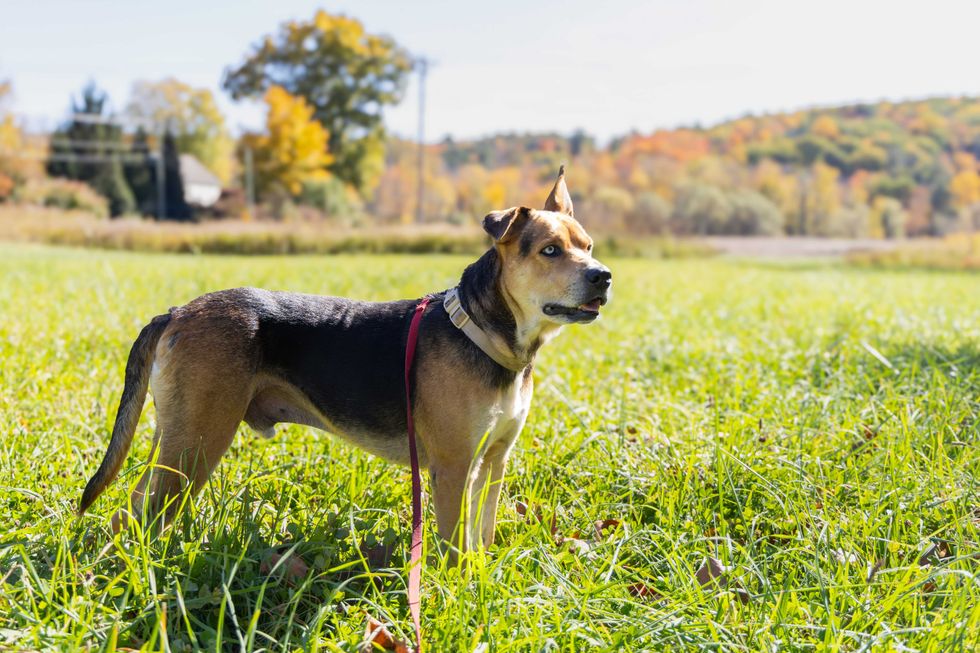 Blue, a 7 year-old Shepard mix, is waiting for his forever home. Madi Long