Like most people, I was appalled by the recently exposed scandals regarding college admissions at a number of elite institutions. Nicknamed “Operation Varsity Blues” by the FBI and other officials investigating the matter, thus far this illegal activity seems to have revolved around one principal fixer who persuaded at least 50 parents of students applying to prominent colleges to pay him to arrange falsification of entry test results; also, to bribe several coaches to petition their admissions committees to give preference to candidates whose athletic credentials were completely falsified. As of now, no students or college administrators other than a few coaches have been implicated.
But these colleges and many others should bear some responsibility for the circumstances that triggered this scandal. Buying admission to prestigious colleges has become all too common, although evidence of illegality is difficult to prove. Universities and other nonprofit institutions are always hard up for money and even the richest schools are not beyond doing most anything that isn’t clearly illegal for a large donation. Often, these gifts have strings attached, like a new building with the donor’s name on it, which may end up committing the institution to substantial additional future spending. As institutions expand, they inevitably cost more to operate.
Tuition at an Ivy League college is now roughly 20 times what it was 50 years ago! It’s not surprising, therefore, that many colleges give some preference to prospective students who can pay their full costs. Even those colleges with large endowments are having a hard time keeping costs down.
Some have cited the advantage given to legacy applicants as a corrupt practice. But there is something to be said for giving some preference to legacies. As colleges have become bigger and more impersonal, students are left with a greater sense of anomie and loneliness. While the forced collegiate bonhomie of earlier times may appear quaint and artificial, nevertheless an increase in school spirit and camaraderie seems warranted in most colleges, especially the elite ones where the competitive atmosphere is most pronounced. More often than not, legacies are the ones who tend to help tie the student body together socially, and are apt to be amongst the most loyal of graduates, by volunteering their efforts as well as making financial contributions (not as large as those of the captains of industry but still enough to keep their colleges prosperous).
Many colleges still use the term “physical education” to refer to the athletic programs at their institutions. It would be wonderful if they took that designation seriously and shaped their sports programs accordingly. Instead of recruiting star athletes from all around the country and beyond, what if they put the emphasis on offering all their students the best physical education? Perhaps students might be required to take so many hours of Phys Ed just as they might be required to have so much science or art to fulfill their degree requirements. And instead of simply doing the activity that they were already proficient in, they might be asked to elect a few semesters of sports they had not already mastered, say a high school football player might learn badminton and throwing the javelin. This would give every student the opportunity to take up new physical activities that would stretch their bodies in addition to their academic pursuits that stretch their minds.
Had the colleges cited in the indictments retreated from semi-professional sports back to amateur physical education as suggested herein, the scandalous bribing of coaches would not have occurred.
Unlike American colleges, institutions of higher learning in the rest of the world do not recruit athletic talent and seldom even offer athletic programs. Although our state university thinks it gains prestige from having championship basketball teams, Ivy League colleges are not going to enhance their reputations by having outstanding athletic teams.
The argument used to be that the sale of tickets for football games provided enough revenue to support all the other athletic programs at a college. But this is no longer usually the case; nowadays, even during “big games,” the Yale Bowl is half empty.
Finally, colleges need to do a better job of picking their future students, which means getting to know them better before selecting them. Perhaps many more interviews by admissions officers might help. Choosing applicants just on the basis of test scores, athletic skills and other quantifiable achievements seems misguided and underlies some of the causes of the scandal. Subjectivity in the selection process and factoring in of many intangibles offers a much richer mix of qualities than formulaic judgments.
If they are doing their jobs well, admissions officers are not selecting competing individuals with the best test scores and extracurricular records, but instead are choosing the best annual class.
Architect Mac Gordon lives in Lakeville.

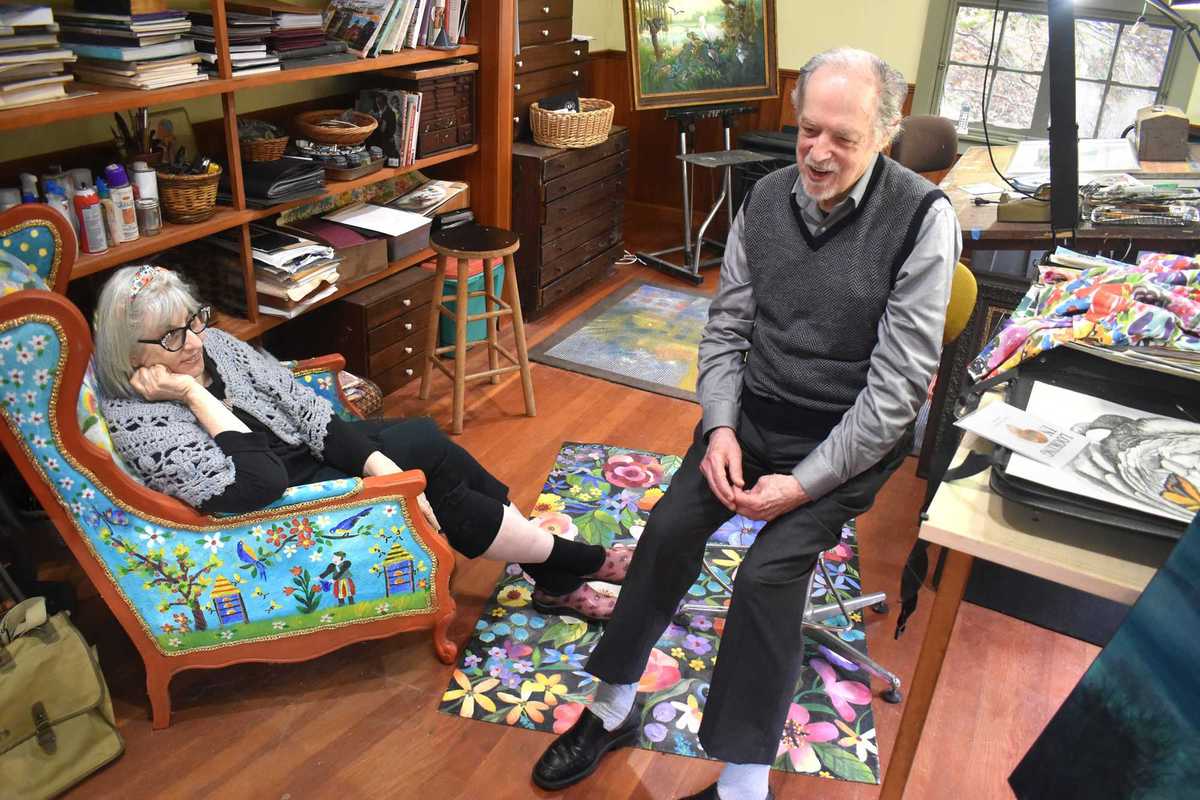
 Justine and Victor Valla in their studio with a painting of Victor’s,”Jonah and the Whale.” Robin Roraback



 A ceramic vase by Kathleen Heidemann.Provided
 Joy Brown’s delightful ceramic sculptures.Provided


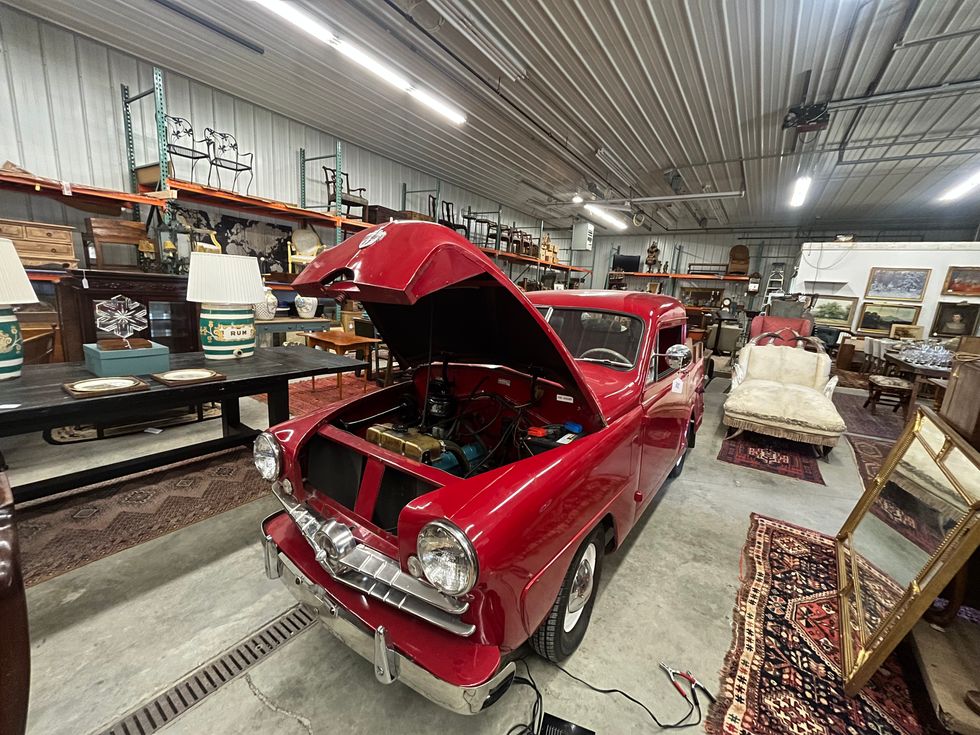 Hundreds of items at Stateline Auctions, including a candy-apple-red Crosley pickup truck.D.H. Callahan