This is a more important movie than a great one. “Selma” takes on the historic voting-rights marches of Martin Luther King from Selma, AL, to the state Capitol steps in Montgomery, marches that led within six months to the Voting Rights Act of 1965. The film is a mostly conventional docudrama focusing on King, his doubts and growing sense of vulnerability and mortality.
“Selma” is about political, social and moral consciousness-raising, the kind we seldom encounter in America anymore, the outrage of a nation — at least a majority of it — at the bigotry and brutality of racism. Set against recent protests of shootings of unarmed black men by white policemen and underscored by the remarkable lyrics of John Legend and Common in “Glory” on the soundtrack,
the clear implication is that the march on Montgomery was only a stage in the long journey toward the goal of equality that continues in 2015.
Considered as a movie only, “Selma” is uneven. First-time theatrical-film director Ava DuVernay, who rewrote much of Paul Webb’s script, was limited by a budget of only $20 million, not much for filming on location with such a large cast. Her shot-framing is largely unimaginative — except in the terrific boom shot of the beginning of the first march taken from over the top of Selma’s Edmund Pettus Bridge. And her colors are oddly yellowish and flat, with a recurrent glare across the bottom of the frame.
Arguments about the historical accuracy of the film have abounded in the media, especially since the crucial center of the story is the disagreement and confrontation between King and President Lyndon B. Johnson over priorities: Johnson wanted to press his War on Poverty as a way to help both black and white people over time; King insisted a national voting rights law would help oppressed Southern black people immediately.
Defenders of Johnson’s legacy have insisted that he was always in favor of voting rights, that he even encouraged the Selma marches. Others, including survivors of the marches, say Johnson supported them after the fact. DuVernay has not been helpful in interviews with her glib insistence that she is not a historian and is more interested in drama than fact, as she demonstrates in the film’s opening minutes.
We first meet King (British actor David Oyelowo, who brings more angst than majesty to the role) in Oslo with his wife, Coretta (the glowing Carmen Ejogo), to receive the 1964 Nobel Peace Prize. Moments later we witness the bombing of the 16th Street Baptist Church in Birmingham, AL, filmed as if body parts are floating in bloody water. This awkward juxtaposition may be dramatic, but it underlines DuVernay’s rearranging of history: the bombing actually took place more than a year before the Nobel Award.
King may be the focus of the movie, but it is an ensemble piece with a large cast of superb actors. Oprah Winfrey, a producer of the film along with Brad Pitt, plays hospice nurse Annie Lee Cooper, whose heartbreaking attempt to register to vote in an early scene lets us see the double standards of Alabama white supremacy; Cuba Gooding Jr. plays lawyer Fred Gray; Martin Sheen is no-nonsense federal Judge Frank Johnson and Nigel Thatch plays Malcolm X, who makes a brief appearance in Selma only three weeks before his assassination in New York City.
Not all the casting choices work, however. Tom Wilkinson’s LBJ never catches the man’s sheer physical impact and substitutes condescension for persuasion. Dylan Baker brings little authenticity to J. Edgar Hoover, and Tim Roth is almost ridiculous as Gov. George Wallace.
But in those moments when “Selma” works, it soars. The brutal, savage attack on participants in the first march across the bridge are stunningly staged. The courage and determination of the protesters is summed up in a short scene with actor Henry G. Sanders as the 82-year-old grandfather of a young man killed by Selma police. And when the final march reaches Montgomery, Oyelowo rises to the occasion with the promise — a paraphrase of King’s actual words, since DuVernay was not allowed to use any of the actual speeches, which are owned by Steven Spielberg — “Our freedom will soon be upon us.”
“Selma” is playing in area theaters. It is rated PG-13.
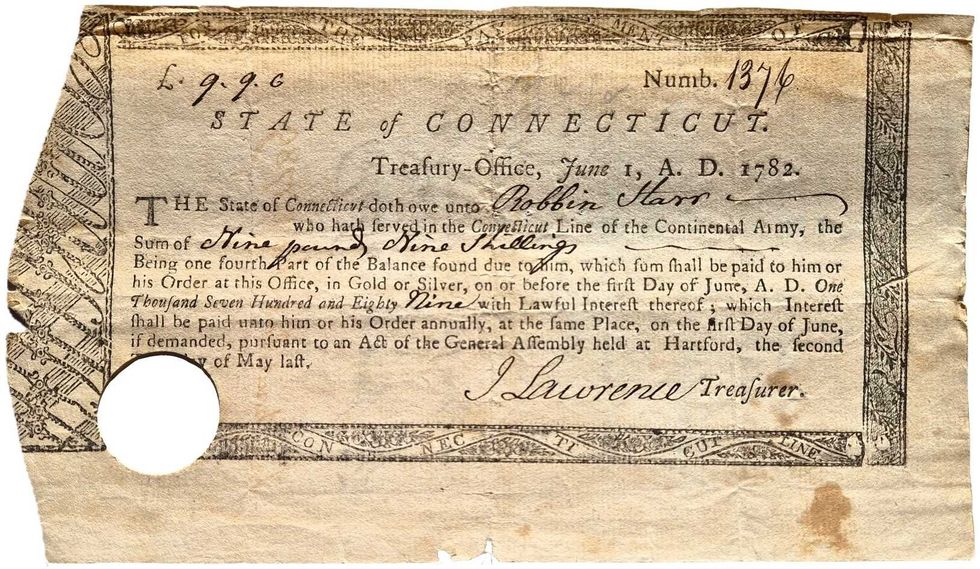 Pay Bill for Robin Starr’s service in the Continental Army.Courtesy the Alex Breanne Corporation
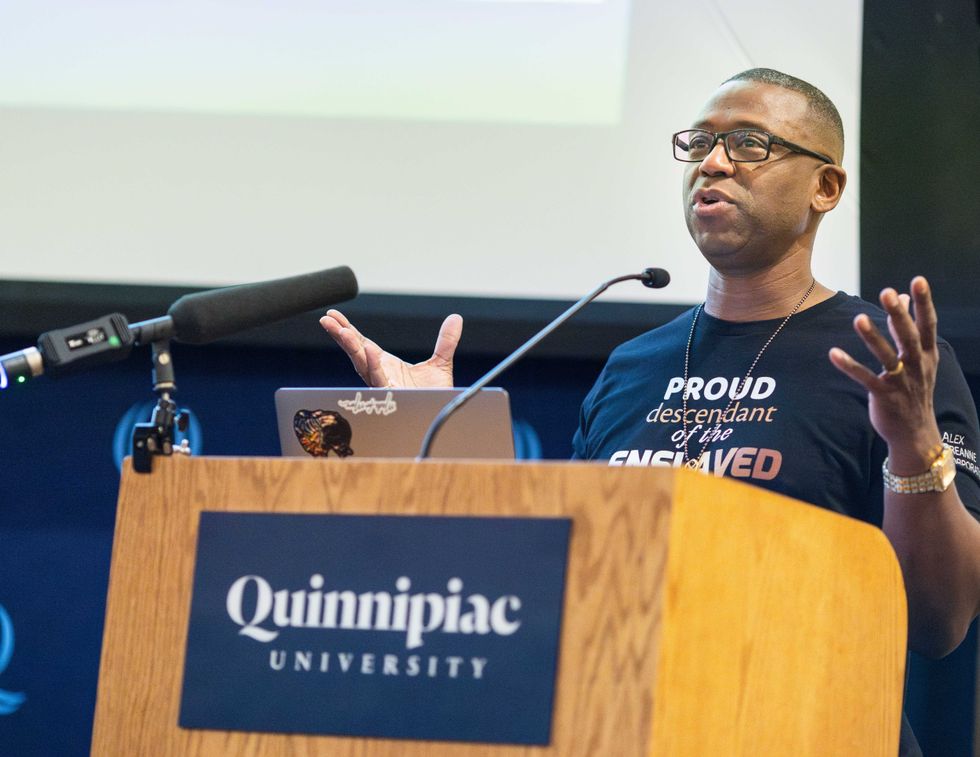 John Mills speaking at Quinnipiac University.Courtesy the Alex Breanne Corporation
 Stephanie Saetta,with her rescue dog George and Blue (left), a shepherd mix awaiting his forever home.Madi Long
 Blue, a 7 year-old Shepard mix, is waiting for his forever home. Madi Long