Volunteers needed for local rescue squad

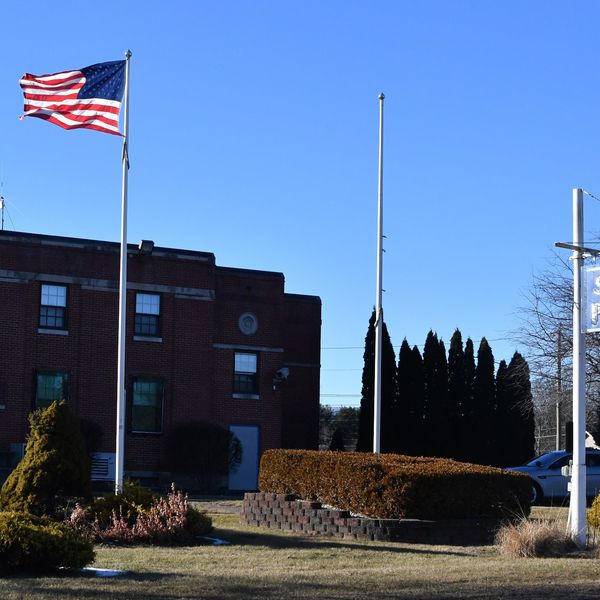
PINE PLAINS — The Pine Plains Rescue Squad, a 100 percent volunteer organization that has been providing emergency medical services for the community for more than 50 years, is sending out an ABP. It needs more volunteers, and soon.

This isn’t an isolated case. The fire departments from Millerton, Amenia, Wassaic, Pine Plains and Stanfordville have all been discussing the shortage in Emergency Medical Technician (EMT) volunteers.

A group of fire commissioners, town supervisors and members of the local rescue squads has been meeting since January, and as Pine Plains Rescue Squad Captain Mike Autenrieth acknowledged, there are basically two options: finding more volunteers or hiring some form of a paid service, which would cost taxpayers much more money.

The group, which is headed informally by Pine Plains town Supervisor Gregg Pulver, is still working toward trying to come up with a cost estimate for a paid service, to be shared between the various fire districts to offset costs.

The Pine Plains squad is determined to tackle the volunteer problem head on. The current rescue squad consists of only eight active volunteers serving a community of over 1,500 people. Yet as the squad acknowledged, it would only take another 10 squad members to solve many of its problems.

The current lack of volunteers has resulted in a decrease in the volunteer squad’s responses to emergency calls, which means the community is relying more and more on costly paid advance life support services, with slower response times and increased financial burdens on the patients and their families.

For example, the cost of an ambulance ride from the Pine Plains Rescue Squad is free for the patient (covered by the town’s budget) but when a paid service is called in the individual is responsible for those costs, which quickly reach hundreds of dollars.

The squad reports that there are approximately two EMS calls to every one fire call, yet local fire departments are not faced with the same volunteer shortage problems.

But, as Autenrieth and his crew pointed out, there are many advantages to joining the rescue squad.

“It’s a worthwhile education,†he said, adding that the town covers the cost for that education, “and there are all sorts of opportunities.â€

The skills learned while volunteering can easily transfer to a paid position with Northern Dutchess Paramedics (NDP) or other paid response units, and Autenrieth added that it’s possible to volunteer and work with a paid service at the same time. Even a rollover program, where students coming out of high school could utilize the free training the town offered for a year or two before getting into the paid business, would be a welcome alternative for the squad.

Being an EMT often isn’t as physically demanding as fire fighting, meaning a wider age range of residents could volunteer. And while EMTs are required to be recertified every few years (firefighters aren’t), Autenrieth said recertification classes are much less demanding than the initial courses.

But most of all, the squad members agreed, the true rewards of being an EMT are the thank you cards that the squad receives in the mail every month after responding to a call, or the gratitude of a neighbor after an emergency.

“The pay is not in your pocket, it’s in your heart,†explained EMT driver Jan Stoutenburgh.

The town of Milan, facing similar problems, has already installed signs looking for volunteers around the town. Jon DePreter, DePreter Designs, is working on some new designs to catch the eye of potential volunteers in Pine Plains.

Anyone interested in volunteering for the Pine Plains Rescue Squad can contact Autenrieth at 845-249-3581 or at ranger_mike231@yahoo.com.
Latest News

A new life for Barrington Hall

A new life for Barrington Hall

Dan Baker, left, and Daniel Latzman at Barrington Hall in Great Barrington.

Provided

Barrington Hall in Great Barrington has hosted generations of weddings, proms and community gatherings. When Dan Baker and Daniel Latzman took over the venue last summer, they stepped into that history with a plan not just to preserve it, but to reshape how the space serves the community today.

Barrington Hall is designed for gathering, for shared experience, for the simple act of being together. At a time when connection is often filtered through screens and distraction, their vision is grounded in something simple and increasingly rare: real human connection.

Keep ReadingShow less

Gail Rothschild’s threads of time

Gail Rothschild’s threads of time

Gail Rothschild with her painting “Dead Sea Linen III (73 x 58 inches, 2024, acrylic on canvas.

Natalia Zukerman

There is a moment, looking at a painting by Gail Rothschild, when you realize you are not looking at a painting so much as a map of time. Threads become brushstrokes; fragments become fields of color; something once held in the hand becomes something you stand in front of, both still and in a constant process of changing.

“Textiles connect people,” Rothschild said. “Textiles are something that we’re all intimately involved with, but we take it for granted.”

Keep ReadingShow less

Sherman Players celebrate a century of community theater

Sherman Players celebrate a century of community theater

Cast of “Laughter on the 23rd Floor” from left to right. Tara Vega, Steve Zerilli, Bob Cady (Standing) Seated at the table: Andrew Blanchard, Jon Barker, Colin McLoone, Chris Bird, Rebecca Annalise, Adam Battlestein

Provided

For a century, the Sherman Players have turned a former 19th-century church into a stage where neighbors become castmates, volunteers power productions and community is the main attraction. The company marks its 100th season with a lineup that blends classic works, new writing and homegrown talent.

New England has a long history of community theater and its role in strengthening civic life. The Sherman Players remain a vital example, mounting intimate, noncommercial productions that draw on local participation and speak to the current cultural moment.

Keep ReadingShow less
google preferred source

Want more of our stories on Google? Click here to make us a Preferred Source.

Reimagining opera for a new generation

Reimagining opera for a new generation

Stage director Geoffrey Larson signs autographs for some of the kids after a family performance.

Provided

For those curious about opera but unsure where to begin, the Mahaiwe Theater in Great Barrington will offer an accessible entry point with “Once Upon an Opera,” a free, family-friendly program on Sunday, April 12, at 2 p.m. The event is designed for opera newcomers and aficionados alike and will include selections from some of opera’s most beloved works.

Luca Antonucci, artistic coordinator, assistant conductor and chorus master for the Berkshire Opera Festival, said the idea first materialized three years ago.

Keep ReadingShow less
BSO charts future amid leadership transition and financial strain

Aerial view of The Shed at Tanglewood in Lenox, Massachusetts.

Provided

The Boston Symphony Orchestra is outlining its path forward following the announcement that music director Andris Nelsons will step down after the 2027 Tanglewood season, closing a 13-year tenure.

In a letter to supporters, the BSO’s Board of Trustees acknowledged that the news has been difficult for many in its community, while emphasizing gratitude for Nelsons’ leadership and plans to celebrate his final season.

Keep ReadingShow less
A tradition of lamb for Easter and Passover

Roasted lamb

Provided

Preparing lamb for the observance of Easter is a long-standing tradition in many cultures, symbolizing new life and purity. For Christians, Easter marks the end of Lenten fasting, allowing for a celebratory feast. A popular choice is roast lamb, often prepared with rosemary, garlic or lemon. It is traditional to serve mint sauce or mint jelly at the table.

The Hebrew Bible suggests that the last plague God inflicted on the Egyptians, to secure the Israelites’ release from slavery, was to kill the firstborn son in every Egyptian home. To differentiate the Israelites from the Egyptians, God instructed them to mark their doorposts with the blood of a lamb. Today, Jews, Christians and Muslims generally believe that God would have known who was Israelite and who was Egyptian without such a sign, but views of God’s omnipotence in the Abrahamic faiths have evolved over the millennia.

Keep ReadingShow less
google preferred source

Want more of our stories on Google? Click here to make us a Preferred Source.

google preferred source

Want more of our stories on Google? Click here to make us a Preferred Source.