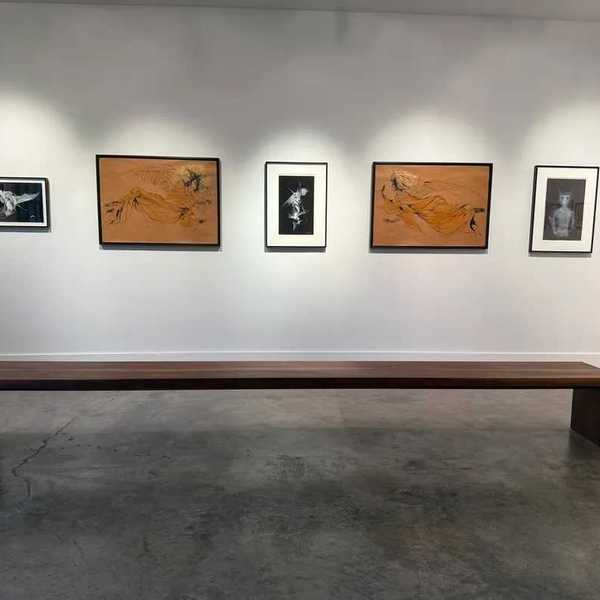
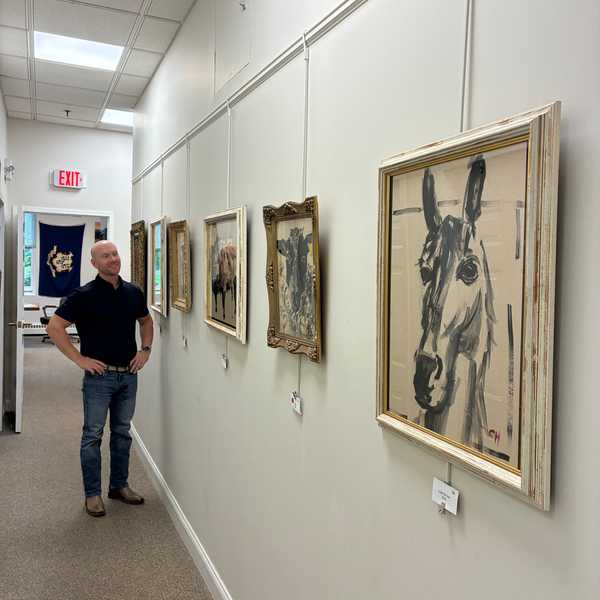
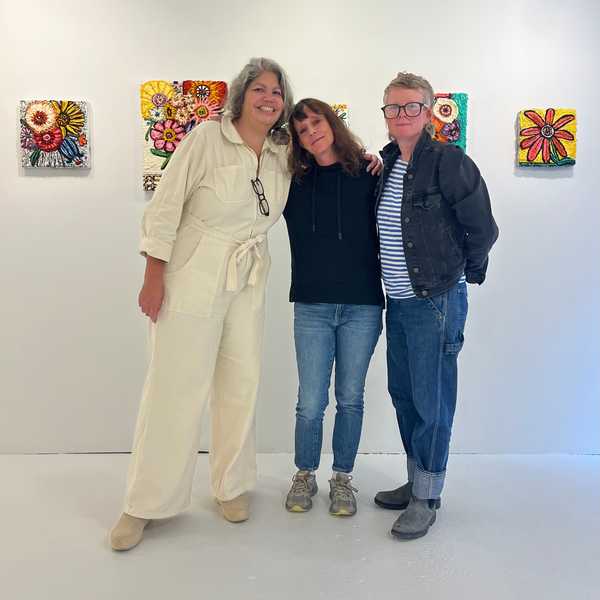
On Wednesday, Sept. 2, the Tremaine Gallery at the Hotchkiss School in Lakeville opened its new show, “Field Notes,” with works by multidisciplinary artist Eve Biddle.
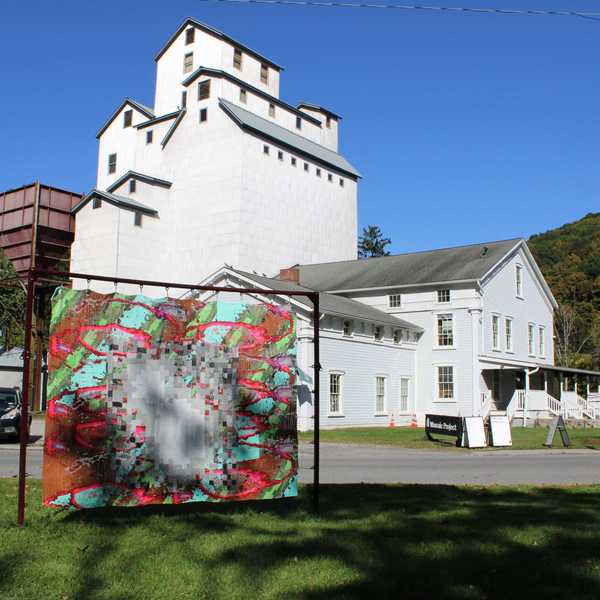
Biddle is best known in the area as one of the founders of the iconic Wassaic Project in the hamlet of Wassaic, New York. The project, which is part art incubator, part gallery, part studio and a whole lot of community, is housed in an old converted grain elevator right next to the Metro North train tracks. It’s credited by many as the spark that revitalized the hamlet, which now boasts a craft bakery, a curated wine and liquor store, a pizza hot spot, the Lantern.
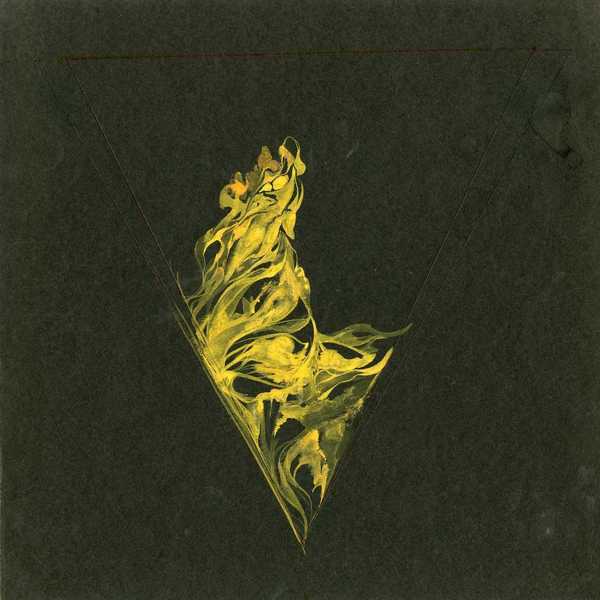
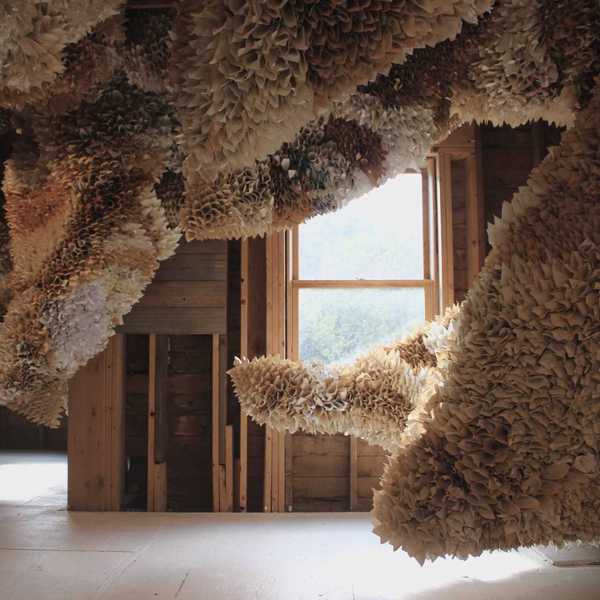
But Biddle is not just a community builder. She’s an artist herself with a robust tool belt of skills. Of those tools, sculpture, object-making, photography, and screen printing are highlighted in “Field Notes.” It’s partially due to her robust skillset, and multiple medium pieces that she hesitates to call herself a sculptor or photographer. Biddle is an artist, and to her, that means finding ways to bring her ideas to life, independent of specific disciplines.
The ambiguity of her categorization can be seen in her work as well. She seems to focus on the space between what is natural and how the human hand, or even technology can alter it in ways that turn it into art. One piece features a picture of flowers growing in the dirt. But Biddle takes this natural, innocuous plant and processes the photo through software that allows her to use small dots to rebuild the image, then silkscreens the result onto board. Yes, it’s still a photo of flowers, but it’s been manipulated by man and machine to create something unlike its original form.
Clearly, the artist’s hands play a major role. This is sometimes implied in the imperfections of a ceramic sculpture, or in the knowledge that she held a camera to snap a shot, but it’s also literal. Multiple pieces feature her hands, and the hands of fellow artists interacting with or even manipulating nature. While just one of many apparent themes in “Field Notes,” it’s even more central in Biddle’s show at the Portland Museum of Art in Maine, which runs through January of next year.
Her hands can also be seen in the finger imprints she left on a cast of a spine. The sculpture was made of molten glass poured over a sand and silica mold at the RISD Hot Shop in Rhode Island. The thematic implications of a glass spine that resembles an amorphous jellyfish might make a Hotchkiss art student want to raise their hand, confident they have the right answer. Biddle rejects the notion of right or wrong meanings in art and doesn’t see it as the artist’s job to define it. It’s one of the reasons the show features snakes, which have been used throughout history to mean wildly different things. Are they evil incarnate, or do they represent fertility? Both can work depending on your perspective.
These are some of the intangible lessons that Biddle and Tremaine Gallery director Terri Moore want to impart to the students. Beyond Biddle’s show is a short tenure as Hotchkiss artist in residence, but she’ll be the first to point out that she is not a teacher. That’s exactly what Moore is looking for. She wants the young artists to get experience from a working professional who has not trained to teach. From Biddle, students will get a different perspective than the ones they’re used to from faculty. And thanks to her role in facilitating the growth of young artists at the Wassaic Project, she might be the perfect person for such a task.
“Field Notes” will be on view at the Tremaine Gallery through Oct. 18 with an opening reception on Saturday, Sept. 19. and an artist’s talk on Thursday, Sept. 17. To learn more about Eve Biddle, visit
evebiddle.works.