Thank you!
Your support is sustaining the future of local news in our communities.

Winter athletes lead charge for more spectator support

Winter athletes lead charge for more spectator support

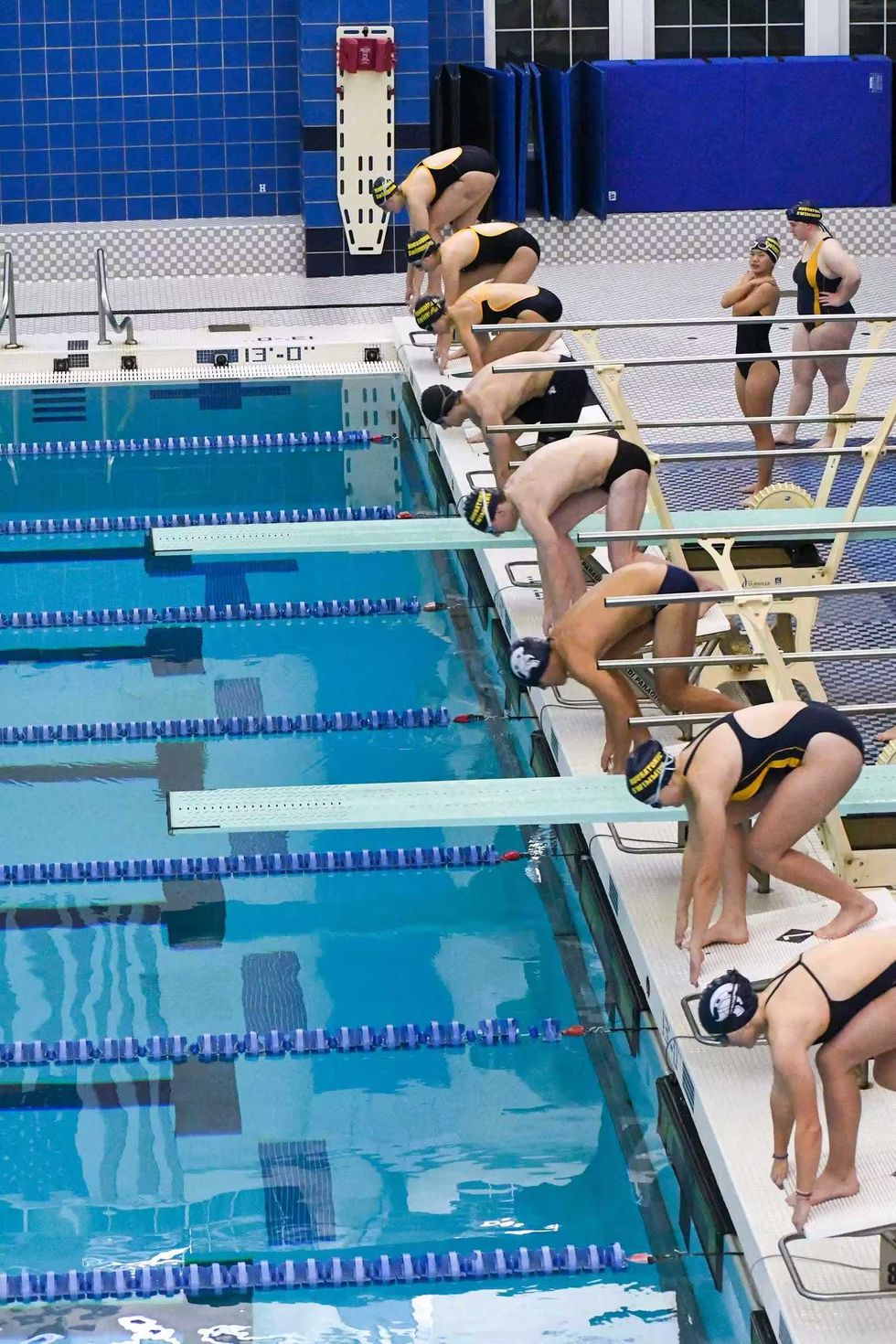
Housatonic Valley Regional High School’s varsity swim team hosted a meet against Shepaug Valley High School on Wednesday, Jan. 21. Shepaug’s team was notably larger, putting forth four relay teams to Housatonic’s one relay team.

Riley Klein

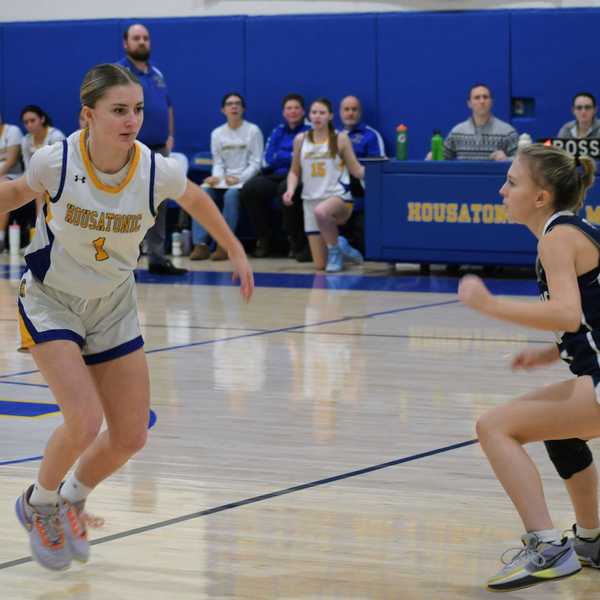
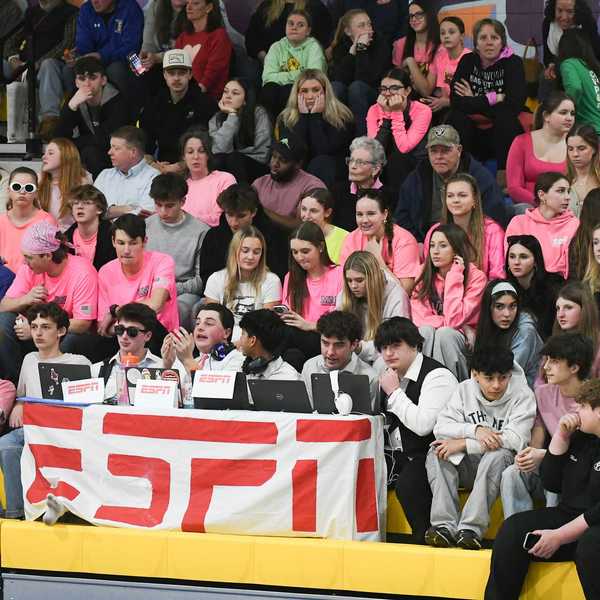
At Housatonic Valley Regional High School, winter brings packed bleachers, ecstatic student sections, and distinctive energy for basketball season. The team culture and overall energy result in a large turnout at the home games. But beyond basketball, other winter athletes endure long practices and tough competitions — often with far less recognition.

While basketball tends to draw large crowds and headlines, sports like swim, ski, indoor track, and hockey compete in front of much smaller audiences. Other than the students directly involved, many people in the school community are unaware of when these teams compete, who their standout athletes are, and how they perform throughout the season.

Part of the difference in involvement comes down to location and the nature of the sports themselves. “It’s much easier to walk into the gym than it is to walk onto a ski course,” athletic director Anne MacNeil said. Basketball is a team oriented sport played in the school gym, making attendance easy. New traditions like rival night and themed games also increase excitement. MacNeil explained that when the ice hockey team used to compete at Hotchkiss, the games were widely attended. Many winter sports are also more individual based, making it harder to build hype around one race or run than a team competition.

Beyond the challenge of drawing spectators, the teams themselves are also limited in size. Housatonic’s small enrollment contributes to smaller rosters, especially in nontraditional sports. Cost and access also make some winter sports harder for students to become involved with. “You have to be introduced to skiing. You have to be introduced to hockey,” MacNeil said. “If you look at what it takes to play those sports, there’s a money factor involved.”

For the swim team, the difference in team culture is notable. Senior Katie Crane played basketball her freshman year before fully committing to the swim team. “When I played basketball, we weren’t just showing up for our team, we were showing up for the student section too,” she said. “For swim, what fueled our energy was just the team itself.”
Riley Klein

Swim meets rarely draw big crowds, but some competitors said that reduced the pressure. “I love swim because there isn’t that competitiveness and pressure,” Crane said. “I just showed up and I would race, but I was racing for myself.” Swimmers said their teammates and coaches were supportive, even if a big audience wasn’t there to cheer them on.

The lack of visibility can also be frustrating. “It definitely feels like I put up big performances without it getting noticed because I made Berkshire League first team and no one knows,” freshman Phoebe Conklin said. “For basketball and soccer, it’s this huge deal when you make first team.”

The ski team faces similar struggles. “It’s actually a fun spectator sport,” said junior Danny Lesch. Because races are largely individual, standout performances don’t always translate into team wins, even though the team has many accomplished athletes. Lesch said the individual athletes then get less recognition despite high levels of personal success. “What a lot of people don’t realize is that probably the most successful students we have at their sport have been our best skiers,” Lesch said.


dWinter Cheney sports three gold medals after a victorious performance in the Berkshire Hills Ski League championships Wednesday, Feb. 18.

Despite the recognition gap between basketball and other winter sports, athletes and community members have recently made larger efforts to improve visibility. “That’s always been an area that I have struggled to do better in,” MacNeil said. “In the last two years, I’ve really focused on our Instagram account and trying to spotlight people.” While trying her best to equally represent each sport, MacNeil also relies on athletes themselves to send photos and stats. “I can’t be everywhere at once,” she said.

Looking ahead, the future of other sports at Housatonic may depend on overcoming challenges tied to the school’s small enrollment. “I just had to cancel girls’ lacrosse,” MacNeil said. Increasing visibility and community support can help keep teams active and competitive. Greater recognition can help spark student interest, increasing participation and reminding the community that success exists across sports with less publicity. For members of the ski team, even small efforts can help make a difference. “What we hope for is one of the races next year, we get a crowd, get people to come, just one race,” Lesch said.


Latest News

Angry bees close Mudge Pond Beach

Angry bees close Mudge Pond Beach

Officials closed the Sharon town beach at Mudge Pond on Wednesday, July 15, after a fallen tree limb exposed a large beehive. The beach is expected to reopen Thursday.

Alec Linden

SHARON – The town beach on Mudge Pond closed on Wednesday, July 15, but the cause wasn’t the smoky haze drifting in from Canadian wildfires – it was angry bees.

According to Sharon’s Parks and Recreation Director Bryan Failla, a large limb fell from an old tree near the lifeguard stand overnight, exposing a hole that houses a large beehive. He said the town made the decision to close the beach Wednesday morning “out of an abundance of caution.”

Keep ReadingShow less
Millerton dressmaker forged path as early businesswoman
Mary Kisselbrack, left, and her husband, George.
Provided

If you’ve driven down Main Street in Millerton, you’ve passed the former home and shop of one of the village’s earliest female entrepreneurs. At a time when most businesses were owned by men, Mary Kisselbrack made a name for herself in the late 1800s as a well-respected milliner and dressmaker.

On April 11, 1891, train conductor George Kisselbrack purchased a 124-by-232-foot vacant lot at 54 Main St. and hired locally renowned builders Beers and Trafford to design what would become their home and Mary’s business.

Keep ReadingShow less
Wastewater project coming to fruition after decades of debate

Millerton’s business community will soon see the completion of a public wastewater system, addressing what local officials and business owners have called a major constraint on commercial development in the community for decades.

The $13.8 million project, which is expected to serve the core of the Village of Millerton and a commercial stretch of the Town of North East along U.S. Route 44, represents one of the largest infrastructure investments in the community in decades, and brings an end to calls for a sewer system that stretch back to World War II. Officials say the system will safeguard local waterways while creating a foundation for long-term economic stability.

Keep ReadingShow less
google preferred source

Want more of our stories on Google? Click here to make us a Preferred Source.

Millerton Moviehouse marks 120 years with structural upgrades

Wooden beams made from tree trunks comprise the load-bearing structure under Millerton’s Moviehouse.

Graham Corrigan

There are a handful of buildings that have stood the test of time over Millerton’s 175-year history. But if there’s one that stands out as a singular representation of the town, it’s the Millerton Moviehouse and its iconic clock tower.

Built in 1903 as a grange hall, it was soon converted into a movie theater with a second-floor ballroom. It was one of a handful of buildings that came to define the town in the following decades, standing tall across the street from the Episcopal Church and Millerton Inn, next to Terni’s, and up the hill from Millerton’s train station.

Keep ReadingShow less
Irondale Schoolhouse: a piece of living history

Ralph Fedele sits at a desk in the historic Irondale Schoolhouse, which he led the effort to relocate to downtown Millerton.

Aly Morrissey
“It was in dire straits. Right on the road, but beautiful. I remember thinking, ‘Wouldn’t that be a great building to move into the village?’” —Ralph Fedele

A one-room schoolhouse sits on Main Street along the Harlem Valley Rail Trail, offering an opportunity for locals and visitors to step inside a piece of living history.

The Irondale Schoolhouse that now sits in downtown Millerton was not originally located on Main Street. The building was first constructed in 1858 along what is now Route 22 in the Irondale section of town, defined by Irondale road and the Old Mill that still sits along Webatuck Creek. At the time, the schoolhouse was one of 14 that served the Town of North East’s children.

Keep ReadingShow less
New Water Department building expected by summer’s end

Millerton’s former Water Department building, ravaged by fire, as it awaited demolition in summer 2025.

Aly Morrissey

Nearly 18 months after a fire destroyed Millerton’s Public Works building, which housed the Highway Department and Water Department, construction is expected to begin within weeks on a new Water Department facility and pumphouse.

The new building would restore the village’s full water pumping capacity and allow officials to end the state of emergency declared after the fire. Village officials are also planning a separate Highway garage, with details of that project still being finalized.

Keep ReadingShow less
google preferred source

Want more of our stories on Google? Click here to make us a Preferred Source.

google preferred source

Want more of our stories on Google? Click here to make us a Preferred Source.