The architecture of James E. Ware, alive and well, in Millbrook

MILLBROOK — James E. Ware was well known for his architectural style in New York City. After all, he was the one who designed the Osborne Hotel, which at the time was the tallest building in Manhattan. He used elevators, which was rare in those days. He began his practice in 1869.

He also designed the Twelfth Regiment Armory on Columbus Avenue and was responsible for the “dumbbell” design of tenement housing. The first two fireproof warehouses in the city were also designed by Ware.

Patrick D. Wing was asked to speak about Ware at the April 20 Millbrook Historical Society meeting, as a great many village buildings were designed by Ware.

Wing showed photos of edifices designed by Ware, some still standing today, on Main and Front streets, Franklin, Maple and Merritt avenues. Although he designed many houses on the same street, each house was different. None was a cookie cutter image of another. While some have since been torn down, others have been lovingly refurbished and cared for.

Wing also spoke about the contributions made by Italian stone masons, who were builders, architects and residents themselves. He mentioned in particular the name Ciferri, still known today. 

Besides private homes, Ware also designed large mansions and commercial buildings. Through connections in the city, especially around Madison Avenue, he became acquainted with Henry James Davison, a successful lawyer who built his own mansion. 

Wing said the now decrepit Halcyon Hall, originally built as a resort by several investors, was most likely built because Davison wanted to draw the wealthy to Millbrook. The village was far from the beaten path for most, though, and the resort failed. It was later sold and became Bennett College. The hall remained after the college failed,  and still stands.

Ware also met Charles Dieterich, a founder of Union Carbide. He designed Daheim Castle for Dieterich, which later became known as the Hitchcock Estate — infamous as the estate where the psychedelic Timothy Leary lived from 1963 until he was evicted in 1968. It was popular among hippies and became a steady site of drug raids. Leary eventually moved to California, but the gatehouse still stands at the juncture at Franklin Avenue and Route 44. The estate is privately owned.

Ware’s early work featured many castle-like touches: parapets, towers and stained glass. He worked with some of the most famous artists of the day, including Louis Tiffany and sculptor Augustus Saint-Gaudens. He was influenced by French and Italian styles, but also occasionally by styles like Queen Anne, Roman, Colonial and arts and crafts.

Walt Disney, Wing said, was well aware of Ware’s work and acknowledged he had Ware in mind when he created his theme parks.

Ware designed Altamont for John Wing, a successful local Quaker, who made his money in the soda ash business. This came about, according to Wing, because Davison didn’t want to be the only wealthy estate baron in Millbrook. He convinced Dieterich and some others to build on the hills in Millbrook. Thus the “hilltoppers” were born. As evidence of their great wealth, many had bowling alleys, tennis courts, magnificent stained glass, marble and other special features at their estates.

One Ware building still used every day is central to the village of Millbrook. Donated by the Thorne family, and designed by Ware, the building was originally the YMCA, at the juncture of Friendly Lane and Merritt Avenue. It is now Village Hall. 

Wing’s book, “Town and Country: the Architecture of James E. Ware,” is expected to be released this time next year. It contains two chapters devoted entirely to Ware and his contributions to Millbrook. 

Wing, a fine art artist, is from Millbrook. His work, shown throughout the U.S., is in private collections nationwide and has been sold through Sotheby’s.

Latest News

Living art takes center stage in the Berkshires

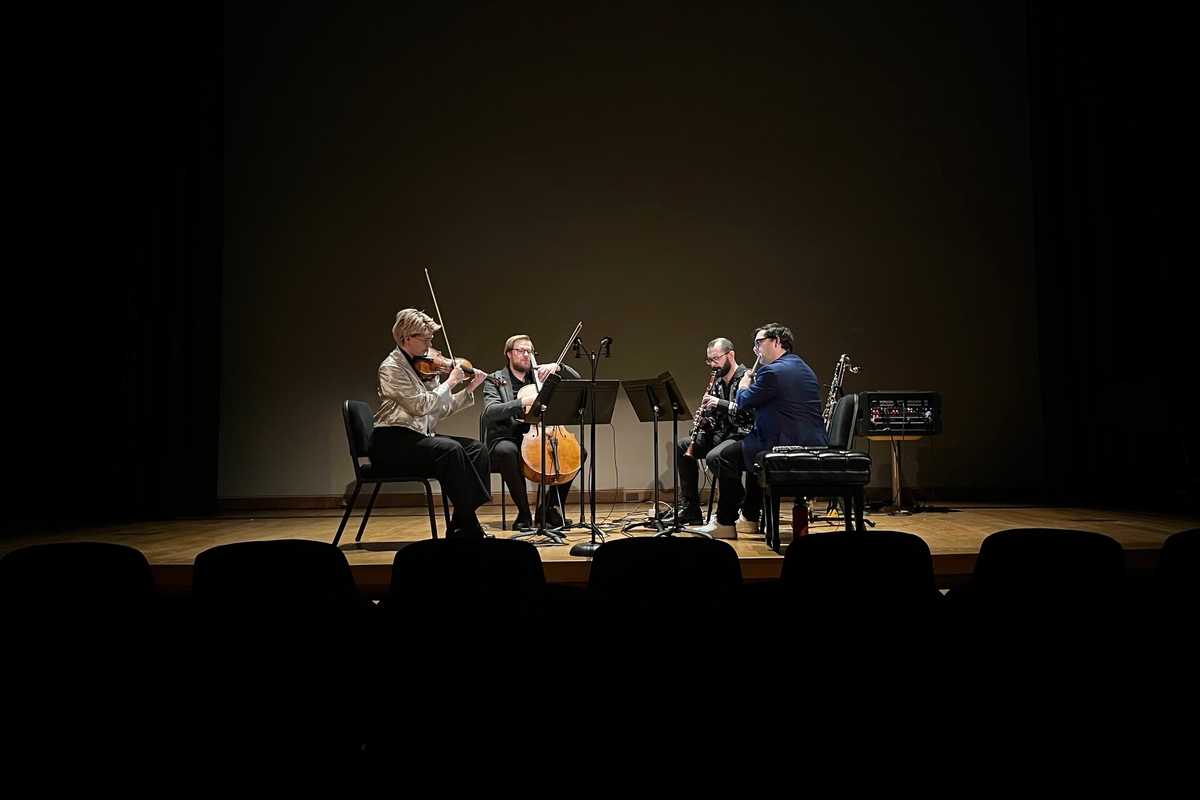
Contemporary chamber musicians, HUB, performing at The Clark.

D.H. Callahan

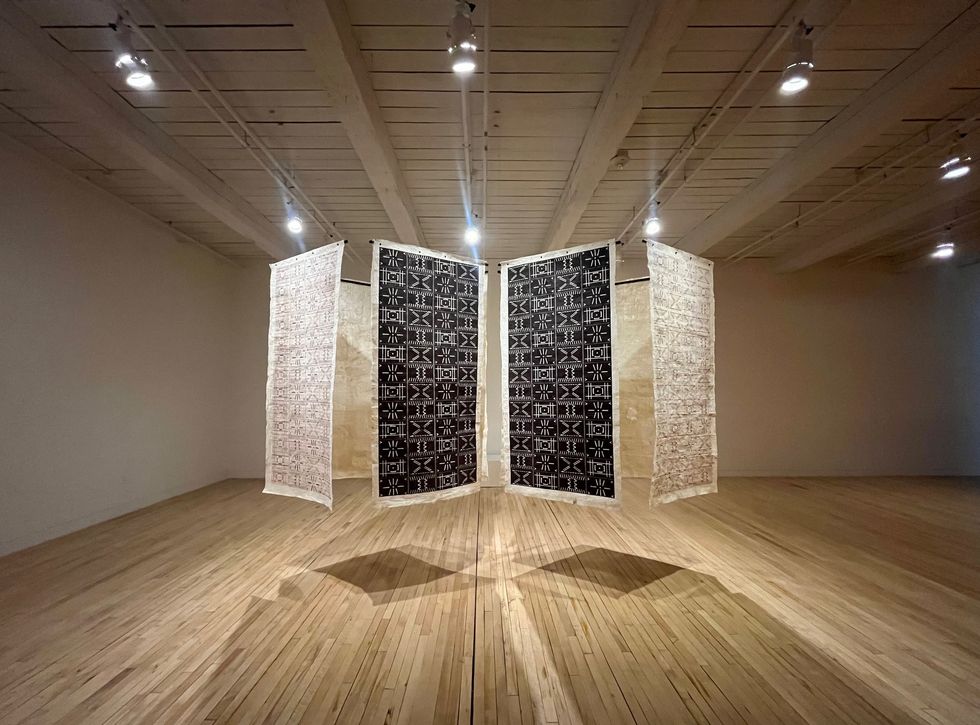
Northwestern Massachusetts may sometimes feel remote, but last weekend it felt like the center of the contemporary art world.

Within 15 miles of each other, MASS MoCA in North Adams and the Clark Art Institute in Williamstown showcased not only their renowned historic collections, but an impressive range of living artists pushing boundaries in technology, identity and sound.

Keep ReadingShow less
Persistently amplifying women’s voices

Francesca Donner, founder and editor of The Persistent. Subscribe at thepersistent.com.

Aly Morrissey

Francesca Donner pours a cup of tea in the cozy library of Troutbeck’s Manor House in Amenia, likely a habit she picked up during her formative years in the United Kingdom. Flanked by old books and a roaring fire, Donner feels at home in the quiet room, where she spends much of her time working as founder, editor and CEO of The Persistent, a journalism platform created to amplify women’s voices.

Although her parents are American and she spent her earliest years in New York City and Litchfield County — even attending Washington Montessori School as a preschooler — Donner moved to England at around five years old and completed most of her education there. Her accent still bears the imprint of what she describes as a traditional English schooling.

Keep ReadingShow less
Jarrett Porter on the enduring power of Schubert’s ‘Winterreise’
Baritone Jarrett Porter to perform Schubert’s “Winterreise”
Tim Gersten

On March 7, Berkshire Opera Festival will bring “Winterreise” to Studio E at Tanglewood’s Linde Center for Music and Learning, with baritone Jarrett Porter and BOF Artistic Director and pianist Brian Garman performing Franz Schubert’s haunting 24-song setting of poems by Wilhelm Müller.

A rejected lover. A frozen landscape. A mind unraveling in real time. Nearly 200 years after its premiere, “Winterreise” remains unnervingly current in its psychological portrait of isolation, heartbreak and existential drift.

Keep ReadingShow less
google preferred source

Want more of our stories on Google? Click here to make us a Preferred Source.

A grand finale for Crescendo’s 22nd season

Christine Gevert, artistic director, brings together international and local musicians for a season of rare works.

Stephen Potter

Crescendo, the Lakeville-based nonprofit specializing in early and rarely performed classical music, will close its 22nd season with a slate of spring concerts featuring international performers, local musicians and works by pioneering composers from the Baroque era to the 20th century.

Christine Gevert, the organization’s artistic director, has gathered international vocal and instrumental talent, blending it with local voices to provide Berkshire audiences with rare musical treats.

Keep ReadingShow less

Leopold Week honors land and legacy

Leopold Week honors land and legacy

Aldo Leopold in 1942, seated at his desk examining a gray partridge specimen.

Robert C. Oetking

In his 1949 seminal work, “A Sand County Almanac,” Aldo Leopold, regarded by many conservationists as the father of wildlife ecology and modern conservation, wrote, “There are some who can live without wild things and some who cannot.” Leopold was a forester, philosopher, conservationist, educator, writer and outdoor enthusiast.

Originally published by Oxford University Press, “A Sand County Almanac” has sold 2 million copies and been translated into 15 languages. On Sunday, March 8, from 3 to 5 p.m. in the Great Hall of the Norfolk Library, the public is invited to a community reading of selections from the book followed by a moderated discussion with Steve Dunsky, director of “Green Fire,” an Emmy Award-winning documentary film exploring the origins of Leopold’s “land ethic.” Similar reading events take place each year across the country during “Leopold Week” in early March. Planning for this Litchfield County reading began when the Norfolk Library received a grant from the Aldo Leopold Foundation, which provided copies of “A Sand County Almanac” to distribute during the event.

Keep ReadingShow less

Erica Child Prud’homme

Erica Child Prud’homme

WEST CORNWALL — Erica Child Prud’homme died peacefully in her sleep on Jan. 9, 2026, at home in West Cornwall, Connecticut, at 93.

Erica was born on April 27, 1932, in Doylestown, Pennsylvania, the eldest of three children of Charles and Fredericka Child. With her siblings Rachel and Jonathan, Erica was raised in Lumberville, a town in the creative enclave of Bucks County where she began to sketch and paint as a child.

Keep ReadingShow less
google preferred source

Want more of our stories on Google? Click here to make us a Preferred Source.

google preferred source

Want more of our stories on Google? Click here to make us a Preferred Source.