The introduction of prediction markets such as Polymarket and Kalshi are exploding in popularity. At the same time crypto currency trading seems to be falling off a cliff. Are the two connected?
“Crypto is so yesterday,” said one Gen Z trader, in response to my question. Younger investors are turning their attention to platforms where users can trade contracts on the outcome of future events. Today, one can bet on everything from the outcome of the mid-term elections to when the next Fed interest rate cut will occur. Not only can you bet on political or cultural events but increasingly on sports and real-world events.
I suspect that economic conditionsmay be behind Gen Z’s shifting preferences. The average salary for a Gen Z is under $40,000. Speculating in Bitcoin has become an expensive proposition with the price around $63,000 per coin. It has traded as high as $124,000. That is a far cry from the days of $15,000 or less.
That doesn’t mean the younger generations are completely abandoning crypto currencies but are instead changing the way they speculate. In addition, the narrative has changed. The number of HODLs “Hold on for dear life” have declined as dreams ofa $1 million Bitcoin seem less feasible. Prediction markets offer a simpler, cheaper and more scalable alternative.
You can still bet on the future price of crypto, along with individual stocks, bonds, gold, or whatever. “Why buy Bitcoin when you can buy a cheap contract that offers you the same chance to profit?” argues another Gen Z trader.The simplicity of the prediction market structure is also appealing. There are no research reports, promises of gains or losses based on scenarios or schedules. The price you pay reflects a bet on a simple yes or no, to happen or not to happen. It appeals to a generation increasingly skeptical of project promises.
However, the prediction market uses cryptocurrency infrastructure to underpin their platform. Custody, settlement and payment processes run on block chain technology. With the support of stablecoins. Bitcoin contracts are still one of the most active speculative markets.
Another encouraging development is that prediction market platforms are regulated by the Commodity Futures Reading Commission. As such all prices are set by buyers and sellers and not by “the house.” In many ways, prediction market contracts are like trading futures contracts. You are essentially buying or selling a financial derivative when you invest in prediction contracts.
In 2025, this prediction markets saw trading volume expand to more than $27.9 billion. Open interest, which is the total value locked in contracts broke $1 billion. These contracts are both liquid and easy to trade. One can pay for them in both crypto currencies and regular currencies.
Supporters argue that these platforms represent a new frontier for fintech.Their platforms innovation has combined the blending of capital markets, crypto, prediction-economics and sports betting into one. The rapid growth in this new avenue of investment, speculation, or just plain gambling depending upon your view, has attracted outside investment. Several institutional players believe this new technology has enormous potential. The retail brokerage firm, Robin Hood, as well as Coinbase Global are entering the market.No surprise there, but some of the largest exchanges and financial institutions in the world are also embracing these betting platforms.
In October 2025, The New York Stock Exchange parent company, Intercontinental Exchange (ICE), purchased a $2 billion stake in prediction leader, Polymarket. The S&P Down Jones Indices also announced a partnership with another fintech company, Dinari, to create a crypto-focused index. DraftKings and Flutter Entertainment, two sports betting operators, entered the prediction markets in December 2025. Flutter joined hands with the CME Group, to launch FanDuel Predicts in five U.S. states and plans to go nationwide this year.
Supporters argue that these platforms use innovation financial technology tools that allow traders to better discover efficient pricing of event risk. Yet prediction markets today are sitting astride several industry faultlines. Including sports on their platforms, for example, are encroaching on already established regulatory domains.
Many states are in an uproar as a result, predicting that these new markets make it easier for coaches, players, or referees to bet on matches they may be able to influence.The wave of recent betting scandals in 2025 makes regulator’s fears that much more immediate. Rather than new investment alternatives, many regulators see them as an easy avenue toward further corruption.
This week two congress representatives Blake Moore (R-UT) and Salud Carbajal(D-Ca) jumped into the fray by introducing legislation that would prohibit the listing of contracts for sale related to terrorism, assassination, war, gaming (sports or athletic competitions ), or illegal activity. Betting on certain outcomes in the U.S./ Iran conflict may have sparked this bipartisan effort to reign in the prediction markets when it comes to what they deem to be threats to public safety and national security risks.
In my opinion, trying to stem the flow of this new prediction market arena in the age of AI is futile. Over the next ten years, the sector is projected to reach a market size of $95 billion, with a growth rate of 47%.Even an old codger like me, is already monitoring the betting on any number of events from war in Iran to the earnings on Nvidia. I suggest you do the same.
Bill Schmick is a founding partner of Onota Partners, Inc., in the Berkshires.Bill’s forecasts and opinions are purely his own and do not necessarily represent the views of Onota Partners, Inc. (OPI).


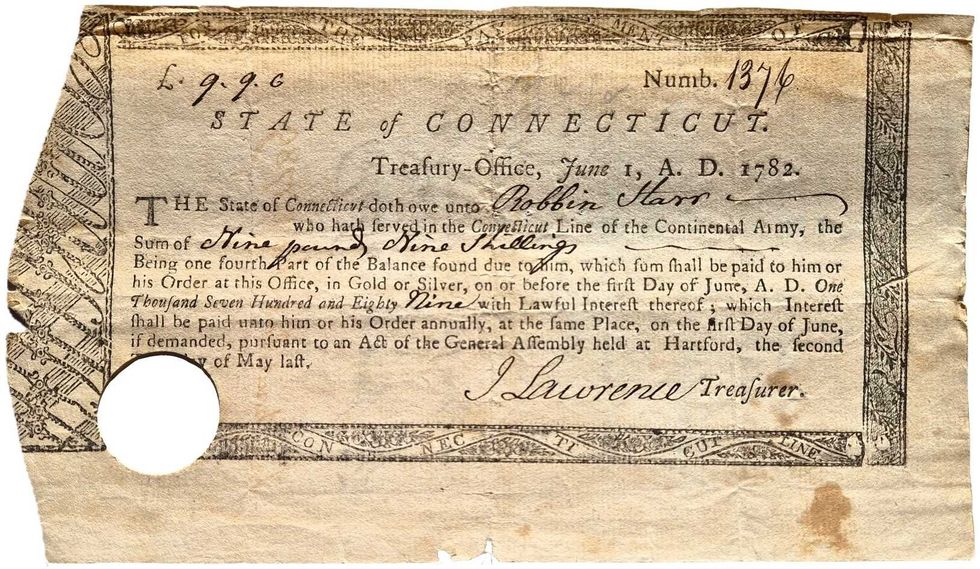 Pay Bill for Robin Starr’s service in the Continental Army.Courtesy the Alex Breanne Corporation
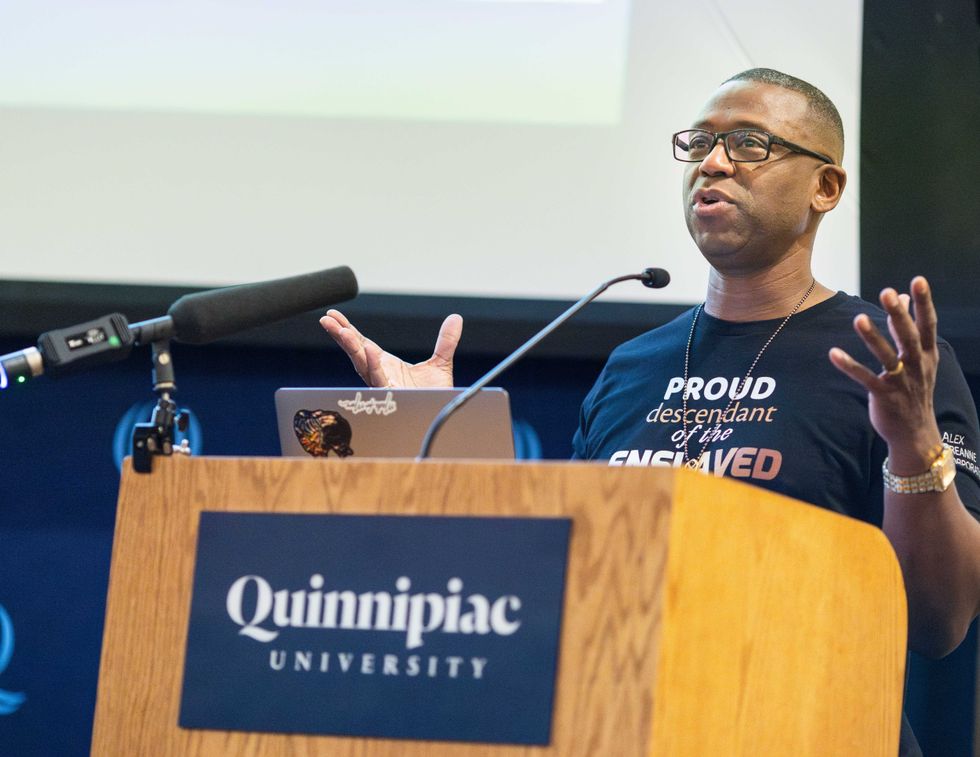 John Mills speaking at Quinnipiac University.Courtesy the Alex Breanne Corporation
 Stephanie Saetta,with her rescue dog George and Blue (left), a shepherd mix awaiting his forever home.Madi Long
 Blue, a 7 year-old Shepard mix, is waiting for his forever home. Madi Long