Thirty some odd (very odd) years ago my wife and I fled pretentious neurotic summers in the Hamptons to the glorious natural beauty of Northwest Connecticut and the rhythmic biblical name of a town called Sharon. And we purchased a place in the woodsie outdoorsie Sharon, (gulp) Connecticut.
Now, I’m a born and bred Brooklyn kid, Williamsburg, home of Domino sugar, Schaeffer beer and, once upon a time, the world’s greatest baseball team, so I had to ask the local people about this place with lotsa things called trees. There had once been a book called “A Tree Grows in Brooklyn.� But since I never read the book I had to ask the local people about the “wilderness.� They said they’ve got “lots of wasps and beaver� up here but I didn’t know they were talking about “insects and animals.�
Then one day on my lake property (unlikely name) “Mudge Pond,� I saw this huge beautiful white birch tree with the sides chipped away in what appeared to be a nibbling affect. It was leaning toward the water. The following week my tree was gone; I was informed that the beaver took it. Mumbling angrily to myself (now that I knew what a beaver really was) I trudged toward the house, sensing a presence accompanying me along the road. A lone beaver walked alongside of me. ‘Hey,� I asked, “you guys cut down and stole my tree, now you’re making like an old buddy walking with me?� Indifference. He ignored me, turned away toward the pond. “Bon appetit,� I shouted after him. I soon learned that was just the beginning. War had been declared, the “battle of Sharon� had begun.
My armory was the local hardware store, my weapons were the technological breakthroughs in anything that can be poured and sprayed to kill or annoy critters. In New York City we’ve got rats, mice and roaches because there’s a lack of the natural balance that one finds in a pristine wilderness like Sharon. The list of critters that eat rats, mice and roaches is endless in these woods and I don’t want to talk about the bear droppings my daughter found at the lake front. There are things that eat the things that eat the things up here. That poor turtle I kept in a fish tank on the porch, forgetting about foraging raccoons which are probably escaping the foraging coyotes.
And bats in my shutters? I never knew that could happen. The National Geographic Society said they (bats) lived in caves and ventured forth en masse to save us all from that huge insect problem that would engulf and destroy our crops. But I had bats in my shutters till my brave daughter pulled the shutters off and swung a bat (a la baseball) at the nasty black flyers. No milksop, my kid, she was Babe Ruth on my porch making the world safe for her Pop. Safe from those (ugh) daytime bats, suggestive of rabies. Scary? Yes!
And speaking of the National Geographic Society, I have seen some bugs in Sharon that resemble Nat Geo’s last issue about the Matta Grosso jungles of South America, yet a winter in these Berkshire mountains should make one wonder about the survival of insects. Crystal clear frozen Januaries are so cold that snow shimmers in a sequined manner and the expanding lower layers of pond ice forces intense pressure in an explosive frozen rumbling reminiscent of Arctic, not Sharon, waters, yet these über bugs, creatures of the wild, survive, or their eggs survive; it’s anoentmologists subtropical wonderland just two hours north of the “Big Apple.�
Spiders, clearing their webs is a lifetime effort. And if you’ve got a cat keep it in the house because it’s on the coyote’s menu. Then there are termites. They ate my upstairs porch and tunneling animals and field mice eat your bulbs. Vegetable gardens are excellent deer food where garden centers recommend “powdered blood� across your greens to keep the deer away (ugh) and that satisfying hand or shoe splat of a bug may be the best remedy, and mosquitoes? The repellent is a gravy “au jus� for their bites and never give up on garden slugs. The battle of Sharon continues, keep on fighting, as John Paul Jones might say, “Don’t give up the tomatoes!�
Bill Lee, a cartoonist by profession, dwells in Sharon and New York City.
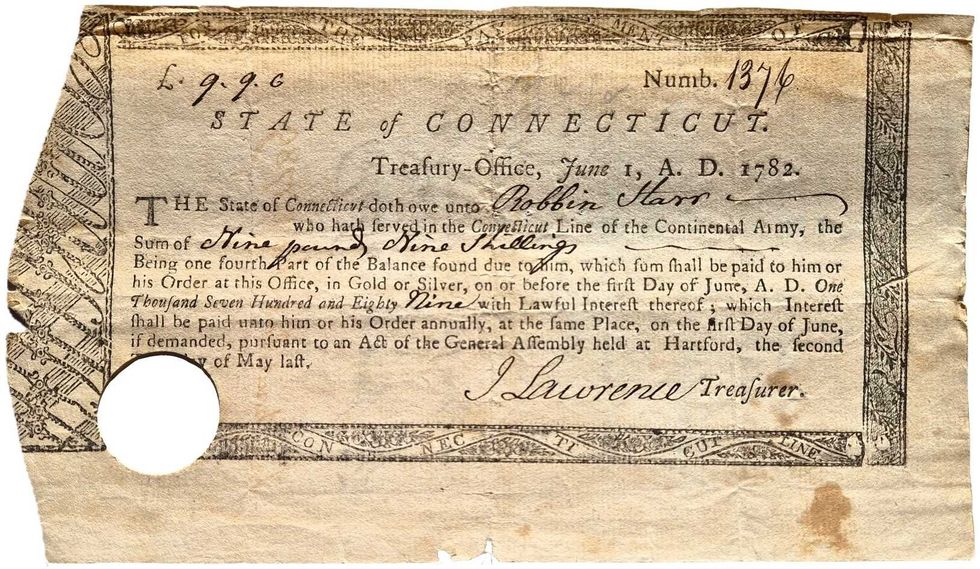 Pay Bill for Robin Starr’s service in the Continental Army.Courtesy the Alex Breanne Corporation
 John Mills speaking at Quinnipiac University.Courtesy the Alex Breanne Corporation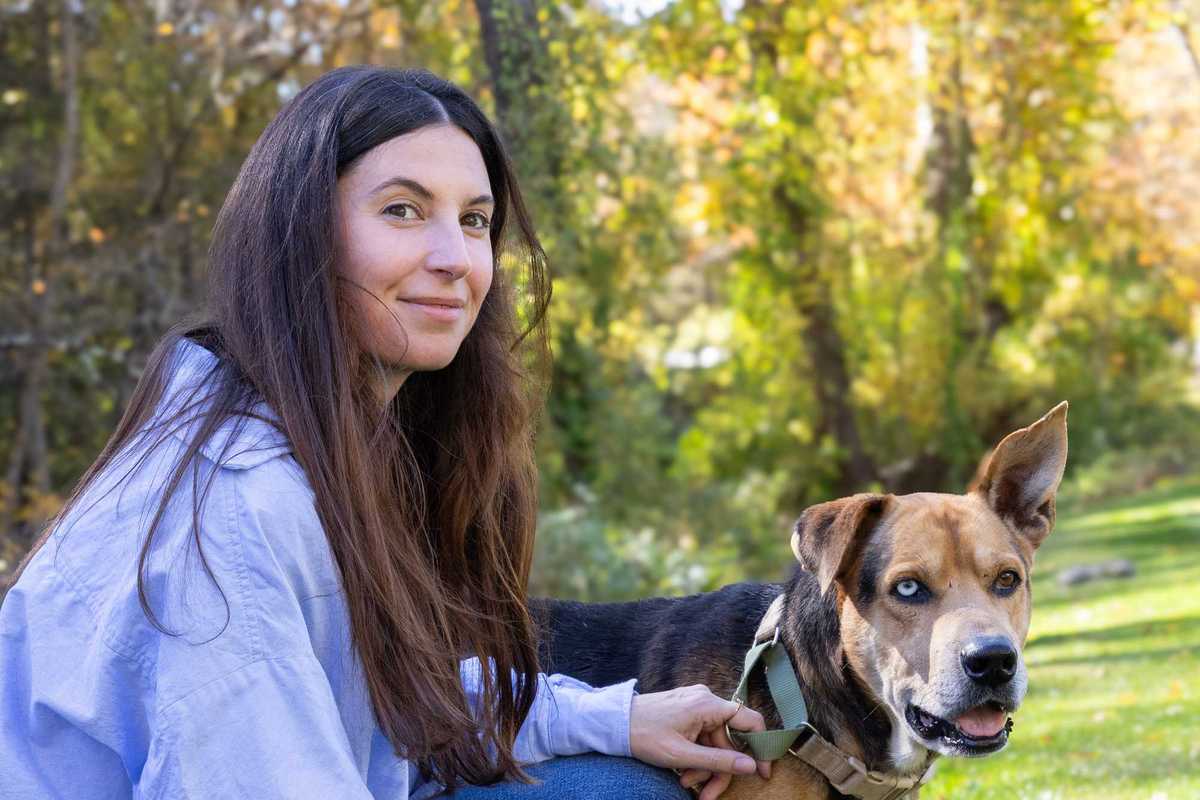
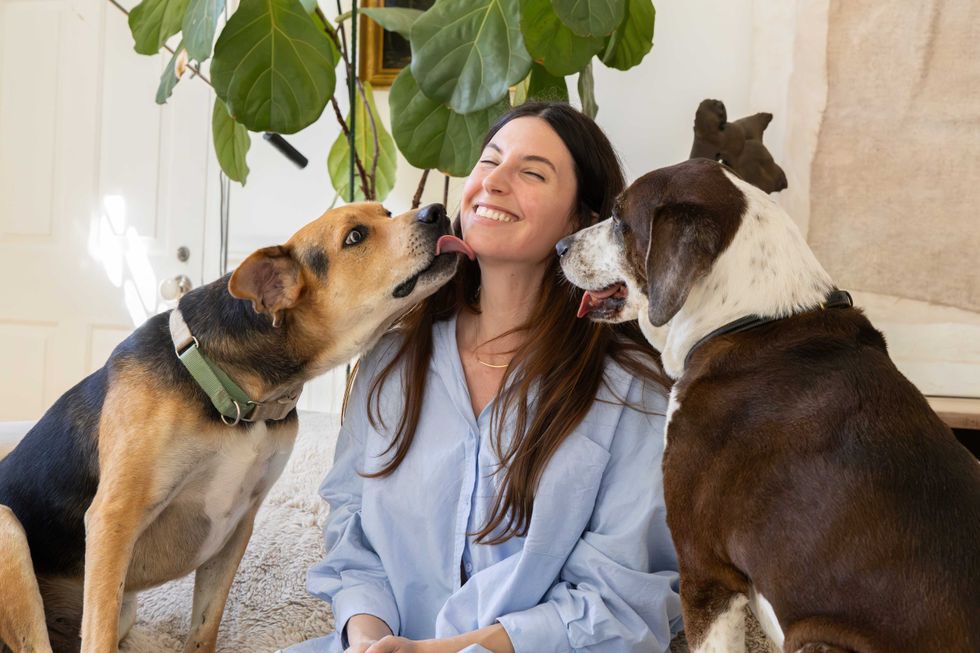 Stephanie Saetta,with her rescue dog George and Blue (left), a shepherd mix awaiting his forever home.Madi Long
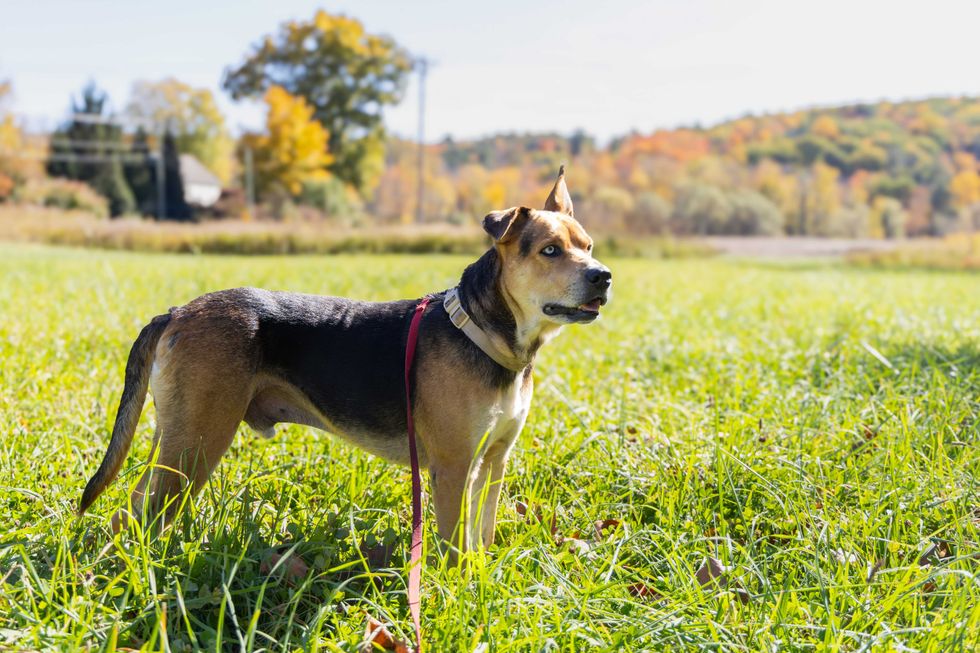 Blue, a 7 year-old Shepard mix, is waiting for his forever home. Madi Long