Raise your hand if you’ve had to redial (retap? repunch? oh, forget it) a local phone number because you forgot to use the area code.
Raise your other hand if you have yet to add the area code to all the numbers in your cell phone address book.
These likely won’t be the only glitchs we’ll discover while attempting to adjust to dialing three extra numbers. Oh, wait, here’s another one: The autodial feature on my phone hit a snag because the caller ID feature only shows seven digits for local numbers.
I’m supposed to be able to scroll to the number, hit a button and lift the receiver. The phone does the rest. Suddenly, all I can get is a recording telling me to dial the area code. (You know that recording; you’ve heard it, too.)
OK, maybe I’m just lazy, but time gets really crunched in my life. This feature makes me feel a little bit more in control (well, it used to, anyway). I had been able to delegate this tiny chunk of manual labor. And now I’m thinking it would be nice if the phone company, which gets a substantial chunk of my monthly budget, was not pulling this particular rug out from under me.
To try and rectify the situation, I engaged in a prolonged Internet chat with a “technician� employed my service provider. Her name was Joy, which was ironic almost from the get-go.
The chat was frustrating. Joy took a defensive tone, suggesting it was surely not her technologically progressive company’s fault. Clearly, I must be an idiot.
Portions of the conversation went exactly like this (Honestly. These are copied and pasted. And no, I didn’t warn her that the conversation was being recorded and might be used for training purposes.):
Joy: To completely understand your concern, could you please elaborate more on it.
Karen: My phone displays caller ID — name and phone number. To return a call, I can select the info from the caller ID and the number is called automatically when I pick up the receiver. Since the area code does not show up on local calls, I cannot use this feature with local calls.
Joy: Oh, I see. (Pause.) Karen, the area code in your area is the same.
A variation on that response, as our conversation continued:
Joy: Can you please try to call now and dial the number again with the area code?
Karen: That’s what I have been doing. What I want is for the [anonymous phone company] system to add the area code to all numbers so that it appears that way on my caller ID and my phone knows what number to call.
At which point, I was told to refer to my phone’s owner’s manual.
Why can [anonymous phone company] not program its system to show local area codes, I asked. Same answer: refer to the owner’s manual.
When I asked if the answer to my question was “no,� I was told by the technician, “I’m not saying no to that, but … �
You guessed it.
She also suggested I refer to the [anonymous phone company] Web site for additional features I could purchase.
So, the only question that seems to leave is, where is my phone’s owner’s manual?
Actually, unbelievably, I know where it is: in the garbage. I threw it out just a few weeks ago, because I never use it, and I had a fit of organizational compulsion.
Doodling = Eureka moment
In the end, the technician did solve my problem, in a way: To avoid total exasperation during the exchange, I began fiddling with my phone. I discovered that I had programmed it with the 860-area code when I bought it, more than a year ago.
I figured out a way to delete the area code. Now my phone doesn’t know which area code it’s in, so it can’t tell the difference if a call that’s coming in is local or long distance.
Believe it or not, it worked. I reached across the desk and called myself from the fax machine. Voila! Area code on the caller ID, from the same room! I hit the auto dial button, and voila, no recording, and pure elation when my fax phone began to ring.
Sometimes it just doesn’t take much.

 Models walk the organic runway at HVSFW. Ilan Harel
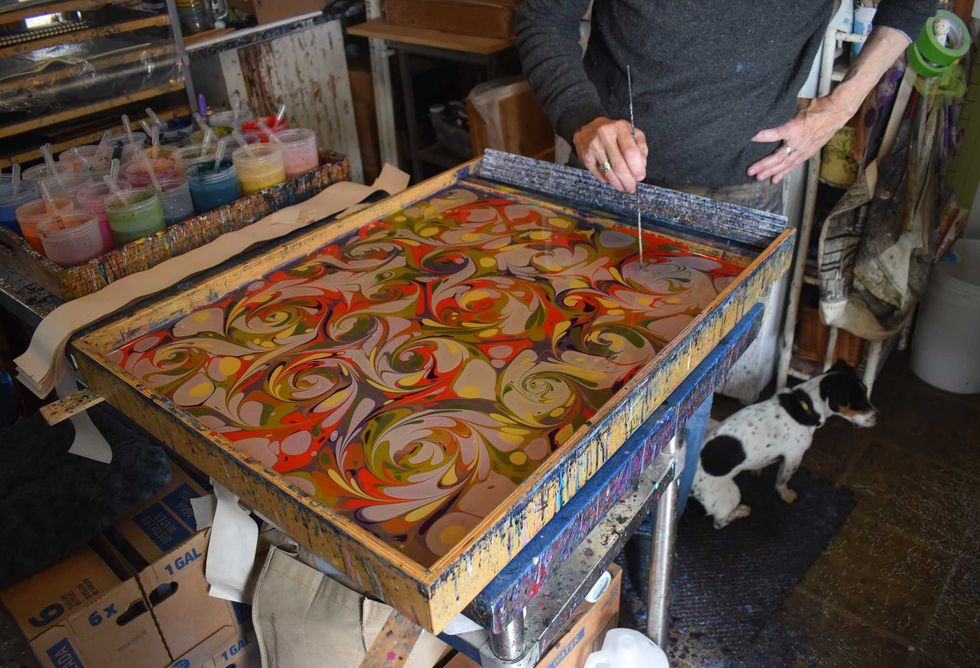 Susan Schneider, owner of Shandell’s, creates a variety of products with marbleized surfaces in her Ashley Falls studio.L. Tomaino



 Roger McKee naming the winners with the first place entry over his left shoulder. Patrick L. Sullivan
 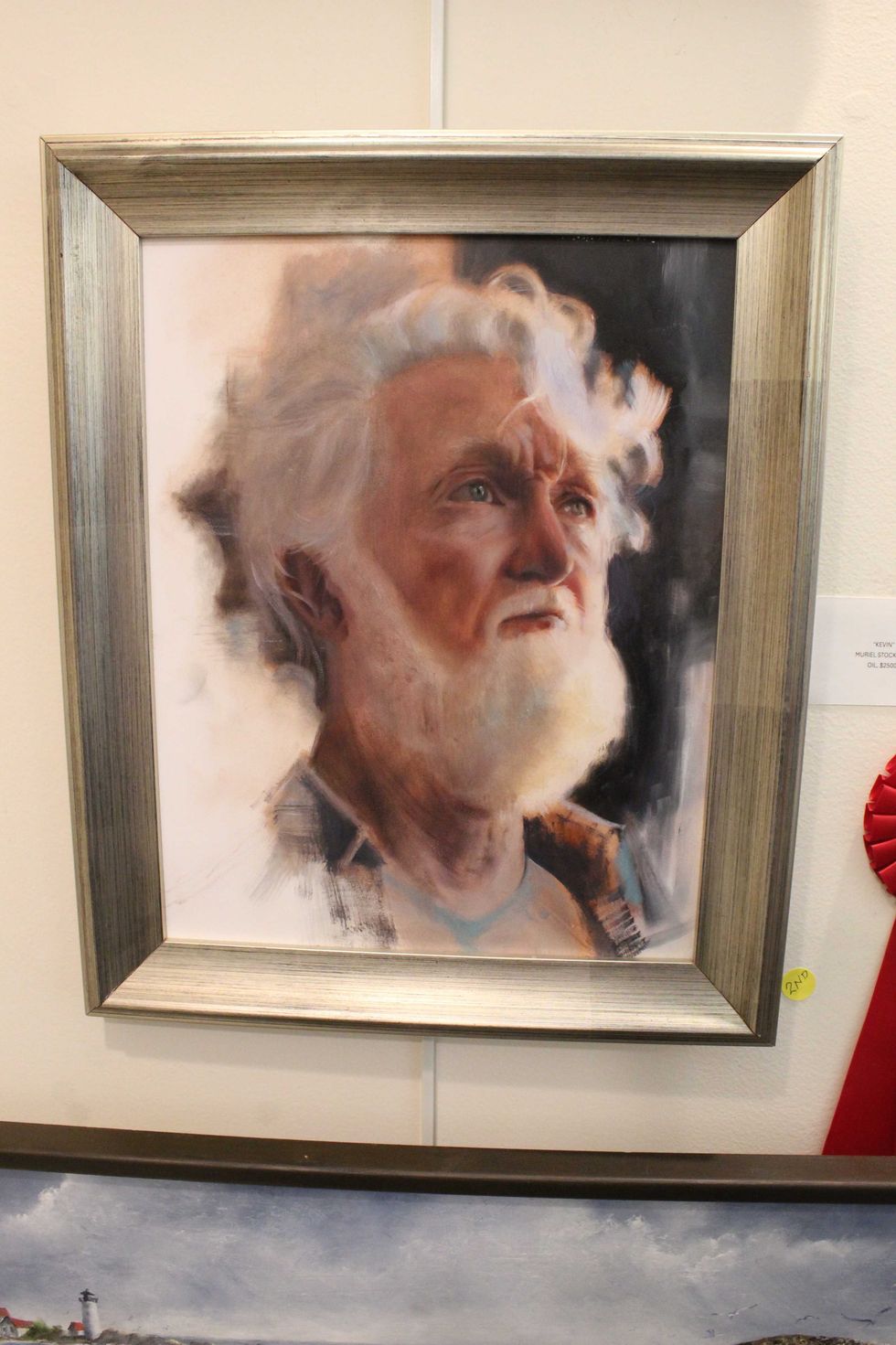 Muriel Stockdale’s “Kevin” took second place in the juried art show at Trinity Episcopal Church.Patrick L. Sullivan