Latest News
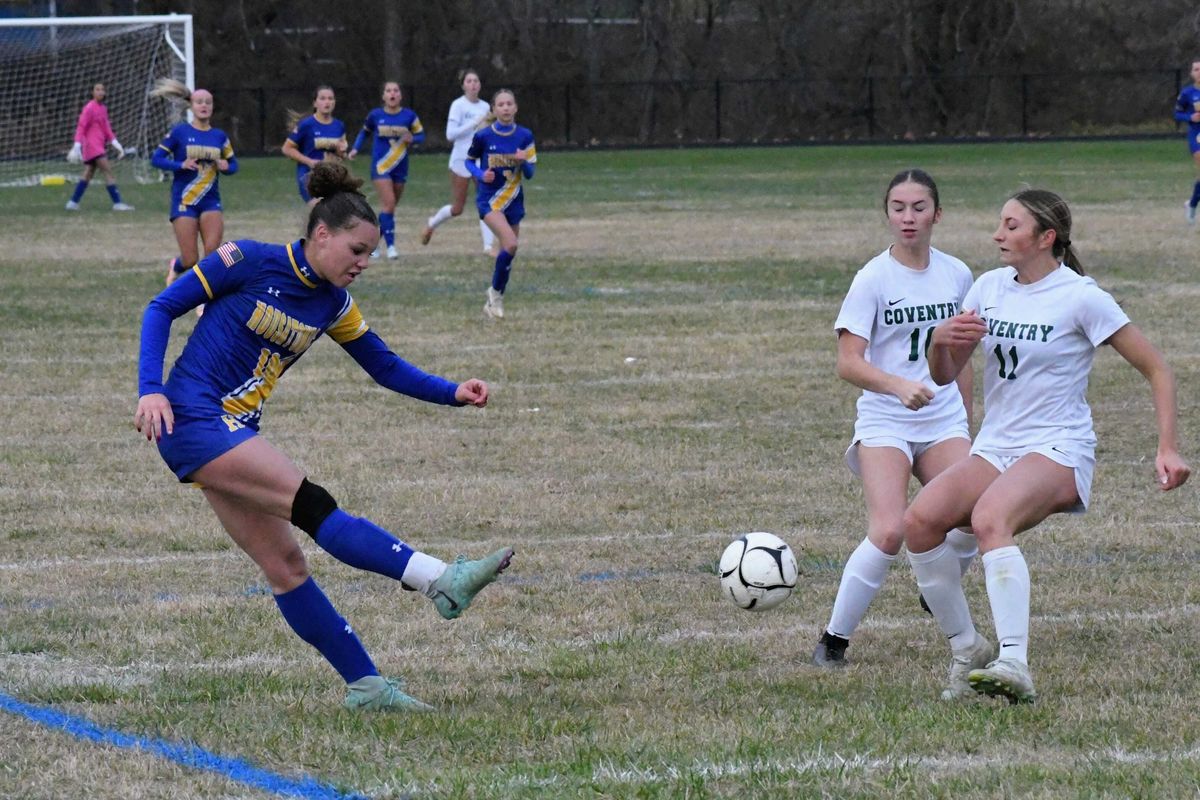
Ava Segalla, Housatonic Valley Regional High School's all-time leading goal scorer, has takes a shot against Coventry in the Class S girls soccer tournament quarterfinal game Friday, Nov. 7.
Photo by Riley Klein
HVRHS (3) will play Morgan High School (10) in the semifinals. On the other side of the bracket, Canton High School (4) will play Old Saybrook High School (9). The winners of both games will meet in the Class S championship game.
To start the tournament, HVRHS earned a first-round bye and then had home-field advantage for the second-round and quarterfinal games.
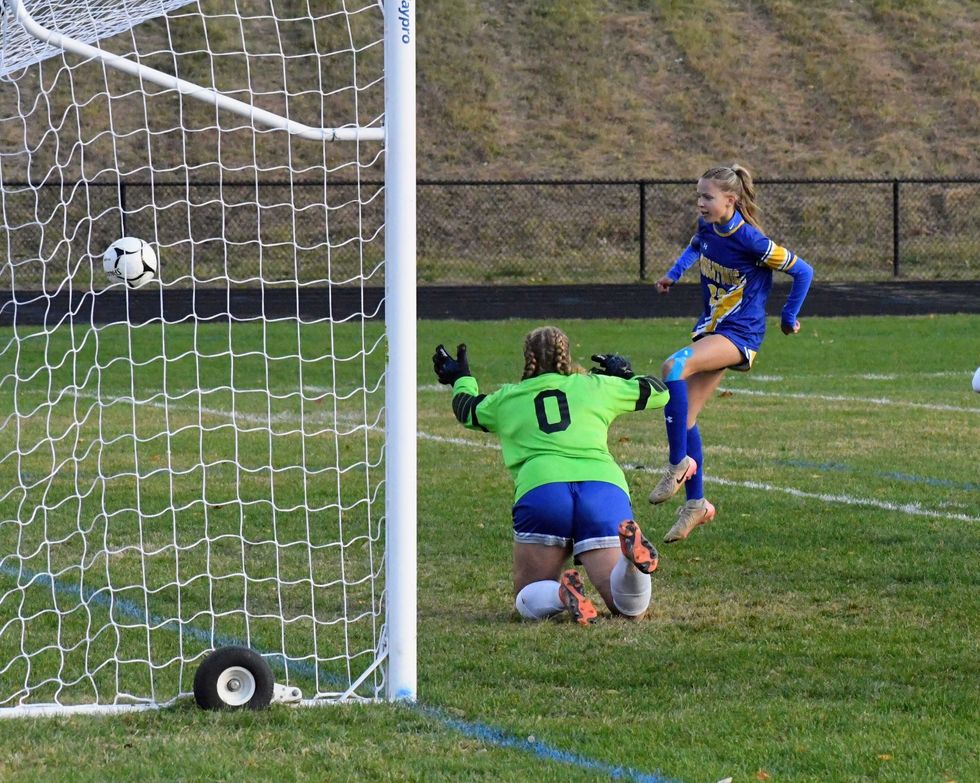 Lyla Diorio scores for HVRHS in the second-round game against Stafford High School Tuesday, Nov. 4.Photo by Riley Klein
In the second round Tuesday, Nov. 4, HVRHS won 4-3 against Stafford High School (19) in overtime. Ava Segalla scored three goals for Housatonic, including the overtime winner, and Lyla Diorio scored once. Bella Coporale scored twice for Stafford and Gabrielle Fuller scored once.
HVRHS matched up against Coventry High School (11) in the quarterfinal round Friday, Nov. 7. In the 2024 tournament, Coventry eliminated the Mountaineers in the second round.
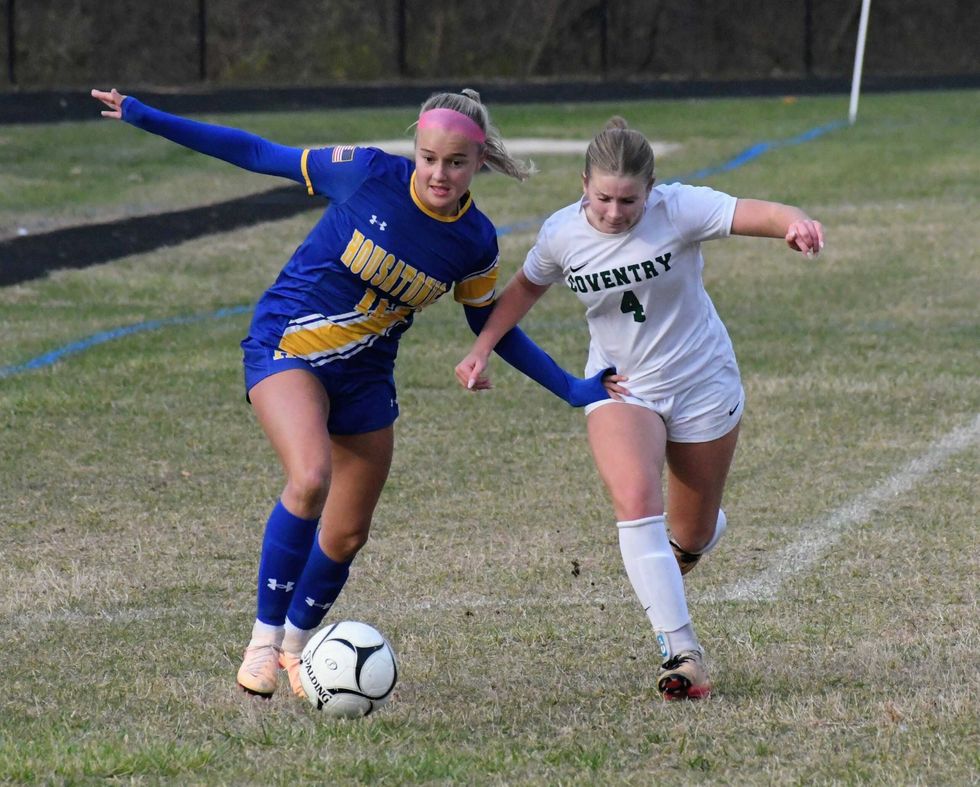 Georgie Clayton, left, races Mazie Cox for the ball.Photo by Riley Klein
Revenge was served in 2025 with a 4-2 win for HVRHS. Segalla scored her second hat trick of the tournament and Georgie Clayton scored once. Coventry’s goals came from Jianna Foran and Savannah Blood.
“The vibes are great,” said HVRHS Principal Ian Strever at the quarterfinal game.
 Housatonic celebrates a goal in the Class S tournament.Photo by Riley Klein
The semifinal against Morgan will be played Wednesday, Nov. 12, on neutral ground at Newtown High School.
If HVRHS wins, it will mark the girls soccer team’s first appearance in the Class S title game since 2014.
Morgan was the runner-up in last year’s Class S girls soccer tournament, losing in penalty kicks to Coginchaug High School.
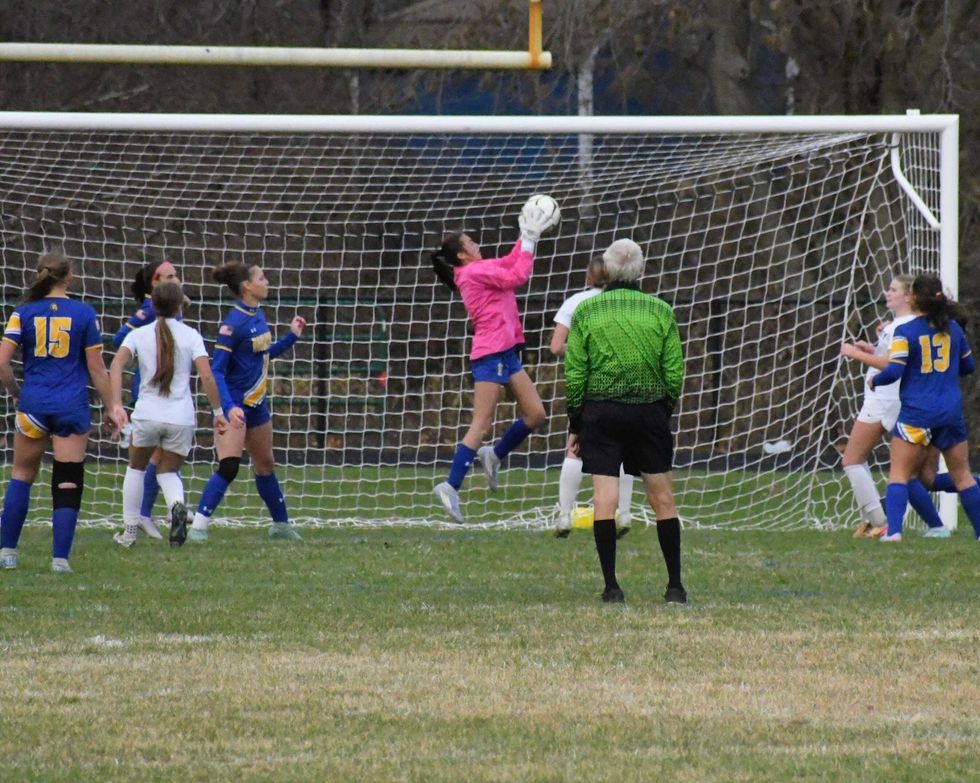 Goalie Vi Salazar makes a save late in the quarterfinal game Nov. 7.Photo by Riley Klein

Hector Pacay Service: House Remodeling, Landscaping, Lawn mowing, Garden mulch, Painting, Gutters, Pruning, Stump Grinding, Chipping, Tree work, Brush removal, Fence, Patio, Carpenter/decks, Masonry. Spring and Fall Cleanup. Commercial & Residential. Fully insured. 845-636-3212.
SNOW PLOWING: Be Ready! Local. Sharon/Millerton/Lakeville area. Call 518-567-8277.
Local editor with 30 years experience offering professional services: to writers working on a memoir or novel, or looking for help to self publish. Hourly rates. Call 917-331 2201.
Real Estate
PUBLISHER’S NOTICE: Equal Housing Opportunity. All real estate advertised in this newspaper is subject to the Federal Fair Housing Act of 1966 revised March 12, 1989 which makes it illegal to advertise any preference, limitation, or discrimination based on race, color religion, sex, handicap or familial status or national origin or intention to make any such preference, limitation or discrimination. All residential property advertised in the State of Connecticut General Statutes 46a-64c which prohibit the making, printing or publishing or causing to be made, printed or published any notice, statement or advertisement with respect to the sale or rental of a dwelling that indicates any preference, limitation or discrimination based on race, creed, color, national origin, ancestry, sex, marital status, age, lawful source of income, familial status, physical or mental disability or an intention to make any such preference, limitation or discrimination.
Houses For Rent
Sharon, 2 Bd/ /2bth 1900 sqft home: on private Estate-Gbg, Water, Mow/plow included. utilities addtl. Please call: 860-309-4482.
Tag Sales
Falls Village, CT
Saturday November 8 Tag Sale in the Barn: 91 Main Street in Falls Village 10 to 3 pm. Please Park in town parking available along Main St. Tools, wood working tools, bench, furniture, antique doors, out door planters, Halloween and Christmas decorations and much more.