We already know about the dangers of ticks, poison ivy, mosquitoes and the ever-present summer sun. Now there’s something new to worry about: wild parsnip, which can be found perched on roadsides, looking innocent but carrying the potential to do real harm to your tender skin.
If you spend any time driving around in the Tri-state region, you’ve probably noticed the wild parsnip plants that are peaking right about now (some of them are already past their peak and are browning out). Up top, they look like dill plants. Their leaves look a lot like celery leaves.
As the name implies, these are the wild version of the parsnip plant that we love to eat as an autumn root vegetable. It’s believed that these wild plants were “volunteers” that escaped the confines of farms and gardens and set out to colonize other, uncultivated areas.
Like all invasive plants, they tend to go wild and grow densely in their favorite kind of habitat, which is disturbed soil. In their first year, all you see are the celery-like leaves. In their second year, they develop dill-like heads — and they also begin to secrete a chemical in their sap that has a weird effect on human skin: It makes skin super sensitive to sunlight, so much so that some people can develop bad burns, rashes and blisters. The sensitivity to the sun can last for as long as two years, according to a report from the Vermont Department of Health that was on the Internet.
The state of Wisconsin also has warnings about the danger of wild parsnip, which seems to be most abundant, locally, in New York state (although there’s no shortage of it in Connecticut and Massachusetts).
Both states warn that if you’re anywhere near wild parsnip, be sure to wear long sleeves and pants (if you’re able to plan ahead) or wash your skin thoroughly and stay out of the sun for 48 hours (if you weren’t able to plan ahead and you just stumbled across a patch of the stuff).
If you’re courageous and just love to eat foraged food, the Vermont Department of Health says you can eat the wild parsnip root; just be careful when you collect the root that you don’t get any sap on your skin from the flowers and the stalk, if the sun is shining. It’s kind of the opposite of a vampire; it can only harm you during the day, you’re safe once the sun goes down.

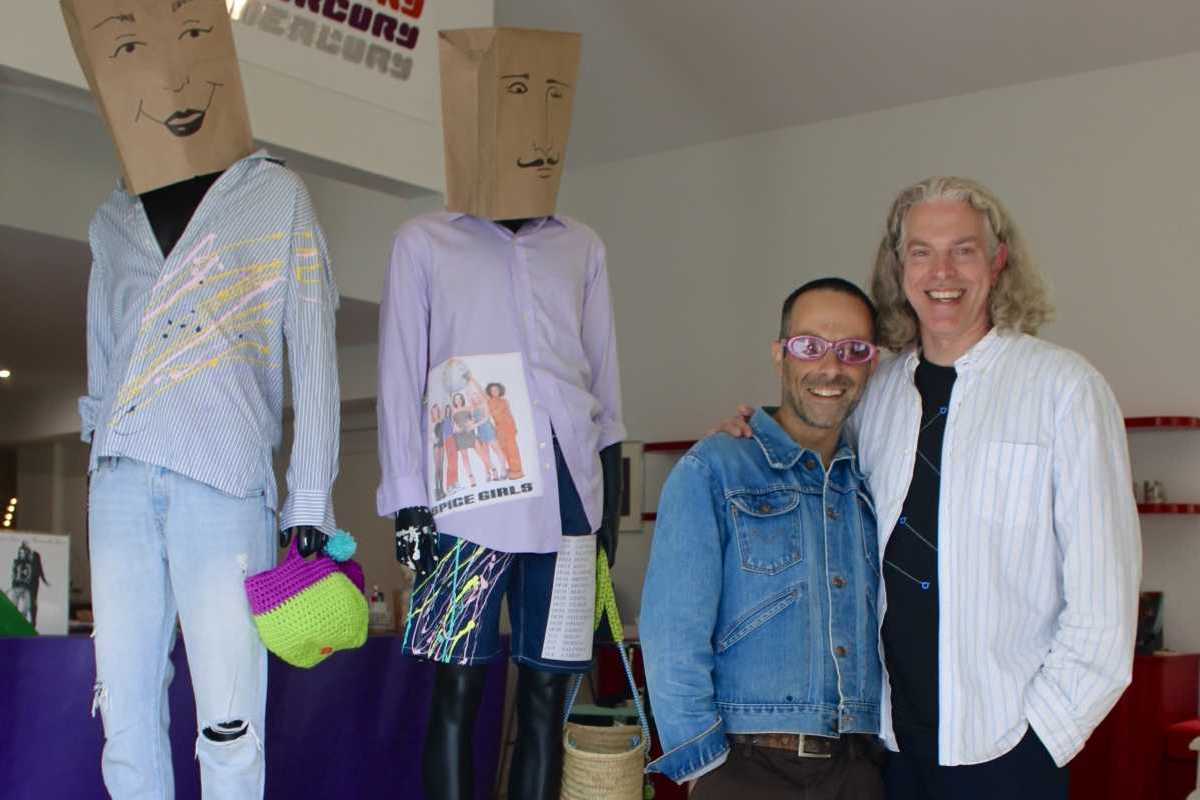
 Classic styles, bold colors, and creative concerts make up the “Imaginary Concerts” line at Peggy Mercury.Provided
 Shirts from Peggy Mercury’s first fashion line, “Imaginary Concerts,” hang on display.Provided