I came across a serpent in an Edenic setting last weekend, stretched out in the sun on a pile of brush just over an embankment. It was a black racer, Coluber constrictor, with its large eyes and a white area under the chin, and though they are not uncommon in our region I had not seen one for many years. This is a very fast snake, and it turned tail and vanished as soon as it caught sight of my movement as I was pointing it out to my son, Elias. I do not have the fear of snakes that for many of us seems to be innate, and neither does Elias. I respect them and their personal space, having lived in regions with many more venomous species than our rather docile timber rattlesnake and rarely encountered copperhead. There is still a visceral almost hardwired response when I first sight a snake, one of immediate attentiveness and focus. Coming upon a long, sleek muscular snake certainly concentrates the mind, but that is all.Elias is fascinated by the natural world. He loves animals without sentimentality. Awareness of “Nature, red in tooth and claw” makes him a sharp observer, interested in the half-fledged robin that falls unexpectedly to the lawn from the tree, even if he realizes that it is now far more vulnerable than if it had remained in the nest. He reads the stories in dried bones, the raptor’s plunge and the new life that comes from one seed out of many. He sees patterns in the ebb and flow around him, and I encourage this curiosity.So often we find teaching moments in what nature reveals. If we had gone looking for a black racer, we probably would not have discovered one. We might have come across something else that would engage and amaze us, but mostly it is a matter of being in the moment, of recognizing the opportunities that present themselves. A basking snake, or an owl pellet, or the cries of a hawk on the wind, draw us out of ourselves and into the environment we share with so many other creatures who are far more aware of us than we aer of them.It is too easy to think of our species as somehow apart from the natural world, and indeed modernity has insulated us from the environment in ways our ancestors could hardly have imagined in the days when we drew our subsistence from our surroundings. I have no wish to eke out my existence so near the margin of survival as was once commonplace, but I do need to maintain awareness and connection to land and water and the creatures they sustain. I look forward to new discoveries, perhaps those that Elias brings to my attention, as the season advances. Tim Abbott is program director of Housatonic Valley Association’s Litchfield Hills Greenprint. His blog is at greensleeves.typepad.com.
Latest News

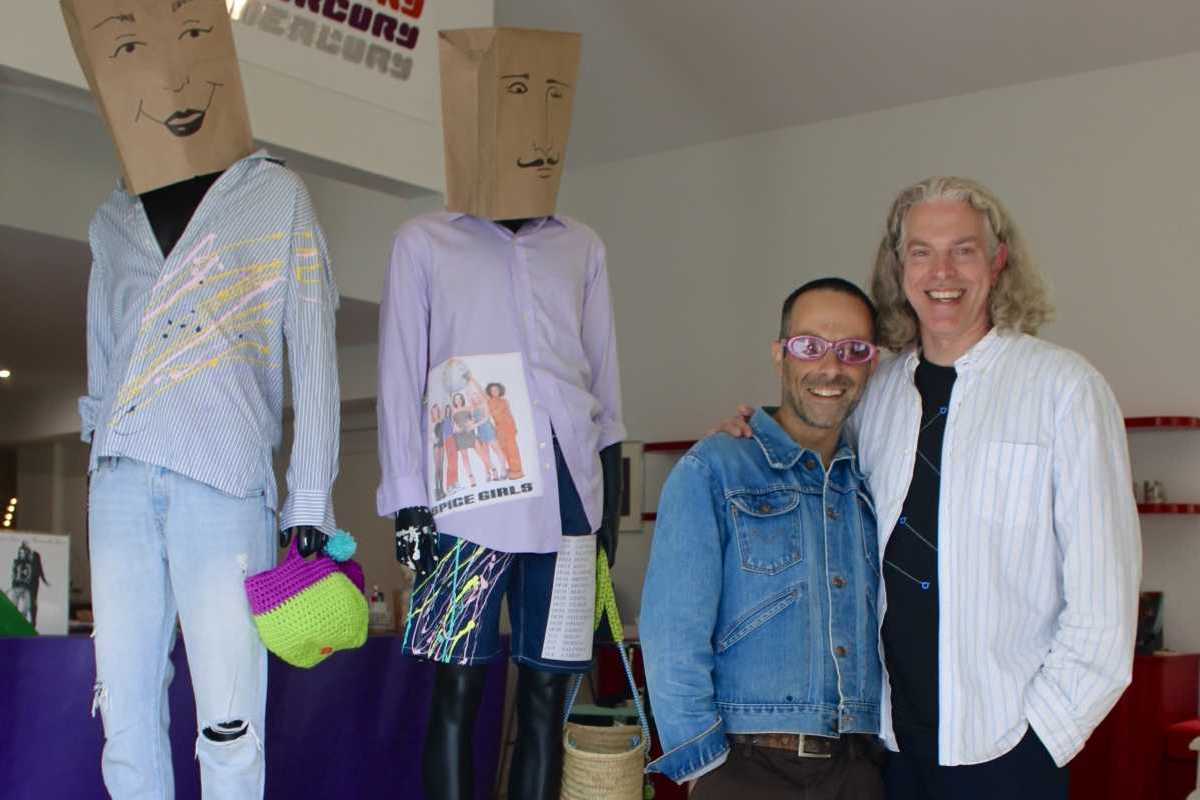
Greg Fricke and James Boehmer, co-owners of Peggy Mercury in Kent, recently launched their first fashion line, “Imaginary Concerts.”
Provided
Fricke and Boehmer are not there to stock their shelves with the same products customers find at standard makeup retailers. They’re there to help customers find what works for them. That usually means asking customers about themselves and learning about their beauty habits, skin, style and the way they like to present themselves. Fricke and Boehmer believe it’s their job to help customers bring out the qualities that suit them and determine what works best for their look.
So much of the Peggy Mercury world is about emboldening people to become more creative, and possibly bolder, versions of themselves. Some of this comes through the store’s creative collaborations with artists, designers and stylists.
It’s part of an ethos that encourages them and their friends to use the shop as a kind of laboratory, trying out new creative experiments without knowing how they might turn out. Whether in fashion, painting, fiber arts or photography, the projects almost always turn out marvelously.
A line of sterling silver charms they sell started as a small project by their friend Nolan Percival. In the beginning, the pieces were for close friends and loved ones. But Boehmer and Fricke encouraged Percival to get a little more serious about the project and create a whole line for the store. Today, it’s one of their top-selling collections.
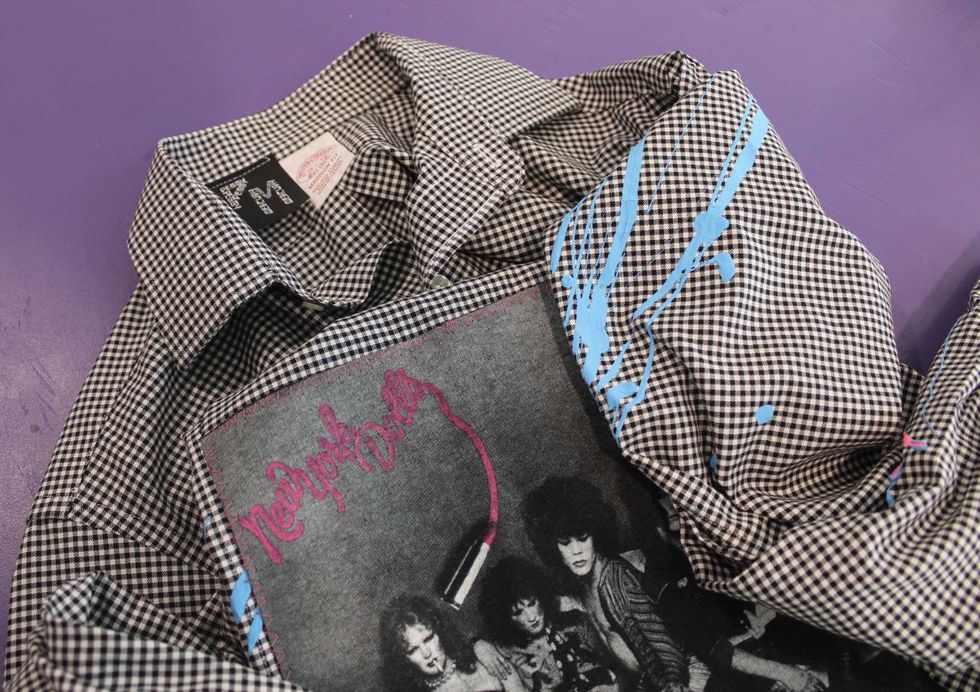 Classic styles, bold colors, and creative concerts make up the “Imaginary Concerts” line at Peggy Mercury.Provided
“Imaginary Concerts” has the duo taking their own advice.
The project started as a way for Boehmer to connect with his mother, who had been diagnosed with Alzheimer’s disease. Taking old concert shirts from his own collection, Boehmer and his mother began cutting out the graphics with the idea that they would make a quilt together. Unfortunately, she died before they could complete the project in 2025. The pieces, which were ready for production, were put on the back burner as Boehmer and Fricke dealt with their loss and the whirlwind of projects that never seemed to cease at Peggy Mercury.
But the harsh winter of 2026 presented an opportunity to take some time and focus on themselves. Part of that meant revisiting and redefining the concert T-shirt project. This time, instead of looking to the warmth and comfort of a quilt, they turned to another passion — fashion.
Taking a page from their own book, they wanted to create something that felt comfortable to them. They took two disparate loves — one rooted in simple preppy style, with clean lines and classic silhouettes, and the other in the nitty gritty worlds of punk rock and pop — and blended them together to create something entirely new. Pulling from the staples of vintage Brooks Brothers and Charvet collections, they applied the graphic elements with bold stitching reminiscent of punk jackets of the ‘70s and ‘80s, but with a much more sophisticated air.
But the remixing isn’t just the pairing of prep and punk. The pieces are not canon. They take liberties with the realities of concert tours, combining one band’s dates with another band’s logos, mixing them all up until the reality is lost and imagination is the only truth.
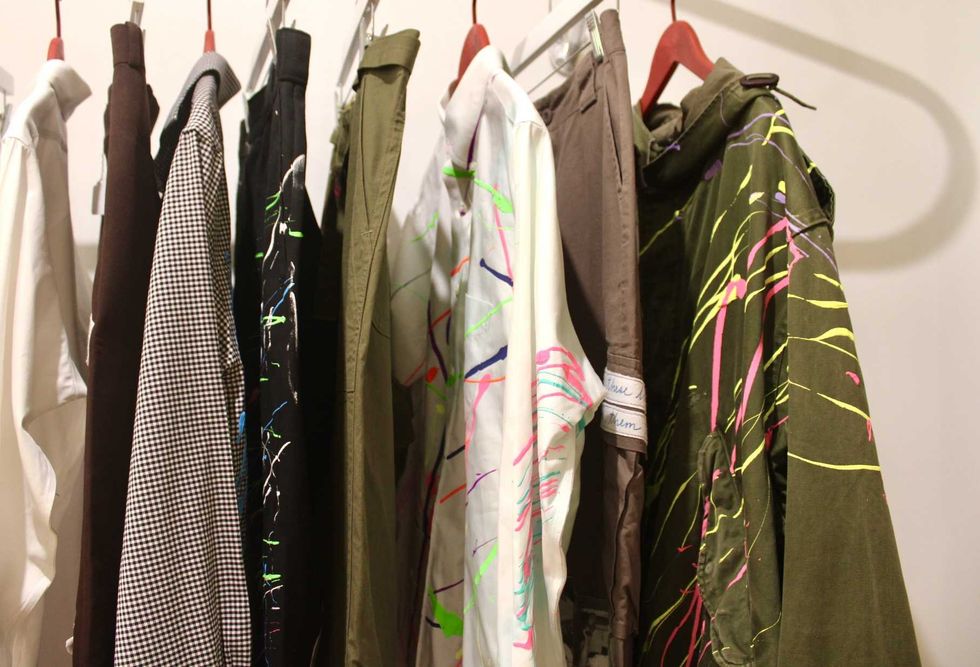 Shirts from Peggy Mercury’s first fashion line, “Imaginary Concerts,” hang on display.Provided
Adding to the mix is an element of perpetual creativity. Art can be messy, both figuratively and literally, and many of Fricke and Boehmer’s artist friends carry evidence of their work on them at all times. As a nod to these tireless creatives, the duo added haphazard splashes of bright color, giving the line an even more distinctive feel.
For them, “Imaginary Concerts” passes the “Peggy Test.” The mythical Peggy Mercury is a fictional figurehead for the company, a character who thrives on creativity and change. The name, much like the clothing line, is a mixture of interests: Mercury is a planet, a deity and an elusive, transformative element, while Peggy is the wonderfully stylish and boundary-pushing Peggy Guggenheim.
Everything Fricke and Boehmer put in their store has to pass this test: Would Peggy Mercury approve? For their first collection, the answer is a resounding yes.
Peggy Mercury is at 9 Maple St., Unit 2, Kent.


Want more of our stories on Google? Click here to make us a Preferred Source.