Sixty-two percent of the world’s populations lives at sea level or 40 feet higher. One climate change expert, Klaus Jacob, 30 miles upstream from New York on the Hudson, even invested in raising his 1850s Hudson-side home five feet before Hurricane Sandy. He had officially predicted years ago that such a storm would occur, so he was prepared, or so he thought. “The water was driven into the New York Harbor and the Hudson flushed backward. We had nine feet of a storm surge ... like a very fast biker it just ran up the Hudson and swamped our home.” Four hours after the surge hit Manhattan it reached Albany. Jacob said, “I am fully aware that I will be the last generation or the last but one generation that will live in this house,” or any house alongside the river. Like all his neighbors, and people all over New York from Sandy Hook to Centerport on Long Island, including 50 percent of the population of the Atlantic coast from Cape Hatteras to Staten Island, all of Long Island Sound coasts, the Connecticut River up to Hartford and on and on — Sandy wrote the coming reality as tide mark for them all.Sandy was 1,000 miles wide and it broke all records of rainfall, wave heights and tidal surge. Had Sandy occurred during peak high tides, the damage would have been worse. Touted as a hundred-year event, we now know better. Decisions have yet to be made on how to cope with catastrophic events yet to come, as vast economies may collapse and people driven inland, forcing abandonment of centuries-old ways of life. History has shown that unless action is taken within one year, the political will and public stamina to manage or prevent reoccurring disasters wanes. And to achieve something, anything, like tidal barriers or channels to prevent river tidal surge, the discussions have to be underway in a serious fashion within six months. Heard anything yet?After Katrina, the finger was pointed at the Army Corps of Engineers for not designing better barriers and protection. So money was poured in, barriers raised and everyone thinks New Orleans is safe. Had Sandy reached New Orleans however, the dykes would have over spilled by five feet, and an area from Mobile, Ala., to Galveston, Texas, would have been flooded, done, over. Oh, and 30 percent of the gasoline supply for the entire USA as well. So is New Orleans safe? Hardly. The head-in-the-sand pundits think that Katrina was a fluke, a one-off, a hundred-year storm. Scientific predictions point otherwise.• • •Why wasn‘t New York ready for Sandy? Perhaps it is a matter of culture, we’re biased to the immediate, the now, not the long-term. We’re better at clean-up than prevention, repair than maintenance. Worried about tornadoes in a place called tornado alley? Build a house out of flimsy wood, insure it, but build a small concrete storm shelter. Kind of hard to do with America’s largest city. And there is another problem with promoting prevention, there is no sure-fire bogeyman, no enemy that is surely coming, we are better off waiting and seeing. We needed Pearl Harbor in order to get into a war we surely knew we needed to fight. We needed 9/11 to decide, as a nation, to go after al-Qaeda even though they had blown up a bomb under the very same building in 1993. Not enough people had been killed in 1993, we didn’t believe the danger was real enough or could repeat.So it is with hurricanes Sandy and Katrina. Surely they are flukes? Right? St. Petersburg learned the lesson and built defenses against the sea, as did Rotterdam. But how do you plan for a storm 1,000 miles wide? How do you protect the whole population of the coasts of America? Again, the American way is to be self-reliant, manage your safety yourself. And that’s fine up to a point. Try telling that to people living on Staten Island. They pay taxes and contribute to the national economy, why shouldn’t they expect safety infrastructure to be put in place? And they do, now, I can assure you, with political voice loud and clear. No one is listening.The current climate change prediction for our planet is a five-foot rise in sea levels within two generations (if not quicker). To prepare for that, Manhattan alone will have to begin building a wall 20 feet high all around the city, five feet for the rise and 15 feet for tidal surges. And budget for future generations at the rate of 12 feet of more wall every 50 years.It is hardly likely to happen. At best New York Harbor may get a barrier, and that will protect 20 percent of the population affected by Sandy. The other 80 percent, like the folks in Sandy Hook, had better prepare to protect themselves and move, while they can afford to. And the reality will be that whole regions of the Atlantic and Gulf coasts will be uninsurable, certainly by FEMA or flood insurance. Will people simply move? Have they left New Orleans or Miami which are indefensible? Or you can ask the Dutch. The dykes and dams there get higher and higher, as public funding has become a way of life. My guess is people will cling on and the age-old human habit of battling Mother Nature will continue. Only this time Mother Nature will be relentless as she is super-charged by global climate change.Peter Riva, a former resident of Amenia Union, now lives in New Mexico.
Latest News


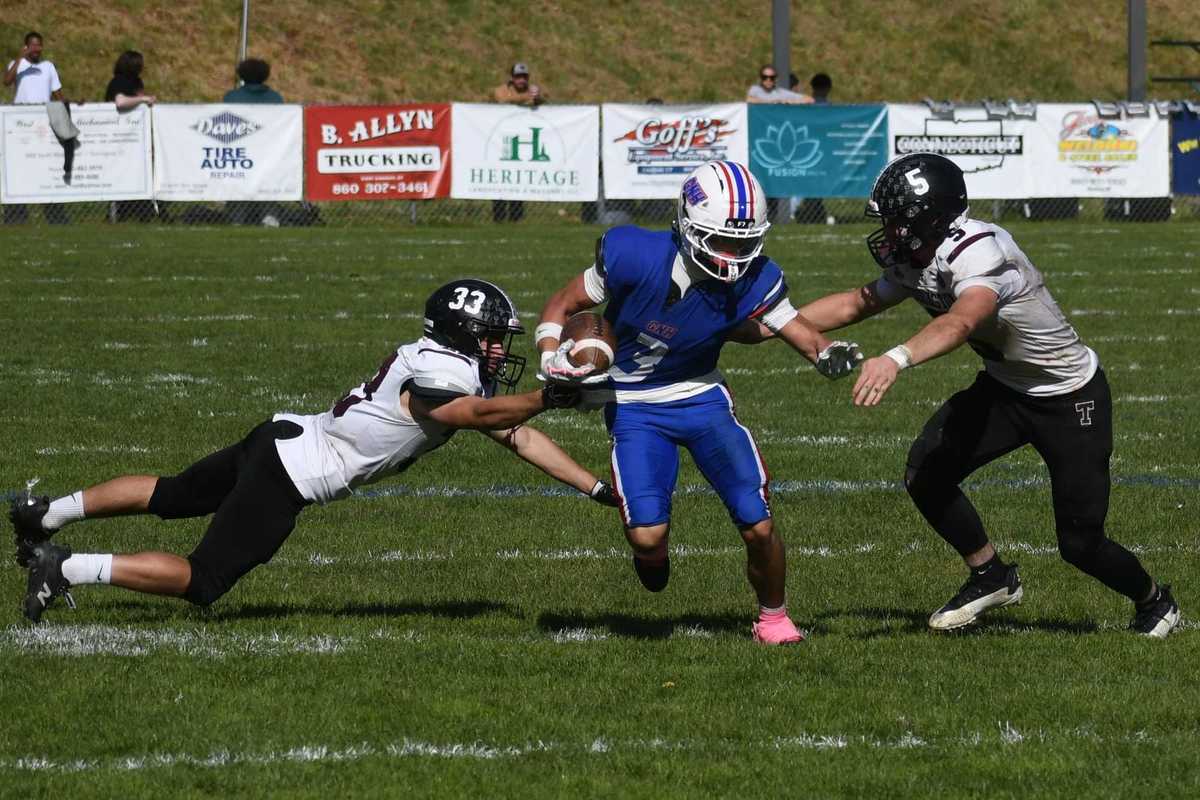
Airyn Berube evades tacklers.
GNH found success on offense in the first half with RB Airyn Berube, who scored the first touchdown of the day on a breakaway run during the opening drive.
Torrington responded in the second quarter when RB Anthony Ciesco concluded a long drive with a two-yard rush up the middle for a touchdown. Torrington successfully scored a two-point conversion and went up 8-7.
Berube scored again for GNH with 5:30 remaining in the second quarter on a 50-yard run down the far sideline to put the Yellowjackets back ahead 14-8. The lead was short lived and Torrington went up 16-14 before half time courtesy of a 10-yard run by RB Nick Coleman.
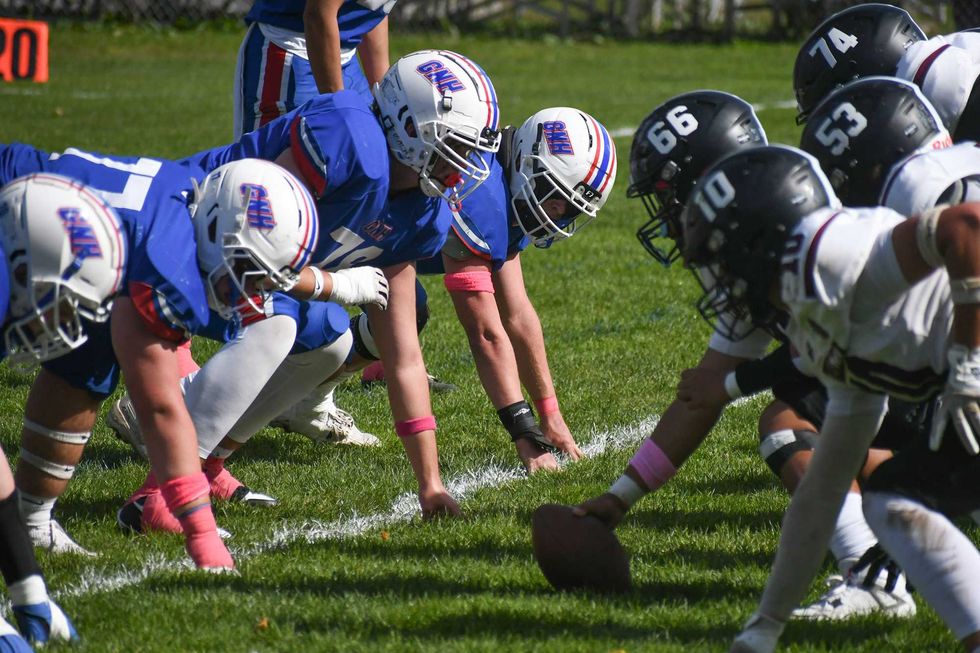 Line of scrimmage.Riley Klein
To begin the second half, Torrington coach Gaitan Rodriguez called for an onside kick and his team reclaimed possession. Coleman followed it up with a 45-yard touchdown run and another two-point conversion to give the Raiders a 24-14 lead.
Torrington scored twice more in the third quarter -- RB Carl Salinas took a 40-yard run to the endzone then DE Cameron Roxbury intercepted a pass and returned it for a touchdown. Torrington took a 39-14 lead going into the final quarter.
Salinas started the fourth quarter with a 22-yard touchdown run. GNH fumbled on the next drive, leading to an eight-yard rushing touchdown by Naziah Lopez. The Raiders’ ground game was unstoppable in the 52-14 victory.
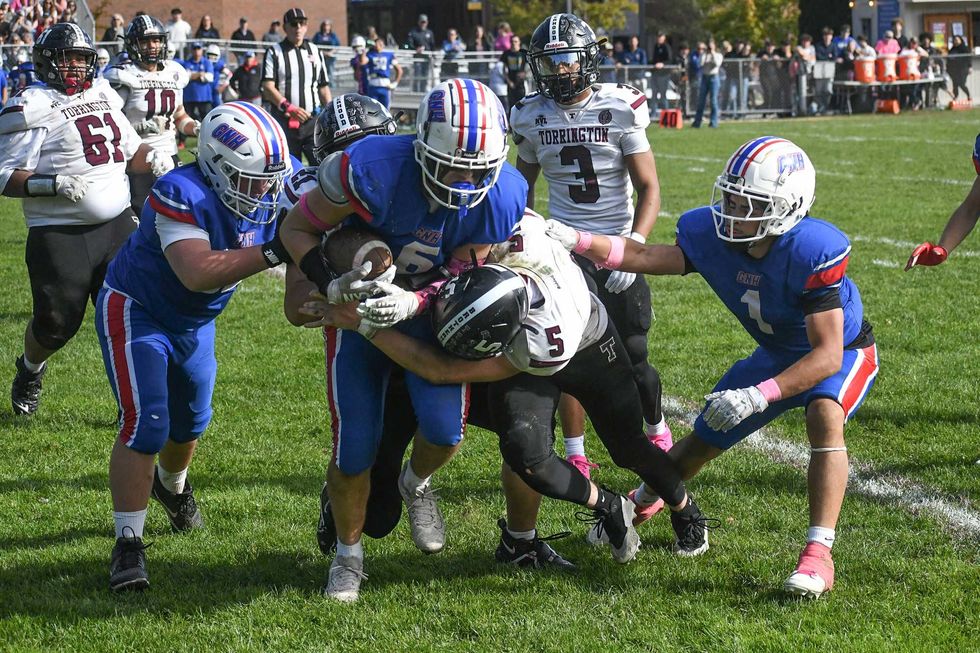 Daniel Nolan moves the pile.Riley Klein
GNH ran the ball 27 times for a total of 224 yards. The Yellowjackets passed 11 times, completing five receptions for 58 yards. The long ball of the day was caught by Jacob Robles.
The Naugatuck Valley League game was played at Van Why Field in Winsted with partly cloudy skies and the temperature around 61 degrees. After the result, Torrington’s record advanced to 3-2 while GNH moved to 0-4 this season.
GNH heads out on the road for the next three games: Derby High School (0-3) Oct. 15; Wolcott High School (4-1) Oct. 23; Watertown High School (2-3) Oct. 30. The Yellowjackets will return home Nov. 7 to host Waterbury Career Academy (1-4).
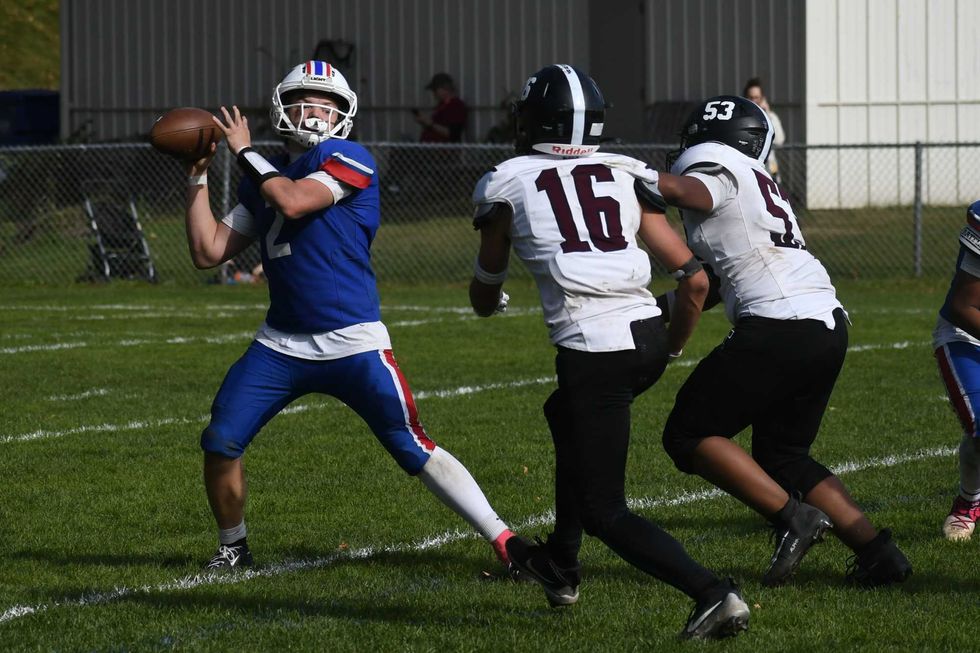 Trevor Campbell throws.Riley Klein

Want more of our stories on Google? Click here to make us a Preferred Source.
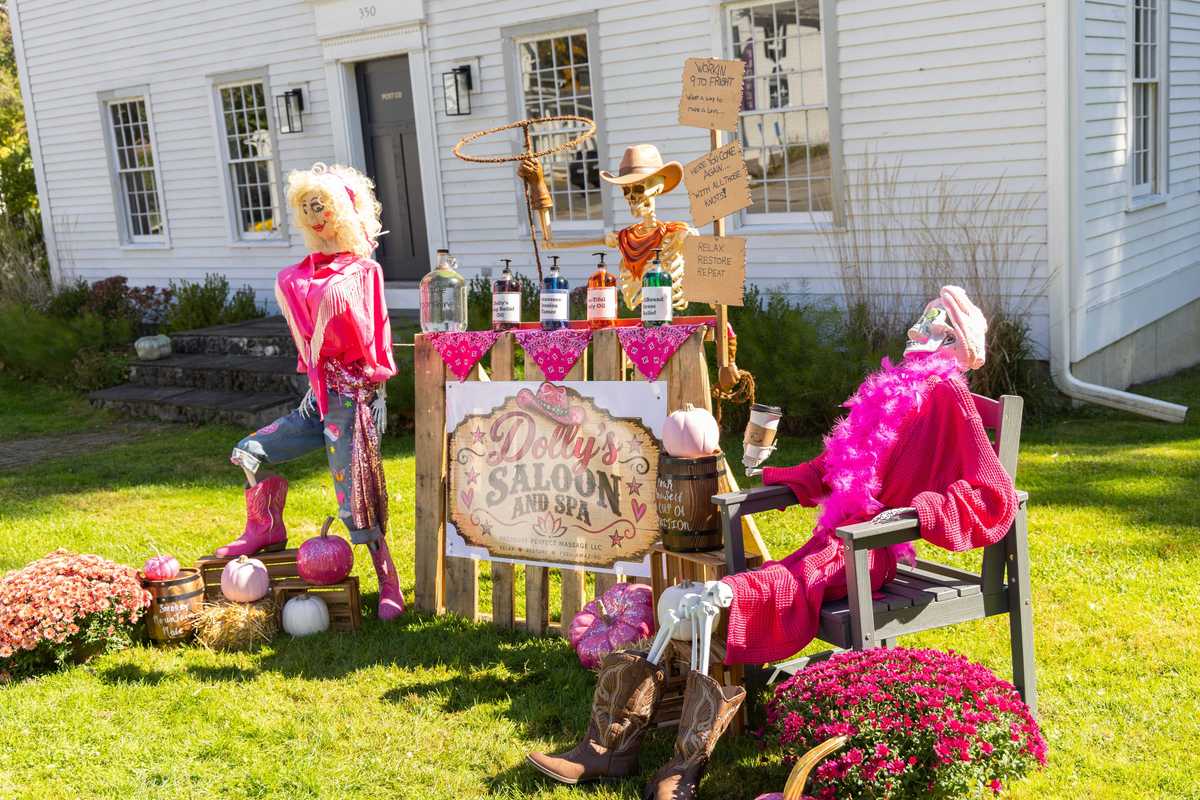
Dolly’s Saloon and Spa by Pressure Perfect Massage LLC won first place in the business category of the annual scarecrow contest. The business will be awarded with a trophy in recognition of its first-place finish.
Cash prizes of $100, $75 and $50 are being awarded to the top three entries in each of three categories: individuals and groups; schools and nonprofits; and businesses.
Winners were announced Monday, Oct. 12. Pressure Perfect Massage’s “Dolly’s Saloon and Spa” topped the business category, the Lakeville Ladies Auxiliary won among schools and nonprofits, and Jean the artist/designer’s “Kill Me with Kisses” took first place among individuals and groups.
The dozens of entries blended humor and imagination with messages about conservation and compassion.
Salisbury School’s “Coral the Octopus” highlighted Oceana, an organization focused on ocean conservation. The orange and blue octopus held plastic bottles, with trash scattered around it. An accompanying sign encouraged viewers to donate to protect the oceans.
East Mountain House, an end-of-life care home in Lakeville, created a scarecrow adorned with leaves bearing inspirational words such as love, peace and joy. The sign beside it read, “Love never leaves.”
Pressure Perfect Massage’s bright pink “Dolly’s Saloon and Spa” paid tribute to Dolly Parton, while Jean’s scarecrow was being “killed by kisses” from its canine friends.
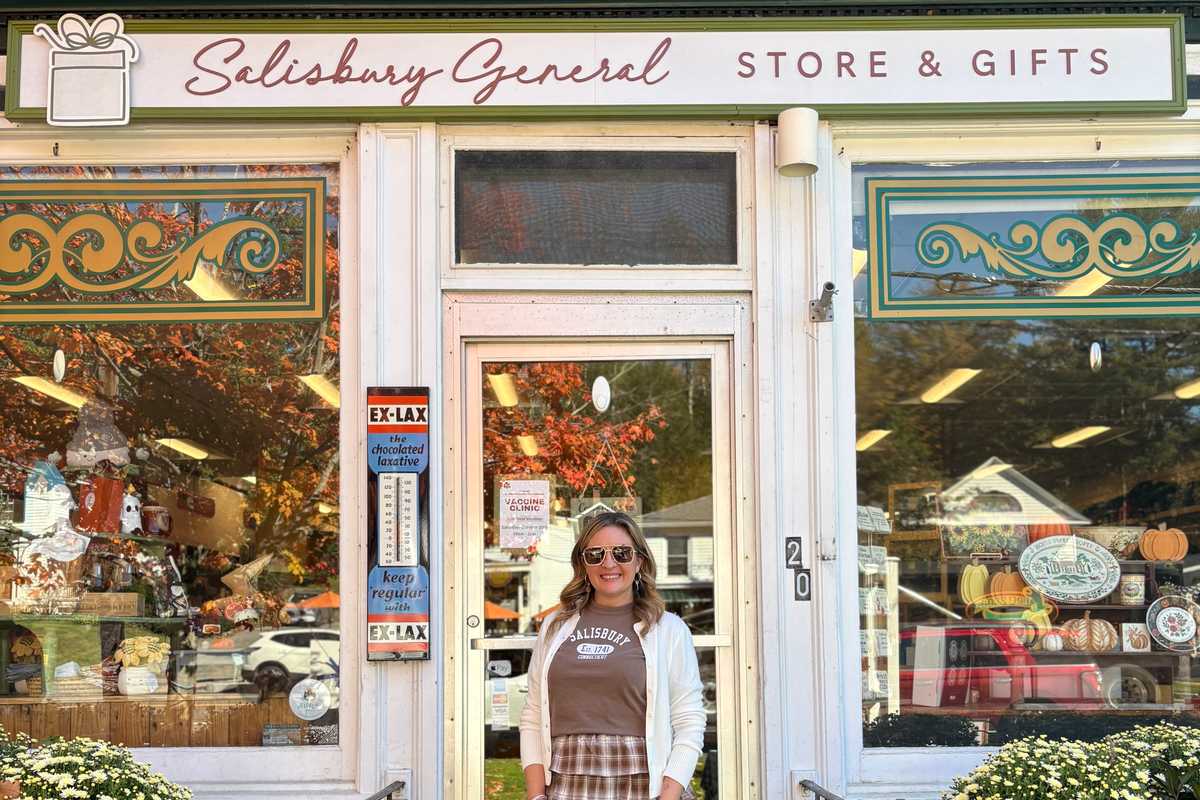
Visitors voted for their favorites using QR codes or paper ballots available at the Salisbury General Store, White Hart Inn and Grassland Dessert Cafe.
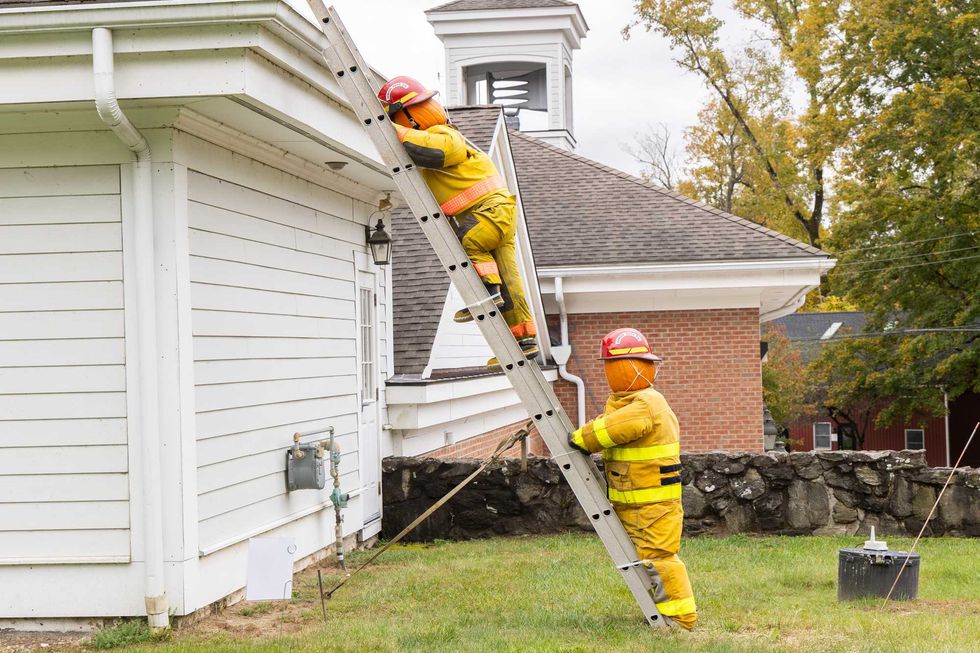 The Lakeville Ladies Auxiliary won first place in the Schools & Non-Profit Category.Madi Long
Business category
First Place: Pressure Perfect Massage, “Dolly’s Saloon and Spa”
Second Place: Elyse Harney Real Estate, “Spiderman”
Third Place: J.T. Murphy’s Barbershop, “E.T.”
Schools & Nonprofits
First Place: Lakeville Ladies Auxiliary
Second Place: Salisbury School, “Help Coral the Octopus Save the Oceans,”
Third place: SOAR Enrichment, “The SOARcerer.”
Individuals and Groups
First Place: Jean the artist/designer, “Kill me with Kisses.”
Second Place: The Hackett family “Skele-pooh & the Honey Pot.”
Third Place: Quinn and Vanessa Bosquet, “Luke.”

Want more of our stories on Google? Click here to make us a Preferred Source.