‘The Batman’ Soars: A Tale Of Revenge and Renewal

“The Batman,” with a cast of extraordinary villains and a tormented antihero, has converted new fans to this decades-old franchise. Photo courtesy IMDB

Batman has always been mysterious to me, perhaps even as mysterious as he is to the residents of Gotham.
Maybe it’s because I’ve been invested in Marvel superheroes since the age of 8, when I first saw Tobey Maguire as Spiderman, or because I only saw “The Dark Knight” for the first time this past January. Maybe there were just so many versions of Batman that I simply lost interest.
So when I was told that “The Batman” starring Robert Pattinson was “the most amazing Batman ever,” I bought a ticket with an open mind. Three hours later, I left the theater speechless — and confident that Pattinson’s Batman had indeed outshone those of his predecessors.
Directed by Matt Reeves, the film opens with a rendition of “Ave Maria” that’s haunted me for days. Batman’s already been thick in the vengeance game for two years. Scarred by his parents’ murder when he was a child, he has made it his mission to protect the residents of Gotham.
Along with some impressive technology and gear, fear is possibly the most potent tool on this Batman’s belt. The illuminated bat signal in the night sky is not just a call for him, but also a warning to the city’s cesspool of criminals.
But even as their fear of Batman sends criminals scurrying back to the shadows, a new and enigmatic figure emerges in the form of The Riddler (played by Paul Dano).
Unlike many comic book villains, The Riddler isn’t out to destroy a city for fun and profit. He is furious at Gotham for its unfulfilled promises of renewal. His rage is palpable in the eyes that peer through his glasses, perched atop the Army weather mask that hides his face. Here is a masked man intent on unmasking the corruption on which Gotham profits.
Beyond the villain and the vigilante, a third figure, Catwoman, emerges from the shadows.
Zoe Kravitz’ Selina Kyle/Catwoman has been damaged by a crook, and left to fend for herself. She teaches herself to be a cunning master of disguise at ease in all worlds, slipping into Gotham’s underworld to gain intel just as easily as she infiltrates a politician’s estate.
Gotham’s body count builds. The Riddler’s clues taunt Batman into uncovering the city’s closeted skeletons. And as he digs deeper, Bruce Wayne is forced to confront not only Gotham’s shameful acts, but also his own role in igniting The Riddler’s reign of terror.
With shadow-ringed eyes and a hoarse voice, Pattinson does an exemplary job of bringing depth to DC Comics’ revered antihero.
Dano creates a worthy opponent in his role as The Riddler. I was shaken by his performance — his research on the Zodiac Killer for this performance was effectively channeled.
Several other Batman villains show up in “The Batman.” John Turturro is a soft-spoken wolf in sheep’s clothing as Carmine Falcone. Colin Farrell was unrecognizable as Oswald Cobblepot, producing what I believe was one unparalleled Penguin.
As for supporting heroes, Jeffrey Wright’s James Gordon was yin to Batman’s yang.
Yet what really stood out in this rendition of “The Batman” was not just its compelling storyline, carefully curated cast or haunting score. What I recall most vividly is what I felt leaving the theater. In a time of citizens navigating a path away from darkness and violence, I left “The Batman” feeling something I’d never expected from a DC Comics movie: hopeful.
“The Batman”has been held over at The Moviehouse in Millerton, N.Y. Go to www.themoviehouse.net for information. It will eventually be available on HBO Max.

Lakeville Journal
A Bingo fundraiser was held on Friday, March 13, in support of the Sharon Center School Class of 2027 trip to Washington D.C. The school’s gymnasium was filled with 88 attendees and a reporter $1,901.50 was raised.

Christine Bates
15 Sharon Valley Road, a home built in 1860 that is in need of renovation work, sold for $380,000 on Jan. 27, 2026.
SHARON — The 12-month trailing median price for a single-family home, excluding condos, in Sharon increased to $720,000 for the period ending Feb. 28, 2026.
The figure marks a 36% increase from the $530,000 median recorded for the 12 months ending Feb. 28, 2025, and 14% from $655,000 for the comparable period ending Feb. 28, 2024.
The unit sales of single-family homes in Sharon on a 12-month rolling basis remained within historic range. A total of 40 single-family homes were sold in the 12 months ending Feb. 28, 2026, compared with 42 sales in the period ending Feb. 28, 2025, and 40 sales for the 12 months ending Feb. 29, 2024. Historically, sales of single-family homes in Sharon typically range between 35 and 45 transactions a year.
Inventory in all categories remains limited and stable. As of March 13, there were 13 single-family homes on the market. Of those, 12 were listed above $1 million and no residential properties were listed below the current $720,000 median price. Ten parcels of land are listed for sale on the MLS ranging from $139,000 to $995,000. Summer furnished rentals account for six out of the 10 rental listings.
Condo prices rise, though sales remain limited
Though relatively few in number, condos remain a factor in the Sharon residential market. The 12-month trailing median price for a condo in Sharon increased to $307,000 for the period ending Feb. 28, 2026. This level marks a $50,000 increase from the $257,000 median recorded for the 12 months ending Feb. 28, 2025, and from $250,000 for the comparable period ending Feb. 28, 2024.
The total number of condos sold in each year remained low with a total of two units sold in the 12 months ending Feb. 28, 2026, compared with four sales in the period ending Feb. 28, 2025, and three sales for the 12 months ending Feb. 29, 2024. Two multi-million-dollar condos remain available at Great Elm.
February transactions
34 Jackson Hill Road – 3 bedroom/2.5 bath renovated house on .83 acres sold by TVC Funding IV REO LLC to Karen and Todd Saxe.
15 Sharon Valley Road – 3 bedroom/1.5 bath home built in 1860 on 1.5 acres sold by Leonard Morrison Jr. to 15SVRenovations LLC for $380,000.
48 Keeler Road – 3 bedroom/3 bath rustic home built in 1918 with a 1 bedroom/1 bath studio, and garage on 39.89 acres sold by Keller Road Holdings LLC to 381 Vinyard LLC for $1,130,000.
4 Upper Main Street, Unit 3 – 2 bedroom/2 bath condo built in 1973 sold by Sandra and Peter Oliver to Claire Marianne Legeard for $325,000.
12 Lucas Road – 4 bedroom/3 bath renovated ranch built in 1964 on 2.73 acres sold by Scott and Stacy Gordon to Shay Alster, Cristina Shapiro-Alster, and Dror and Irit Anna Price for $750,500.
8 Upper Main, Unit 14 – 2 bedroom/2 bath condo built in 1973 sold by Heather Jolicoeur to Darryl Peck for $289,000.
* Town of Sharon real estate transfers recorded between Feb. 1 and Feb. 28, 2026, provided by Sharon Town Clerk. Transfers without consideration are not included. Current market listings from Smart MLS and market statistic from Infosparks. Note that recorded transfers frequently lag sales by a number of days. Compiled by Christine Bates, Real Estate Salesperson with William Pitt Sotheby’s International Realty.
Alec Linden
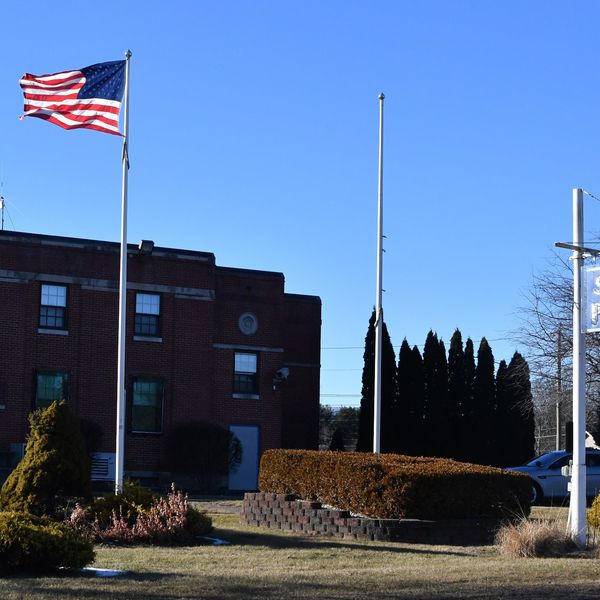
SHARON — Two longtime municipal employees will retire at the end of June, bringing more than six decades of combined experience at Town Hall to a close.
Stanley MacMillan Jr. and Jamie Casey submitted resignation letters that were read by First Selectman Casey Flanagan at the Board of Selectmen’s regular meeting on March 10. Both will step down effective June 30.
In her resignation letter, Casey wrote that she and MacMillan Jr. had worked closely together throughout their years at Town Hall and had decided to vacate their positions at the same time.
MacMillan Jr. has served as the town building inspector and fire marshal for over three decades.
Casey has held many roles at 63 Main St. since beginning as wetlands secretary in 1991, including assistant town clerk, secretary to the building inspector and fire marshal, health department sanitarian, and, most recently, land use administrator. She stated in her letter that she is confident Nikki Blass, current land use assistant, is well suited to replace her in the role.
Flanagan offered the following statement of gratitude for the Town Hall veterans:
“Stan and Jamie have been pillars of our town government for decades. Their knowledge, integrity and unwavering commitment to Sharon place them among a truly exceptional group of public servants.It is impossible to overstate the impact they have had on our community through both their professional work and their extensive volunteer contributions. We are profoundly grateful for their service and wish them every happiness in their well‑earned retirement.”

Want more of our stories on Google? Click here to make us a Preferred Source.
Alec Linden
The storefront of Smoker’s Choice, which sits between Stateline Wine and Spirits and Family Dollar within the North Canaan East Main Street shopping center.
NORTH CANAAN — The owner of the smoke shop Smoker’s Choice was arrested on March 11 for allegedly selling recreational marijuana products without a license from his East Main Street store.
Town Resident Trooper Spencer Bronson, who coordinated the enforcement effort, shared an official Facebook post on March 14 announcing that Mohammad Rahman, 47, of Litchfield had been taken into custody.
The arrest follows an investigation into the business that began with an unannounced search of the store on Jan. 16 which yielded several pounds of illegal cannabis products.
The charges against Rahman are for possession of illicit substances of over 1 kilogram with intent to sell, and for operating a drug factory – the statutory term for any place where drug packaging products are found.
The initial investigation was reportedly instigated due to complaints from residents that illegal merchandise was being sold on the premises, as well as concern that age identification was not being adequately checked.
Multiple “high THC” products, exceeding the legal limit of the psychoactive substance for an unlicensed establishment in Connecticut, were seized during the search, including vapes, edibles and cannabis flower totaling just over 5 pounds, according to the arrest warrant.
Rahman was held on a $100,000 surety bond and faced arraignment the same day as his arrest.
The legal retail of recreational cannabis products in North Canaan narrowly passed a town vote in 2023, but state statute only allows for licensed dispensaries to sell high THC products. Smoker’s Choice does not possess such a license.
Lakeville Journal
The following information was provided by the Connecticut State Police at Troop B. All suspects are considered innocent until proven guilty in a court of law.
Protective Order Violation
On March 10, troopers arrested Nicholas Plouffe, 36, of Sharon, on an active warrant charging him with violating a protective order. Plouffe was released on a $25,000 cash bond and was scheduled to appear at Torrington Superior Court the next morning for his arraignment.
The Lakeville Journal will publish the outcome of police charges. Send mail to P.O. Box 1688, Lakeville, CT 06039, Attn: Police Blotter, or send to editor@lakevillejournal.com
Debra A. Aleksinas
Pockets of Poverty: A Northwest Corner Series
Poverty in the Northwest Corner doesn’t define an entire town. Instead, it exists in quieter pockets — apartments above storefronts, income-restricted housing and older homes where seniors and working residents struggle to keep pace with rising costs.
Pockets of Poverty is a series examining where financial hardship exists in Region One towns, what is driving it and how communities are responding.
Janet Lynn has lived her entire life in Lakeville.
At 84, the lifelong resident carefully plans her errands around trips outside the Northwest Corner — driving to Torrington, where groceries and gasoline cost less, and stretching each tank of gas long enough to refill it when she visits her daughter in Harwinton.
“People don’t understand,” Lynn said. “The prices here are geared to the rich.”
Like thousands of residents across Northwest Connecticut, Lynn falls into a category economists call ALICE — households that earn above the federal poverty line but still struggle to afford the basic cost of living.
ALICE — short for Asset Limited, Income Constrained, Employed — describes households whose incomes are too high to qualify for many public benefits but still too low to reliably cover necessities such as housing, food, transportation and health care.
Lynn was born at Sharon Hospital and has spent all her 84 years in the Lakeville section of Salisbury, on property once owned by her parents.
“But I’m struggling to stay here,” she said.
To stretch her limited budget, she regularly visits the local food pantry and carefully limits spending to essentials. Her daughter pays for her cell phone as part of a family plan.
Lynn’s experience reflects a broader reality across the region.
In the Northwest Hills Planning Region, which includes the Region One towns of Salisbury, Sharon, Kent, Cornwall, Falls Village and North Canaan, about 36% of households fell below the ALICE threshold in 2023, according to United Way data.
Statewide, about 40% of Connecticut households fell below the ALICE threshold, including 11% living in poverty and another 29% classified as ALICE.
In the Northwest Hills region, roughly one in four households — about 13,000 families — fall into the ALICE category, meaning they are above the poverty line but struggle to cover everyday expenses.
Rising housing costs have been a major factor driving the region’s affordability challenges. Median home prices in several Northwest Corner towns range from $700,000 to $1 million, fueled in part by second-home buyers and limited housing supply.
At the same time, rental options remain scarce, and rents have risen with property values, with monthly rentals reaching into the thousands of dollars.
Federal poverty statistics often fail to capture that reality.
The federal poverty line is about $15,000 for a single person, yet a single adult earning between $15,000 and $38,000 a year in northwest Connecticut falls below the ALICE budget threshold.
For a family of four, the federal poverty line is about $30,000, yet households earning between $30,000 and $116,000 in the region can still fall short of covering the region’s basic cost of living, according to ALICE measures.

A quiet lifeline in Lakeville
Across the Northwest Corner, residents facing financial strain often rely on support networks to make ends meet.
One of those lifelines is The Corner Food Pantry, located in a modest white building behind St. Mary Church in Lakeville.
The church leases the building to the pantry for a nominal $1 per year, said Holly Kempner, co-president of the nonprofit with Amanda Halle.
“We couldn’t run the pantry without their help.”
Support also comes from local businesses, volunteers and community partners. LaBonne’s Market in Salisbury helps supply fresh produce, and a massive container filled with dozens of eggs recently came from the nonprofit Tenmile Farm Foundation in Dover Plains, N.Y.
Referrals are also submitted electronically from local social service agencies, including from the town of Sharon, as well as Project SAGE, which is a nonprofit domestic violence agency serving Northwest Connecticut and nearby communities in New York and Massachusetts, Kempner explained.
Hardship is often hidden, Kempner said.
“It’s hard to know who is struggling and who isn’t. It’s not as obvious as in the city where you have a lot of hardcore stuff going on.”
On a recent Saturday morning, cars filled the church parking lot across Wells Hill Road and stretched up the driveway leading to the pantry a half hour before opening.
The vehicles reflected the income disparity in the Northwest Corner — luxury SUVs alongside aging sedans and well-worn jalopies.
Volunteers worked with practiced efficiency, unloading produce and filling grocery bags.
Among the volunteers was Jo Loi, 85, a retired educator who taught in Cornwall for three decades.
“This is really important,” Loi said as she unpacked frozen chicken and pork chops. “This is something I can really do at age 85.”
Working at the pantry has also made her reflect on how quickly circumstances can change.
“I was thinking, what would my husband and I do if we lost our home? Where would we go? We could no longer afford to live here.”
Loi worries that rising costs are gradually pushing longtime residents out.
“When people can’t afford to stay, you lose the fabric of the community,” she said. “You’re losing institutional memory.”

The social toll
Beyond financial strain, some residents say there is also a growing sense of isolation.
Lynn said the community she once knew has changed as longtime residents move away.
“I’ve lived here my whole life, and I don’t know anyone anymore,” she said. “You feel invisible.”
That sentiment was echoed by Sharon resident Linda Swenson, whose financial and social challenges became more apparent after the recent death of her husband.
Swenson was raised in Indiana before relocating to New York. She and her late husband, both graphic designers, eventually moved to Sharon to open a studio.
“One of the things I love about this area is that people accept others as you are and are very respectful of each other,” she said.
Still, she said social connections can be harder to maintain after becoming single.
“Couples have all kinds of options, but for a single woman, it can be difficult to feel connected.”
Swenson believes rural Northwest Corner towns could do more to help residents living alone build stronger social ties.
“That’s something this community can really work on,” she said.
Impacts on families and children
Lisa Ferris, executive director of the United Way of Northwest Connecticut, said the organization focuses heavily on supporting ALICE households.
“Many are working two or three jobs to cover basic living expenses and still have a hard time putting food on the table,” she said.
Ferris also worries that changes to federal SNAP regulations could make it harder for some residents to receive food assistance.
“People may have to prove they have a part-time job or show volunteer hours to qualify for benefits,” she said. “But we’re here to give them a leg up. We don’t want them to fall into poverty or homelessness.”
Health providers working with children say financial pressures on low-income families are also showing up in schools.
Rebecca Malone, a primary care provider with Community Health & Wellness Center in North Canaan, serves students through school-based health centers in the Region One School District, including Housatonic Valley Regional High School.
“Hunger is an across-the-board challenge for families in the Northwest Corner,” Malone said.
Food insecurity often remains hidden, she noted.
“People may have neighbors forced to choose between paying for health insurance, or filling their refrigerators, or paying rent,” Malone said.
Often, multiple families are living under one roof to make ends meet.
Limited budgets frequently push families toward cheaper foods with little nutritional value.
“Many kids are eating empty calories — junk food that lacks nutrition,” Malone said. “It’s not through a lack of caring. Parents are trying to feed an entire family with a very limited amount of money.”
In response, a food closet has been set up at the high school where hungry students can help themselves to healthy food and snacks.
Seasonal employment can make the situation worse.
“A lot of families work in seasonal jobs, landscaping and outdoor work,” Malone said. “Those jobs shut down for winter and people get laid off,” creating financial stress that can spill into the home.
“We can’t expect excellence from children until we fill their needs,” she said. “Without a safe and secure shelter, and food, nothing else matters.”

Want more of our stories on Google? Click here to make us a Preferred Source.

Want more of our stories on Google? Click here to make us a Preferred Source.