Concerns continue on state budget

LITCHFIELD— Members of the state legislature and first selectmen from several Northwestern Connecticut towns met Friday, Jan. 4, for the annual “legislative breakfast” at the Community Center in Litchfield.Mark Lyon, first selectman of Washington (who was also representing the Northwestern Connecticut Council of Governments, which includes Cornwall, Falls Village, Kent, North Canaan, Roxbury, Salisbury, Sharon, Warren and Washington) opened the meeting by noting some success in the last year on preserving state aid to towns; improved storm response from Connecticut Light and Power; and keeping the Troop B barracks in North Canaan open.Lyon said the towns should continue to pressure members of the General Assembly to protect state aid — the bulk of which is in the Education Cost Sharing (ECS) and Town Aid Road grants — and that the legislature should not attempt to balance its budget by cutting aid. He said that a cut in state aid equals an increase in local property taxes to make up the difference.Lyon said that the municipalities represented (including the 11-town Litchfield Hills Council of Elected Officials: Barkhamsted, Colebrook, Goshen, Hartland, Harwinton, Litchfield, Morris, New Hartford, Norfolk, Torrington and Winchester) have been responsible in keeping their budgets under control.“We don’t have much room to work with our municipal budgets, so balancing the [state] budget on us only shifts the burden to the towns.” Prevailing wage The prevailing wage law was a sore spot with the assembled first selectmen. The law states that “the prevailing wage law does not apply where the total cost of all work to be performed by all contractors and subcontractors in connection with new construction of a public works project is less than $400,000 dollars. The prevailing wage law does not apply in connection with remodeling, refinishing, refurbishing, rehabilitation, alteration or repair of any public works project under $100,000 dollars.”Lyon said that the thresholds are too low, and recommended the first category be increased to $1 million.He said complying with the prevailing wage law adds as much as 30 percent to the cost of projects and makes it difficult for local contractors to bid on jobs in their towns.“It’s not that they’re not paying good wages,” Lyon said. Rather, the problem is that small contractors don’t have the clerical staff to handle the paperwork that accompanies a prevailing wage project.Donald Stein of Barkhamsted said the new speaker of the state House of Representatives had asked him “to show me data” on the effect of the current law.“We’ve been showing them data for years.” Storm response Stein continued on the subject of storm response. He said CL&P was much better during Superstorm Sandy, and the response of the cable company in his town, Charter Communications, was also improved.He wasn’t as kind to AT&T, which he said was “on the bad list.”“Every [cell] tower should have a generator.”Stein said the telephone company should “mimic” CL&P’s system of local liaison personnel.He wasn’t optimistic about economic development. “Year after year we hear that the population is aging, younger people are leaving. STEAP (Small Town Economic Assistance Program} grants are helpful, but they’d be 30 percent better without the prevailing wage.”He said the state’s tourism bureau doesn’t have much impact, in part because it covers the entire area from Fairfield County in the south to the Massachusetts border, with major cities like Danbury and Waterbury getting the most attention.Stein also took on the subject of unfunded state mandates, a perennial complaint of Northwest Corner officials.He said Barkhamsted found itself trying to cover an unexpected $18,000 shortfall for five children to be sent to a charter school in Avon.He urged the state legislators “not to pass those costs down to us.” Legislators respond State Rep. Roberta Willis (D-64) said the legislature has been “pretty good” in not reducing aid to towns, but it hasn’t increased them either, so with inflation the towns are getting behind.“In terms of this session, it’s very hard to find $2 billion” (a projected deficit figure for the state budget).“Don’t expect an early decision.”State Rep. Arthur O’Neill (R-69) said that while he is sympathetic to the towns, state aid is the sort of thing that “jumps off the page as an easy cut” when legislators consider the budget deficit.“There may be some slight reductions.”On the ECS grants, Willis said, “We do our best to maintain, but the probem is implementation of educational reform. A lot is being asked of the education system.”State Rep. Craig Miner (R-66) said he believed the Newtown school shooting in December “will have a price tag associated with legislation” that may be passed to deal with school security.State Sen. Jason Welch (R-31) said towns could “probably expect some cuts to aid.”He said the budget problems could be seen as an opportunity for the towns to say “if you cut us this much, then we need relief here.”Miner, observing that many of the complaints of the towns are not new, asked, “Could you put together a small group and have a priority list? ‘These are the top five things that cost us money — often when we didn’t think it would.’”Miner said that if he had such a list before the legislature convened, “It would be helpful.”And he added: “If this conversation isn’t going on at the regional level, this is going to be a long summer.” The 2013 session The state legislature is in session this year from Jan. 9 to June 5. It is what is known as the long session. Every odd-numbered year (such as 2013) is a long session, in which new laws can be voted on. The sessions begin on the Wednesday following the first Monday in January and adjourn no later than the first Wednesday following the first Monday in June.In even-numbered years (such as 2012 and 2014), the legislature has a short session in which only budget issues and emergencies are addressed.Short sessions begin on the Wednesday following the first Monday in February and adjourn no later than the first Wednesday following the first Monday in May.

Latest News

Living art takes center stage in the Berkshires

Contemporary chamber musicians, HUB, performing at The Clark.

D.H. Callahan

Northwestern Massachusetts may sometimes feel remote, but last weekend it felt like the center of the contemporary art world.

Within 15 miles of each other, MASS MoCA in North Adams and the Clark Art Institute in Williamstown showcased not only their renowned historic collections, but an impressive range of living artists pushing boundaries in technology, identity and sound.

Keep ReadingShow less
Persistently amplifying women’s voices

Francesca Donner, founder and editor of The Persistent. Subscribe at thepersistent.com.

Aly Morrissey

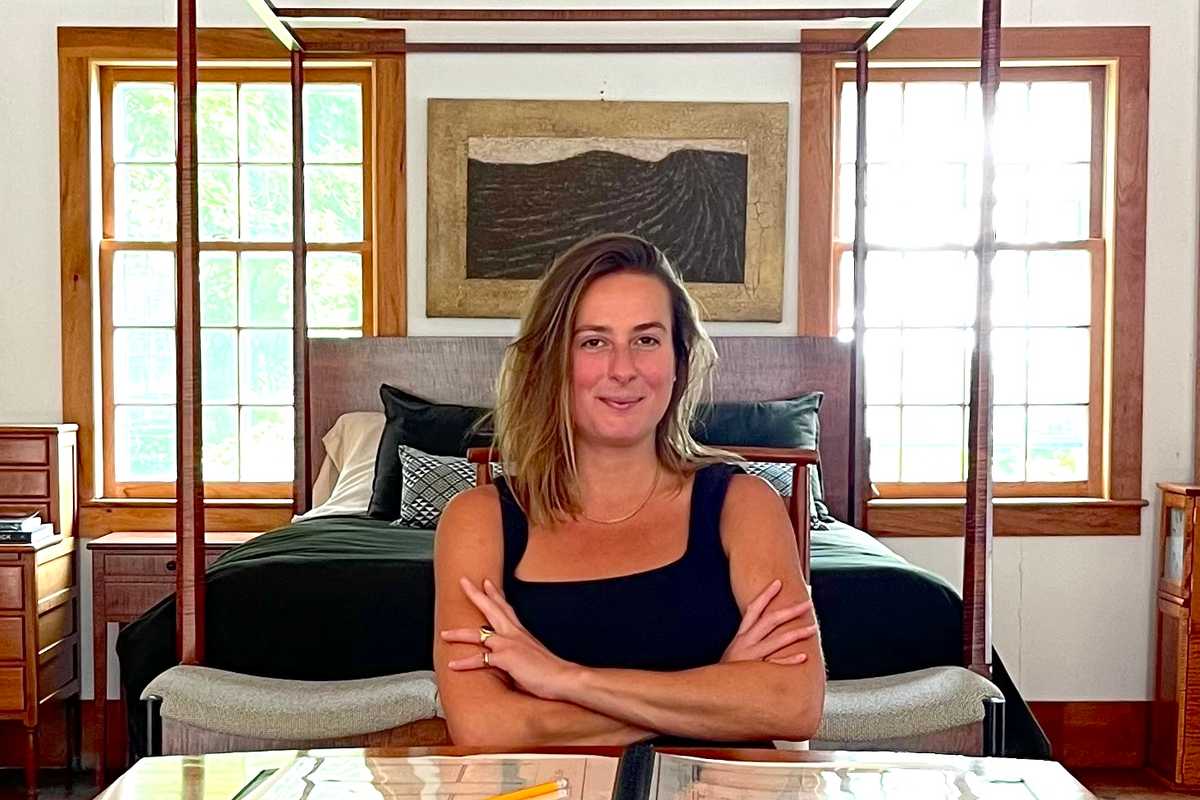
Francesca Donner pours a cup of tea in the cozy library of Troutbeck’s Manor House in Amenia, likely a habit she picked up during her formative years in the United Kingdom. Flanked by old books and a roaring fire, Donner feels at home in the quiet room, where she spends much of her time working as founder, editor and CEO of The Persistent, a journalism platform created to amplify women’s voices.

Although her parents are American and she spent her earliest years in New York City and Litchfield County — even attending Washington Montessori School as a preschooler — Donner moved to England at around five years old and completed most of her education there. Her accent still bears the imprint of what she describes as a traditional English schooling.

Keep ReadingShow less
Jarrett Porter on the enduring power of Schubert’s ‘Winterreise’
Baritone Jarrett Porter to perform Schubert’s “Winterreise”
Tim Gersten

On March 7, Berkshire Opera Festival will bring “Winterreise” to Studio E at Tanglewood’s Linde Center for Music and Learning, with baritone Jarrett Porter and BOF Artistic Director and pianist Brian Garman performing Franz Schubert’s haunting 24-song setting of poems by Wilhelm Müller.

A rejected lover. A frozen landscape. A mind unraveling in real time. Nearly 200 years after its premiere, “Winterreise” remains unnervingly current in its psychological portrait of isolation, heartbreak and existential drift.

Keep ReadingShow less
google preferred source

Want more of our stories on Google? Click here to make us a Preferred Source.

A grand finale for Crescendo’s 22nd season

Christine Gevert, artistic director, brings together international and local musicians for a season of rare works.

Stephen Potter

Crescendo, the Lakeville-based nonprofit specializing in early and rarely performed classical music, will close its 22nd season with a slate of spring concerts featuring international performers, local musicians and works by pioneering composers from the Baroque era to the 20th century.

Christine Gevert, the organization’s artistic director, has gathered international vocal and instrumental talent, blending it with local voices to provide Berkshire audiences with rare musical treats.

Keep ReadingShow less

Leopold Week honors land and legacy

Leopold Week honors land and legacy

Aldo Leopold in 1942, seated at his desk examining a gray partridge specimen.

Robert C. Oetking

In his 1949 seminal work, “A Sand County Almanac,” Aldo Leopold, regarded by many conservationists as the father of wildlife ecology and modern conservation, wrote, “There are some who can live without wild things and some who cannot.” Leopold was a forester, philosopher, conservationist, educator, writer and outdoor enthusiast.

Originally published by Oxford University Press, “A Sand County Almanac” has sold 2 million copies and been translated into 15 languages. On Sunday, March 8, from 3 to 5 p.m. in the Great Hall of the Norfolk Library, the public is invited to a community reading of selections from the book followed by a moderated discussion with Steve Dunsky, director of “Green Fire,” an Emmy Award-winning documentary film exploring the origins of Leopold’s “land ethic.” Similar reading events take place each year across the country during “Leopold Week” in early March. Planning for this Litchfield County reading began when the Norfolk Library received a grant from the Aldo Leopold Foundation, which provided copies of “A Sand County Almanac” to distribute during the event.

Keep ReadingShow less

Erica Child Prud’homme

Erica Child Prud’homme

WEST CORNWALL — Erica Child Prud’homme died peacefully in her sleep on Jan. 9, 2026, at home in West Cornwall, Connecticut, at 93.

Erica was born on April 27, 1932, in Doylestown, Pennsylvania, the eldest of three children of Charles and Fredericka Child. With her siblings Rachel and Jonathan, Erica was raised in Lumberville, a town in the creative enclave of Bucks County where she began to sketch and paint as a child.

Keep ReadingShow less
google preferred source

Want more of our stories on Google? Click here to make us a Preferred Source.
google preferred source

Want more of our stories on Google? Click here to make us a Preferred Source.