Latest News
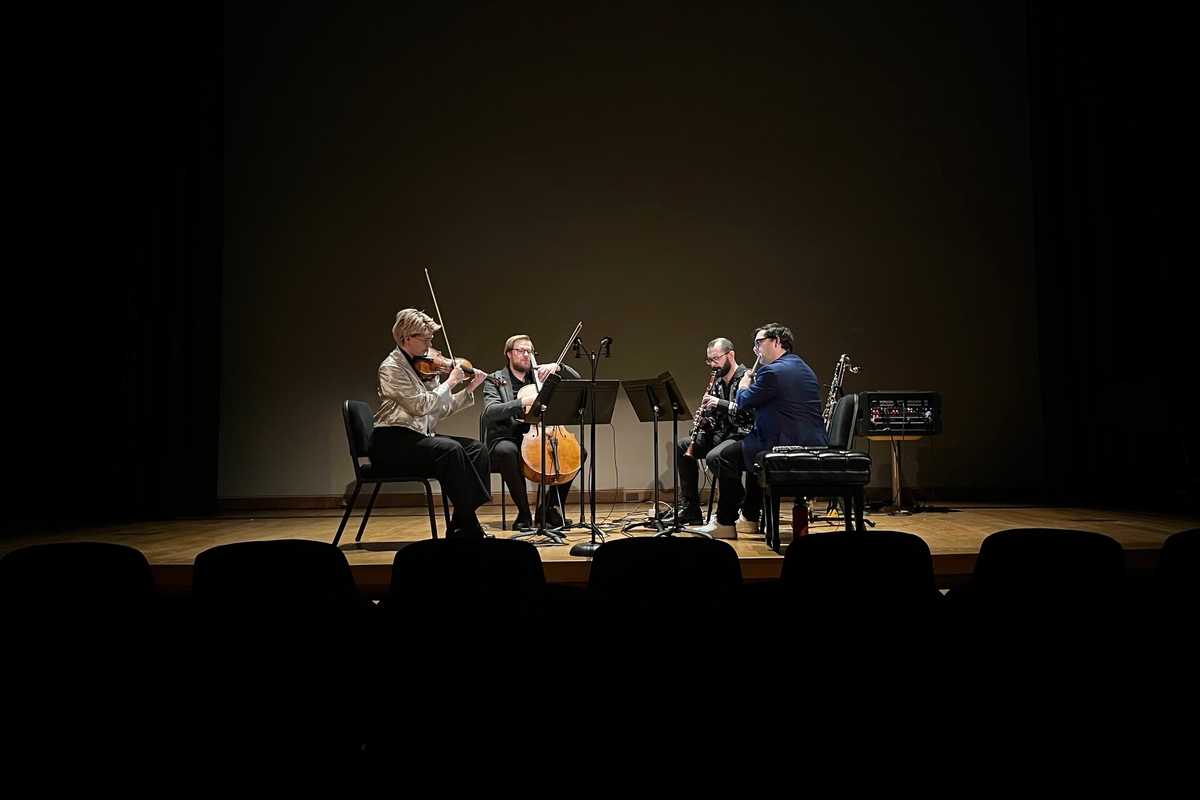
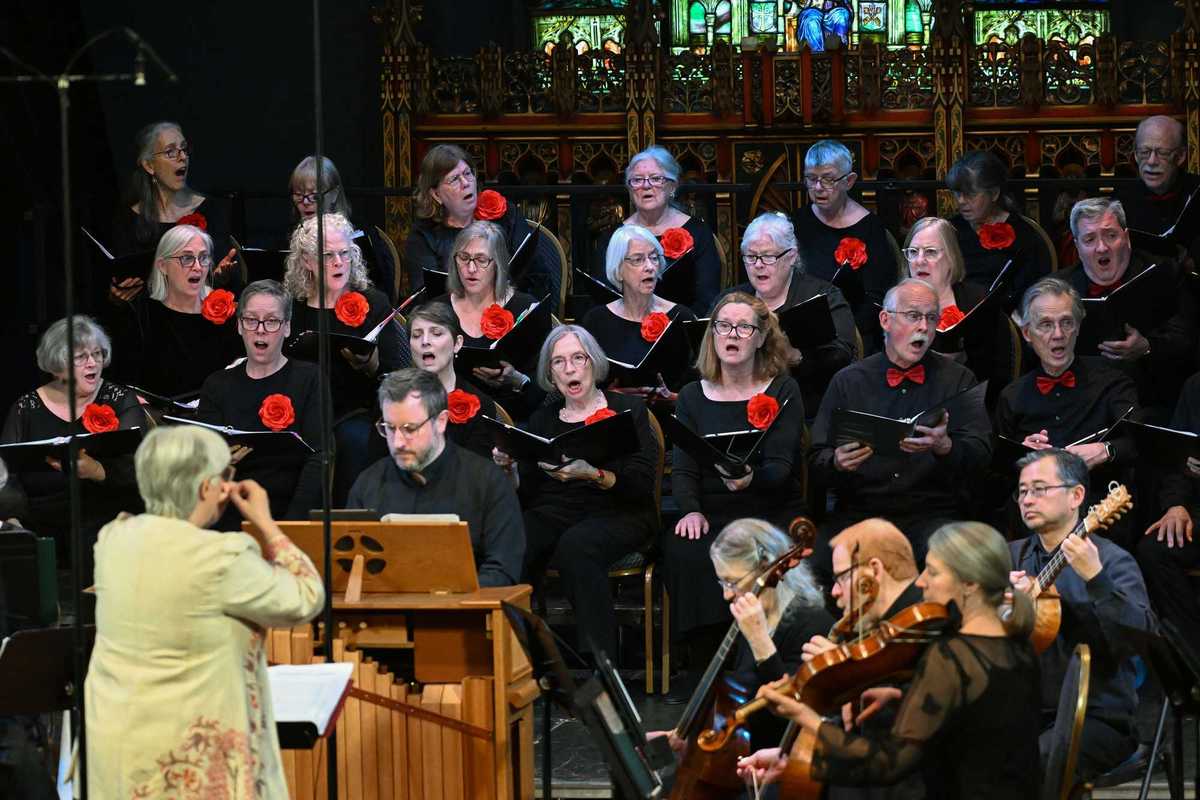
Contemporary chamber musicians, HUB, performing at The Clark.
D.H. Callahan
MASS MoCA is known for its 20th-century holdings spread throughout a sprawling complex of industrial brick buildings. Installations by Sol LeWitt and James Turrell have permanent homes there. Just down the road in Williamstown, the Clark features masterworks by Winslow Homer, Frederic Remington, John Singer Sargent and Claude Monet.
But what visitors might not immediately associate with those established names is how deeply both institutions invest in art happening right now.
On Saturday afternoon, a panel of young artists discussed their relationships with art, identity and technology as part of MASS MoCA’s “Technologies of Relation” exhibition, which opened that evening. The artists represented a broad range of cultural backgrounds, drawing on ancestry while exploring the future of art and technology.
The work itself ran the gamut: wax relief paintings, stained glass, interactive video and sculptural installations. One immersive piece automated the traditional Armenian practice of reading fortunes from coffee grounds. Particularly striking were Roopa Vasudevan’s hand-drawn QR codes and Taeyoon Choi’s large-scale weavings of binary code.
Opening the same night was Zora J. Murff’s “RACE/HUSTLE.” Through photographs, paintings and installations, Murff explores the wide-ranging and sometimes violent implications of being Black in America today. Each piece — whether confronting the rise of white supremacy or examining stereotypes imposed on Black communities — carries razor-sharp visual commentary designed to unsettle.
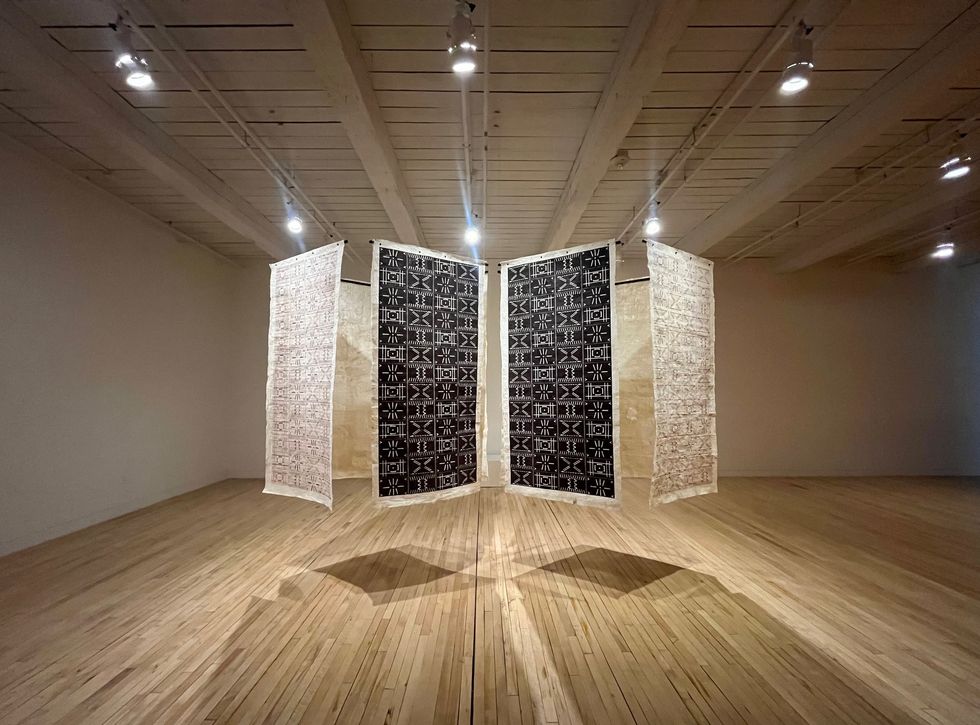 Pelenakeke Brown’s “Reverb” (detail) at Mass MoCA. D.H. Callahan
On Sunday, the Clark continued the contemporary thread. A small exhibition of work by Raffaella della Olga, titled “Typescript,” features intricate patterns created using a typewriter on varied paper surfaces. The effect seems almost impossible until viewers watch a video of della Olga loading her typewriter with 140-grit sandpaper and typing in a hypnotic rhythm. Though the typewriter is considered obsolete technology, she continues to find new applications for it, completing some of the works in recent months.
Next door in the Clark auditorium, HUB New Music performed works written specifically for its unusual instrumentation: violin, cello, clarinet and flute. While that combination may not stand out to casual listeners, relatively little classical repertoire exists for it. The ensemble regularly commissions composers to expand the possibilities.
The results were striking. From the opening notes of Francisco del Pino’s “Passacaglia,” the quartet’s command and layered repetition pulled unexpected emotion from the audience.
After three pieces came the world premiere of Daniel Wohl’s “Mirage,” a roughly 25-minute work accompanied by digital blips, static and electronic textures evoking radio transmissions and UFO lore. Hearing four virtuoso musicians extract entirely new sounds from traditional instruments echoed the weekend’s larger theme: old tools made new again.
Like della Olga’s typewriter, Vasudevan’s QR codes or Murff’s charged imagery, the performances demonstrated that contemporary art often grows from familiar materials — reimagined.
The old masters will always draw visitors to these institutions. But when living artists command equal attention, this quiet corner of the Berkshires feels less like the middle of nowhere and more like a creative epicenter.
D.H. Callahan is a voice actor, creative director and trail steward. He lives with his artist wife in West Cornwall, Connecticut.

Want more of our stories on Google? Click here to make us a Preferred Source.