Have you seen one of these lately? This recent, gorgeous visitor to our backyard was an ebony jewelwing, one of the most abundant species of damselflies in Connecticut. It is our only damselfly with all-black wings — in the male only. (Females have brown wings with a white spot). The male’s body is a glittering turquoise. Depending on the angle of the light, it can appear either green or blue.
This damselfly inhabits the borders of slow-moving streams, but it will also wander into meadows and gardens. It flies with an erratic, loping motion somewhat like a butterfly’s.
Damselflies and the related dragonflies belong to the insect order Odonata, which means “toothed.†Odonates have extendible jaws that are used for eating prey. Both damselflies and dragonflies feed mainly on flies and other insects smaller than themselves.
It is easy to tell dragonflies and damsels apart. The most obvious difference is that, when perched, damselflies fold their wings together above and behind them. Their wings are hinged at the shoulder, allowing them to do this. Dragonflies’ wings are held laterally at all times.
Dragonflies generally are less delicate and have thicker bodies than damselflies. Owing to differences in their wing structure, dragonflies often have a much more powerful and direct flight than damselflies, and some dragonflies are long-distance migrants.
You’ll have a few more weeks to see the ebony jewelwing; it flies until mid-September.
Connecticut has 49 species of damselflies and twice that many dragonflies. If you are interested in finding out more, the University of Connecticut maintains an excellent Web site, “The Odonata Fauna of Connecticut,†ghostmoth.eeb.uconn.edu/dragons.
Fred Baumgarten is a writer and naturalist living in Sharon. He can be reached at fredb58@sbcglobal.net.






 Tiffany Lemelin, shelter manager, brushing Marsala upon arrival.Provided
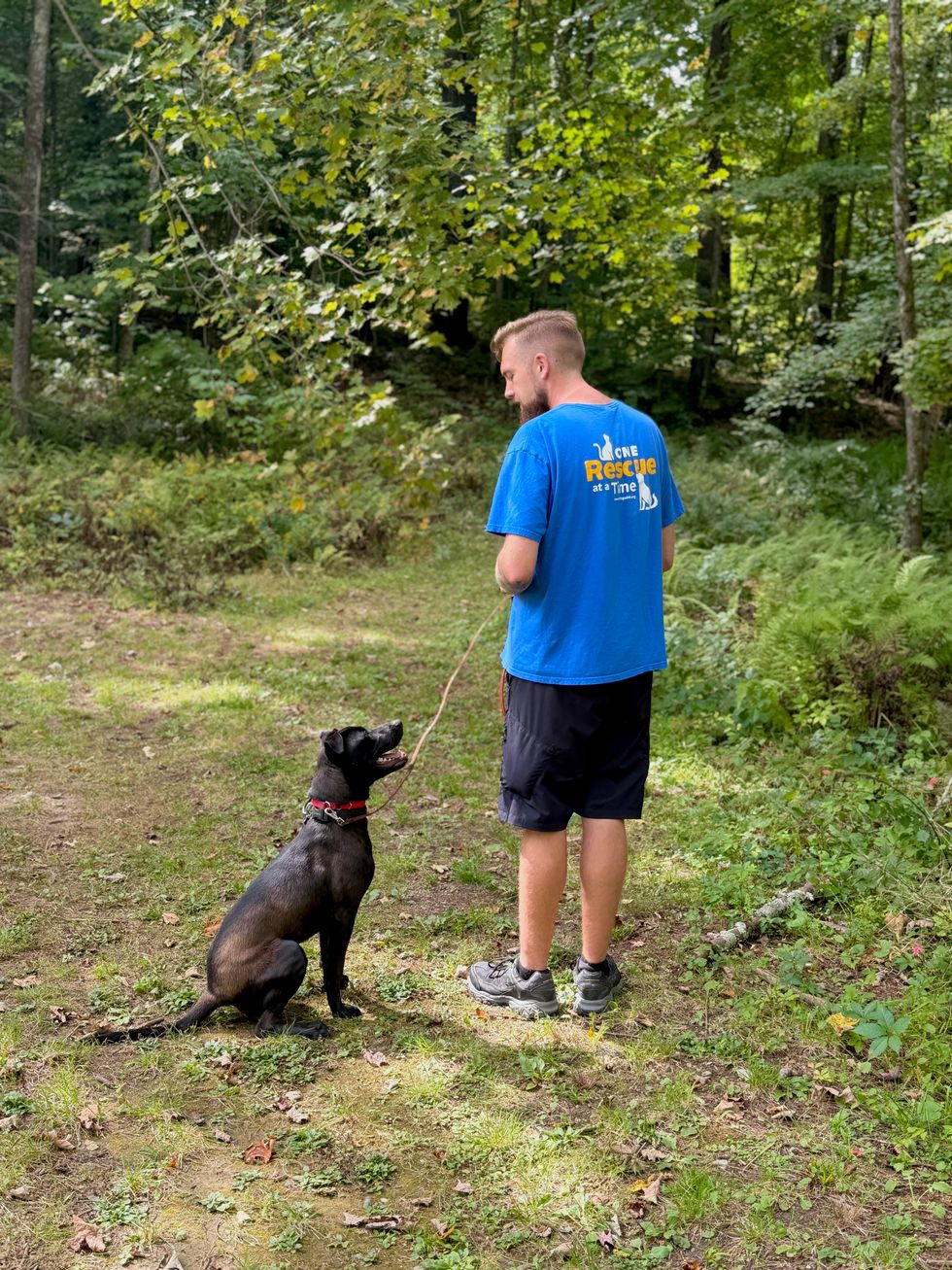 Michael DeBarba, certified dog trainer working with Marsala.Jennifer Almquist
 Marsala wins a heart.Jennifer Almquist