Catherine Hanf Noren, author of a book that recounts her Jewish family’s escape from Germany, as told through ephemera, spoke at the Cornwall Library Sunday, March 22. The talk was sponsored by the Cornwall Historical Society. This is part one.
CORNWALL — A bit of miscommunication turned out to be the perfect setup for a talk by Cornwall resident Catherine Hanf Noren.
Organizers for the event, which was sponsored by the Cornwall Historical Society, thought the subject was genealogy. And it was, sort of.
But Noren’s approach to telling the story of her family — German Jews who, for the most part, escaped persecution — is not really about the well-ordered charts and documents that are the world of genealogists. Instead, to tell her tale, Noren uses old photographs, letters, news clippings and documents, things that make one wonder why anyone would save them. Noren uses these bits of ephemera to create a framework; and then she fills in the blanks.
“If you believe like I do that family history, like other history, is basically fiction, then all that stuff in the attic is a motherlode of material to create a history,� she said.
Noren’s mother’s family “documented itself fervently.� The charts, dating back through many, many generations, are all there. But she is not particularly interested in them.
“I’m not a scholar or a genealogist, and what once took an incredible amount of work now takes 10 minutes on the Internet. Anyone can do it,� she shrugged.
Even back in the mid-1970s when she was writing her book, “The Camera of my Family,� she looked to her mother’s Lime Rock attic for inspiration.
As a result, she noted, “Much of what is in the book is totally subjective and anecdotal.�
Wedding certificates in German, letters from her grandfather’s textile business (written in rudimentary English), her mother’s gift and guest lists for her 9th birthday are fascinating documents themselves — literal pieces of history that have been touched by those who lived, now, long gone.
Noren didn’t bring along only the precious originals. She also had photocopies, which she passed out to her audience. One was a copy of the front and back of an envelope — which had contained letters from her grandfather’s brother and his wife written in June 1941, expressing their distress over their failed attempts to leave Germany.
Continued next week
They died sometime later, in a concentration camp. Their son, Franzl, made it to England on a children’s transport.
“The Nazi stamps on the envelope tell the story,� Noren explained. “Franzl came to Cornwall last summer. He died two months ago, in his late 80s.�
Noren had been working her way through the belongings of her deceased sister and mother, and discovered that many of her friends who were doing the same thing with their own family ephemera. She encouraged them to take those random objects and devise from them portraits of their families.
“If everything is not true, it’s OK,� she said. What matters is sitting down with those scraps and remembering the people who once owned them. “All that junk in the attic may seem worthless, but it is the connection to our past.�
She passed around handpainted textiles and the carved wooden blocks that brought fame and fortune to her grandfather, Moritz Wallach. His bombed-out German factory was returned to him after the war, but the family came to Lime Rock, where he set up a new workshop on the second floor of the family’s home.
“He popularized the dirndl for street wear,� Noren said. “His wood cutouts are a lasting legacy.�
Noren went on to list his accomplishments: a museum in Munich, textiles for a Parisian designer, costumes for the Paris opera. He was recently described as “the Martha Stewart of Germany.�
“He invented branding before there was a name for it,� Noren said.
When Noren was about 3-1�2 years old, her family emmigrated to Australia. She and her sister were sent to a very unusual school there — but they were glad just to get out of Germany; “you went where you could go,� she said.
The experimental school in the Australian bush that she attended for three years taught mostly art and architecture. Australia was fun. Noren recalls a lot of swimming, not a lot of supervision and rides in the headmaster’s Rolls Royce.
“I remember it like a dream. I was never really sure it was real until recently, when I read about it on the Internet. I even found a letter from a former student who described the same crazy things I remember. I was thrilled to realize I didn’t make it up.�
Among the artifacts she discovered in the attic of the Lime Rock house is a stuffed koala bear she got while she was in Australia.
“It’s been around all my life, but I only recently realized it’s a piece of real taxidermy.�
Noren’s book, “The Camera of my Family,� is available at the Cornwall Library.
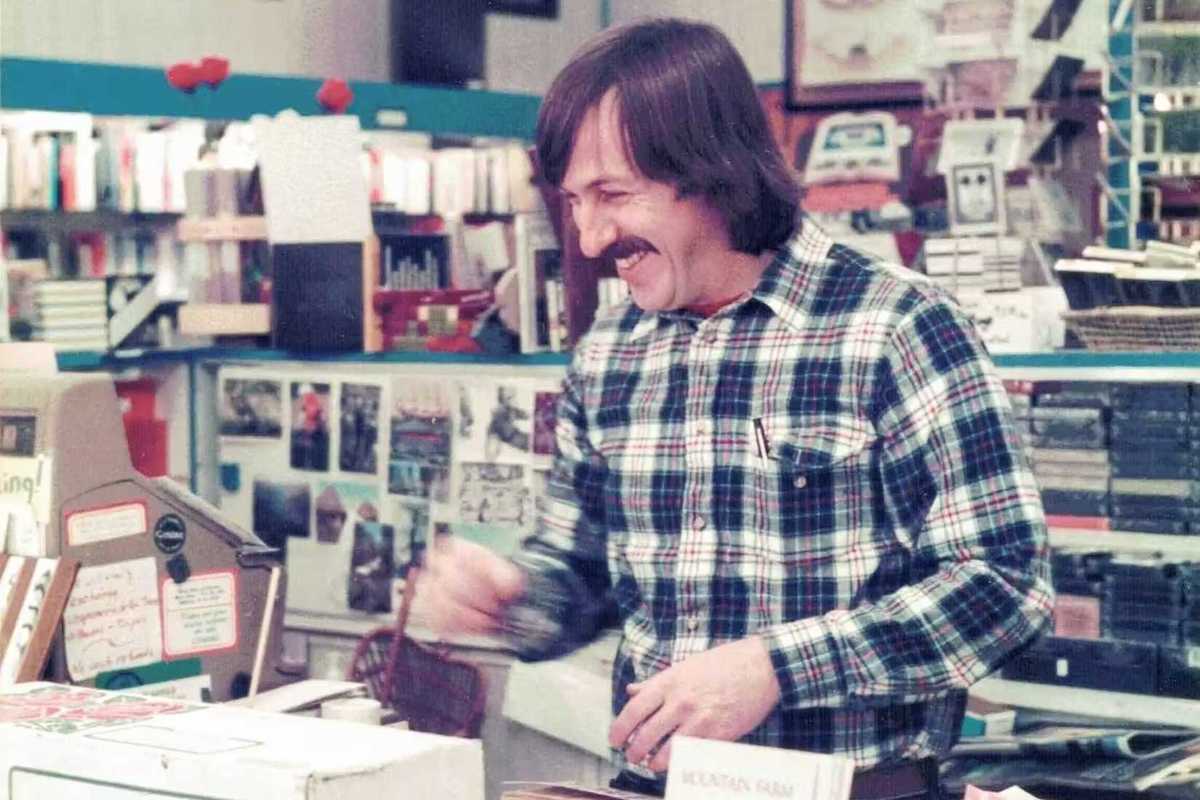
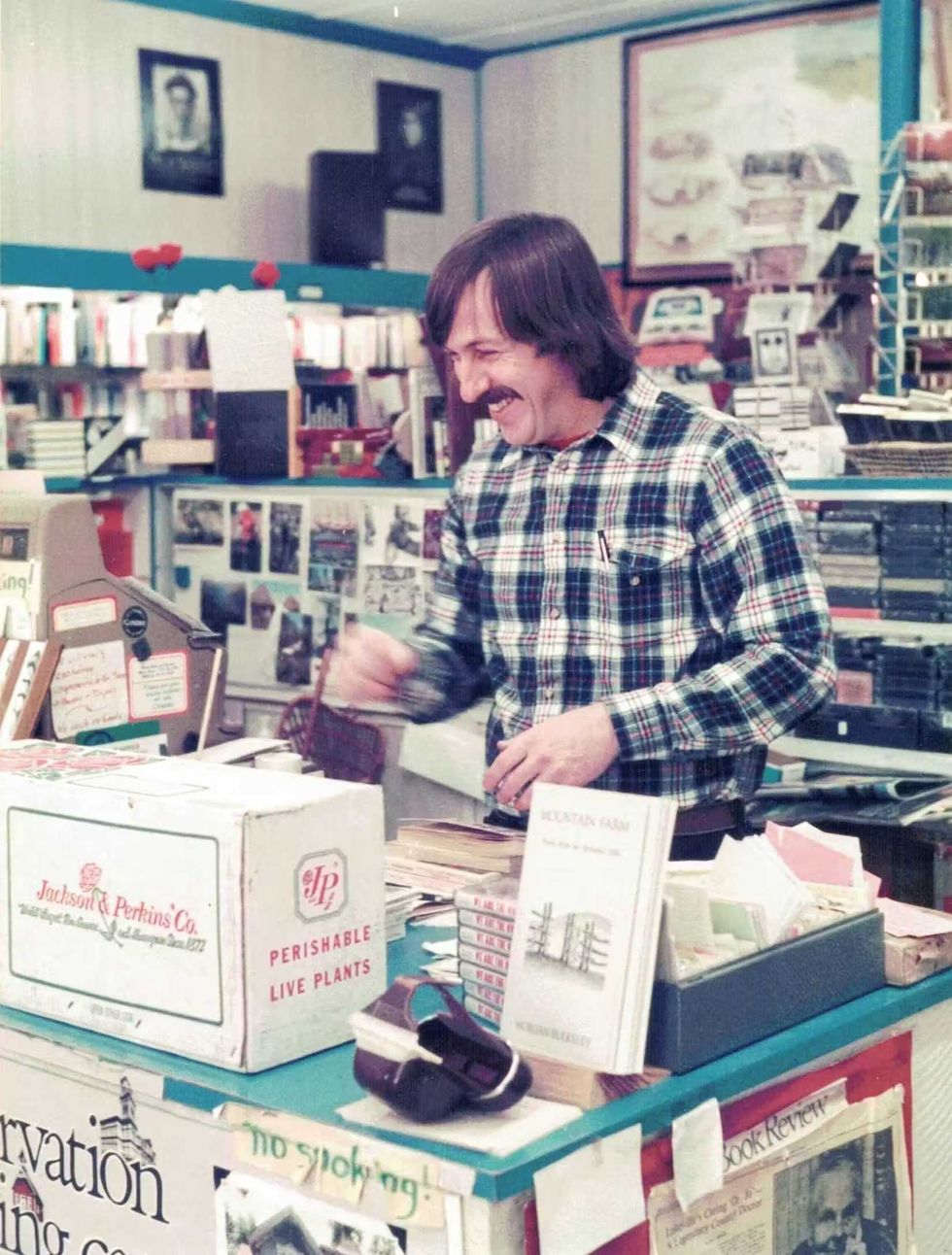 Dick Hermans in the Oblong Bookstore on Millerton’s Main Street in 1985.Provided

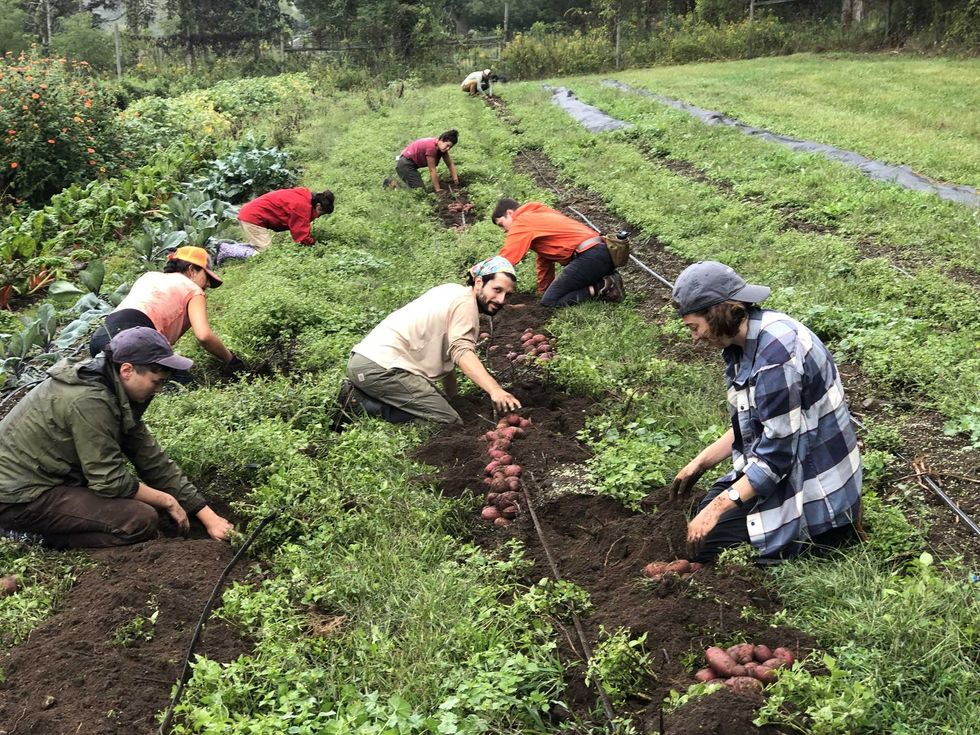 Fall storage crop harvests amid soil building cover crops at Adamah Farm in Falls Village. Janna Siller