Fennel: beautiful, crunchy and different


When I went to the grocery store this weekend, I was somewhat surprised to find the produce department full of spring vegetables and loaded with big, green, fresh-looking cabbages - which didnt make me think about cole slaw so much as it made me think of St. Patrick's day and corned beef, cabbage and potatoes.

I don't really love the bland taste of cabbage (even though it's really good for you, and apparently is delicious if you don't overboil it, as I always do).

Also, I don't particularly love the smell of boiled cabbage.

However, there is a bounty of fennel around at this time of year, which made me think of a variation on the classic: How about corned beef, whipped potatoes and roasted fennel?

Fennel is a vegetable that many people ignore even though it has a lot to offer.

It's an antioxidant, so it helps fight the free radicals that can damage cells and cause cancer.

It's an antiflammatory and helps reduce swelling in the joints.

It also helps with digestion and is recommended for people who suffer from irritable bowel syndrome.

It's also got vitamin C, fiber, potassium, manganese, folate, niacin, phosphorous, calcium, magnesium, iron and copper.

And perhaps best of all, it has a very mild flavor, unlike some of the other super-veggies such as broccoli and, well, cabbage. And it's crunchy and refreshing, like celery, but it's not as fibrous and it has more flavor.

It is often called anise, and tastes a little like licorice.

Not sure how to cook it? Fennel is fantastic raw. Slice it thin and use it in a salad (a classic Italian salad combines fennel with orange slices and shaved parmesan cheese) and, in chunkier slices, as a crudité with dip or the wonderful smoked salt sold at the Old Drover's in Dover Plains.

I often take a bulb of fennel and toss it in with chicken breasts that I roast in a 375-degree oven. The juices from the chicken moisten the fennel and make it tender and sweet.

Many cooks braise fennel (bake it in a pan with water and savories such as onion, garlic and herbs).

I prefer it roasted.

If you're not making a chicken (and you won't be with this recipe), try roasting it with some olive oil on it, or braising it first in some chicken stock (it actually will be a little dry if you roast it on its own). Trim the leafy fronds off the top of the bulb, and trim off the hard base (fennel is like celery; after you cut off the outside of the base, there is still some left to hold the individual fronds together).

Cut the remaining bulb in quarters, leaving the base intact so that you have four banana-like sections.

Use a baking dish large enough for your fennel quarters to lie flat. Pour in enough chicken stock to come up about a quarter or half inch in the roasting dish. Season with some salt and pepper. Roast in a 375-degree oven for about 15 minutes, until the fennel becomes soft and nearly translucent and just begins to brown. Serve with whipped potatoes and corned beef.


Corned beef


Adapted from Mark Bittman's "How to Cook Everything


1 corned beef, 3 to 5 pounds

1 bay leaf

6 cloves garlic, peeled

3 cloves

10 peppercorns

5 allspice berries or a teaspoon of ground allspice

1 onion, whole, peeled


Put the beef in a large heavy pot and cover it with water (don't fill it all the way to the top or it will boil over). Add the remaining ingredients and boil gently.

Skim off any foam from the surface, and then lower the heat so that the water bubbles only occasionally, not constantly. Continue cooking for about two hours, turning the beef every 30 minutes or so.

After two hours, begin checking the beef every 15 minutes to see if it's tender.

When you can pass a thick knife through the middle of the brisket without much resistance, it's done. Pull the beef from the pot and let the water drain out of it. Slice across the grain and serve with whipped potatoes, roasted fennel (plan on one fennel bulb per person), coarse salt and mustard.


Latest News

Living art takes center stage in the Berkshires

Contemporary chamber musicians, HUB, performing at The Clark.

D.H. Callahan

Northwestern Massachusetts may sometimes feel remote, but last weekend it felt like the center of the contemporary art world.

Within 15 miles of each other, MASS MoCA in North Adams and the Clark Art Institute in Williamstown showcased not only their renowned historic collections, but an impressive range of living artists pushing boundaries in technology, identity and sound.

Keep ReadingShow less
Persistently amplifying women’s voices

Francesca Donner, founder and editor of The Persistent. Subscribe at thepersistent.com.

Aly Morrissey

Francesca Donner pours a cup of tea in the cozy library of Troutbeck’s Manor House in Amenia, likely a habit she picked up during her formative years in the United Kingdom. Flanked by old books and a roaring fire, Donner feels at home in the quiet room, where she spends much of her time working as founder, editor and CEO of The Persistent, a journalism platform created to amplify women’s voices.

Although her parents are American and she spent her earliest years in New York City and Litchfield County — even attending Washington Montessori School as a preschooler — Donner moved to England at around five years old and completed most of her education there. Her accent still bears the imprint of what she describes as a traditional English schooling.

Keep ReadingShow less
Jarrett Porter on the enduring power of Schubert’s ‘Winterreise’
Baritone Jarrett Porter to perform Schubert’s “Winterreise”
Tim Gersten

On March 7, Berkshire Opera Festival will bring “Winterreise” to Studio E at Tanglewood’s Linde Center for Music and Learning, with baritone Jarrett Porter and BOF Artistic Director and pianist Brian Garman performing Franz Schubert’s haunting 24-song setting of poems by Wilhelm Müller.

A rejected lover. A frozen landscape. A mind unraveling in real time. Nearly 200 years after its premiere, “Winterreise” remains unnervingly current in its psychological portrait of isolation, heartbreak and existential drift.

Keep ReadingShow less
google preferred source

Want more of our stories on Google? Click here to make us a Preferred Source.
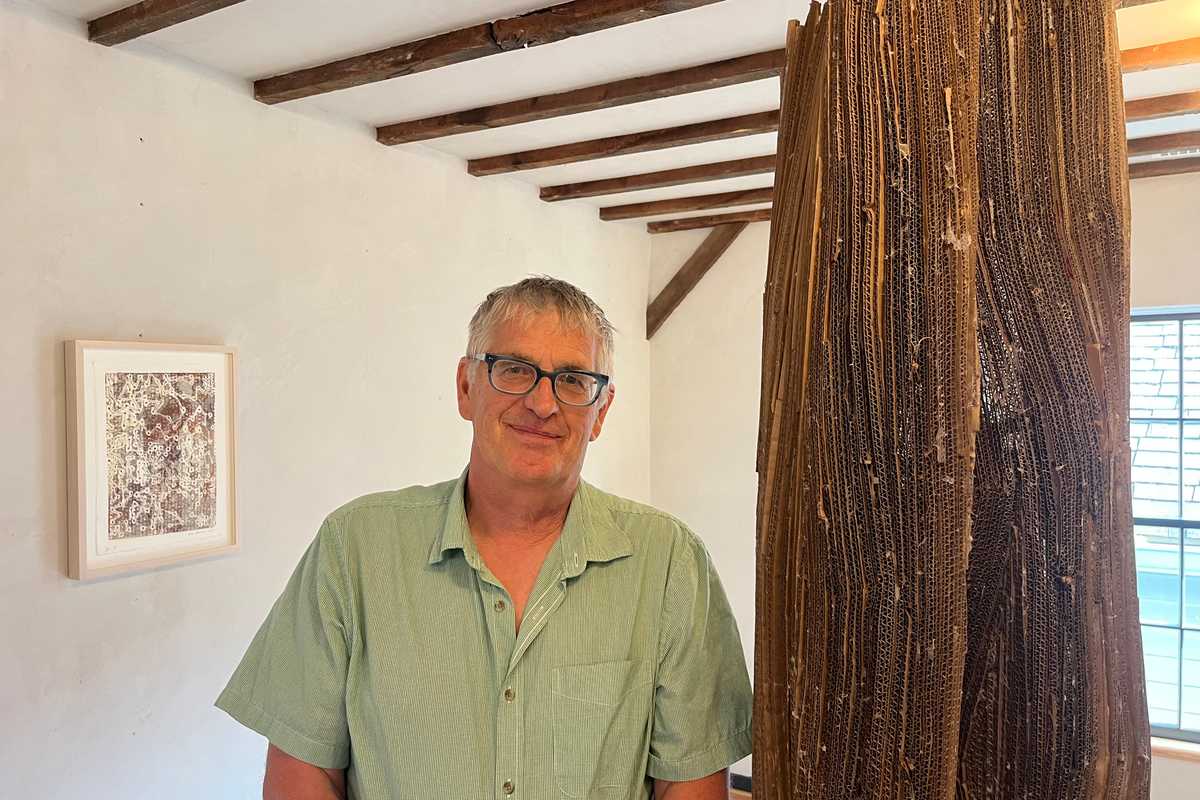
A grand finale for Crescendo’s 22nd season

Christine Gevert, artistic director, brings together international and local musicians for a season of rare works.

Stephen Potter

Crescendo, the Lakeville-based nonprofit specializing in early and rarely performed classical music, will close its 22nd season with a slate of spring concerts featuring international performers, local musicians and works by pioneering composers from the Baroque era to the 20th century.

Christine Gevert, the organization’s artistic director, has gathered international vocal and instrumental talent, blending it with local voices to provide Berkshire audiences with rare musical treats.

Keep ReadingShow less

Leopold Week honors land and legacy

Leopold Week honors land and legacy

Aldo Leopold in 1942, seated at his desk examining a gray partridge specimen.

Robert C. Oetking

In his 1949 seminal work, “A Sand County Almanac,” Aldo Leopold, regarded by many conservationists as the father of wildlife ecology and modern conservation, wrote, “There are some who can live without wild things and some who cannot.” Leopold was a forester, philosopher, conservationist, educator, writer and outdoor enthusiast.

Originally published by Oxford University Press, “A Sand County Almanac” has sold 2 million copies and been translated into 15 languages. On Sunday, March 8, from 3 to 5 p.m. in the Great Hall of the Norfolk Library, the public is invited to a community reading of selections from the book followed by a moderated discussion with Steve Dunsky, director of “Green Fire,” an Emmy Award-winning documentary film exploring the origins of Leopold’s “land ethic.” Similar reading events take place each year across the country during “Leopold Week” in early March. Planning for this Litchfield County reading began when the Norfolk Library received a grant from the Aldo Leopold Foundation, which provided copies of “A Sand County Almanac” to distribute during the event.

Keep ReadingShow less

Erica Child Prud’homme

Erica Child Prud’homme

WEST CORNWALL — Erica Child Prud’homme died peacefully in her sleep on Jan. 9, 2026, at home in West Cornwall, Connecticut, at 93.

Erica was born on April 27, 1932, in Doylestown, Pennsylvania, the eldest of three children of Charles and Fredericka Child. With her siblings Rachel and Jonathan, Erica was raised in Lumberville, a town in the creative enclave of Bucks County where she began to sketch and paint as a child.

Keep ReadingShow less
google preferred source

Want more of our stories on Google? Click here to make us a Preferred Source.
google preferred source

Want more of our stories on Google? Click here to make us a Preferred Source.