Thank you!
Your support is sustaining the future of local news in our communities.

FFA students return from Indianapolis with awards

FFA students return from Indianapolis with awards

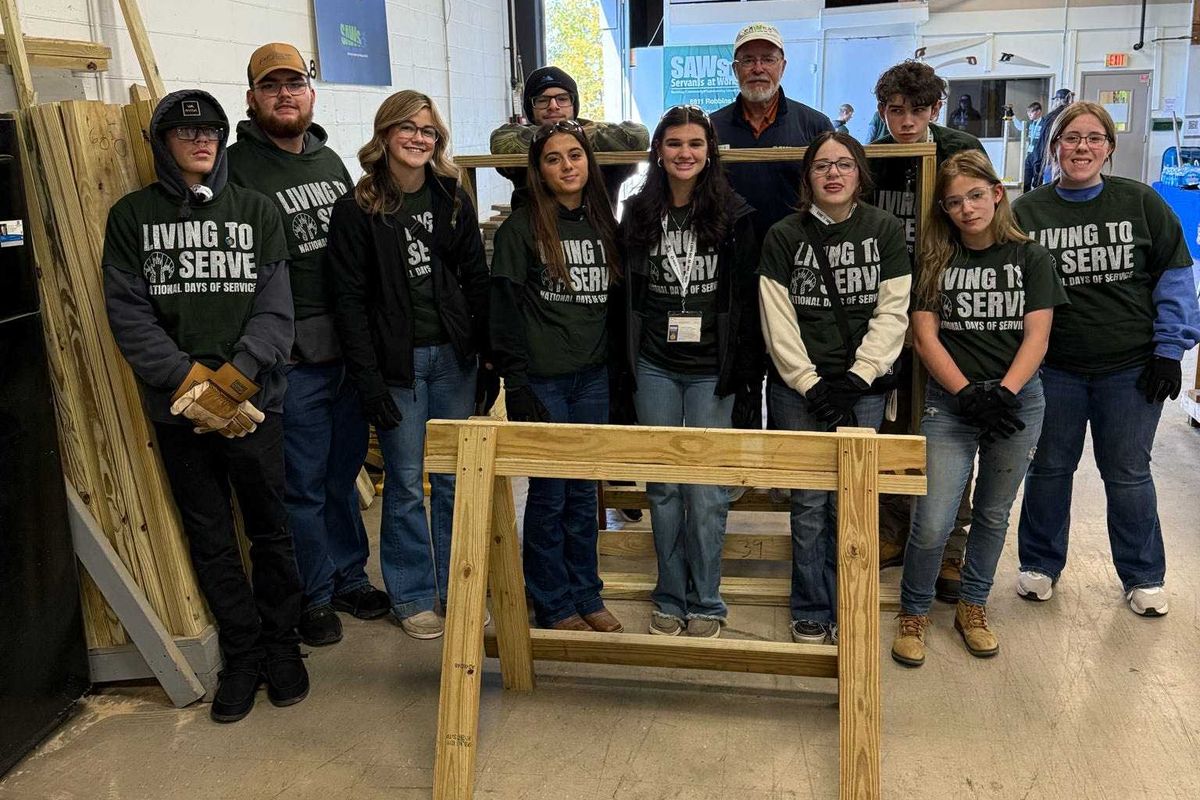
Housatonic Valley FFA built wheelchair ramps for homes during the FFA convention.

Provided

A group of 18 Housatonic Valley FFA students, joined by two American Degree recipients, two chaperones and four advisors, took part in the 98th National FFA Convention in Indianapolis, Indiana, Oct. 29 to Nov. 1.

The event brought together 73,000 FFA members from across the country to compete, learn and celebrate agricultural education.

Four Housatonic students - Hannah Johnson, Madison Melino, Darwin Wolfe and Kellie Eisermann - competed in the horse evaluation competition, where the team won a bronze placement. The nursery landscape team, made up of Byron Bell, Hayden Bell, Madeline Collingwood and Michael Gawel, earned a silver placement overall in their competition.

In the leadership development events, Zayre Trail competed in the Creed Speaking with an overall bronze placement. Riley Mahaffey, in her third national public speaking event, advanced to the semifinals in Extemporaneous Speaking. Tyler Anderson represented our chapter by applying for and receiving a two-star national chapter award.
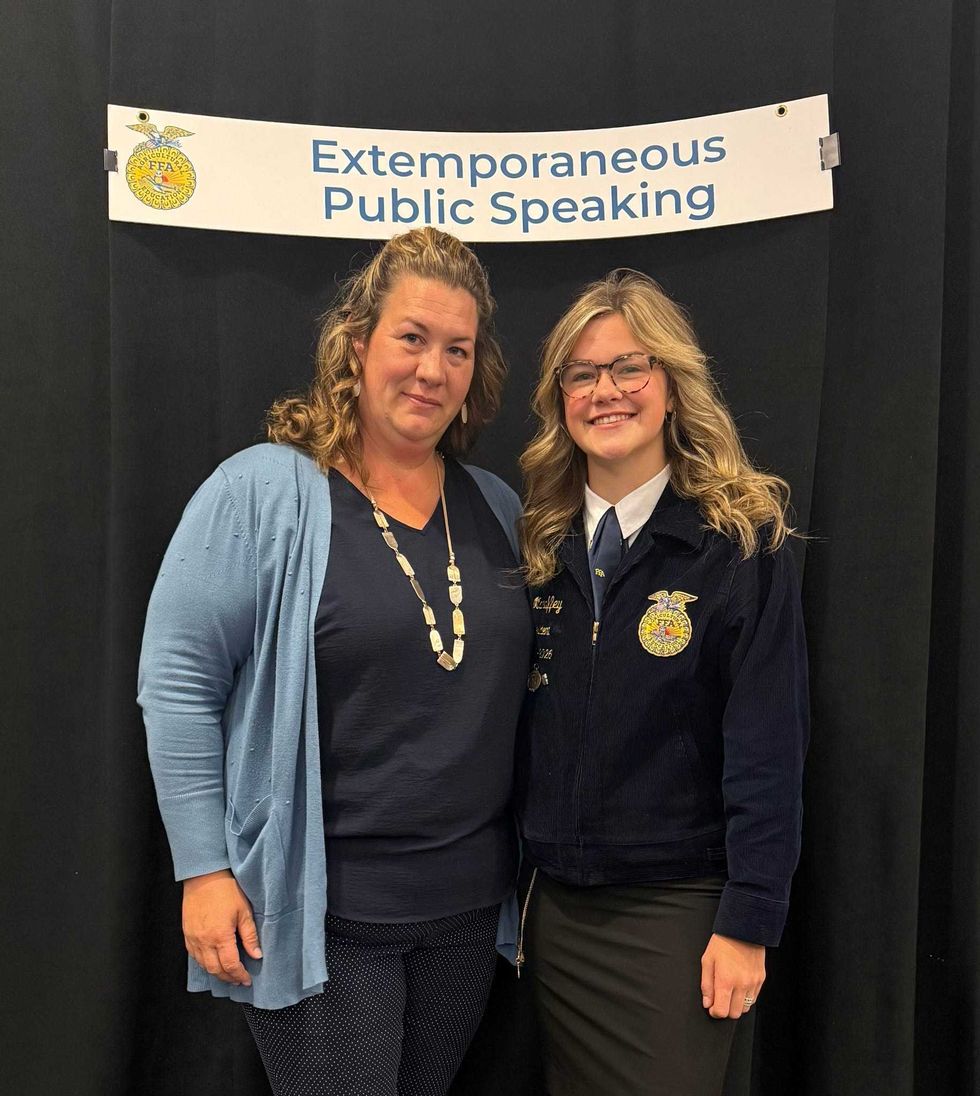
Teacher Sheri Lloyd and FFA student Riley Mahaffey at the FFA convention.Provided

Two recent HVRHS alumni, Emma Crane and Will Star, earned their American FFA Degrees. The American Degree is the highest degree an FFA member can achieve, recognizing exceptional leadership and dedication to agricultural education and supervised agricultural experience projects.

In addition, Levi Elliott and Daniel Moran were honored with the Brian Parker Award, sponsored by the Housatonic Valley FFA Alumni. This award is given to hardworking members who have not yet had the opportunity to attend the National Convention.

Other chapter representatives included Hayden Bachman, Christopher Crane, Daphne Paine, Logan Padelli and Taylor Green, who were all recognized for their dedication and involvement in FFA activities.

During the trip, students participated in “Days of Service,” including projects with Servants at Work (SAWS) to build wheelchair ramps for homes, volunteer in food kitchens and organize clothing donations. Members also attended leadership workshops to strengthen their leadership skills.

Students participated in other fun activities such as a rodeo with broncs and bull riding, a concert by Ernest and Ella Langley and of course the National Convention Expo, which is always a big hit. They also attended sessions at Lucas Oil Stadium, featuring keynote speakers, retiring addresses from national officers and performances from FFA talent shows.

Our chapter’s goal was to exchange information from different chapters across the country to set up exchange trips in the future.

Overall, everyone had a great time competing, meeting new members from across the country, and making unforgettable memories.

Kellie Eisermann is the FFA Reporter this year. She is a junior and lives in Lakeville.
The views expressed here are not necessarily those of The Lakeville Journal and The Journal does not support or oppose candidates for public office.

Latest News

Juneteenth graduation celebrates Berkshire’s next generation of leaders

Cohort 2026 members Abigail Horace, Adam Liccardi, Adrian Lynch, Cameo Brown, Chauncey Dozier, Claudette Grant, Erline Saintilet, Harmony Edwards, Kamayue Gomes, Mackenzie Colvin, Otis West, Shadre Domingo, TJ West and Tyeesha Keele-Kedroe and Blackshires’ leadership team John Lewis, Patrick Danahey, Dubois Thomas and Julie Haagenson gather at the Blackshires City Hall Fishbowl alongside Mayor Peter Marchetti and city officials Michael Obasohan, Brandon Gill, Katherine VanBramer, Heather Brazeau, Justine Dodds and Jesse Tobin McCauley.

Provided

When designer Abigail Horace joined the Blackshires Leadership Accelerator, she was looking for support as the founder of the Black Berkshires Social Club, which creates culturally grounded social spaces for Black and BIPOC residents in the region. What she found was something deeper: a community of peers invested in one another’s success.

“Finding Blackshires has been transformative,” Horace said. “Being a BIPOC founder in this region can feel isolating, and this community has changed that. They see my work, champion my business and have opened doors I couldn’t have opened alone.”

Keep ReadingShow less
Forged by curiosity: Art, craftsmanship and big fun with Izzy Fitch

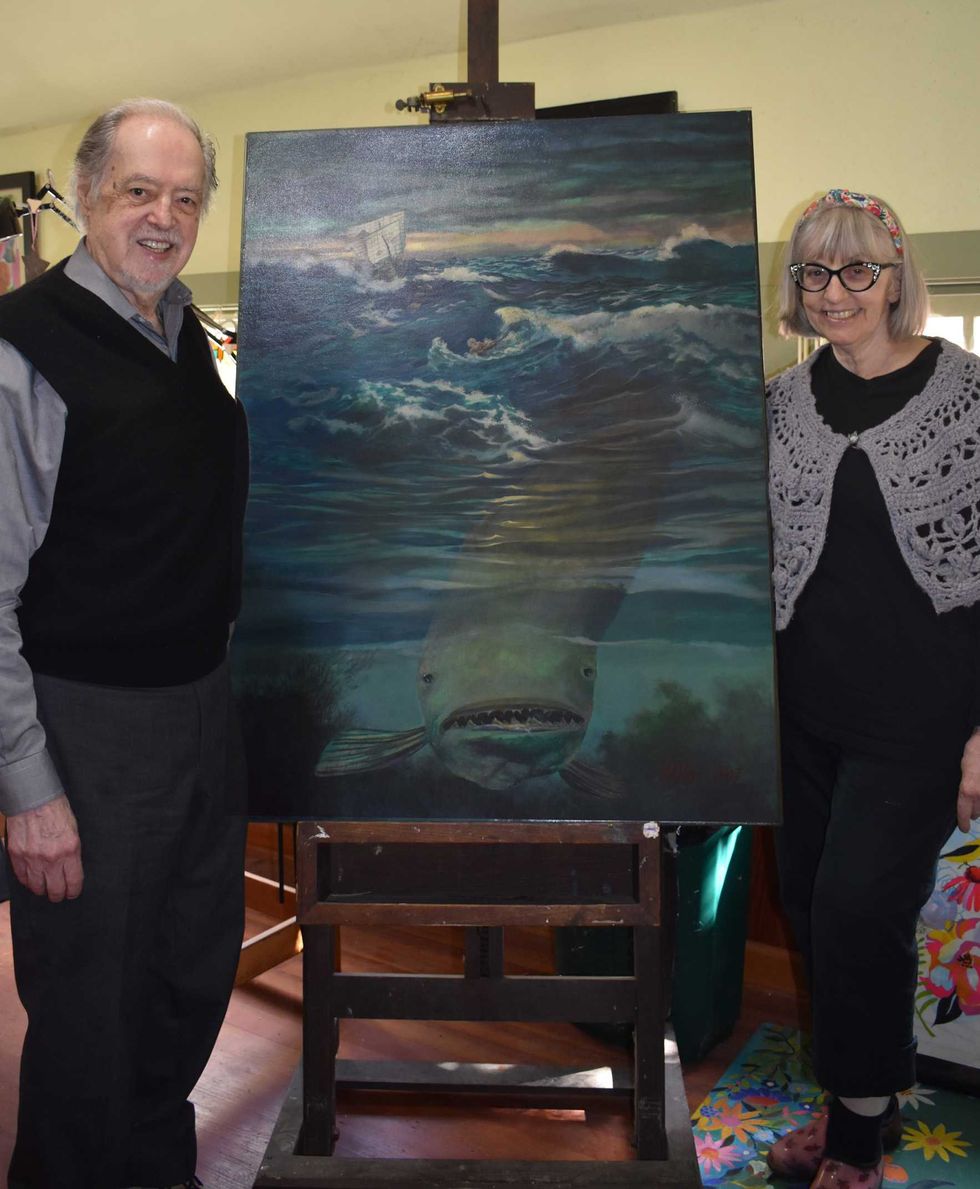
Izzy Fitch at Battle Hill Forge in Wassaic.

Madi Long
I’m not really inventing anything new. I just tweak it a little bit.— Izzy Fitch

A steel praying mantis stands among garden accents at Battle Hill Forge in Wassaic, its folded forelegs ready for prayer and mischief in equal measure.

“She’s very nice,” said blacksmith, sculptor and Battle Hill Forge owner Izzy Fitch, patting the giant insect affectionately. Then he added, “Just don’t go out to dinner with her.”

Keep ReadingShow less
Unexpected subjects, familiar beauty in new Kent exhibits
Millerton-based artist Alexis England with her flamingo and mandrill portraits at Peggy Mercury in Kent.
D.H. Callahan

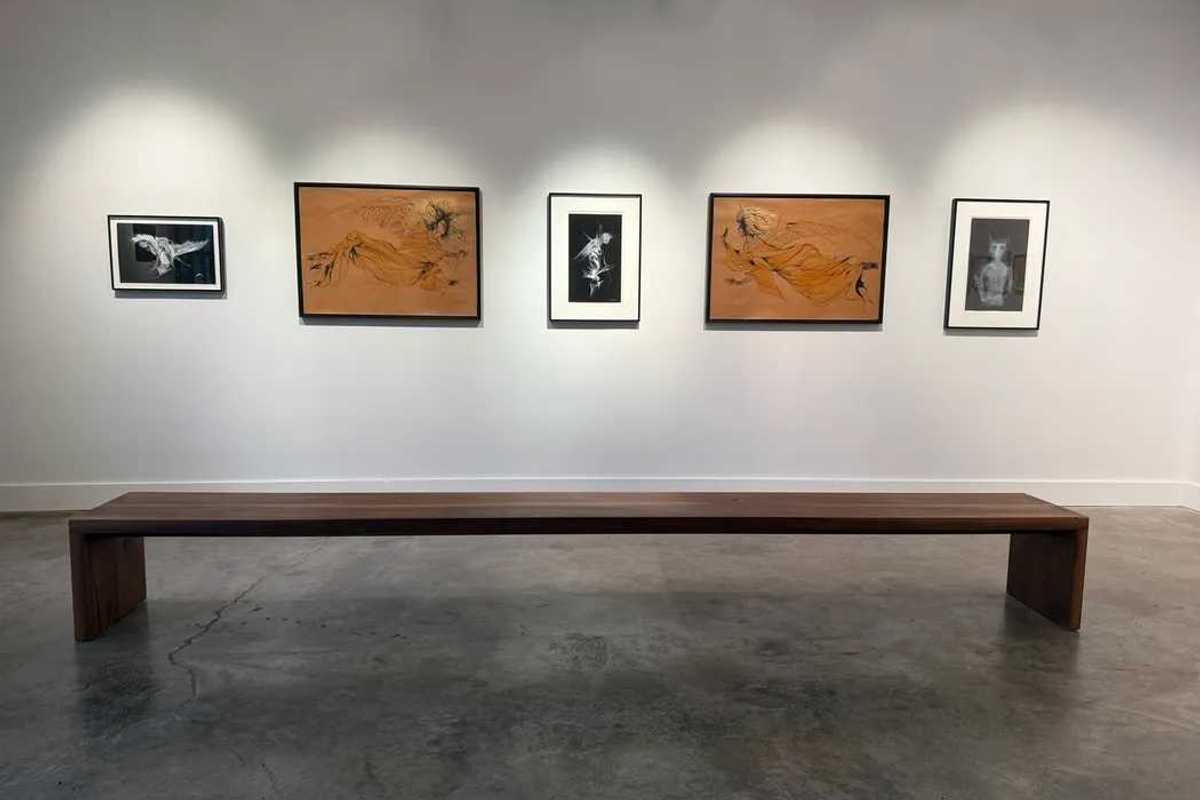
Kent Barns was alive with art on Saturday, June 13, as three new shows opened at Peggy Mercury and Kenise Barnes Fine Art, featuring a variety of fascinating paintings and drawings from four local artists.

Peggy Mercury, which in just two years has earned a reputation for curating remarkable collections of fine beauty products and accessories, continues to find exciting art to complement its offerings. The new show, “Portraits,” features four pairs of paintings by Millerton-based artist Alexis England. The “portraits” she paints, however, feature some pretty unexpected sitters.

Keep ReadingShow less
google preferred source

Want more of our stories on Google? Click here to make us a Preferred Source.

Stonewood Farm launches chefs in residence program
Jocelyn Ueng is the first Chef in Residence at Stonewood Farm.
Provided

Stonewood Farm in Millbrook is expanding its educational and community food programs this summer with the launch of a new Chefs in Residence program, an eight-week immersion that brings culinary professionals to the nonprofit farm to live, cook, teach and work alongside farmers.

The program is led by Kristen Essig, Stonewood’s director of culinary outreach and development, an award-winning chef whose background includes work with Emeril Lagasse and multiple James Beard Award nominations.

Keep ReadingShow less
A rare look inside Connecticut’s Colonial-era homes

The Hollister House, aka Whitbeck Estate, is believed to have been built circa 1780.

Provided

For anyone who has ever stopped to admire an old house and wonder what it looks like inside, HisTOURy’s Colonial Home Tour on June 20 offers a rare opportunity.

The four-hour guided tour will take participants inside four private colonial-era homes in Salisbury and Falls Village while highlighting another 20 historic properties along the route. Presented as part of HisTOURy’s series marking America’s 250th anniversary, the tour explores the architecture and history of northwestern Connecticut’s colonial settlement period.

Keep ReadingShow less
Local garden centers spotlight keystone plants

Eric Mendelson, owner of Salisbury Garden Center, stands with a selection of keystone native plants now available through a partnership with Homegrown National Park.

Michelle Alfandari

The Ungardener from May 13 was about a specific group of native plants called keystone plants. These are the ecosystem workhorses of our environment; they are essential to the survival of many animals that rely on them for food. Nutrition in this case includes, but goes beyond, nuts and pollen. It is the leaves of keystone native plants that make them superheroes. These leaves are essential to the survival of butterfly and moth caterpillars that, in their larval state, will eat only the leaves of very specific native plants.

And in this case, eating leaves is a good thing because caterpillars are relied upon by birds to feed their hatchlings. A single baby bird will be fed approximately 3,000 caterpillars from hatching to fledging; for most species, caterpillars are the sole source of food until they leave the nest. As native plants decrease, which they rapidly are, so do the numbers of caterpillars that rely on them. And as caterpillars decrease, so do the numbers of birds that rely on them.

Keep ReadingShow less
google preferred source

Want more of our stories on Google? Click here to make us a Preferred Source.

google preferred source

Want more of our stories on Google? Click here to make us a Preferred Source.