The more successful you are, the more difficulty you face in wrestling with one inescapable fact. In preparing to pass the torch to your heirs, you need to give them the power to decide what happens to you and your estate in the event you can’t.
That’s not an easy thing to get your arms around if you have been the go-to guy or gal that the family depends on when life’s hard knocks come visiting. How do you entrust your own health and wealth to others? Even if you love them to death, are they really capable of taking care of you in your time of need?
No question, it is a problem that you need to deal with and resolve before that family meeting I have been writing about in this series. Specifically, there are three documents you must create and complete: a durable power of attorney (DPOA), a living will and a health-care proxy. Let’s begin with the DPOA.
This document allows someone to act on your behalf or allows you to act on the behalf of someone else, such as your parents. That means you can sign checks for them, as well as other legal documents like tax returns, etc. Bottom line: the DPOA allows someone to control your money, so you’d better be sure whoever you pick is trustworthy, responsible and knows something about managing money. It is best to name one person and have another as a back-up just in case.
In addition, it is important that you or your parents have a durable power of attorney for each other. I had a client who failed to do so, which created endless problems for his wife. She could not change investments for him in his tax-deferred accounts when the markets took a dive, nor could she draw money from his checking account to pay bills.
A living will is different from a will, which I covered in a prior column. While a will explains to your heirs who gets what, the living will is all about advance directives. These are legal directions you want followed in the event you require serious medical care. Your living will would address questions such as the kind of medical treatment you want (or don’t want), which person can make medical decisions for you when you can’t, or how comfortable you want to be and what, if anything, you want your loved ones to know.
For those interested, you can actually purchase a copy of something called “Five Wishes” from Aging with Dignity, based in Florida, for a nominal sum. It addresses all of the above concerns and can act as a legal document as long as it is witnessed and notarized. Take a look at it on the internet.
The second advance directive is familiar to many of us — the health care proxy, also called a health care power of attorney. The person who holds this power is equally as important as whoever you trust with your DPOA. The health care proxy holder has the responsibility of making certain that the doctors and medical staff carry out your wishes specified in your living will.
In the event of a life-and-death decision, it is this person who has the authority to make that call. Your child may not be the best person for this job. I know my wife had that responsibility when her father became ill, and it is not a pleasant task. You may want to select a close friend instead, and never select more than one person.
I realize that this has not been the most uplifting of columns. The sober subject matter can certainly be a downer, but it is necessary. It will be a big elephant in the room when your family meeting gets started. You may even want to pass this column along to your prospective heirs before discussing you or your parents’ thinking on these subjects. The point is to begin the conversations now rather than wait until it may be too late.
Bill Schmick is registered as an investment advisor representative with Berkshire Money Management. Bill’s forecasts and opinions are purely his own. None of the information presented here should be construed as an endorsement of BMM or a solicitation to become a client of BMM. Direct inquires to Bill at 1-888-232-6072 (toll free) or email him at Bill@afewdollars
more.com.

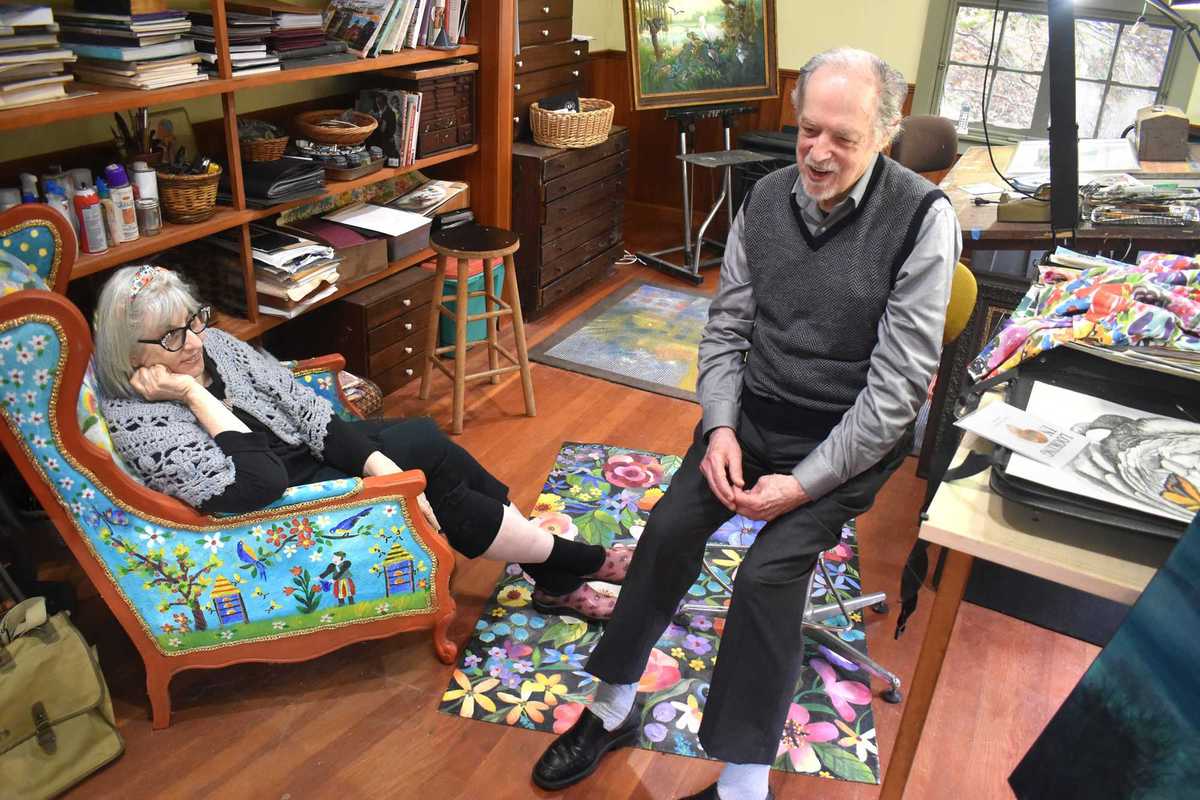
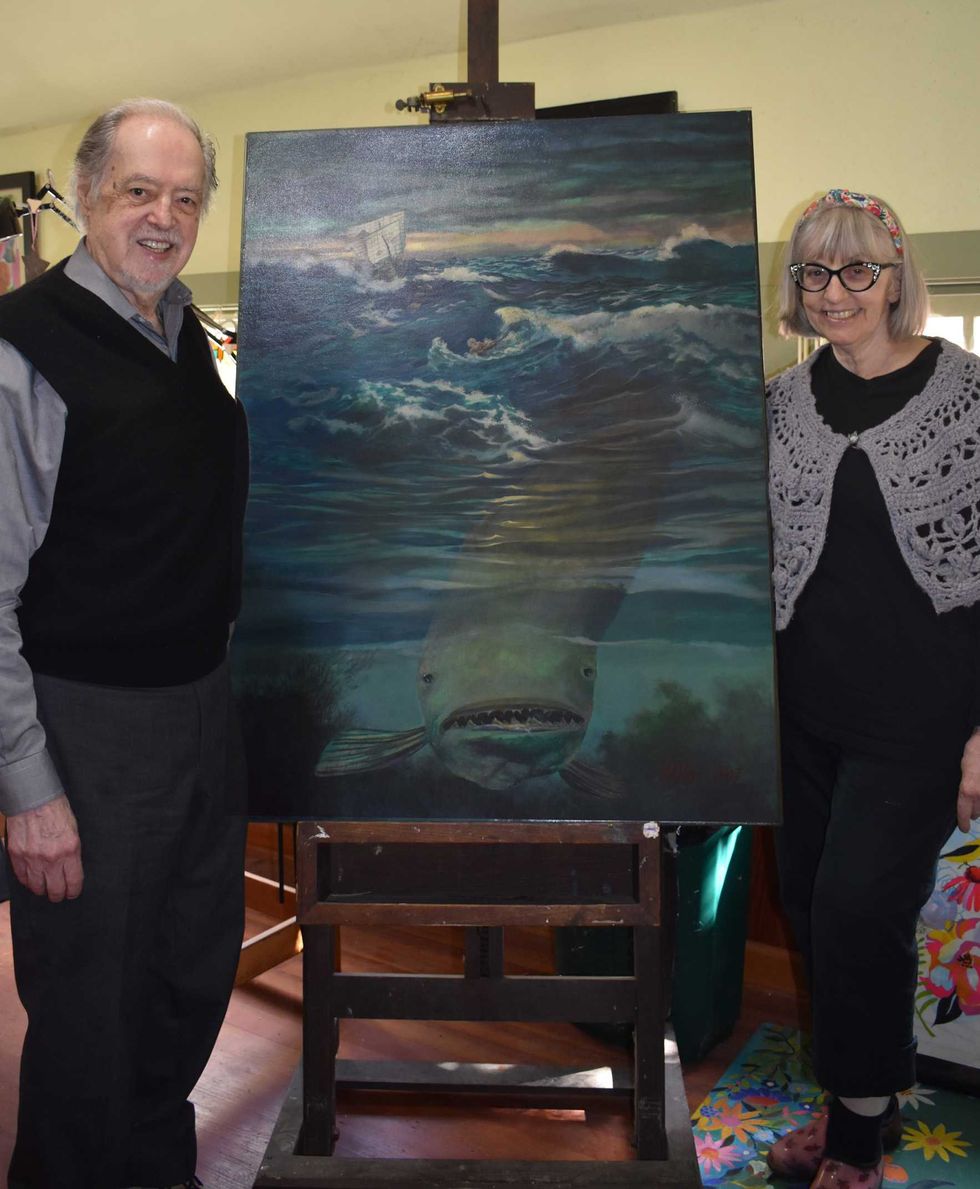 Justine and Victor Valla in their studio with a painting of Victor’s,”Jonah and the Whale.” Robin Roraback


 A ceramic vase by Kathleen Heidemann.Provided
  Joy Brown’s delightful ceramic sculptures.Provided