Gotchas: some good, not so good

Most of those seemingly unfair “gotcha” questions this presidential season appear to be aimed at Republican candidates, but that’s because, like Lincoln’s common people, the Lord made so many of them. Meanwhile, the obscenely few Democratic candidates are ducking debates and even press conferences that are gotcha producers. With all that in mind, a little history and perspective are in order.

A gotcha question can be defined as one that seems to trap a candidate into giving an answer that is damaging to his character, his cause or both. Sometimes it’s a hard question, other times, a snarky one. The distinction can be difficult to fathom, as the gotcha part is often in the eye of the beholder. 

It’s pretty clear, however, that gotcha questions have been bipartisan. In fact, you can trace the first truly gotcha questions — there’s a tie — to the 1988 campaign and both targets were Democrats. One destroyed Gary Hart, then the front runner, and the second helped defeat Michael Dukakis, the nominee.

The Hart gotcha has been overshadowed in political lore by the famous photograph that illustrated it. You surely remember the picture: There was candidate Hart, sitting on a dock, dressed in a T-shirt bearing the legend, “monkey business,” with a lovely woman, not his wife, aboard his lap.

The photo didn’t turn up until after a sloppy stakeout by The Miami Herald revealed Hart may or may not have weekended with the same woman. But The Washington Post was also working on a story dealing with another Hart affair of the heart, and it was a Post reporter who asked the gotcha:

“Have you ever committed adultery?” 

Hart angrily refused to answer but after the reporter privately told him the paper knew about a second woman, he quit the campaign and the paper quite properly dropped the story. 

“It was well known around Washington that Hart liked women and that all the women he liked were not his wife,” writes Matt Bai in his book on Hart, “All the Truth’s Out: The Week Politics Went Tabloid.” But Hart assumed his avocation would be tolerated, or protected, by the media, as had the peccadilloes of past pols. He was wrong.

The second gotcha question of the campaign was asked by CNN’s Bernard Shaw during a debate between the Democratic nominee, Gov. Michael Dukakis, and his opponent, Vice President George H.W. Bush.

Shaw, who liked to think of himself as the asker of tough questions, knew Dukakis was opposed to capital punishment, but found a new way to ask about it:

“Governor, if Kitty Dukakis were raped and murdered, would you favor an irrevocable death penalty for the killer?” 

“No, I don’t, Bernard,” Dukakis quickly replied. “And I think that you know that I’ve opposed the death penalty all of my life.” 

Later, staff members argued Dukakis responded so coldly because he wasn’t feeling well, had a virus, was running a fever, but Susan Estrich, Dukakis’s campaign manager, ultimately admitted that, “When he answered by talking policy, I knew we had lost the election.” 

You might agree these questions were a bit rougher than asking Donald Trump to identify his favorite Bible verses upon hearing him boast that the Bible was his favorite read, which, in turn, caused Ted Cruz to accuse debate reporters of picking on Republicans while asking the Democratic candidates fawning questions.

Actually, Anderson Cooper’s first debate question to Hillary Clinton sounded rather gotcha: “Will you say or do anything to be president?”

In between the first gotchas in the 1980s and the present festivities, there were plenty of stupid and petty gotchas. A reporter asking George W. Bush to identify the presidents of Chechnya, Taiwan and other exotic places comes to mind. 

But there was also Katie Couric’s interest in knowing what papers and magazines vice presidential candidate Sarah Palin regularly read. When Palin answered by speaking of her “great appreciation for the media,” Couric tried again and Palin revealed she read “all of them, any of them that have been in front of me over all these years.” And Couric was accused of being unfair.

Recently, Palin admirably told an interviewer, “I had a crappy answer but it was a fair question.” And so it goes.

Simsbury resident Dick Ahles is a retired journalist. Email him at dahles@hotmail.com.

Latest News

Living art takes center stage in the Berkshires

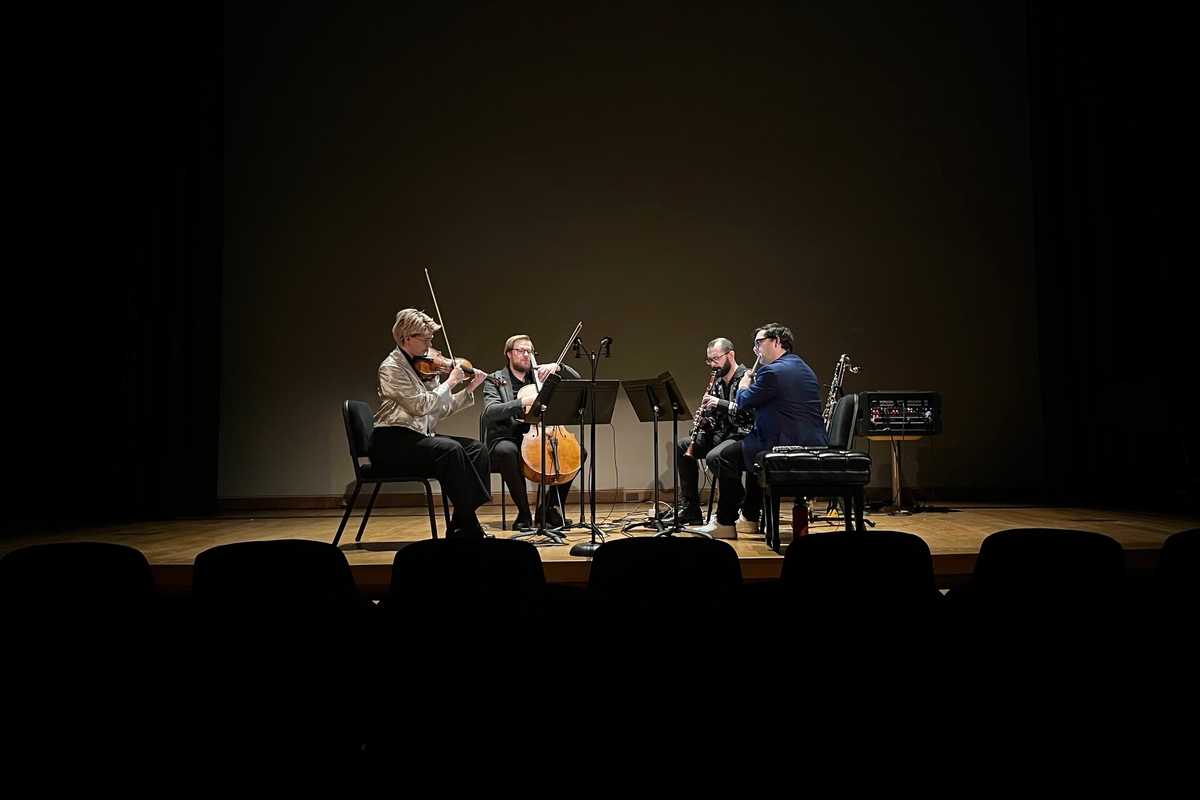
Contemporary chamber musicians, HUB, performing at The Clark.

D.H. Callahan

Northwestern Massachusetts may sometimes feel remote, but last weekend it felt like the center of the contemporary art world.

Within 15 miles of each other, MASS MoCA in North Adams and the Clark Art Institute in Williamstown showcased not only their renowned historic collections, but an impressive range of living artists pushing boundaries in technology, identity and sound.

Keep ReadingShow less
Persistently amplifying women’s voices

Francesca Donner, founder and editor of The Persistent. Subscribe at thepersistent.com.

Aly Morrissey

Francesca Donner pours a cup of tea in the cozy library of Troutbeck’s Manor House in Amenia, likely a habit she picked up during her formative years in the United Kingdom. Flanked by old books and a roaring fire, Donner feels at home in the quiet room, where she spends much of her time working as founder, editor and CEO of The Persistent, a journalism platform created to amplify women’s voices.

Although her parents are American and she spent her earliest years in New York City and Litchfield County — even attending Washington Montessori School as a preschooler — Donner moved to England at around five years old and completed most of her education there. Her accent still bears the imprint of what she describes as a traditional English schooling.

Keep ReadingShow less
Jarrett Porter on the enduring power of Schubert’s ‘Winterreise’
Baritone Jarrett Porter to perform Schubert’s “Winterreise”
Tim Gersten

On March 7, Berkshire Opera Festival will bring “Winterreise” to Studio E at Tanglewood’s Linde Center for Music and Learning, with baritone Jarrett Porter and BOF Artistic Director and pianist Brian Garman performing Franz Schubert’s haunting 24-song setting of poems by Wilhelm Müller.

A rejected lover. A frozen landscape. A mind unraveling in real time. Nearly 200 years after its premiere, “Winterreise” remains unnervingly current in its psychological portrait of isolation, heartbreak and existential drift.

Keep ReadingShow less
google preferred source

Want more of our stories on Google? Click here to make us a Preferred Source.
A grand finale for Crescendo’s 22nd season

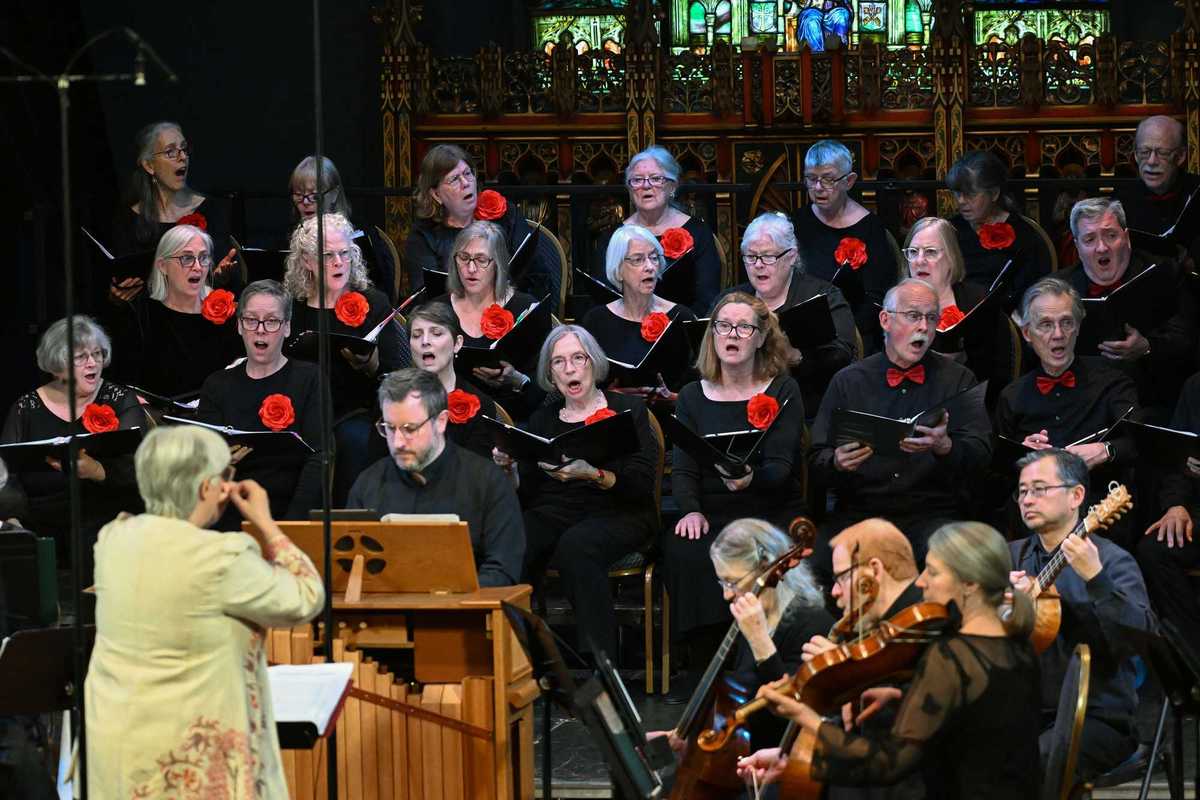
Christine Gevert, artistic director, brings together international and local musicians for a season of rare works.

Stephen Potter

Crescendo, the Lakeville-based nonprofit specializing in early and rarely performed classical music, will close its 22nd season with a slate of spring concerts featuring international performers, local musicians and works by pioneering composers from the Baroque era to the 20th century.

Christine Gevert, the organization’s artistic director, has gathered international vocal and instrumental talent, blending it with local voices to provide Berkshire audiences with rare musical treats.

Keep ReadingShow less

Leopold Week honors land and legacy

Leopold Week honors land and legacy

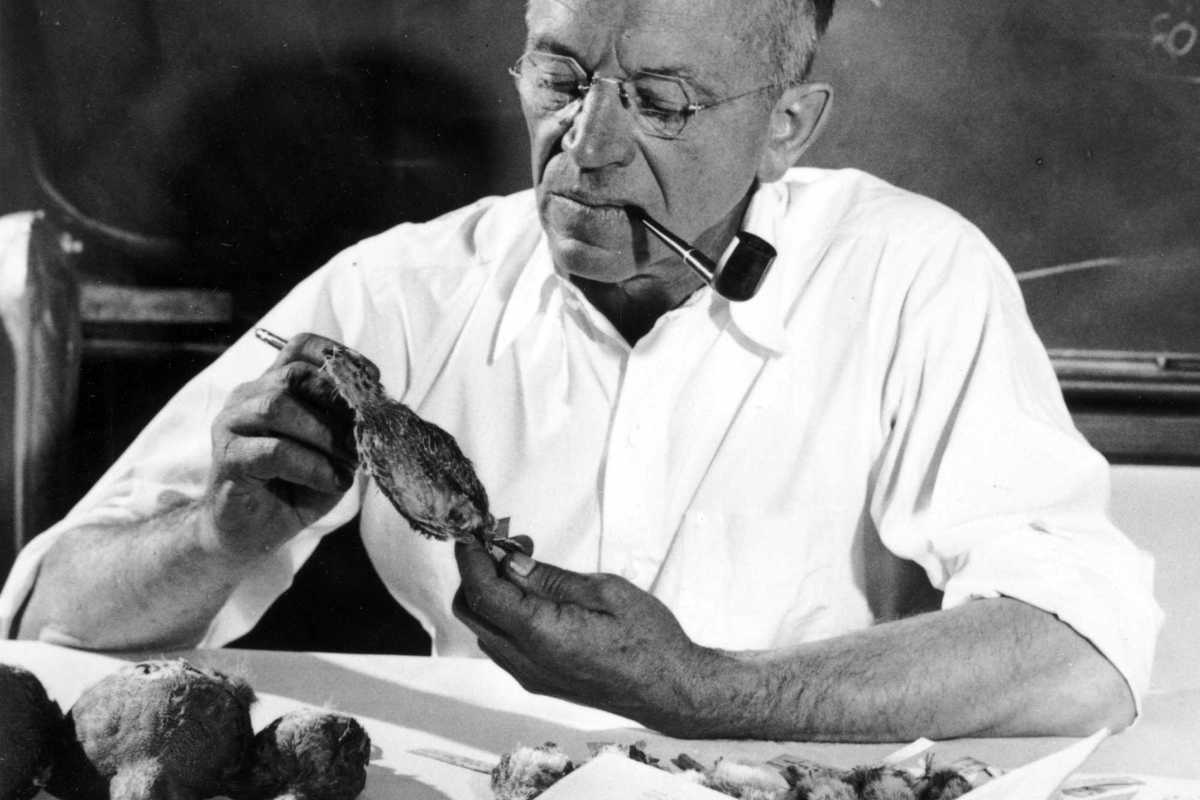
Aldo Leopold in 1942, seated at his desk examining a gray partridge specimen.

Robert C. Oetking

In his 1949 seminal work, “A Sand County Almanac,” Aldo Leopold, regarded by many conservationists as the father of wildlife ecology and modern conservation, wrote, “There are some who can live without wild things and some who cannot.” Leopold was a forester, philosopher, conservationist, educator, writer and outdoor enthusiast.

Originally published by Oxford University Press, “A Sand County Almanac” has sold 2 million copies and been translated into 15 languages. On Sunday, March 8, from 3 to 5 p.m. in the Great Hall of the Norfolk Library, the public is invited to a community reading of selections from the book followed by a moderated discussion with Steve Dunsky, director of “Green Fire,” an Emmy Award-winning documentary film exploring the origins of Leopold’s “land ethic.” Similar reading events take place each year across the country during “Leopold Week” in early March. Planning for this Litchfield County reading began when the Norfolk Library received a grant from the Aldo Leopold Foundation, which provided copies of “A Sand County Almanac” to distribute during the event.

Keep ReadingShow less

Erica Child Prud’homme

Erica Child Prud’homme

WEST CORNWALL — Erica Child Prud’homme died peacefully in her sleep on Jan. 9, 2026, at home in West Cornwall, Connecticut, at 93.

Erica was born on April 27, 1932, in Doylestown, Pennsylvania, the eldest of three children of Charles and Fredericka Child. With her siblings Rachel and Jonathan, Erica was raised in Lumberville, a town in the creative enclave of Bucks County where she began to sketch and paint as a child.

Keep ReadingShow less
google preferred source

Want more of our stories on Google? Click here to make us a Preferred Source.
google preferred source

Want more of our stories on Google? Click here to make us a Preferred Source.