SALISBURY — Taxes and tariffs on tea were a political and economic issue in the period leading up to the American Revolution and, as one local tea expert noted, they still spark controversy today.
Mike Harney of Harney & Sons Fine Teas traced that history during a talk at the Scoville Memorial Library on Saturday, April 18, covering tea’s origins, production and its role in shaping colonial resistance.
Harney started with the establishment of the British East India Company in 1600, when Queen Elizabeth I granted a group of London merchants and explorers a charter to open up trade with all countries east of the Cape of Good Hope at the southernmost part of Africa and west of the Straits of Magellan at the southernmost part of South America. This large area was known as the “East Indies” and the Spanish and Portuguese had established a significant trade presence there prior to British involvement.
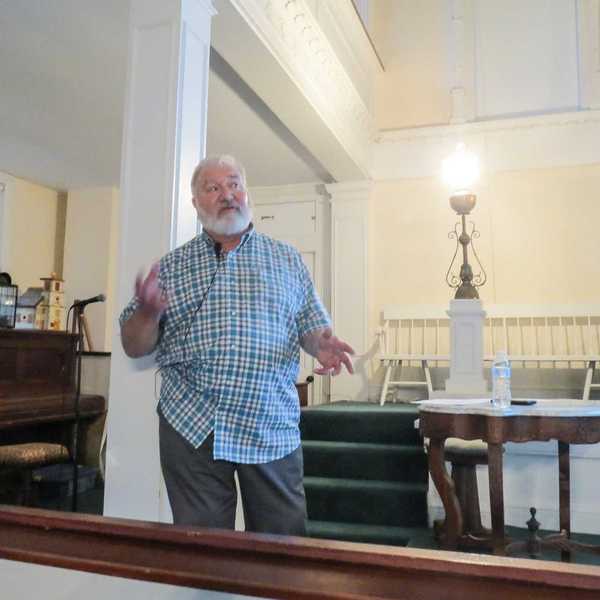
 Mike Harney of Harney & Sons Fine Teas speaks at the Scoville Memorial Library Saturday, April 18 about the beverage’s importance throughout American history.Patrick L. Sullivan
“The Queen set it up to make money,” Harney said.
Harney said there were two other reasons for importing tea and making it more widely available in Great Britain.
“People liked it, and it was better for people than gin.”
The British colonists in North America brought their tea habit with them.
Harney said the French and Indian War, while militarily successful for the British, left them with significant war debt.
The East India Company had its own financial problems at the time as well.
So Parliament enacted a tax on tea, a move that backfired when it proved hugely unpopular with the American colonists.
Harney said he has recently traveled to Mozambique and Kenya in search of new teas, in part because of tariffs on Chinese goods.
“So taxes were a problem then and now.”
He said green tea is the easiest to produce and that the tea thrown into Boston Harbor during the Boston Tea Party in 1773 was almost certainly green tea from China. In response to a question, Harney said the British and Indian tea trade didn’t take off until the 1820s.
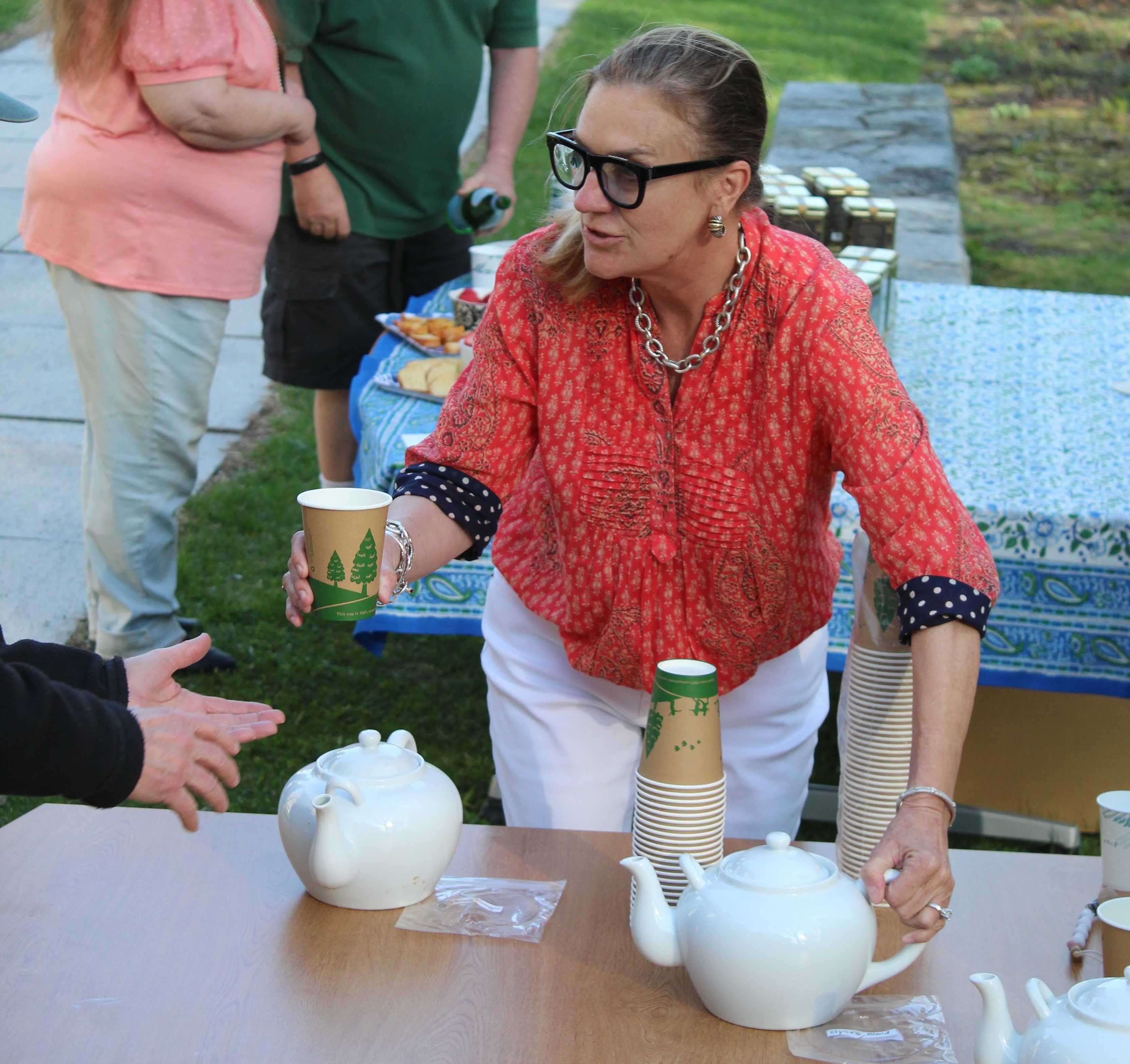
Following the talk, attendees gathered outside to sample a variety of teas, and receive a free tin of Harney’s Library Blend.




 Pay Bill for Robin Starr’s service in the Continental Army.Courtesy the Alex Breanne Corporation
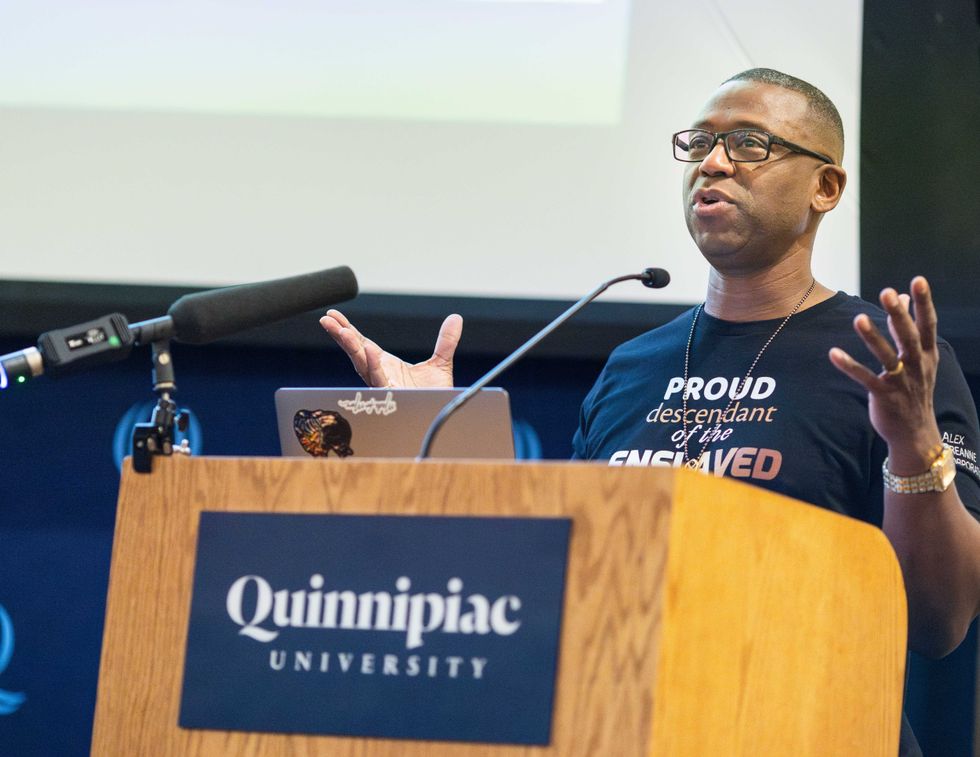 John Mills speaking at Quinnipiac University.Courtesy the Alex Breanne Corporation
 Stephanie Saetta,with her rescue dog George and Blue (left), a shepherd mix awaiting his forever home.Madi Long
 Blue, a 7 year-old Shepard mix, is waiting for his forever home. Madi Long