Health district sees funding cut for Lyme disease care

 One of the worst things about having chronic Lyme disease is often the people, especially doctors, who tell you there is no such thing.

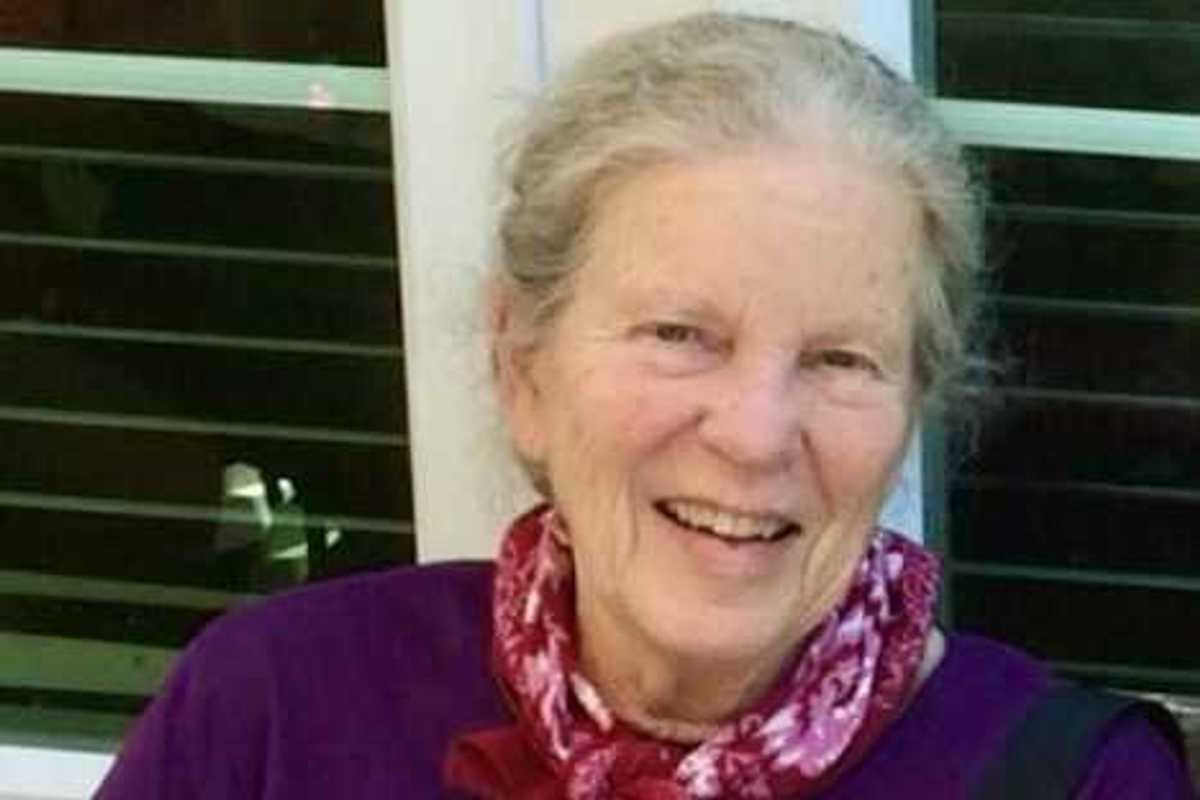
For Jane Martel, it was that and urgings that she get up and get going that activity would make her feel better.

“All it does is make you worse,� she said. “You can’t push yourself. I spend my day budgeting my energy.�

Martel was diagnosed in May 2006 with the disease borne by the tiny deer tick. Like many sufferers, she never knew she was bitten, and her blood tests were inconclusive. There were two false positives followed by negative results.

It took a multiple sclerosis scare, caused by brain lesions, and being “sicker than a dog,� to convince a doctor she needed serious treatment. She spent seven months with an intravenous port in her arm for antibiotics. She was bedridden for a year, barely leaving her Music Mountain home in Falls Village. She lost the job she’d held at Canaan Bank and then Salisbury Bank and Trust for more than three decades.

A typical day is spent napping around the clock. Pastimes are limited.

“And you can only watch so much TV. I take pills to stay awake so I can at least move around some and avoid blood clots.�

Martel, 52, was anxious to tell her story not for sympathy, but to let others know their suffering is not “in their head.�

Lyme disease is becoming increasingly prevalent around the state, with numbers showing that the Northwest Corner is among the hardest-hit regions in Connecticut. But at what seems like the moment of greatest need, the region’s health district has had its funding cut for Lyme disease information programs.

Wanted: Lyme-literate doctors

For Torrington Area Health District (TAHD) Director Jim Rokos, the budget cuts seem particularly cruel. He is among those who knows what it’s like to suffer. His Lyme disease lasted two years. He was treated, but never clinically diagnosed; probably the most common scenario these days. One of the greatest strides in fighting the disease has been educating doctors, Rokos said.

[The health district covers all the towns in the Northwest Corner except Sharon.]

“There are some that still dispute it,� he said. “And more that don’t believe in chronic Lyme. That’s still a big debate. It’s huge. The thing with doctors is they need to have a clinical diagnosis, but the testing is so inaccurate. And once you have it, you’ll always test positive.�

TAHD has started accepting ticks removed from humans for testing at an outside lab. The ticks have to be deer ticks and engorged. But he said they rarely turn away samples, except for the dog ticks, which don’t carry Lyme, that are often brought in.

The drawback with tick testing is that results are not returned for four to six weeks. That’s far longer than is recommended to wait for treatment. Rokos.said he doesn’t see why the ticks have to be engorged. Once it was believed it took 48 to 72 hours for the bacteria to move from the tick to the bite victim. Experience has shown infection can take place as soon as the tick punctures the skin.

Rokos’ advice is to always seek treatment for a rash. That’s a sure sign. Otherwise, symptoms need to be reviewed with an open-minded doctor. Many will go right to antibiotic treatment. But even that has become an issue for debate.

A new breed of specialists is cropping up: Lyme-literate doctors. Martel travels to Orange to see hers. She does not disparage most of the doctors she sees here, but recommends finding someone who focuses on Lyme.

District loses Lyme funding

Meanwhile, as Lyme disease seems to become more and more prevalent, funding has been cut for the Torrington Area Health District Lyme program.

“Just when this area is seeing the highest levels of cases, we lost our grant.�

For eight years, Sue Perlotto, known as The Tick Lady, spread the word and taught prevention. She was a high-profile presence at health fairs and other events, arriving in a distinctive lime green VW Beetle covered with tick stickers.

“It really put us on the map,â€� Rokos said. “We were able to get about $900,000 in grants over the years for a very effective program. There are no grants out there for it right now. We put out a proposal for a scaled-back program at $30,000 a year and had about six solid leads for private funding. We were into serious discussion, but they all fell through. We were not given any reasons. I guess everyone’s strapped for  cash.â€�

Rokos believes one of the problems is that it’s tough to measure results. The numbers show cases on the rise. But he believes there are far more cases avoided because an educated public is doing diligent tick checks.

And nearly four months after the program was dissolved and the VW “de-ticked,� calls pour in to TAHD for appearances by The Tick Lady.

Perlotto is working in Ridgefield now, on another grant project.

“The governor decided Windham and Fairfield counties needed more public education. They each got $50,000 for a six-month program,� Rokos said.

NW Corner has most cases

It stymies him that funding is not numbers-driven, as it seems to be in every other case. The latest state Department of Health statistics, from 2007, show the Northwest Corner by far the hardest hit. Data includes the number of confirmed cases and the rate, or percentage of residents in each town. The latter is the more telling number.

Leading the way by a large margin is Cornwall. Not far behind is Kent. Rates for Falls Village, Salisbury and Sharon are well up there. North Canaan is among the lowest. Ranking well below all but North Canaan is Lyme, where clusters of the disease were identified in 1975, and the illness got its name.

A disease with huge hidden costs

Not surprisingly, medical insurance coverage can be an issue for Lyme disease sufferers.

Attorney General Richard Blumenthal’s antitrust investigation of the Infectious Diseases Society of America’s 2006 Lyme disease guidelines has uncovered some of the issues. The guidelines have been used to deny coverage for long-term antibiotic treatment, or even as evidence the disease does not exist. A review panel has been seated.

Martel’s husband, John, carries excellent medical insurance through his job. They have had to pay things like a $1,000 deductible to see an out-of-network doctor. The $5,000 monthly cost of IV antibiotics was covered.

“We’re lucky. But not everyone has that kind of coverage. Or they do but they’re turned down and have to fight for it. When you’re sick, it’s really hard to deal with an insurance company.�

Next up for Martel is intravenous immunoglobulin (IVIG). The cost is $25,000 per month. She has been told it will be covered. It is a collection of antibodies extracted from the plasma of more than 1,000 blood donors and used to treat immune deficiencies and acute infections.

“The idea is that your body’s own antibodies are not doing their job, and some of the ones you get will kick in and take over the fight,� Martel said.

It is an intensive treatment she approaches with hope and a little anxiety.

“The idea is to make the disease cells comes out of hiding. Then they are killed. But once they start circulating in your blood again, you get a lot sicker.�

No easy way to avoid it

Of course, prevention is key. Unfortunately, that is getting the least amount of effort, according to Rokos.

He recently testified before the Legislature’s public health committee, where a consensus was drawn that the number of Lyme disease cases is directly related to the number of deer.

“Estimates show there are more than 150,000 deer in Connecticut. There was research done on islands where there are no deer. Lyme disease levels were extremely low. There is serious talk about ways to significantly reduce the deer population.

A vaccine could be the real answer.

“Ten, or probably more like 15 years ago, we had a vaccine. It was about 76 percent effective but had some bad side effects. It got a bad rap and people didn’t want it,� said Rokos. “As these things usually happen, drug companies made a market-driven effort to stop producing it. To the best of our knowledge, there is no effort being put into a Lyme disease vaccine.�

Latest News

Living art takes center stage in the Berkshires

Contemporary chamber musicians, HUB, performing at The Clark.

D.H. Callahan

Northwestern Massachusetts may sometimes feel remote, but last weekend it felt like the center of the contemporary art world.

Within 15 miles of each other, MASS MoCA in North Adams and the Clark Art Institute in Williamstown showcased not only their renowned historic collections, but an impressive range of living artists pushing boundaries in technology, identity and sound.

Keep ReadingShow less
Persistently amplifying women’s voices

Francesca Donner, founder and editor of The Persistent. Subscribe at thepersistent.com.

Aly Morrissey

Francesca Donner pours a cup of tea in the cozy library of Troutbeck’s Manor House in Amenia, likely a habit she picked up during her formative years in the United Kingdom. Flanked by old books and a roaring fire, Donner feels at home in the quiet room, where she spends much of her time working as founder, editor and CEO of The Persistent, a journalism platform created to amplify women’s voices.

Although her parents are American and she spent her earliest years in New York City and Litchfield County — even attending Washington Montessori School as a preschooler — Donner moved to England at around five years old and completed most of her education there. Her accent still bears the imprint of what she describes as a traditional English schooling.

Keep ReadingShow less
Jarrett Porter on the enduring power of Schubert’s ‘Winterreise’
Baritone Jarrett Porter to perform Schubert’s “Winterreise”
Tim Gersten

On March 7, Berkshire Opera Festival will bring “Winterreise” to Studio E at Tanglewood’s Linde Center for Music and Learning, with baritone Jarrett Porter and BOF Artistic Director and pianist Brian Garman performing Franz Schubert’s haunting 24-song setting of poems by Wilhelm Müller.

A rejected lover. A frozen landscape. A mind unraveling in real time. Nearly 200 years after its premiere, “Winterreise” remains unnervingly current in its psychological portrait of isolation, heartbreak and existential drift.

Keep ReadingShow less
google preferred source

Want more of our stories on Google? Click here to make us a Preferred Source.

A grand finale for Crescendo’s 22nd season

Christine Gevert, artistic director, brings together international and local musicians for a season of rare works.

Stephen Potter

Crescendo, the Lakeville-based nonprofit specializing in early and rarely performed classical music, will close its 22nd season with a slate of spring concerts featuring international performers, local musicians and works by pioneering composers from the Baroque era to the 20th century.

Christine Gevert, the organization’s artistic director, has gathered international vocal and instrumental talent, blending it with local voices to provide Berkshire audiences with rare musical treats.

Keep ReadingShow less

Leopold Week honors land and legacy

Leopold Week honors land and legacy

Aldo Leopold in 1942, seated at his desk examining a gray partridge specimen.

Robert C. Oetking

In his 1949 seminal work, “A Sand County Almanac,” Aldo Leopold, regarded by many conservationists as the father of wildlife ecology and modern conservation, wrote, “There are some who can live without wild things and some who cannot.” Leopold was a forester, philosopher, conservationist, educator, writer and outdoor enthusiast.

Originally published by Oxford University Press, “A Sand County Almanac” has sold 2 million copies and been translated into 15 languages. On Sunday, March 8, from 3 to 5 p.m. in the Great Hall of the Norfolk Library, the public is invited to a community reading of selections from the book followed by a moderated discussion with Steve Dunsky, director of “Green Fire,” an Emmy Award-winning documentary film exploring the origins of Leopold’s “land ethic.” Similar reading events take place each year across the country during “Leopold Week” in early March. Planning for this Litchfield County reading began when the Norfolk Library received a grant from the Aldo Leopold Foundation, which provided copies of “A Sand County Almanac” to distribute during the event.

Keep ReadingShow less

Erica Child Prud’homme

Erica Child Prud’homme

WEST CORNWALL — Erica Child Prud’homme died peacefully in her sleep on Jan. 9, 2026, at home in West Cornwall, Connecticut, at 93.

Erica was born on April 27, 1932, in Doylestown, Pennsylvania, the eldest of three children of Charles and Fredericka Child. With her siblings Rachel and Jonathan, Erica was raised in Lumberville, a town in the creative enclave of Bucks County where she began to sketch and paint as a child.

Keep ReadingShow less
google preferred source

Want more of our stories on Google? Click here to make us a Preferred Source.

google preferred source

Want more of our stories on Google? Click here to make us a Preferred Source.