Latest News
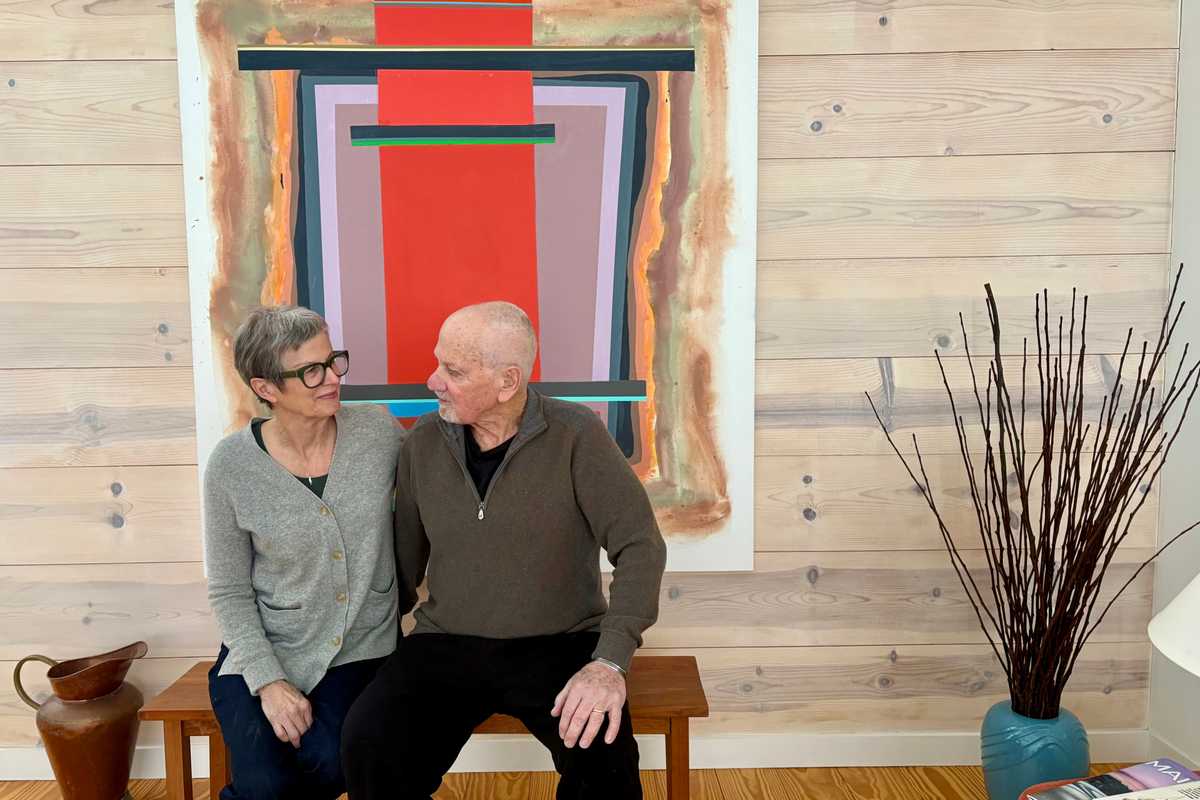
Laurie Fendrich and Peter Plagens at home in front of one of Plagens’s paintings.
Natalia Zukerman
“He was doing critiques with everyone,” Fendrich said of Plagens. “We met at one of those sessions and, well, what can I say. We fell in love instantly.”
Fendrich speaks candidly about the pressures that shaped her early life choices. “We both married the first time at 21, which a good number of women of my generation did without much thought.” Her first husband was a good guy, she says, but “we weren’t suited for each other at all, even though he suited my parents perfectly.” Her decision to get a divorce was seismic. “My mother didn’t speak to me for a year.” Time softened the rupture. “One day she told me, ‘I see now why you left.’”
Fendrich had a rigorous liberal arts education at Mount Holyoke. “I studied painting and drawing, but I also got interested in political philosophy. Plato, Aristotle, Machiavelli — Rousseau was my big guy — Tocqueville, everybody. And I still read them.” Plagens’s path was less formal. “I went to USC at 17,” he said, “and declared English as my major. It was a frat school, and I was in one for the first two years. Then I started doing the cartoons for the Daily Trojan, took a couple art classes, and thought, ‘Wait a minute, I like this.’”
Culturally, they diverged just as sharply. “I came from a fairly puritanical family that didn’t even go to the movies,” Fendrich said. Plagens, by contrast, grew up immersed in pop culture. “My father was an omnivorous reader,” he said, “and a jazz fan, and he shared these passions with me.” In 1966, Plagens walked into Artforum’s LA office and said, “I want to write reviews.” He was paid five dollars per piece. “Gasoline was 23 cents a gallon, so it went a long way.”
Over time, the couple slowly fused their educations. “He taught me jazz, I taught him Mozart,” Fendrich said with a laugh. “I’ve had a movie education from him; he read Jane Austen because of me.”
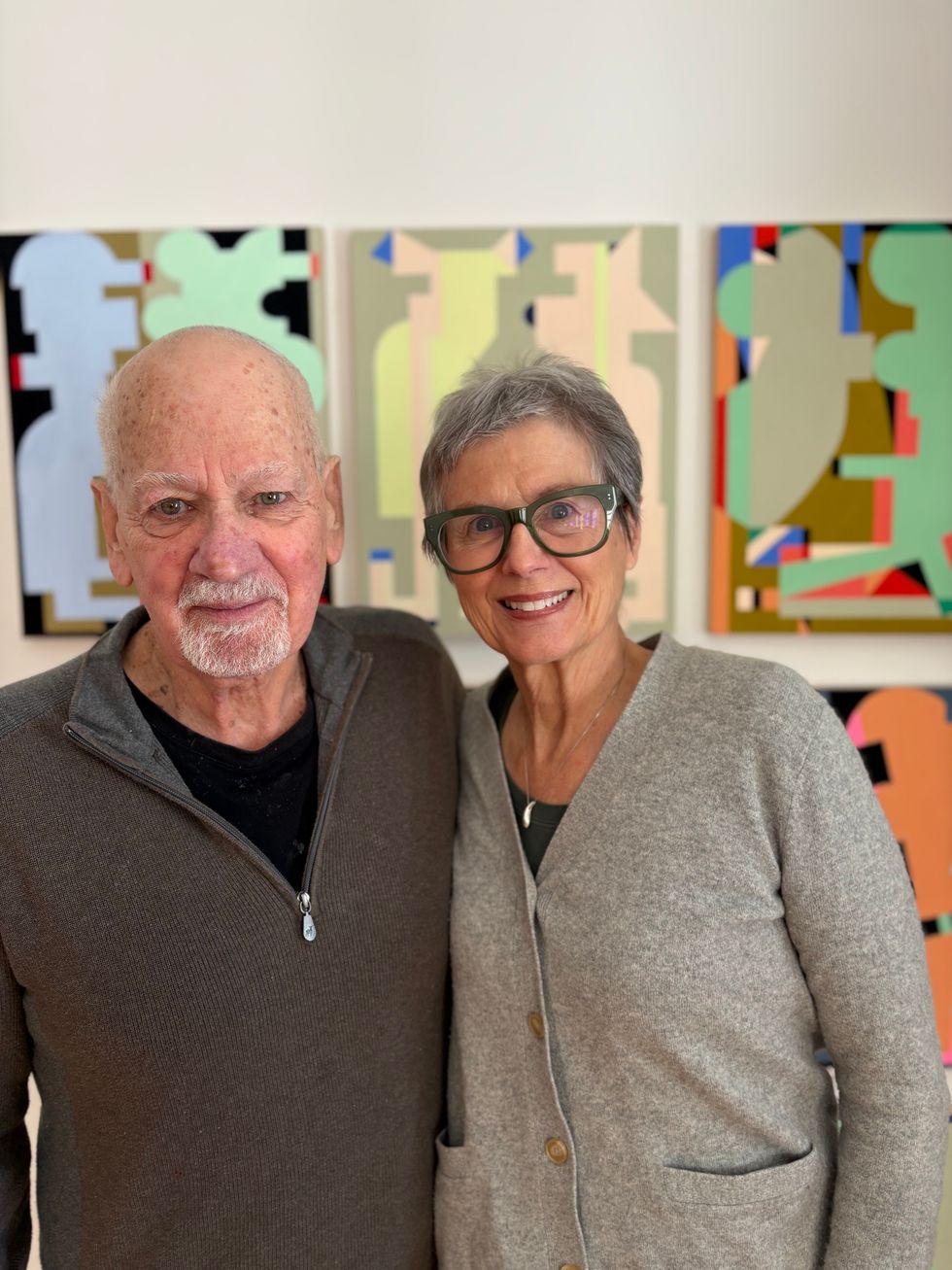 Plagens and Fendrich at home in front of some of Fendrich’s paintings. Natalia Zukerman
During their early years in LA, Plagens taught at USC, and Fendrich at Art Center College of Design. In 1985, they decided “our kind of abstraction would do better in New York,” as Fendrich put it. “So, we up and moved to Tribeca with $10,000 and a toddler.”
Both artists grounded their artistic careers in teaching and writing. “Teaching, which I loved, gave me the financial stability to be an artist,” Fendrich said, reflecting on her 27 years as a professor at Hofstra. “It meant that being an artist didn’t require I make money from every show. I didn’t start writing until 1999, but though I write for publication frequently, I make hardly any money at it.”
Artistically, they guard each other’s independence. “We have unspoken rules,” Plagens said. “You don’t comment on someone’s work while they’re in the middle of creating it.” Critique comes by invitation only. “He’s not mean, just direct,” said Fendrich. Over time, their aesthetics have subtly converged. “My work has gotten cleaner from looking at his,” she said. “He’s gotten more colorful because of me.”
The two have had several two-person exhibitions. At a recent duo show at the Texas Gallery in Houston “Laurie’s paintings flew off the wall,” Plagens recalled. “Me, well, not so much.”
Plagens’s parallel career in journalism shaped their lives in tangible ways. He worked as art critic at Newsweek from 1989 until 2003 and currently contributes reviews of museum exhibitions to The Wall Street Journal. “Being at Newsweek was one of the luckiest breaks I ever had,” he said. “They paid me to see things I would gladly pay to see.”
Their creative processes mirror their personalities. “I start with a specific idea,” Fendrich said, “and then modify things as I paint.” Plagens laughed. “I start with complete mush, just blurting it out and spending the rest of the time fixing it.”
In 2019, they made what Fendrich calls “a decision of contraction.” They left the TriBeCa loft they had lived in for three decades, sold their Catskills home with its large studio, and moved full-time to a former auto repair shop in Lakeville, now a house where each has a studio, and the ground floor retains the open feel of a loft.
What sustains them in life, art and love, decades in, are endless conversations — and arguments — about art, history, exhibitions, books and movies. That exchange, ongoing and rigorous, may just be the masterpiece of their shared life.

Want more of our stories on Google? Click here to make us a Preferred Source.
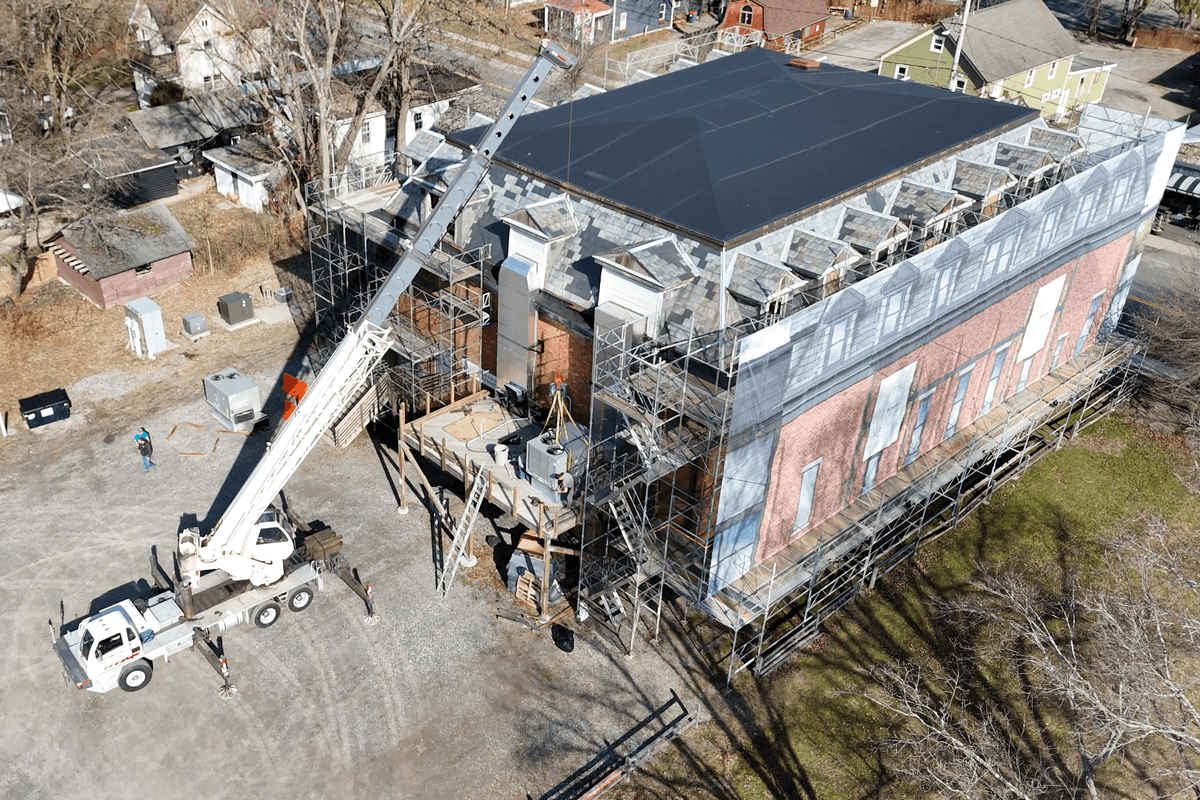
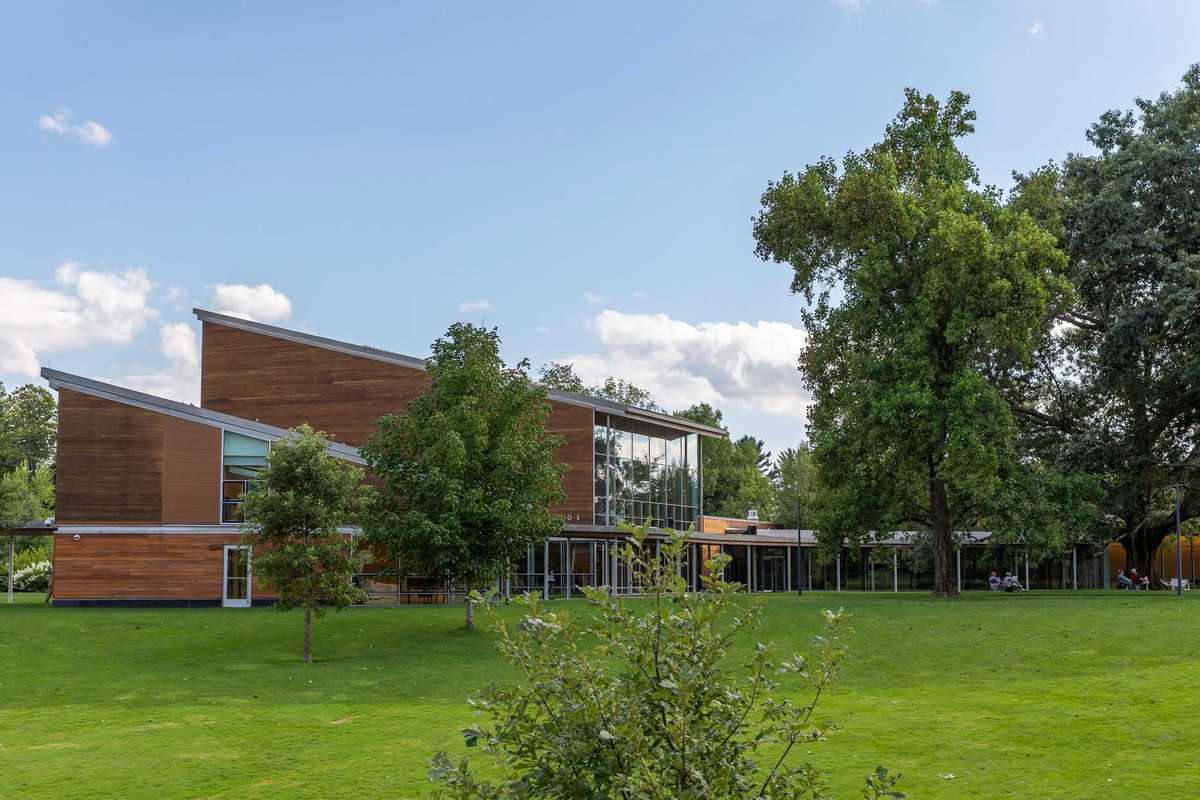
Exterior of the Linde Center for Music and Learning.
Mike Meija, courtesy of the BSO
“We have been thrilled and humbled to see the Tanglewood Learning Institute embraced as a year-round destination for a breadth of exceptional programming, including classical, jazz and family-friendly events,” said BSO President and CEO Chad Smith. “Our 2025–26 fall, winter and spring season reflects our deepening commitment to engaging the vibrant, year-round Berkshires community and to fully exploring the potential of TLI as a space where BSO programs make thought-provoking connections between music, art and society.”
TLI is once again presenting its Chamber Concerts series on Sunday afternoons, with small ensembles of BSO musicians performing familiar favorites and classic mainstays, as well as new music by contemporary composers. There are upcoming chamber concerts scheduled for Feb. 22, March 8 and March 15.
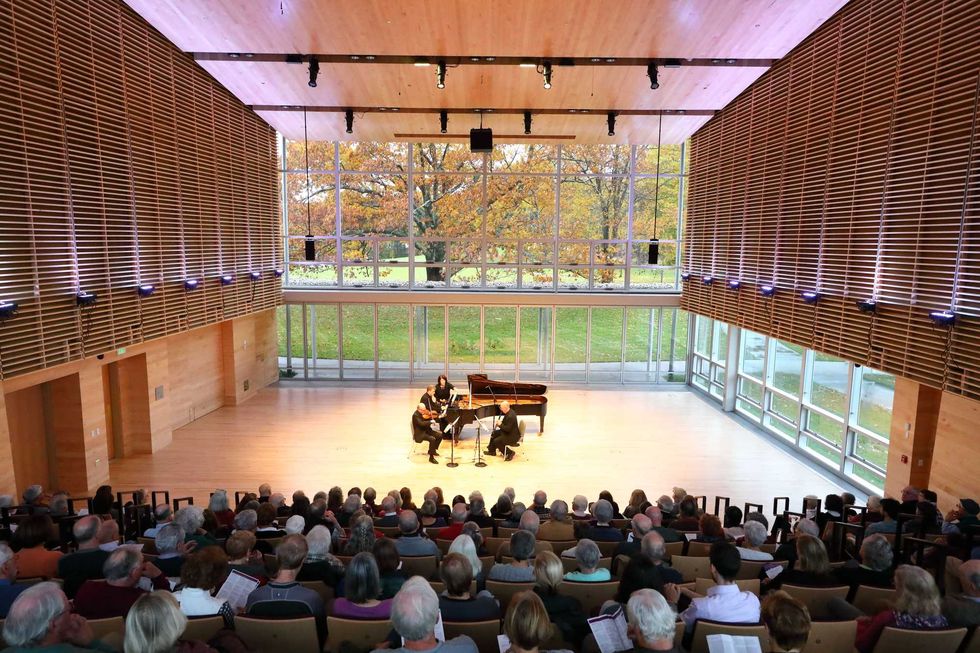 Interior of the Linde Center for Music and Learning.Hilary Scott, courtesy of the BSO
New this season is the TLI Jazz series, which continues March 20 with the Sullivan Fortner Trio, led by Grammy Award-winning artist and educator Sullivan Fortner, whose eponymous ensemble won the 2024 DownBeat Critics Poll for Rising Jazz Group. “Soul-sax sensation” Nick Hemp brings his free-blowing blend of “barroom excitement and modern jazz finesse” for a rousing night of soul jazz April 10. Rounding out the jazz series, and back by popular demand, is Grammy Award-winning trumpeter and singer Jumaane Smith, who brings his repertoire of jazz and American Songbook standards to the Linde Center on May 9.
Another season highlight comes April 12 with an animated live concert screening of the 3D stop-motion adventure film “Magic Piano.” Produced by the Academy Award-winning BreakThru Films production company in Poland, the film will be accompanied by a screening of “The Chopin Shorts,” a collection of animated films set to Chopin’s etudes, performed by pianist Derek Wang.
All performances take place in Studio E, the Linde Center’s 4,000-square-foot multiuse room that serves as TLI’s main performance and event space. It features retractable seating, acoustic and technical systems, flexible configurations, and is accessible and comfortable for all patrons.
The entire Linde Center for Music and Learning is worth a visit in itself. The complex, which also includes the informal Cindy’s Cafe (seasonal) for a quick bite, is conceived not as a single building but as a cluster of pavilion-like spaces connected by an outdoor covered walkway and arranged around a century-old red oak tree. The center promotes a welcoming and serene sense of place and continuity with the rolling Tanglewood lawn and surrounding woodlands.
Smith said, “This ongoing work is also a passion project for our musicians, who form deep ties to the area and are eager to remain active in the Berkshires beyond the summer months. We look forward to welcoming new and returning audiences to experience all that TLI offers — all year long.”
The Tanglewood Learning Institute is located at 3 W. Hawthorne Road, Lenox, Mass. For more information and to purchase tickets,
visit bso.org/tli.
Want more of our stories on Google? Click here to make us a Preferred Source.