The Lakeville Journal congratulates the honorees of the student of the week program at Housatonic Valley Regional High School.National Emergency Medical Services Week this year runs to May 21. Training begins early for emergency service volunteers, and a significant number of junior volunteers are students at Housatonic Valley Regional High School — including our student of the week, Jonah Whiteside.In addition to maintaining high grades at Housatonic, Jonah has high aspirations for a career in the field of emergency medicine. He has recently earned his EMT Basic certification, which allows him to work with the Cornwall Fire Department as a junior member. Jonah hopes to study emergency medicine as a combat medic in the Army Reserves. In preparation for this medical training, Jonah devotes himself to studying biology with instructor Letitia Garcia-Tripp, whom he finds inspiring.Much of Jonah’s civic-minded spirit can be traced to his parents, James and Carla, a paramedic and a teacher, respectively. With his father, Jonah has volunteered six times to build houses for families in Mexico, and he clearly finds inspiration in his father’s career path.Additionally, Jonah is a talented athlete, and has spent the past two years at Housatonic trying out various sports. Only a sophomore, he has already played football, basketball, tennis and track. All that cross-training should prepare him well for Army Reserve Basic Training, which he hopes to undergo next summer.
Latest News
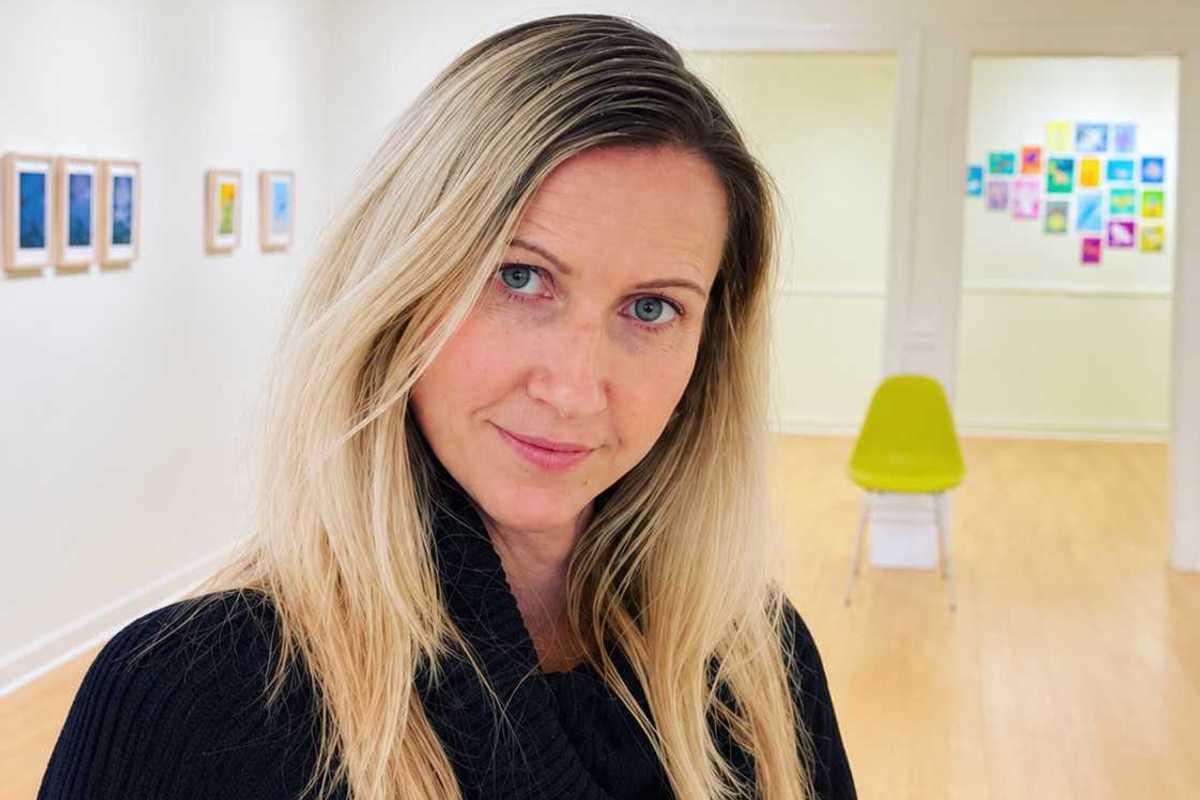
Jennifer Terzian’s sanctuary for contemporary art
Troy Mcmullen
The gallery is really meant to create a very intimate relationship with the artist and the story behind their work.
—Jennifer Terzian
On a recent crisp, fall afternoon in Litchfield, Jennifer Terzian welcomed a steady stream of collectors, artists, and art-world insiders into her jewel box of an art space on South Street, just off the town’s manicured historic Green.
The occasion was an opening for Jenny Kemp, an artist noted for balancing fluidity and structure in her abstractions through repetition, variation, and gradual shifts in hue. Hers is exactly the kind of tactile, process-driven work Terzian champions at a subterranean space that feels less like a commercial art gallery and more like stumbling into an impeccably edited sanctuary of contemporary thought.
“I don’t really consider myself a traditional gallerist,” explained Terzian, a Southern California native who moved to Connecticut in 2008. “I see myself more as an artist advocate.”
Established in 2021 as a platform to promote the work of emerging and mid-career artists, Terzian’s gallery has grown into one of Litchfield County’s most compelling launching pads for contemporary art. Focusing on drawing, works on paper and paintings in ambitiously varied visual vocabularies, the gallery has built a reputation for its devotion to the artists’ methods, tools, materials and critical thinking. Terzian has also cultivated a niche rooted in an ethos that favors intense tactile engagement over sheer wall acreage.
“The gallery is really meant to create a very intimate relationship with the artist and the story behind their work,” said Terzian, who has spent two decades organizing exhibitions in galleries and museums and taught art history and museum studies at Miss Porter’s School in Farmington for six years. “It’s always very much about the process and I think the artists and the visitors to the gallery really recognize and appreciate that focus.”
That commitment to creative rigor is raising Terzian’s profile among art institutions. The gallery’s acceptance into the New Art Dealers Alliance (NADA) earlier this year marked a significant milestone, cementing its place within an international network of contemporary galleries and arts professionals dedicated to supporting vanguard talent.
“Her innate enthusiasm allows artists to test out new bodies of work on the walls in a supportive environment, creating space for both joy and growth,” explained Rebecca McNamara, chief curator at the Mattatuck Museum.
Jenny Kemp, whose solo exhibition “Reverbs” runs through Dec. 12, echoes that sentiment: “She encourages artists to lead in shaping their exhibitions and the installation, giving them the freedom to respond to the space and bring their own vision to it.”
While Litchfield County has long attracted creative minds, Terzian’s arrival in 2021 coincided with a period of cultural momentum, allowing her to tap into an expanding cadre of local talent. The gallery’s roster bridges mid-career artists such as Fritz Horstman, Kristin Lamb and Richard Pasquarelli, who have exhibited their work in museums, galleries and art fairs throughout the U.S. and Europe.
Yet her programming also crosses geographic boundaries seamlessly, bringing work by painters and paper-makers from Brooklyn, Providence, Berlin as well as artists working in established studios across Connecticut.

Recent exhibitions highlight Terzian’s curatorial leanings toward precision and patience over hyper-commerciality. Jessica Smolinski’s mixed-media works probed memory and time through photography and textiles, while Aliza Morell employed holographic streamers against flat fields of color transferred to canvas via a layered material process. China-born artist Jenny Wu, who studied studio art at Hobart and William Smith Colleges and American University, poured and layered liquid paint until it took on dense, sculptural forms.
“The space feels like you are leaving the day’s responsibilities behind and entering a world of serenity,” said Wu, whose paintings explore composition, color and materiality. “Stand there, look at the works, feel them, and let them consume you for once.”
Terzian advocates for a more intimate scale to help amplify impact and says the diversity of aesthetics allows her to build a space tailored to creative rhythms of the artist. “It fosters a better dialogue between artist, curator and collector.”
The gallery’s momentum coincides with a broader revival across Litchfield. The recent arrival of three boutique hotels — The Abner, Belden House and Lost Fox Inn — has brought a steady influx of younger, design-conscious travelers to Connecticut’s northwest corner, energizing the town’s cultural landscape.
“I love for people who are new to Litchfield to walk down those stairs to my gallery and just come inside and just be educated about the artists and their work,” Terzian reflected. “Whether or not they walk away with purchasing something, I just think the experience of coming into a space and not feeling intimidated is valuable.”
For more information, visit jenniferterziangallery.com.
Troy McMullen is a former Wall Street Journal reporter in Berlin and New York and currently an executive editor at ABC News. His arts and culture reporting appears in several New England publications, including Litchfield Magazine, New England Home and Connecticut Magazine. He splits his time between Manhattan and a weekend home in Litchfield, adjacent to the Hauser Nature Preserve.
Peter Cusack is finding the eternal in North Canaan
Natalia Zukerman
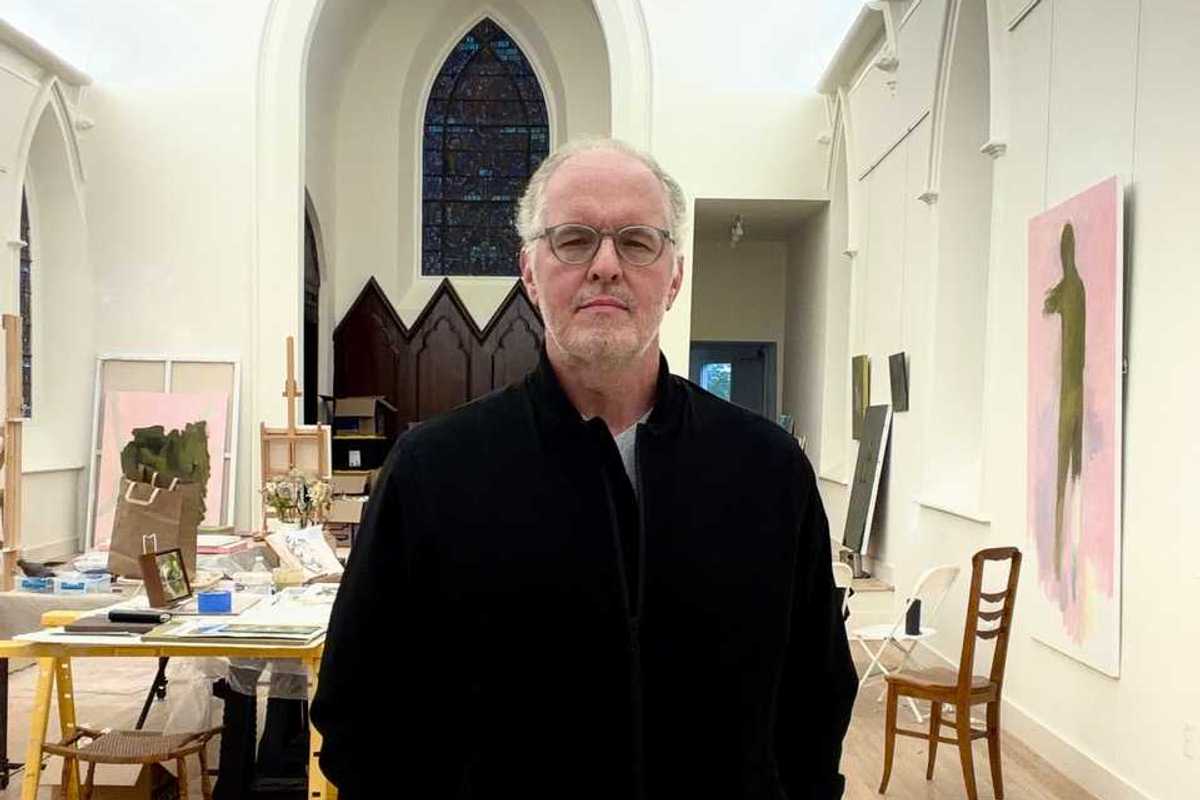
“I think art is the thing that allows us to feel there’s something in the universe that loves us,” said painter Peter Cusack in his new studio, a mid-19th-century stone church on Main Street in North Canaan.
For Cusack, art has always been a way of reaching toward something beyond the physical world. That sensibility runs through “Eternal: New, Recent, and Near Distant Paintings,” his upcoming exhibition in the church, a setting that seems an improbably good fit.
Cusack recently moved his painting practice from Torrington into the former church at 58 Main Street. The move came about somewhat unexpectedly, after a change in ownership made his previous studio untenable.
“At first I thought it was just gonna be too much,” Cusack said. When he first saw it, the building still looked unmistakably like a church, with its vaulted ceiling, stained glass and architectural details intact. It had served as a place of worship for generations before closing roughly 12 years ago.
But the space began to make sense.
“I’m very philosophical, very spiritual, very humanistic,” said Cusack. “And so for me to be in a church sort of fits.”
Cusack still lives in West Cornwall, where he has a garden he describes as mature and beautiful, along with a saltwater pool. The church is strictly a working studio, though he hopes to bring students in and occasionally invite other artists to exhibit alongside him.
As with every studio, Cusack says, there is a particular direction and position that feels right for painting. In the church, he gravitated toward a spot where the geometry of the building creates a distinct rhythm, near where the pews once ended, before the altar.
“I can already see the arc of the dome involved in my work,” he said.
The first painting he made in the new space, “Prophets and Proverbs,” grew out of three forms he encountered during his morning meditation at home. After drawing and reflecting on them, he came to understand them as expressions of different aspects of maturity: “ego, strategy, agency.”
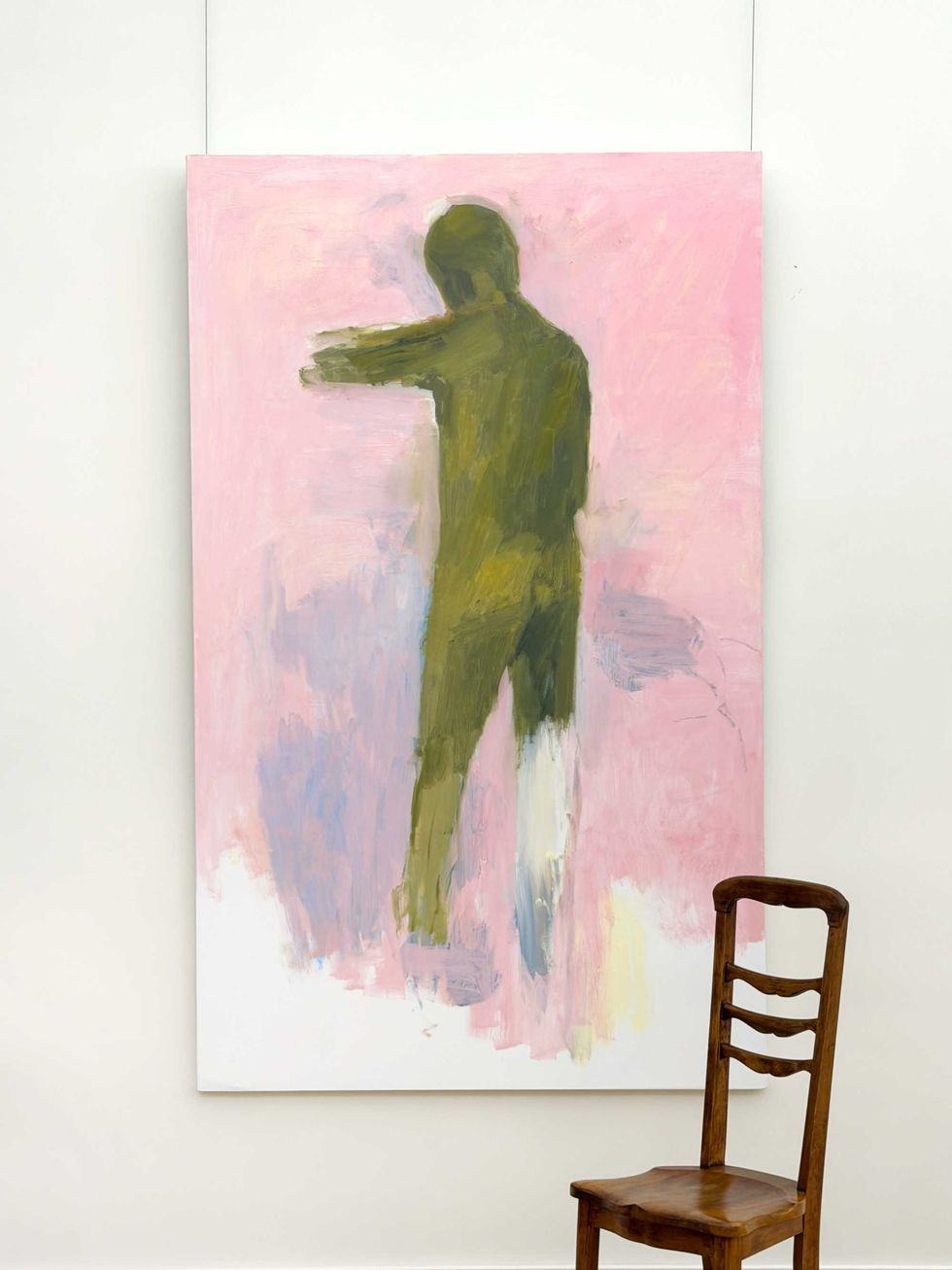
The exhibition’s title comes from “Nature Eternal,” a painting of a young nude figure in a pink field that evokes, for Cusack, the Garden of Eden and an idea of bliss and perfection. “The Narcissist,” by contrast, considers what happens after that innocence is lost: the arrival of consciousness, self-awareness and the search for identity.
Two paintings of swimmers explore another dimension of that relationship. In “I Will Love You Completely,” Cusack sees a figure reaching outward from the canvas almost like an angel. “It’s a message from the divine,” he said. In another painting, the swimmer appears to be held by the water, suggesting the possibility of being held by something larger than ourselves.
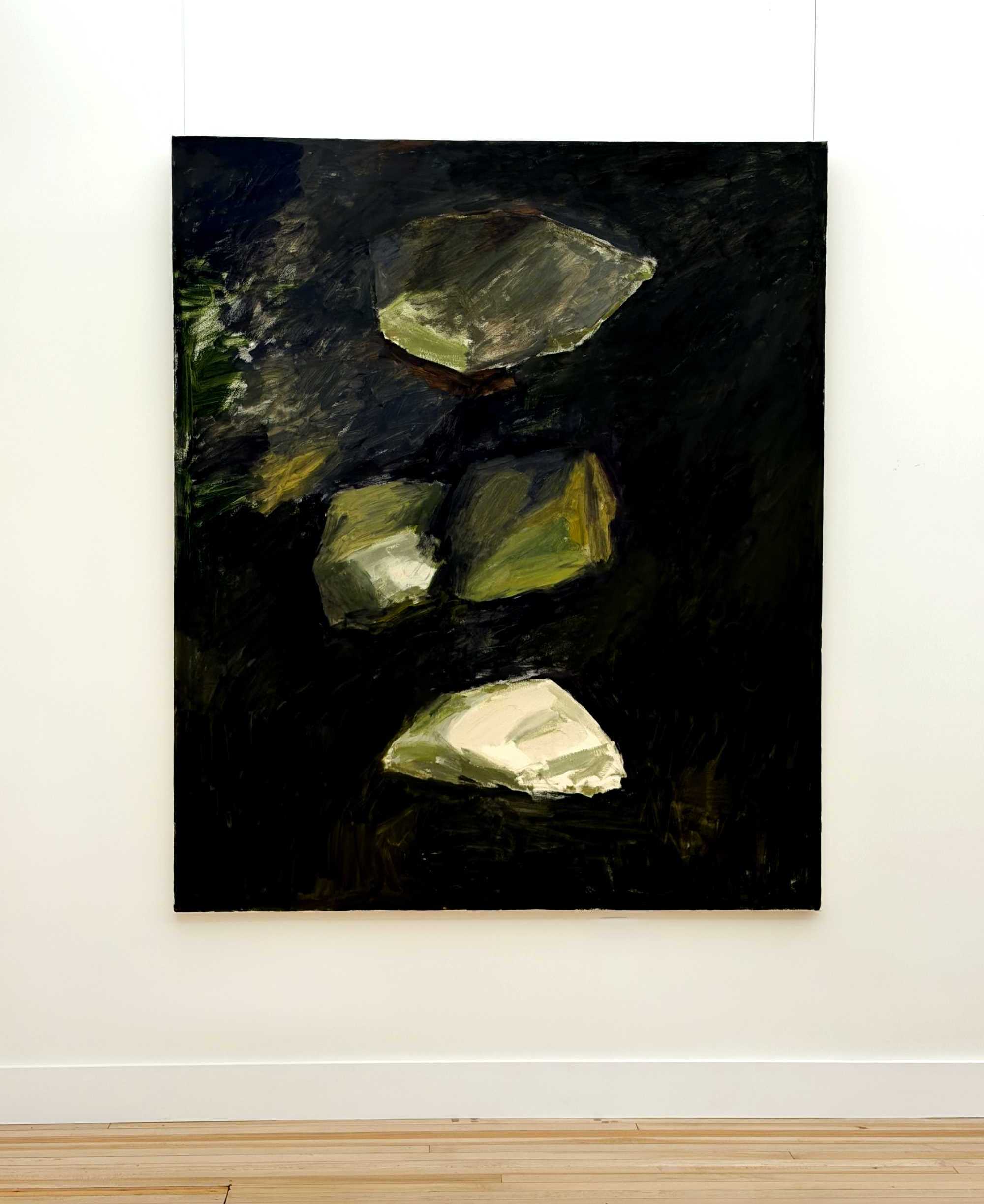
Having grown up in New York, Cusack says his relationship with the natural world has deepened since moving to northwest Connecticut. He thinks about the glacier that passed through this region, leaving stones behind that have remained through countless chapters of human history. In a painting of stones, Cusack considers the wisdom of the landscape and the extraordinary passage of time. “To me, that’s an eternal wisdom.”
Cusack regularly visits the Metropolitan Museum of Art, where he sits in the sculpture galleries, contemplating and drawing the figures.
“Drawing is just a way of looking and continuing to look,” he said. “It just helps me ground myself and be very present.”
That practice of extended observation can be seen in the paintings. At first glance, Cusack’s color palettes can appear remarkably simple, sometimes almost monochromatic. But the longer one spends with them, the more they open up. Subtle shifts in tone and color begin to emerge, deepening and expanding the visual experience. What initially seems restrained becomes increasingly expansive as the viewer gives the work time and attention.
Before turning fully to painting, Cusack spent 12 years as a commercial artist represented by Morgan Gaynin Inc., where his work became known for its emotive storytelling. His paintings have appeared in Architectural Digest, Veranda, New England Home and Litchfield Magazine, among other publications, and are held in the collections of the United States Air Force, the New York Transit Museum and the Society of Illustrators. His training included an MA at Syracuse University and a year of classical study in France’s Loire Valley with a master painter who was also a former Zen monk.
The church, meanwhile, has its own layers of history. During the many repairs required after Cusack moved in, a plumber mentioned that he had been married there. His wife had since died, and Cusack asked whether he was sure he wanted to return to the building. He was.
It is a small story, but one that seems to resonate with Cusack’s interest in the passage of time and the histories held by places and objects. Although he says he doesn’t feel a particular presence in the church, he is conscious of its history and of the community for whom it was once a gathering place.
For now, he is looking forward to welcoming people into his new studio and seeing how they respond to the paintings. “Interacting with the work” is important, he said. “It always feels good to have people in your studio space.”
“Eternal: New, Recent and Near Distant Paintings” will be on view Nov. 13–15, from 1 to 5 p.m., at 58 Main Street (the Stone Church) in North Canaan. An opening reception will take place Saturday, Nov. 14, from 4 to 7 p.m.
Cowboy Junkies celebrate 40 years at the Mahaiwe
Mike Cobb
Cowboy Junkies celebrate 40 years together at the Mahaiwe Nov. 14
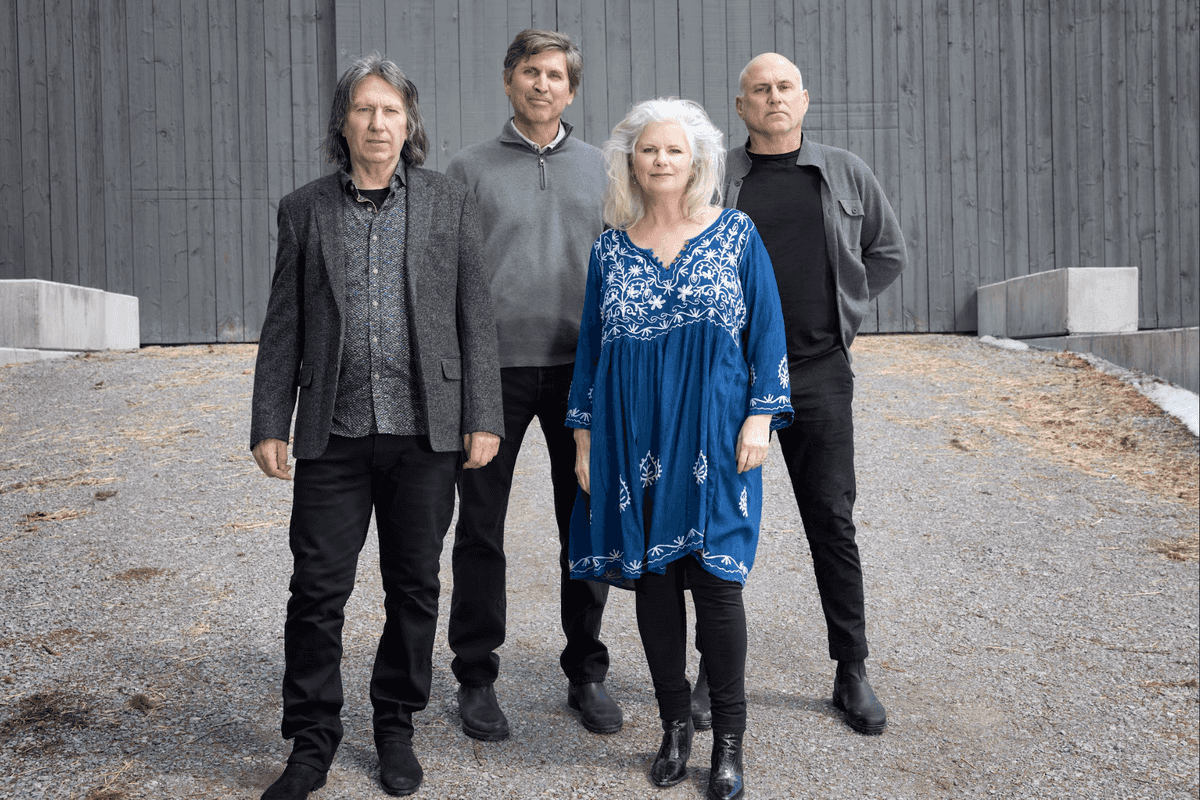
Now celebrating 40 years, Cowboy Junkies will perform Saturday, Nov. 14, at the Mahaiwe Performing Arts Center in Great Barrington, Massachusetts.
The band is celebrating its long career with a triple-vinyl retrospective album called “Open to Beauty,” featuring a selection of songs from 2000 onward, including material from its most recent release, “Such Ferocious Beauty.”
Initially, the band was inspired by the dark, spacious qualities of post-punk and goth groups such as Siouxsie and the Banshees and Joy Division. But the musicians soon settled on an organic, rootsy country-blues sound with hints of psychedelia. Their hushed sound developed from playing quietly in their garage rehearsal space so as not to disturb their neighbors.
Formed in 1985, the band made a huge impact on the indie rock scene with its second album, “The Trinity Session,” recorded with a single ambisonic microphone at the Church of the Holy Trinity in Toronto.
“Part of going to Trinity Church was because I couldn’t afford a studio. We continue to do as much recording as live as possible, said guitarist and songwriter Michael Timmins. “Playing together for 40 years, you develop a certain chemistry. You react to each other, and that lends the track your personality. We want people to hear the band when they listen to our record,” Timmins said.
The album included a serene version of Lou Reed’s “Sweet Jane,” later used in Oliver Stone’s “Natural Born Killers,” TV’s “Stranger Things” and many other productions.
When asked if Reed ever heard their version, Timmins said:
“Yes. He said it was the best and most authentic version he’d ever heard. The record company used that quote on the cover. He really appreciated the bridge section, which had been taken out of his version. We met him a few years after the record had come out, and he said he’d started to play it live again. He thanked us for that, which was pretty amazing.”
The band also toured with legendary singer-songwriter Townes Van Zandt while promoting 1990’s “The Caution Horses.” Cowboy Junkies continued recording, producing 16 studio albums and five live albums.
Reflecting on the band’s earliest days, Timmins recalled how his sister Margo had not envisioned herself as a singer.
“Margo was reluctant. Alan and I were working on this next project, which had this more rootsy kind of direction. We knew Margo could sing because, as a kid, she always got the lead in the school musical. She wasn’t looking to do that as a career, but we knew she had a voice, so we invited her to the practice. She quickly fit right in.”
Asked how the musicians view their Canadian identity, Timmins said:
“‘The Trinity Sessions’ got our name around the world. So, we consider ourselves a Canadian band, but we’re not Canadian-centric.”
Over the years, the band members grew up, married, took on mortgages and had children. But the lineup has remained essentially unchanged, with singer Margo Timmins, guitarist and songwriter Michael Timmins, drummer Peter Timmins and bassist Alan Anton.
Timmins said the Mahaiwe audience can expect old favorites as well as new material.
“After 40 years, you have people who have come to the band at different points along the way.You’re bound to hear something you know and a lot you don’t, which is always a good thing at a live show, I think. Hopefully you walk away smiling and inspired.”For tickets, visit mahaiwe.org.

Want more of our stories on Google? Click here to make us a Preferred Source.
Mike Selbach finds the extraordinary in everyday life
Natalia Zukerman
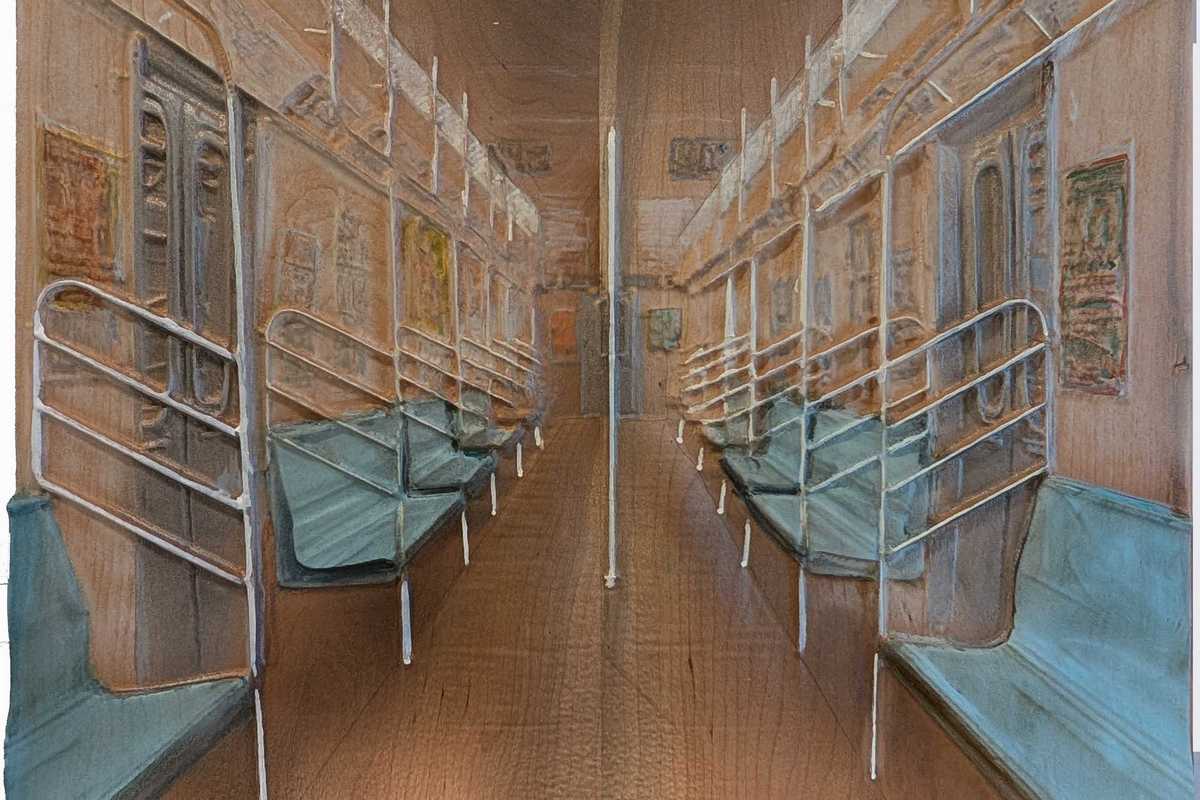
Subway stations may seem unlikely places to encounter the divine, but amid the rumble of trains, the crush of commuters and the cavernous underground passageways, Salisbury artist Mike Selbach finds moments of unexpected beauty.
In “Subway Saints,” his solo exhibition opening Thursday, Nov. 12 at the Warren Family Gallery at Berkshire School in Sheffield, Massachusetts, Selbach transforms ordinary commuters and familiar transit spaces into sacred moments.
Through carved, two-sided wooden sculptures and expressive woodcut prints of New York City subway stations, Selbach captures both the individuality of the people who pass through these spaces and the shared experience of moving through the city. His work draws on decades of experience in sculpture and printmaking, with a distinct focus on the expressive possibilities of wood. Influenced by German Expressionist printmakers, Selbach brings a striking interplay of color, texture and perspective to his work, finding connections between the ancient art of woodcarving and the rhythms of contemporary urban life.
An opening reception will be held Thursday, Nov. 12, from 6 to 7:30 p.m. The exhibition runs through Dec. 20 at the Warren Family Gallery, 245 North Undermountain Road, Sheffield. For more information, email the curator at victoria.selbach@gmail.com or call (516)220-9909.
Winding down in Fall? Think again.
Dee Salomon
Putting the garden to bed is not just a metaphor; some blanket trees and shrubs with mulch and burlap. Think of leaves as nature’s blanket, giving precious caterpillars and other insects food, shelter and warmth during the winter. Gentle treatment of leaves now will give insects the best chance of surviving and feeding baby birds in the spring. A gentle blow or rake to move leaves from footpaths into woodland margins or under trees will work. But do not shred or mulch leaves or pile them up too densely, as this will kill the life overwintering there.
For me, fall, especially late fall, is an opportune time for action rather than winding down. Poison ivy has disappeared and, as the days get colder, tick numbers decline (still, no complacency on ticks!). Most of all, now is when the major invasive offenders are easiest to see and eradicate.
Norway maple, Acer platanoides, stands out with its five-lobed, yellow leaves and red stems that are still attached; native maples lost their leaves weeks ago. This invasive tree has a straight, vertical trunk that, combined with its large leaves, can resemble a child’s drawing. Instead of the sugary sap from which we make maple syrup, Norway maple oozes a milky liquid that does not provide nutrition to our native wildlife.
You can see the dominance of Norway maple along many of our roads, where it deftly outcompetes native trees and plants with a trifecta of superpowers characteristic of many invasives: its leaves cast dense shade, blocking sunlight from reaching the forest floor and preventing the growth of other plants; its leaves emerge earlier in spring and fall later in autumn than those of most native plants, giving it a longer growing season; and, finally, it disperses far more seeds than native species.
These trees grow as tall as 90 feet and, as with all large trees, benefit the Earth by storing carbon and producing oxygen. But this alone does not give these maples a pass; our native oaks do the same while supporting hundreds of species of caterpillars, insects, birds and small mammals. And I challenge anyone to defend the visual appeal of the Norway maple over, say, a mature scarlet oak, especially in the fall.
As with any large tree, mature Norway maples are best cut down by a professional, but a tree under 10 feet tall is easier to tackle yourself. If it is shorter than a couple of feet, try pulling it out by its base; the roots are shallow. Young trees have soft wood trunks that can be easily cut with pruning shears or loppers or, if larger, with a hand saw. You can then apply an appropriate herbicide to the cut surface of the trunk, following label directions. If you do not have an herbicide handy or are opposed to using one, repeated cutting over several seasons can work, but this can be tedious, especially as there likely to be many trees where there is even one.
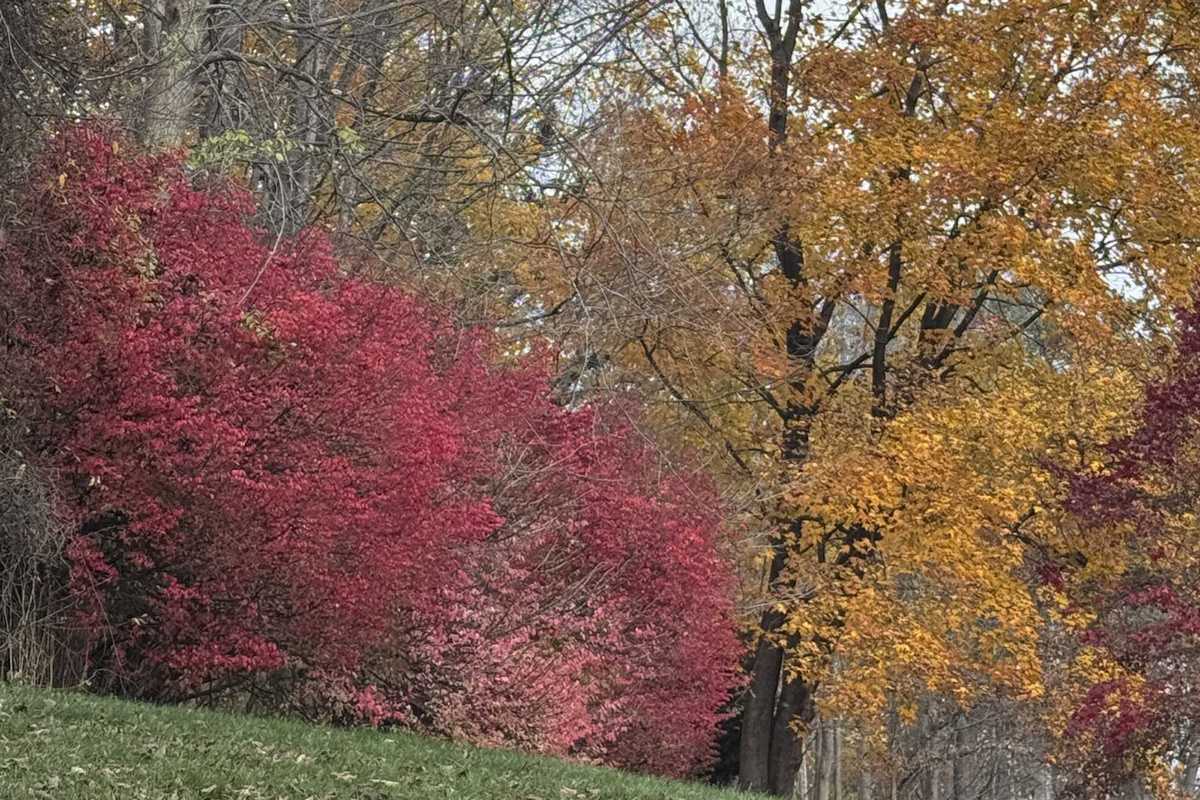
Burning bush, Euonymous alatus, is like a blinking red light along just about every road this time of year. It is a noxious invasive that alters soil chemistry with its leaf litter, turning soil alkaline so that natives cannot germinate and grow. There are some who cannot let go of this notorious invasive, which is restricted or prohibited for sale in several Eastern states. The fact that it no longer can be bought in some nurseries is a moot point, as it long ago jumped the garden fence and is now running rampant, damaging our native habitats.
Some laud its leaf color in fall; to my eye, it’s blue-red shade is a sore thumb among the orangey russets and scarlets of the native oaks and the brilliant red of our sumac varieties or the Nyssa sylvatica, the tree known as tupelo or black gum. By the time you are reading this, burning bush leaves will have mellowed to a pale purplish pink. Native Mapleleaf viburnum has a similar pale leaf color in fall, along with a sweet lacy white flower in spring, and is a sensible replacement in wooded environments.
I have been steadily working on about an acre of a dense burning bush infestation behind our house. As with Norway maple, the small ones are easily seen and pulled this time of year. The larger ones can be cut with loppers or a hand saw and then treat with herbicide — always closely following label directions. A nice last effort before the winter cold sets in.
Dee Salomon ungardens in Litchfield county.
A dinosaur is coming to Cornwall
D.H. Callahan
On Saturday, Nov. 14, Cornwall Town Hall will be the coolest place in the county. Lou Barlow, of the rock bands Dinosaur Jr., the Folk Implosion and Sebadoh, will be joined by Attawalpa’s Luis Felber and hauntingly raw singer-songwriter Amelia Jackie as they transform the official administrative building into a rockin’ music venue.
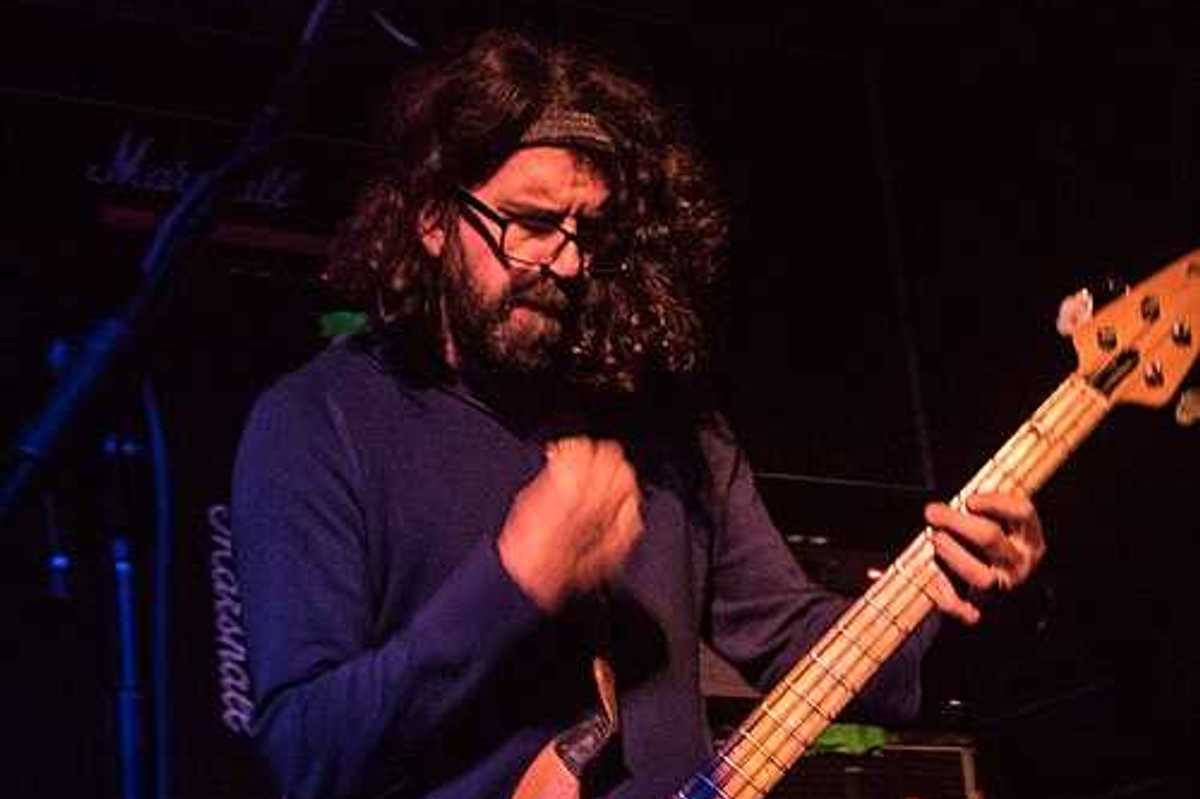
Lou Barlow rarely gets the credit he deserves. As bassist for 1980s pre-grunge indie sensation Dinosaur Jr., he influenced a whole generation of bass players. Barlow started his music career by playing guitar in a hardcore punk band called Deep Wound out of Central Massachusetts.
When Barlow and the band’s drummer, J Mascis, left to form their own band, Dinosaur, Mascis took over on guitar and asked Barlow to join him on bass. As this was long before widespread public access to the internet, there was no easy way to find out that there was already a band called Dinosaur. Like the Warlocks before them, who eventually changed their name to the Grateful Dead, Dinosaur needed its own identity. Their solution? Simply add a Jr.
Barlow took his hard-playing guitar method and transferred it to the electric bass. By playing chords and using a guitar pick instead of the standard bare fingers, he gave his bass a richer, fuller sound, allowing Mascis to play with his guitar and litany of pedals. Along with their drummer, Murph, the band was rising to uncharted levels of popularity.
This was all happening in the late 1980s, when MTV was starting to take over the airwaves and commanded an outsized influence on the music industry as a whole. Eventually, the pressures of the road and the band’s creative struggles led to a famously fractured relationship between Mascis and Barlow. In 1989, Barlow was kicked out of Dinosaur Jr.
Because Mascis didn’t like sharing the band’s creative direction, Barlow had already been writing his own material. On a four-track cassette recorder, he cobbled together songs in bedrooms and living rooms while still touring with Dinosaur Jr. Many of those songs were about the tensions between Barlow and Mascis and the way he had been treated in the later days of his tenure with the band.
Barlow teamed up with Northampton-based musicians Eric Gaffney and Jason Loewenstein to form Sebadoh. Together with bands like Pavement and Guided by Voices, Sebadoh was instrumental in pioneering the lo-fi sound that would eventually be inextricable from shoegaze and other forms of indie rock in the late 1990s and early 2000s. While Sebadoh’s albums rarely garnered the kind of popularity they deserved upon release, music critics and record collectors would eventually look back and lavish praise on the band for setting trends that the industry couldn’t see as they were happening.
Popular success finally came for Barlow with another project, the Folk Imposition. Formed with multi-instrumentalist John Davis, the band was heavily featured on the soundtrack to Harmony Korine and Larry Clark’s independent blockbuster “Kids.” The movie became a generational touchstone, due in no small part to its use of music.
Barlow, Mascis and Murph seemed to use the 1990s as a way to grow up and work out their creative demons. In 2005, Dinosaur Jr. reunited with a lot less baggage and a greater willingness to work together as a band. Since the reunion, the band has released several new albums and achieved egendary status, with a new generation of music fans obsessing over the ahead-of-its-time albums released 30 to 40 years ago.
At Cornwall Town Hall, Barlow will perform solo. The show offers a series of ticket tiers, from general admission to a post-show wine-and-cheese soirée.
Tickets are available at dice.fm.

Want more of our stories on Google? Click here to make us a Preferred Source.