In a region of plenty, campaign aims to meet growing food needs

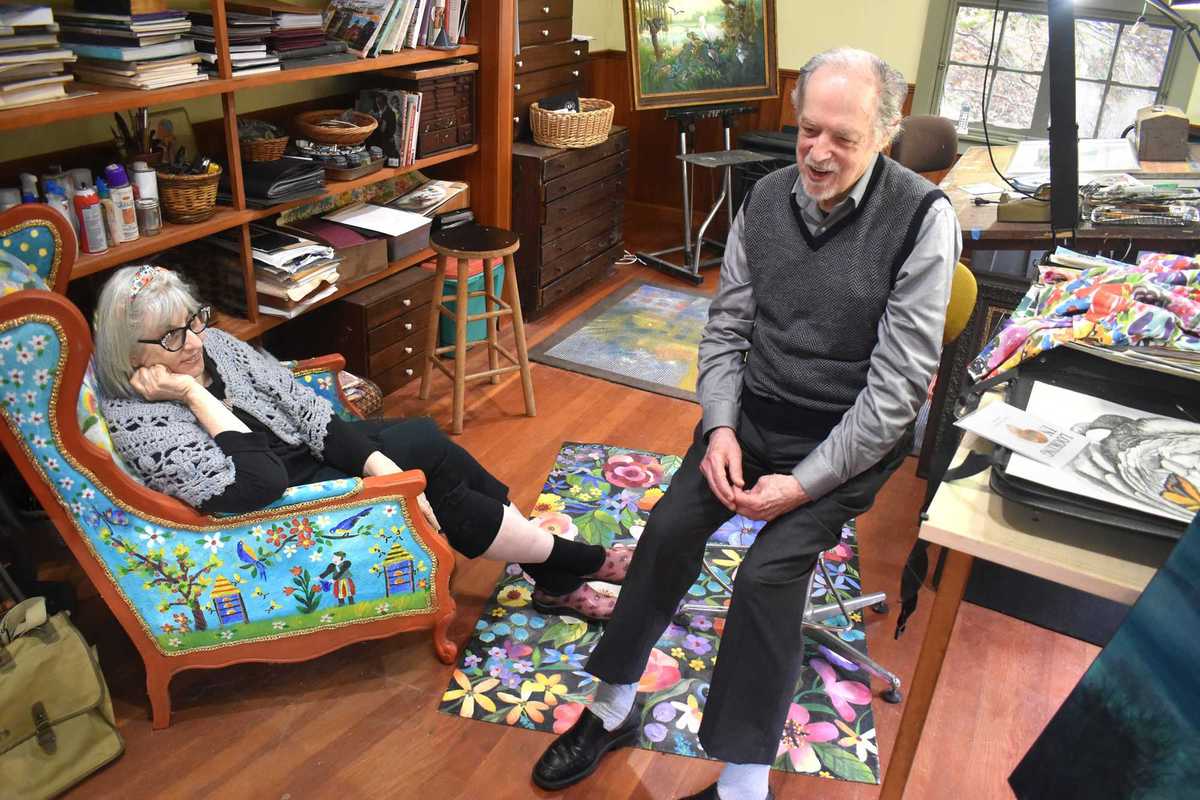
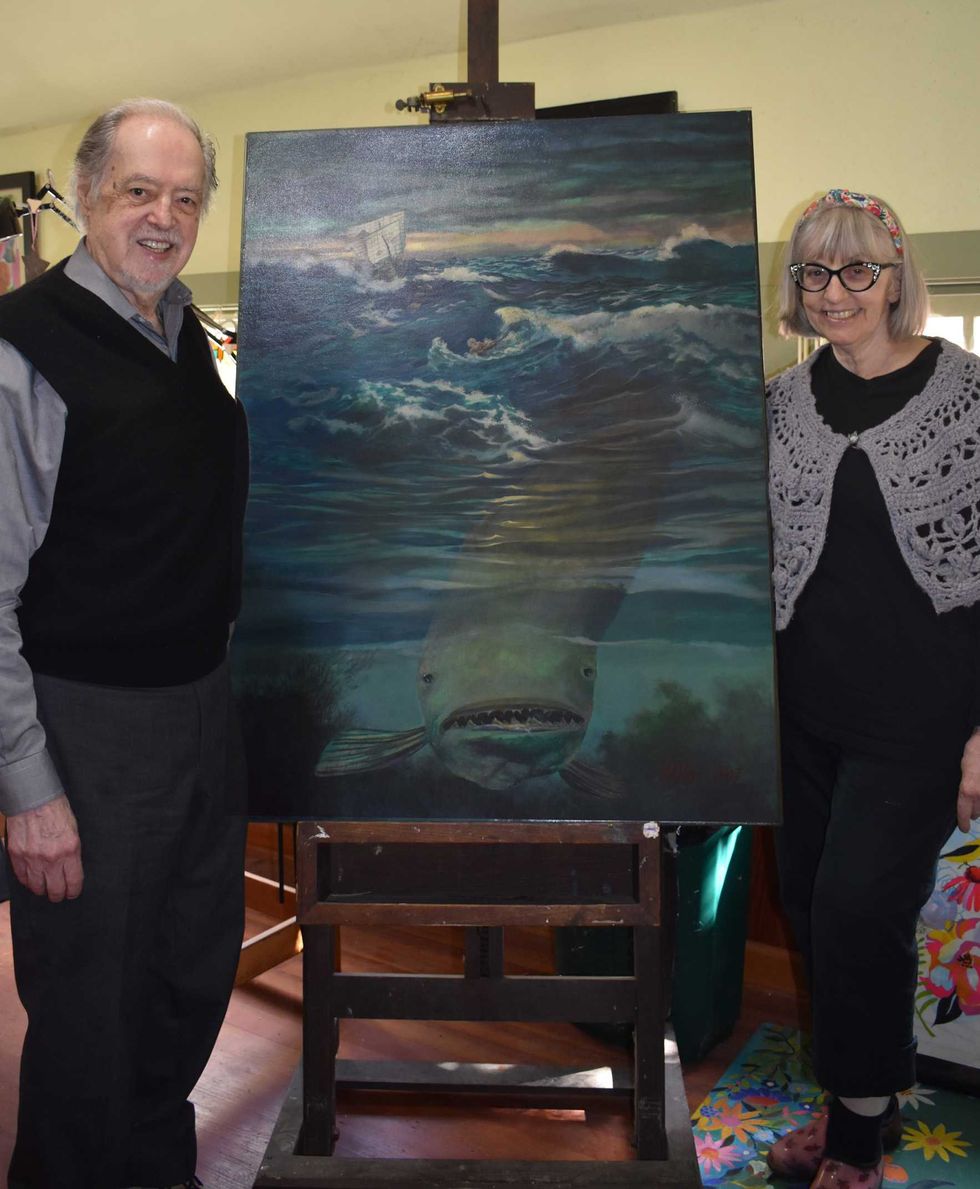
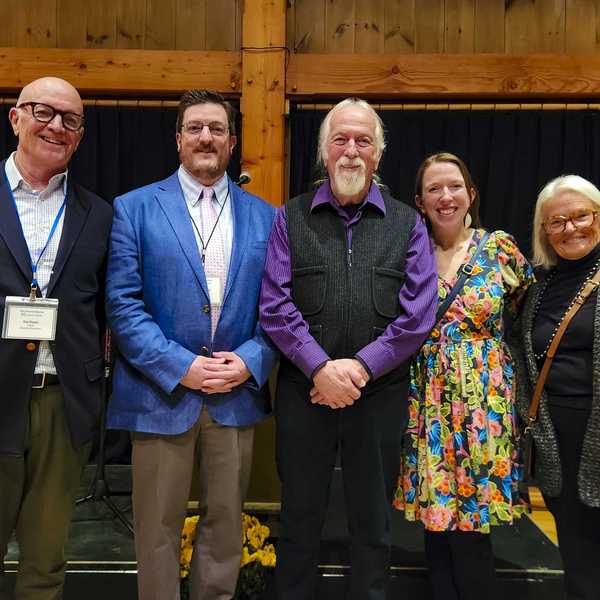
Blake Myers, left, director of food programs at the Tri Corner F.E.E.D. Market in Millerton and Linda Quella, founder, take a break on a recent busy Friday.
Debra A. Aleksinas

Blake Myers, left, director of food programs at the Tri Corner F.E.E.D. Market in Millerton and Linda Quella, founder, take a break on a recent busy Friday.
Poverty in the Northwest Corner doesn’t define an entire town. Instead, it exists in quieter pockets — apartments above storefronts, income-restricted housing and older homes where seniors and working residents struggle to keep pace with rising costs. This series examines where financial hardship exists in Region One towns, what is driving it and how communities are responding.
SHARON — In a region often associated with affluence, hunger relief organizations say pockets of poverty are deepening, with as many as four in 10 households struggling to cover basic needs, according to regional estimates.
A weeklong fundraising campaign beginning May 11 will ask diners at local restaurants to help address that gap by funding the purchase of fresh food from local farms for distribution to area pantries.
Supported by more than a dozen restaurants and cafes across the tri-corner region, the Nourish Neighbors campaign raises funds to support that effort — connecting restaurants, farms and hunger relief efforts.
“We expect to have about 15 restaurants participate, from Champêtre in Pine Plains all the way to the Falls Village Inn,” said Chris Armero, an organizer of the campaign. “Not many people know that four out of 10 of our neighbors have trouble paying their bills.”
The effort is led by Tri Corner F.E.E.D. (Food Equity, Education and Distribution), the Sharon-based nonprofit behind Nourish Neighbors, founded in 2023 by former Q Farms owners Linda and James Quella. The organization is advancing a model to expand access to fresh, locally grown food while supporting farmers and small businesses — a concept organizers say is increasingly needed in the tri-corner region, where many households are struggling to meet basic needs.
Tri Corner F.E.E.D. operates a local storefront at 56 South Center St. in Millerton, where food is priced on a sliding scale. It offers farm-fresh meats, seasonal vegetables, prepared foods, coffee and baked goods.
“We really want to reduce barriers for people to be able to afford nutritious, local food,” said Blake Myers, director of food programs at the Tri Corner F.E.E.D. Market.
About 75 people shop there weekly, she said, with roughly 50 relying on it as a primary grocery source.
Demand rising at local food pantries
Local food pantries — including The Corner Pantry in Lakeville, North East Community Center (NECC) in Millerton and St. Thomas Episcopal Church in Amenia — have reported sustained increases in demand since the pandemic, even as emergency supports have receded and funding sources have tightened.
That pressure has exposed a broader challenge across the region: not only how to meet immediate need, but how to provide consistent access to nutritious food in a way that is sustainable for both households and the local agricultural economy.
Tri Corner F.E.E.D.’s approach centers on strengthening those connections, said Linda Quella, who previously farmed land in Sharon and sold her produce primarily via farm stands and farmers markets.
She said the experience underscored how difficult it is for farmers to earn a living through local sales alone.
“We were going to farmers markets three times a week,” Quella said. “People don’t realize how much you have to sell to earn a living as a farmer.”
She added, “Everybody that was buying our food was very well off.”
That realization led to conversations with hunger relief organizations, including the NECC in Millerton and its food programs director, Jordan Schmidt.
With food pantries held twice a month, Quella saw an opportunity to host a pop-up market with the organization.
“We could tell it was a need,” Quella said. “It became clear this would be welcome in this community.”
Quella also researched a study from United Way that collected data from households that struggle to cover basic costs. Her efforts helped inform Tri Corner F.E.E.D.’s sliding scale model.
“Through that study, we found that farmers can’t afford to discount products. They need full price for their product,” Quella said. “And that consumers needed nutrient-rich food but didn’t have access to it.”
Quella describes Millerton as a food desert, noting the closure of the town’s only food market there several years ago.
Program pays
farmers upfront
Tri Corner F.E.E.D. also purchases produce and other goods through its Food Sovereignty Fund, which was established to buy directly from farmers and distribute those goods to local food pantries — ensuring access to fresh food while providing farmers with a stable, guaranteed market.
Farmers are paid in advance for their harvests, offering financial stability and encouraging participation in food distribution programs. The fund also connects farms with local food pantries, schools and community centers — to deliver fresh produce to underserved populations.
Participating farms include, in addition to Adamah Farm, Rock Steady Farm, Sky High Farm and the Ten Mile Farm Foundation, among others across Connecticut and New York.
Surplus crops
benefit communities
At Adamah, a nonprofit CSA (Community Supported Agriculture program), connected to the Isabella Freedman Jewish Retreat Center, the model allows members to buy a share of a farm’s harvest upfront in exchange for regular distributions of fresh produce throughout the growing season — helping redirect surplus crops into the community.
“In 2025, we sold a few items a week through Tri Corner, including cherry tomatoes, zucchini and herbs,” said Janna Siller, farm director and advocacy coordinator at Adamah.
Siller said the region produces abundant food, yet many residents rely on distant grocery stores due to cost barriers or limited access.
“Tri Corner is helping bridge that gap,” she said.
Adamah also raises funds to donate produce to local pantries, sometimes delivering close to 1,000 pounds of food in a single day.
Restaurant patrons
pay it forward
That same model extends to the upcoming Nourish Neighbors campaign.
“When you visit a participating restaurant or business, you have the opportunity to pay it forward,” Myers said, adding that proceeds go to Tri Corner’s Food Sovereignty Fund.
Supported local pantries include The Corner Pantry in Lakeville, North East Community Center in Millerton and St. Thomas in Amenia.
“This is especially urgent as demand for their services has risen just as federal and state support has come under pressure,” Armero said.
Even as the program expands, Quella said, the scale of need continues to outpace available resources. Rising living costs strain both households and farms, leaving programs like Tri Corner F.E.E.D. to shoulder a growing share of the region’s food access needs.
Natalia Zukerman
“A Love Letter to Handsome John” screens at The Colonial Theatre on May 8.
Fans of the late singer-songwriter Todd Snider will have a rare opportunity to gather in celebration of his life and music when “A Love Letter to Handsome John,” a documentary by Otis Gibbs, screens for one night only at The Colonial Theatre in North Canaan on Friday, May 8.
Presented by Wilder House Berkshires and The Colonial Theatre, the 54-minute film began as a tribute to Snider’s friend and mentor, folk legend John Prine. Instead, following Snider’s death last November at age 59, it became something more intimate: a portrait of the alt-country pioneer during the final year of his life.
What began as a simple gesture of gratitude evolved into a poignant meditation on friendship, artistic influence and loss, offering viewers an unusually personal glimpse of Snider at home in his quietest moments.
For Brad Sanzenbacher of Wilder House Berkshires, bringing the film to the Northwest Corner has been deeply personal.
“I’ve been a huge fan of Todd Snider and John Prine for 20 years,” he said. “I lived in the Bay Area before I moved here, and I would see Todd live probably at least four times a year — sometimes back-to-back nights. I was that kind of super Dead Head-type fan that was on tour.”
Sanzenbacher said he had the chance to meet Snider several times and attended the musician’s Catskills retreats.
“He was just one of those people that I really connected with strongly,” he said. “Like a lot of people, when he passed away, I was really shocked and devastated.”
When he learned screenings of the film were beginning to pop up around the country, he wanted to bring that communal experience here.
“I know there are a lot of Todd Snider fans everywhere who want closure on his life and maybe a chance to feel like they’re in the room with him again,” he said. “I thought it would be a really cool experience to bring the film to the community.”
The screening is part of what Sanzenbacher calls the film’s organic, fan-driven momentum.
“I love the grassroots movement of the film,” he said. “They were going to do two screenings and that was going to be it, and now they’re showing it all over the country because fans have reached out to say, ‘How can I bring a screening to my town?’ I feel really lucky we’re able to show it.”
He hopes the evening captures some of the camaraderie that defined the Todd Snider fan experience.
“One of my favorite things about being a Todd Snider fan was when you’d go to two or three shows in a row, you’d turn into a little caravan and make friends with strangers and become this community,” he said. “That’s kind of something I’m hoping happens at the film.”
The screening begins at 7 p.m. Friday, May 8, at The Colonial Theatre, 27 Railroad St., North Canaan. Run time is 54 minutes, with time afterward for audience members to gather and connect.
Matthew Kreta
New Sharon Playhouse logo designed by Christina D’Angelo.
The Sharon Playhouse has unveiled a new brand identity for its 2026 season, reimagining its logo around the silhouette of the historic barn that has long defined the theater.
Sharon Playhouse leadership — Carl Andress, Megan Flanagan and Michael Baldwin — revealed the new logo and website ahead of the 2026 season. The change reflects leadership’s desire to embrace both the Playhouse’s history and future, capturing its nostalgia while reinventing its image.
After attending the closing performance of the Playhouse’s production of The Mousetrap last September, Christina D’Angelo told Playhouse leadership she was “completely changing her design direction” for the new logo after experiencing the work and atmosphere of the Sharon Playhouse firsthand. She incorporated the barn silhouette to capture the theater campus’s history and evoke the warmth and magic of the Playhouse.
“The barn gives a fixed image of how we all feel about the Playhouse,” said Megan Flanagan, managing director. “The new branding presents the story of the great history of Sharon Playhouse — who we were, who we are today, who we are becoming — and the barn is that unifying element.”
The design was one of several options presented and was selected unanimously by Playhouse leadership. D’Angelo also designed this season’s branding, creating a visual throughline for the 2026 season.
The Playhouse remains committed to its taglines and mission statements, “Create. Community. Together.” and “Your destination for the arts.” While those phrases are no longer reflected in the logo itself, Carl Andress, artistic director, said the organization is not moving away from them and that they will continue to appear in publications and on the updated website.
“The refreshed brand aims to shift the narrative in the community, reinforcing the Playhouse’s role not only as a theater but as a vibrant gathering place and artistic home,” Playhouse leadership said in a press release.
For more information, including a video about the updated logo and details on the upcoming 2026 season, visit sharonplayhouse.org
Patrick L. Sullivan
Gary Dodson demonstrated the two-handed switch rod cast on the Schoharie Creek on April 18. The author failed to learn said cast.
The last time I tried fishing in the Catskills, in the fall of 2025, I had to stop pretty abruptly when it became apparent my hip was not going to cooperate.
So it was with considerable trepidation that I waded across a stretch of the “Little Esopus” that turned out to be a little bit deeper and a tad more robust than I thought.
This was on Thursday, April 16.
The Esopus is a tailwater, meaning cold water comes out of a dam and supplies the river with regular infusions of cold water that is good for trout.
But it is an unusual tailwater, in that the added flow comes out of the Schoharie Reservoir in Greene County and travels 18 miles through a pipe running under a considerable chunk of mountains and empties into the Esopus in the hamlet of Allaben.
This is officially known as “Diversion from Schoharie Reservoir” or the “Shandaken Tunnel.” In practice it is called “the Portal.”
Between the Portal and the Ashokan Reservoir about 13 miles downstream the Esopus is a big brawling trout river, roughly the same size as the Housatonic. Upstream of the Portal the Esopus is a medium-sized to small freestone stream. Hence “Little Esopus.”
My compatriot Gary Dodson and I were messing around on the “Little” section a couple weeks ago.
The weather was summery. The water temperature was 58 degrees F, about ideal.
The forsythia was blooming everywhere, and that usually means the first significant mayfly hatch of the year, the one imitated by the Hendrickson fly, is going on.
And I did see some Hendricksons floating around here and there.
But mostly I saw zip, except for when I spooked a couple of suckers.
Old joke: Suckers are often mistaken for brown trout. They tend to dive and tug like browns when hooked, adding to the illusion.
It’s only when one comes to the net that the angler feels like a sucker for being taken in. Again.
The day before, with high winds complementing the summer feel, we tried the Batavia Kill impoundment in Windham, where I attempted to crack the code on the two-handed rod cast.
I failed there and blamed it on the wind. So we went to the Schoharie, where legions of recently-stocked trout should have been eager to eat anything, and the wind wasn’t quite as bad.
I failed there too. This is going to take a while.
Meanwhile the usual Harry Homeowner opening up experience included a highly satisfactory lack of mice and their droppings, and a leaky hot water heater.
We’ve had the thing for about 50 years, so it’s hard to complain too much. Phil the Plumber installed a new one and we’re good for another 50 years.
The wading adventure described above felt a little hairy but I managed, and I found an easier place to cross on the return trip.
The new hip didn’t bother me at all. My thigh muscles were pretty sore the next day, though. Too much couch time over the bleak winter.
And while our rabbit population seems to have moved on, the resident deer were messing around on the lawn in the evenings. I like to sit outside reading and occasionally chirrup to them. They like to ignore me until they take fright for a mysterious deer reason and go bounding off into the woods.

Want more of our stories on Google? Click here to make us a Preferred Source.
Brian Gersten
The Mahaiwe Performing Arts Center in Great Barrington.
The Mahaiwe Performing Arts Center will light up the silver screen this summer with the return of “100 Years of Movies,” a beloved film series celebrating the enduring legacy of American cinema.
Now in its third consecutive year, the program blends entertainment with insight, as director and film scholar Deborah Reinisch introduces each screening with historical context, behind-the-scenes anecdotes and a deep appreciation for the craft of filmmaking.
This year’s series carries added resonance, aligning with the 250th anniversary of the signing of the Declaration of Independence. It also pays tribute to iconic performers whose careers shaped generations of moviegoers, including the late Robert Redford, Diane Keaton, Gene Hackman, Rob Reiner and Robert Duvall.
The series opens May 15 with “Bringing Up Baby” (1938), the quintessential screwball comedy starring Cary Grant and Katharine Hepburn. A week later, audiences can dive into the shadowy intrigue of “The Big Sleep” (1946), featuring Humphrey Bogart and Lauren Bacall.
Additional highlights include “All About Eve” (1950), starring Bette Davis; “North by Northwest” (1959), directed by Alfred Hitchcock; and the Oscar-winning thriller “The French Connection” (1971). Later in the summer, the series continues its journey through decades of filmmaking with canonical works such as “The Godfather” (1972) and “All the President’s Men” (1976).
With a thoughtfully curated lineup, “100 Years of Movies” offers both longtime cinephiles and casual viewers a chance to experience the films that have helped define American culture. As Reinisch notes, the series provides “a splendid way to explore our American experience,” one frame at a time.
Tickets are available at mahaiwe.org or through the Mahaiwe box office at 413-528-0100.
Bobby Graham & Matthew Marden
Savory onion pie
Each month, Dugazon owners Bobby Graham and Matthew Marden share a recipe inspired by the traditions, stories and sense of welcome at the heart of their shop in Sharon, Connecticut. Visit Dugazon at 19 W. Main St. Wednesday-Sunday, 11 a.m. to 5 p.m. and online at dugazonshop.com.
This savory pie is a delicious alternative to quiche or tomato pie (which we’ll share in the future). Bobby’s mother made a similar recipe, and it was a huge hit.
Ideal for breakfast, brunch or lunch entertaining. Serve hot with a crisp white wine and a crispy green salad. Great for groups. Yum!
Inspired by a recipe from Barbara Dugazon Graham
Yield: 6 to 8 servings
Ingredients
For the crust:
•1 cup crushed saltine crackers
•1/4 cup salted butter, melted
For the filling:
•2 cups thinly sliced onions
•1 clove garlic, finely chopped (optional)
•2 tablespoons salted butter
•1 cup milk
•2 large eggs
•1/2 teaspoon black pepper
•1 1/2 cups grated cheddar and Parmesan cheese
•5 dashes Tabasco sauce
•1/2 teaspoon Tony Chachere’s Cajun seasoning
•Leaves from 1 fresh thyme sprig, or 1/2 teaspoon Italian seasoning
•1 to 2 green onions, finely chopped, for garnish
Preparation
•Heat oven to 350 degrees. Place rack in center of oven.
•Make the crust: Combine cracker crumbs and melted butter. Press firmly into a 9-inch metal pie pan to form an even crust.
•In a skillet over low heat, melt 2 tablespoons butter. Add onions and cook, stirring occasionally, until softened and lightly caramelized, about 5 to 7 minutes. Add garlic, if using. Let cool slightly, then spread evenly over crust.
•In a large bowl, whisk together milk, eggs, black pepper, Tabasco, Cajun seasoning and thyme. Stir in cheese until well combined. Pour mixture over onions.
•Bake uncovered until golden and set, 45 to 60 minutes. Watch closely during final baking.
•Let cool 5 minutes. Sprinkle with green onions, slice and serve hot or at room temperature.
Notes: Pie can be frozen after assembly and baked later. A metal pie pan is recommended for best results.
Lakeville Journal
Support local food access during Tri Corner FEED’s second annual Nourish Neighbors, May 11–17, by dining and shopping at 18 participating businesses across the Northwest Corner and eastern Dutchess County, with donations benefiting the organization’s Food Sovereignty Fund. For a list of participating restaurants and businesses, visit tricornerfeed.org/nourishneighbors

Want more of our stories on Google? Click here to make us a Preferred Source.

Want more of our stories on Google? Click here to make us a Preferred Source.