Iron artifact tucked in the woods

Taconic State Park in North East, N.Y., has lots to explore beyond the tent and trailer campgrounds, picnic spots, Rudd Pond swimming beach and playground. 

With little difficulty, for example, I found a brush-hidden connection to local iron industry history.

The pond takes its name from an early inhabitant, Reuben Rudd, son of the delightfully named Bezaleel Rudd and his wife, the former Ruth Brush. The elder Rudds migrated from Greenwich, Conn., to Great Nine Partners in about 1765, and homesteaded in northwest Amenia. Their son settled in North East in about 1820, near what became known as Rudd Pond.

The Rudd family had little to do with the later industrial history of the Rudd Pond environs. But some Dakinses did.

“This section of the country is rich in iron ore,” according to James H. Smith in his 1882 “History of the Town of North East.” “Numerous valuable mines have been opened and worked,the iron yielded being particularly adapted to certain of the mechanical arts. The Dakin Ore bed, one of the most prominent of those found in this section, was discovered in 1846 by Henry and Gideon Dakin, sons of Orville Dakin, on land owned by the latter. They at once sunk shafts for mining the ore, and a company was forged to develop the industry.”

Moses C. Wells, Phineas Chapin and Charles C. Alger formed Dutchess County Iron Co. and acquired from Orville Dakin 10 acres of land next to the ore bed. It was just south of Rudd Pond. In 1848 they built a furnace and ran it for two years before their business failed. 

Alger was a busy iron man, active with furnaces in Cornwall, Conn., Stockbridge, Mass., and Hudson, N.Y. He soon moved on.

Orville Dakin next took over the company and ran it for six years, until he, too, failed. Silas Harris, Henry C. Myers, Cornelius Husted and George Barton held the property, then George Morgan (he called it Phoenix Furnace). 

It went idle again in 1861. 

u u u

Caleb S. Maltby had better success with the iron furnace than his predecessors. It was the time of the Civil War and demand for pig iron was sufficient that Maltby rebuilt  the bosh in 1863 and restarted production. 

Returning to North East, “The Maltby Furnace or ‘stack’ was made of rubble and mortar and the oven seated on top of it was of brick, 9 feet square, 8 feet high to the springing line and 12 and one-half feet high at the crown of the arch,” according to George A. Armstrong Jr. in the Harlem Valley Times for Aug. 24, 1987. 

Malty closed in 1884, though Thomas Iron Co. extracted ore from the mine for another nine years, according to Armstrong. 

There are no buildings remaining from those iron days. To find the ruins of the furnace (which sits in plain view if you know where to look), you have to go navigate dense undergrowth to come upon ... a mound of stone and rubble. 

I visited during warmer weather. I left my car in the state park parking lot, walked east on Beige Road, stepped across the small clearing and aimed for the hillside. I found some nifty turkey and vulture feathers as I wrestled with the tangled undergrowth. This isn’t a recommended path. But it gets you to the tumble-of-rocks ruins.

The sanctioned trails from the parking lot lead to a small pond and beyond. 

There’s another whole section of Taconic State Park, for the unaware, a few miles up Route 22 in Copake Falls. It also has camping and recreation and is centered around another old iron furnace and mine, with the added feature of Bash Bish Falls nearby.

Maltby, by the way, has a lake named for him. Three, in fact. They’re in New Haven, part of a municipal water supply he constructed for Fair Haven Water Co. just before he took over the  iron furnace in North East. Maltby Lakes are part of a state park.

The writer is a longtime member of the Society for Industrial Archaeology and an associate editor of this newspaper.


Latest News

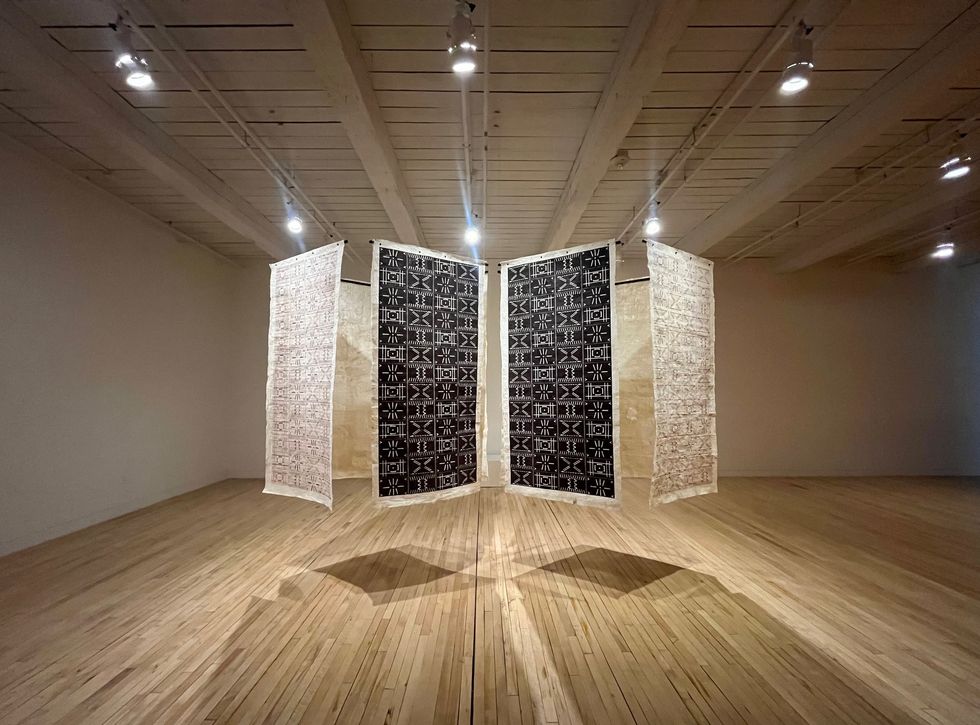
Living art takes center stage in the Berkshires

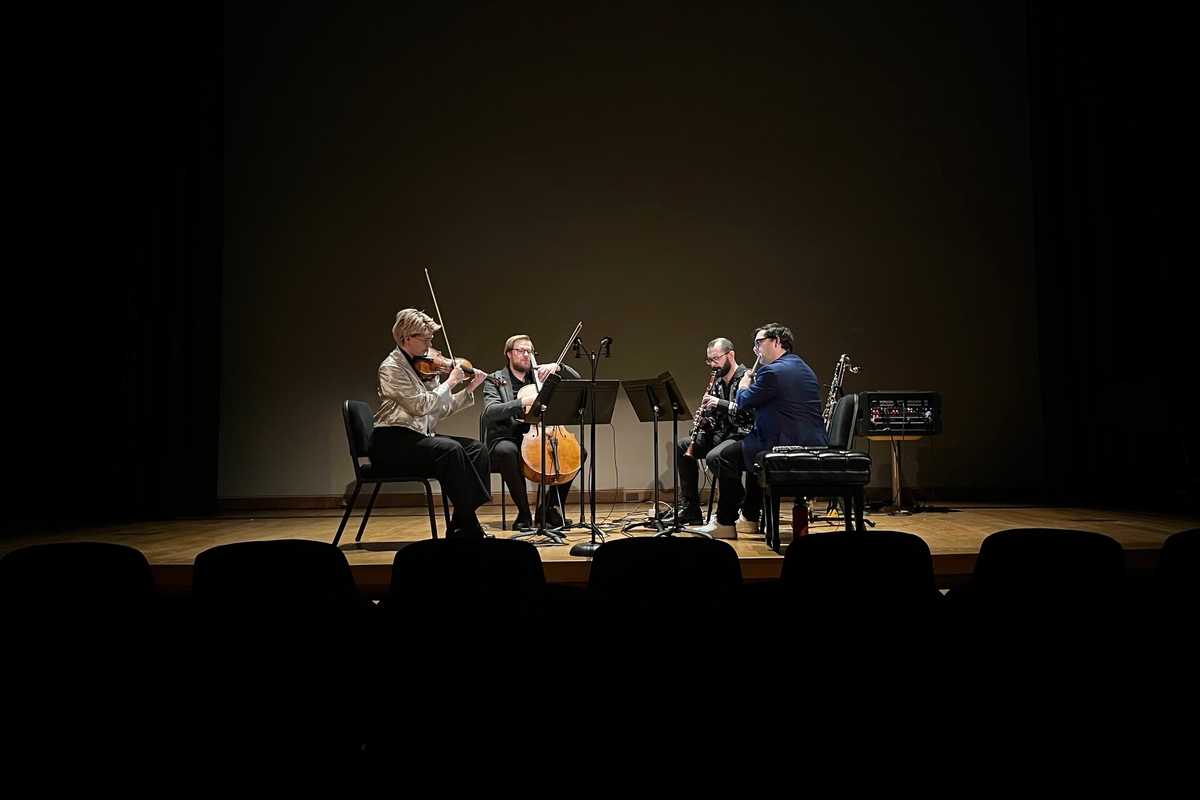
Contemporary chamber musicians, HUB, performing at The Clark.

D.H. Callahan

Northwestern Massachusetts may sometimes feel remote, but last weekend it felt like the center of the contemporary art world.

Within 15 miles of each other, MASS MoCA in North Adams and the Clark Art Institute in Williamstown showcased not only their renowned historic collections, but an impressive range of living artists pushing boundaries in technology, identity and sound.

Keep ReadingShow less
Persistently amplifying women’s voices

Francesca Donner, founder and editor of The Persistent. Subscribe at thepersistent.com.

Aly Morrissey

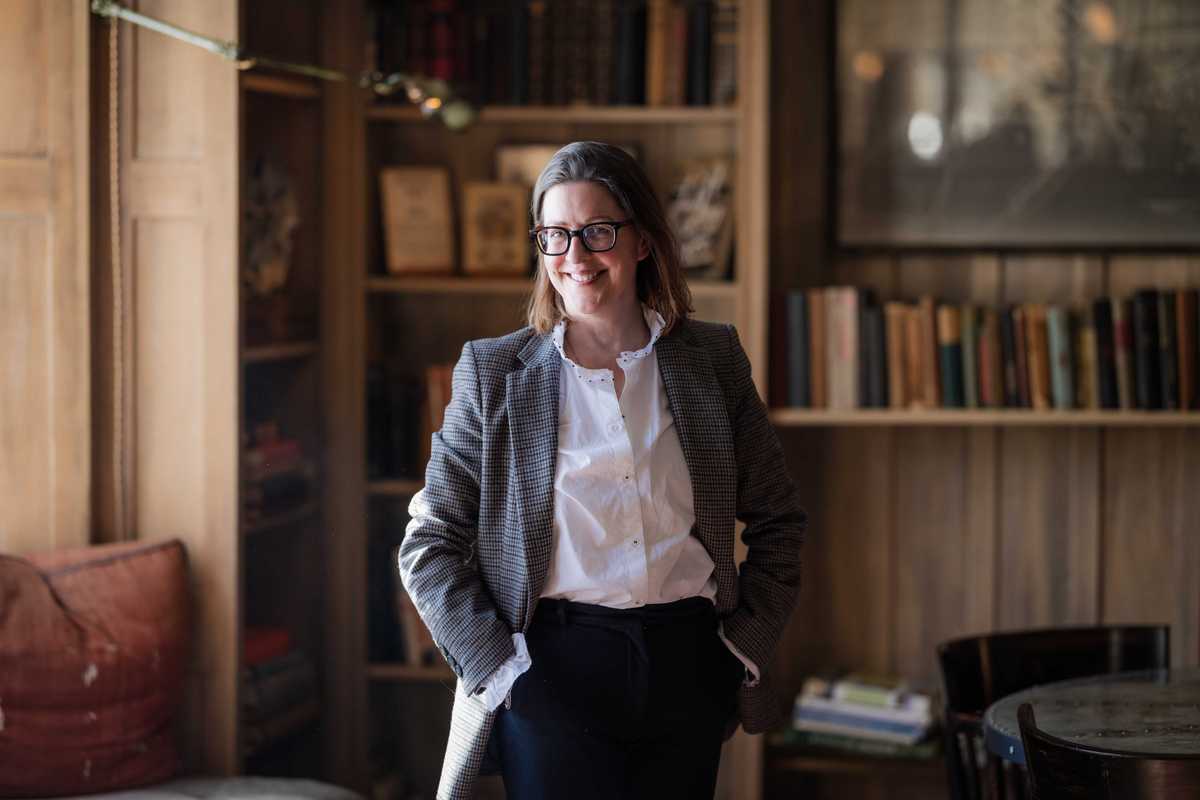
Francesca Donner pours a cup of tea in the cozy library of Troutbeck’s Manor House in Amenia, likely a habit she picked up during her formative years in the United Kingdom. Flanked by old books and a roaring fire, Donner feels at home in the quiet room, where she spends much of her time working as founder, editor and CEO of The Persistent, a journalism platform created to amplify women’s voices.

Although her parents are American and she spent her earliest years in New York City and Litchfield County — even attending Washington Montessori School as a preschooler — Donner moved to England at around five years old and completed most of her education there. Her accent still bears the imprint of what she describes as a traditional English schooling.

Keep ReadingShow less
Jarrett Porter on the enduring power of Schubert’s ‘Winterreise’
Baritone Jarrett Porter to perform Schubert’s “Winterreise”
Tim Gersten

On March 7, Berkshire Opera Festival will bring “Winterreise” to Studio E at Tanglewood’s Linde Center for Music and Learning, with baritone Jarrett Porter and BOF Artistic Director and pianist Brian Garman performing Franz Schubert’s haunting 24-song setting of poems by Wilhelm Müller.

A rejected lover. A frozen landscape. A mind unraveling in real time. Nearly 200 years after its premiere, “Winterreise” remains unnervingly current in its psychological portrait of isolation, heartbreak and existential drift.

Keep ReadingShow less
google preferred source

Want more of our stories on Google? Click here to make us a Preferred Source.

A grand finale for Crescendo’s 22nd season

Christine Gevert, artistic director, brings together international and local musicians for a season of rare works.

Stephen Potter

Crescendo, the Lakeville-based nonprofit specializing in early and rarely performed classical music, will close its 22nd season with a slate of spring concerts featuring international performers, local musicians and works by pioneering composers from the Baroque era to the 20th century.

Christine Gevert, the organization’s artistic director, has gathered international vocal and instrumental talent, blending it with local voices to provide Berkshire audiences with rare musical treats.

Keep ReadingShow less

Leopold Week honors land and legacy

Leopold Week honors land and legacy

Aldo Leopold in 1942, seated at his desk examining a gray partridge specimen.

Robert C. Oetking

In his 1949 seminal work, “A Sand County Almanac,” Aldo Leopold, regarded by many conservationists as the father of wildlife ecology and modern conservation, wrote, “There are some who can live without wild things and some who cannot.” Leopold was a forester, philosopher, conservationist, educator, writer and outdoor enthusiast.

Originally published by Oxford University Press, “A Sand County Almanac” has sold 2 million copies and been translated into 15 languages. On Sunday, March 8, from 3 to 5 p.m. in the Great Hall of the Norfolk Library, the public is invited to a community reading of selections from the book followed by a moderated discussion with Steve Dunsky, director of “Green Fire,” an Emmy Award-winning documentary film exploring the origins of Leopold’s “land ethic.” Similar reading events take place each year across the country during “Leopold Week” in early March. Planning for this Litchfield County reading began when the Norfolk Library received a grant from the Aldo Leopold Foundation, which provided copies of “A Sand County Almanac” to distribute during the event.

Keep ReadingShow less

Erica Child Prud’homme

Erica Child Prud’homme

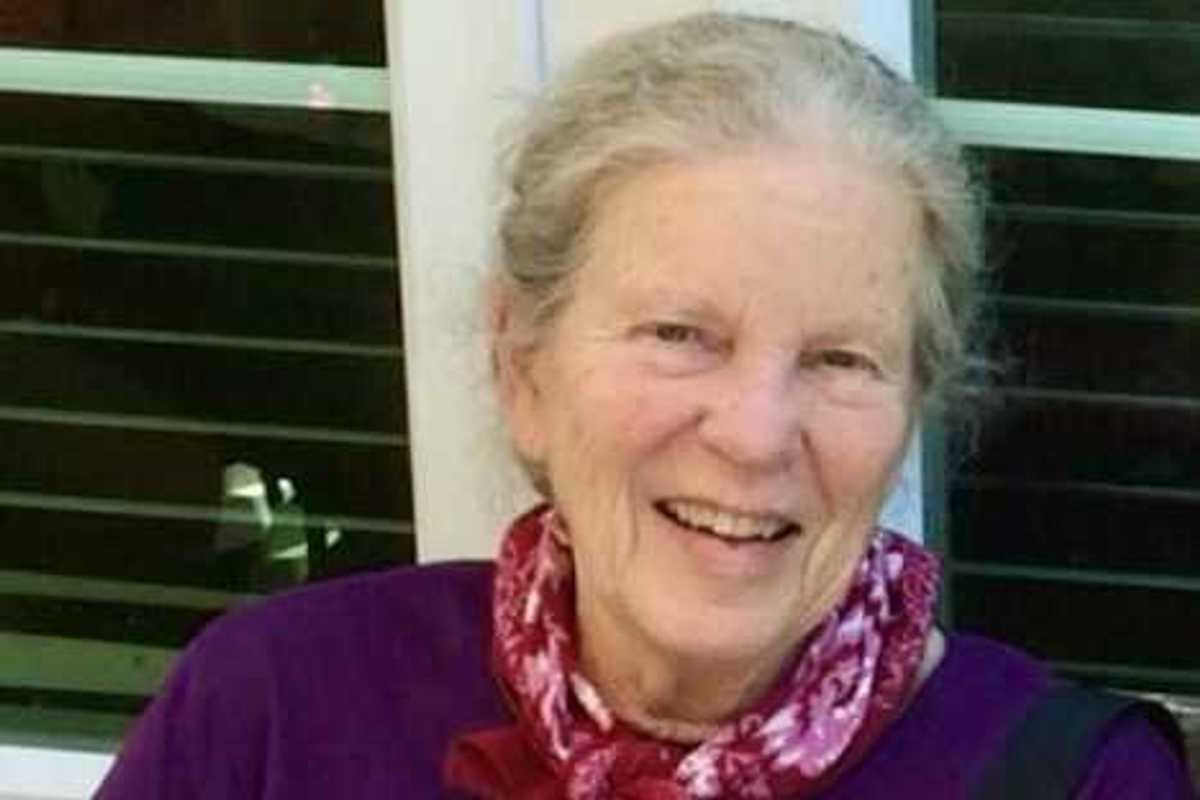
WEST CORNWALL — Erica Child Prud’homme died peacefully in her sleep on Jan. 9, 2026, at home in West Cornwall, Connecticut, at 93.

Erica was born on April 27, 1932, in Doylestown, Pennsylvania, the eldest of three children of Charles and Fredericka Child. With her siblings Rachel and Jonathan, Erica was raised in Lumberville, a town in the creative enclave of Bucks County where she began to sketch and paint as a child.

Keep ReadingShow less
google preferred source

Want more of our stories on Google? Click here to make us a Preferred Source.

google preferred source

Want more of our stories on Google? Click here to make us a Preferred Source.