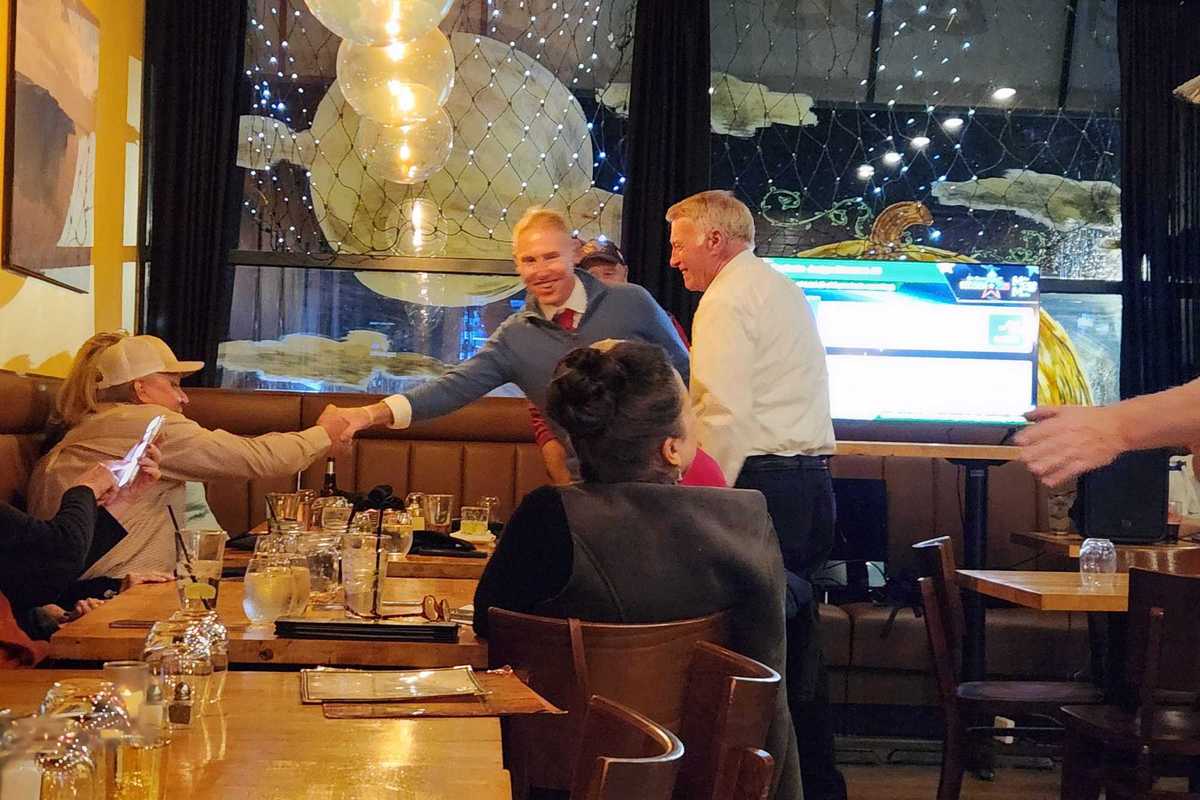
NORTHWEST CORNER — After being re-elected in November, State Rep Jay Case (R-63) started his second term on Wednesday, Jan. 7.
In November, Case defeated his Democratic challenger, Marie Solianil, by a vote of 5,233 to 2,770.
“It feels great to be back,” Case said in an interview with The Winsted Journal on Monday, Jan. 12. “I’m humbled that the electorate put me back into office for a second term. It is going to be a difficult term given the amount of debt we have in the state and trying to figure out how to overcome that. The towns are struggling, and I don’t know where we are going to be coming up with money.”
Case, who serves on the Appropriations Committee, said this term should be quite interesting for the committee.
“I don’t know where we are going to be coming up with money,” Case said. “The state is pushing up to $78 billion in bonding debt. It’s been accumulating over years due to bonding projects and not living within our means. Right now the state practically lives on credit cards. Whenever there has been a large project that needs to be done we always go out for bonding.”
Case said that the state needs to find a way to pay down its debt.
“Our bonds are 20-year bonds at 5 percent interest,” he said. “We have to start working on paying down debt. Don’t get me wrong, because I think the money is going to good projects. But if you had a household and if you didn’t have money in your checkbook, that means you can’t make a purchase. In the meantime, we have to learn how to live within our means for everyday expenses.”
In regards to the state’s finances, Case pointed to Gov. Dannel P. Malloy’s inauguration speech earlier this month where he said he no longer wants the legislature to raid the state’s Special Transportation Tax Fund.
“The past few years the state has used $400 million from the fund,” Case said. “The taxes that we pay for at the gas pump are used for the fund. They are supposed to be used for road projects. Interstate 84 needs to be revamped and Interstate 95 needs to be widened. These are huge projects and if we had not used those funds for other projects we could have started on these projects already.”
Locally, Case said that he will be pushing the state to approve the town’s Small Town Economic Assistance Program (STEAP) grant application for funds to repair Newfield Road.
“Either our town will get the funds or another town will get it, but of course I’m going to go after it,” he said. “There is a sign that has been posted that the road is only open to local traffic. The road is a connector between Route 263 and Route 4 in Torrington. Torrington has secured funds to fix up their part of Newfield road. I’m proposing to the STEAP grant committee that the STEAP funds could piggyback with Torrington’s funds and both towns could repair the road together.”
So far this year, Case has introduced three bills to the General Assembly.
The first bill, “An Act Concerning Substance Abuse Treatment,” proposes to prohibit licensed substance abuse treatment facilities from limiting admission or treatment only to persons currently under the influence of alcohol or drugs.
“Some treatment facilities require that, for people seeking help with substance abuse, they have to be high on the substance in order to be treated,” Case said. “If someone admits that they have a problem, why do they have to prove to us that they are using it to be admitted to a program? A lot of people who want to be treated go on to buy the drug of their choice and get high on it just so they get in a program.”
Case’s second proposed bill, “An Act Concerning Health Care Providers’ Acceptance of Private Insurance for the Provision of Mental Health Services to Young Adults,” aims to require health care providers to accept all private insurance plans for mental health services for young adults.
“If [a young adult] has insurance with the state, you have access to mental health care,” Case said. “If you have private insurance, it does not pay for mental health care. We don’t want to discriminate against those who have private insurance.”
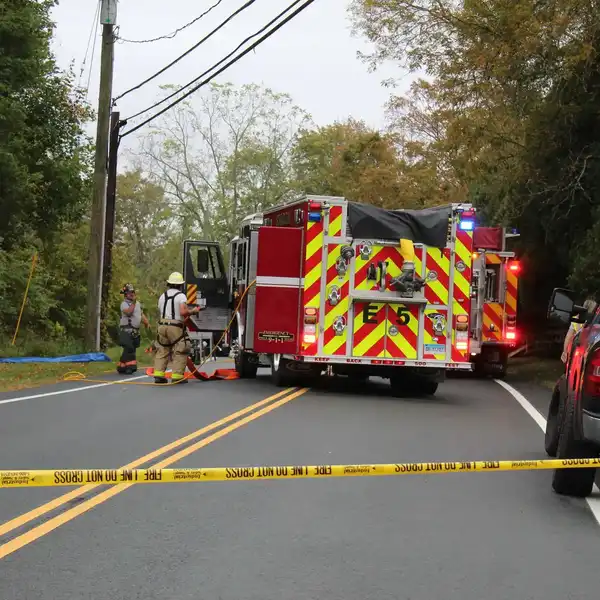
The third bill is “An Act Concerning Residential Solar Photovoltaic Installations,” which Case said he created after consultations with Winchester Fire Chief Robert Shopey.
The bill, if passed, would require the state’s building code to be amended to require all residential solar panel systems be installed with a switch, circuit breaker or other device on the outside of a residential building in order to disconnect power to it.
It would also require an access way on the roof of a building for a firefighter.
“If a fire happens at a house, the fire department needs to find a way to turn off the solar panels,” Case said. “Also, if a large percentage of a roof is covered with solar panels, how does a firefighter go onto the roof? I think solar panels are a great alternative source of energy, but we have to look at safety. If there is a fire a firefighter cannot walk onto solar panels. They have to have pads on the roof so firefighters can walk on it.”
Case said he is currently working on ten other bills possibly for submission this year to the legislature but they were all still in the development stages.