Keeping history alive by caring for graveyards

CORNWALL — Cemeteries around here are mostly on private property and began as family plots that a volunteer association takes over, carrying on the task of selling plots, arranging for burials and keeping a cemetery maintained.

In Cornwall, it was recently brought to the attention of the selectmen that, under state statute, they may step in and take care of cemeteries, or sections of them, that are more than a century old. The aim is to preserve the historical aspect, especially where war veterans are interred.

At the Calhoun Cemetery on Route 7, across from the Route 45 intersection in Cornwall Bridge, there are graves of Revolutionary War and Civil War soldiers, and many of the town’s first settlers. Some of the old gravestones are so worn as to be unreadable.

Joanne Wojtusiak recently took over as secretary of the Calhoun Cemetery Association, not because she particularly wanted the job, but because she found herself in possession of its jumble of records.

In the small but prominent cemetery, in addition to broken and downed gravestones, there are dead perimeter trees threatening further harm. She has been trying to get funding for at least some of the needed tree and restoration work from state STEAP (Small Town Economic Assistance Program) grants the town applies for on a regular basis. The cemetery has not been a priority in light of the need for economic development and other historic restoration projects.

Wojtusiak said she understands the priorities, but pointed out that old cemeteries are a tourist attraction, especially those on main roads.

She and association treasurer Mary Ann Boughton met at the cemetery recently with the Board of Selectmen and Gary Heaney, of Cornwall Bridge Granite Company, to do an on-site assessment. 

Boughton explained that, from the little information she could find, the cemetery was established in 1773 for the Puffingham settlement. General Herman Swift, a Revolutionary War commander, is buried there. The northerly front portion was called Calhoun Corner, because that family owned those plots. 

While its name may have changed over the decades, what has not changed is driving its future.

Back in the 1930s, plot owners paid $50 each for perpetual care, Wojtusiak said. It may have been a hefty sum then, but it was a one-time assessment that was not going to last forever.

A rough estimate for needed repair work and tree removal is $50,000. 

The plan devised on a very cold morning among the gravestones was for the town to handle some grounds work, the priority being the removal of a dying maple that overhangs the cemetery’s oldest section. 

Heaney will come up with estimates and options for resetting and repairing stones. At the very least, he said, those that have fallen over should be righted to help preserve them. 

First Selectman Gordon Ridgway said his board will assess how it funds cemetery maintenance. It currently budgets $1,000 to mow the grass at five very small cemeteries that are all inactive, and another $1,000 to pay for a portion of mowing at Cornwall Cemetery on Cemetery Hill Road (Route 4). Financial support is not typically given to active cemeteries. The problem here is that Calhoun is not active enough to generate a maintenance fund. It takes just one burial within a 40-year period for a cemetery to be deemed active, but that will not pay the bills. 

The association, basically Wojtusiak and Boughton, will look into other funding sources, such as fundraisers and bequests. Donations are also accepted, and they are tax-deductible. 

Cornwall is not unique in its assortment of small cemeteries. Like other rural towns here, it was once very segmented. Burial grounds were among the first things established in its many village settlements. 

There are 14 here. They are designated by family names or locations, mostly. There is the Wilcox Cemetery at the corner of routes 43 and 63, Old Cornwall Hollow and New Cornwall Hollow, Christians, Allen and Wright cemeteries. The latter is on the old Wright Farm, where there is a separate smallpox cemetery.

Latest News

Living art takes center stage in the Berkshires

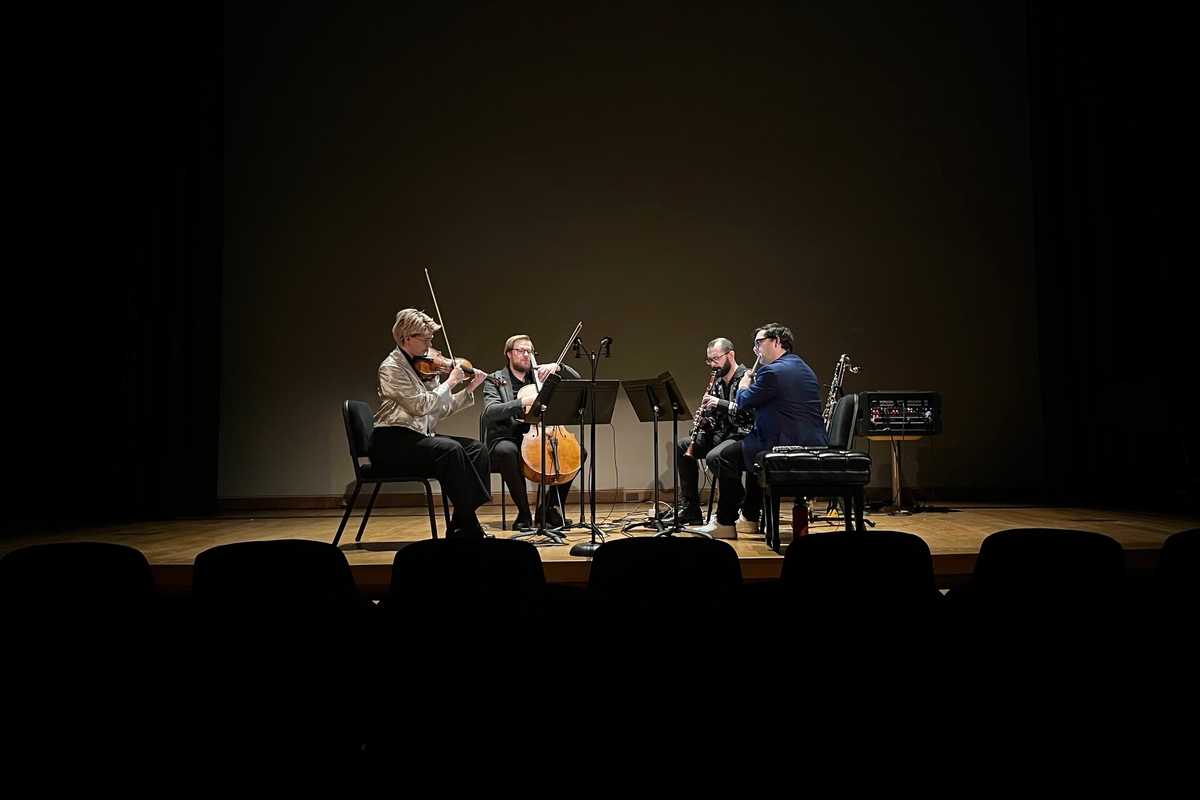
Contemporary chamber musicians, HUB, performing at The Clark.

D.H. Callahan

Northwestern Massachusetts may sometimes feel remote, but last weekend it felt like the center of the contemporary art world.

Within 15 miles of each other, MASS MoCA in North Adams and the Clark Art Institute in Williamstown showcased not only their renowned historic collections, but an impressive range of living artists pushing boundaries in technology, identity and sound.

Keep ReadingShow less
Persistently amplifying women’s voices

Francesca Donner, founder and editor of The Persistent. Subscribe at thepersistent.com.

Aly Morrissey

Francesca Donner pours a cup of tea in the cozy library of Troutbeck’s Manor House in Amenia, likely a habit she picked up during her formative years in the United Kingdom. Flanked by old books and a roaring fire, Donner feels at home in the quiet room, where she spends much of her time working as founder, editor and CEO of The Persistent, a journalism platform created to amplify women’s voices.

Although her parents are American and she spent her earliest years in New York City and Litchfield County — even attending Washington Montessori School as a preschooler — Donner moved to England at around five years old and completed most of her education there. Her accent still bears the imprint of what she describes as a traditional English schooling.

Keep ReadingShow less
Jarrett Porter on the enduring power of Schubert’s ‘Winterreise’
Baritone Jarrett Porter to perform Schubert’s “Winterreise”
Tim Gersten

On March 7, Berkshire Opera Festival will bring “Winterreise” to Studio E at Tanglewood’s Linde Center for Music and Learning, with baritone Jarrett Porter and BOF Artistic Director and pianist Brian Garman performing Franz Schubert’s haunting 24-song setting of poems by Wilhelm Müller.

A rejected lover. A frozen landscape. A mind unraveling in real time. Nearly 200 years after its premiere, “Winterreise” remains unnervingly current in its psychological portrait of isolation, heartbreak and existential drift.

Keep ReadingShow less
google preferred source

Want more of our stories on Google? Click here to make us a Preferred Source.
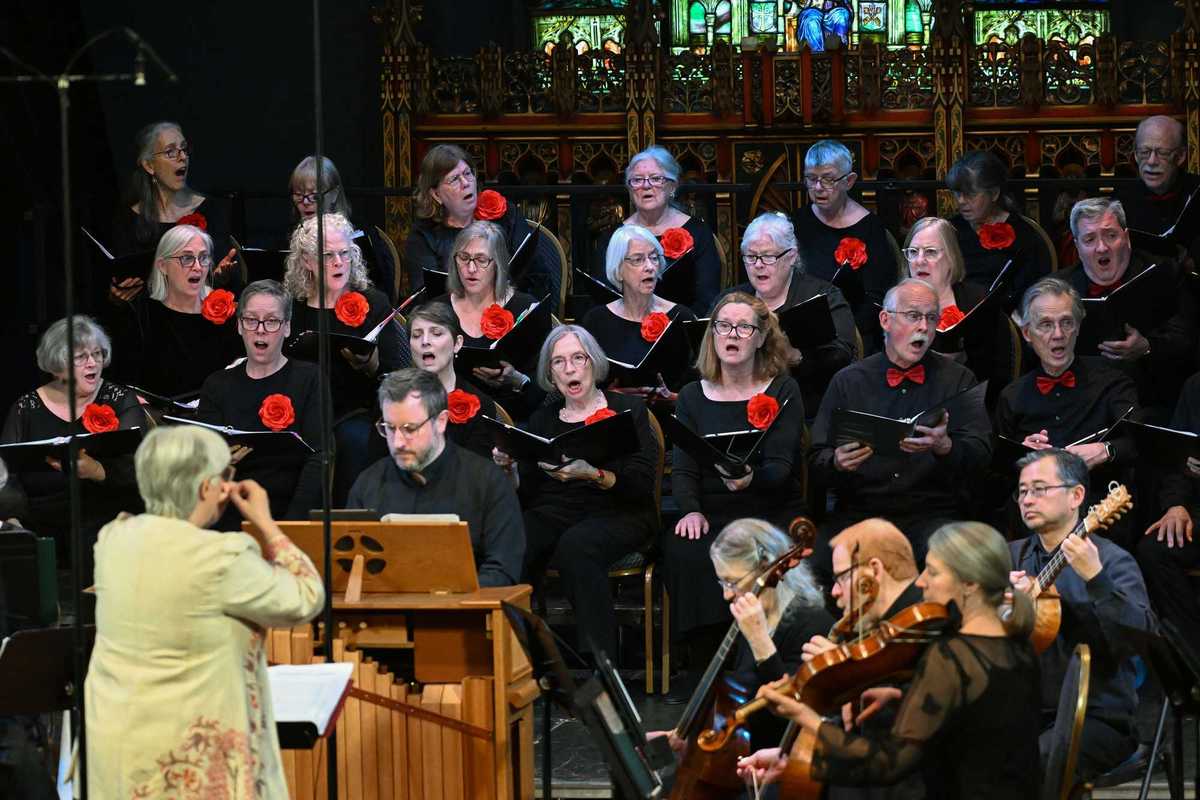
A grand finale for Crescendo’s 22nd season

Christine Gevert, artistic director, brings together international and local musicians for a season of rare works.

Stephen Potter

Crescendo, the Lakeville-based nonprofit specializing in early and rarely performed classical music, will close its 22nd season with a slate of spring concerts featuring international performers, local musicians and works by pioneering composers from the Baroque era to the 20th century.

Christine Gevert, the organization’s artistic director, has gathered international vocal and instrumental talent, blending it with local voices to provide Berkshire audiences with rare musical treats.

Keep ReadingShow less

Leopold Week honors land and legacy

Leopold Week honors land and legacy

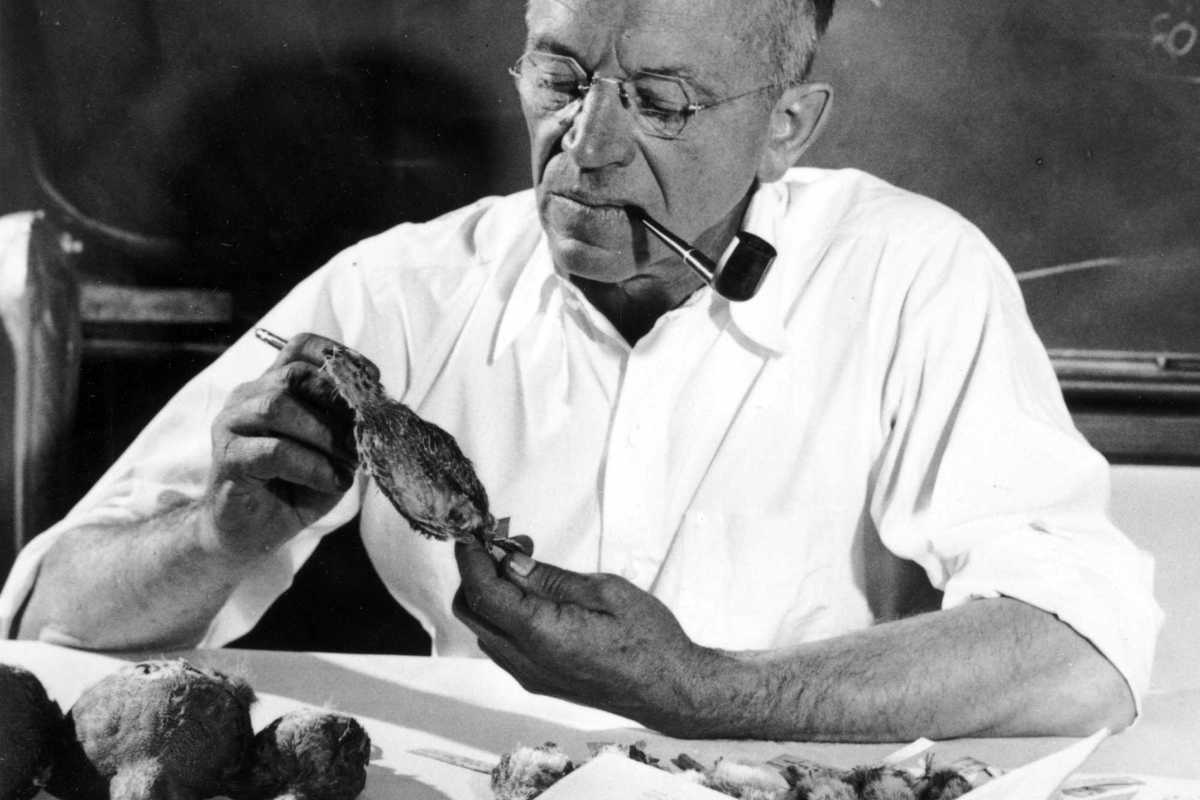
Aldo Leopold in 1942, seated at his desk examining a gray partridge specimen.

Robert C. Oetking

In his 1949 seminal work, “A Sand County Almanac,” Aldo Leopold, regarded by many conservationists as the father of wildlife ecology and modern conservation, wrote, “There are some who can live without wild things and some who cannot.” Leopold was a forester, philosopher, conservationist, educator, writer and outdoor enthusiast.

Originally published by Oxford University Press, “A Sand County Almanac” has sold 2 million copies and been translated into 15 languages. On Sunday, March 8, from 3 to 5 p.m. in the Great Hall of the Norfolk Library, the public is invited to a community reading of selections from the book followed by a moderated discussion with Steve Dunsky, director of “Green Fire,” an Emmy Award-winning documentary film exploring the origins of Leopold’s “land ethic.” Similar reading events take place each year across the country during “Leopold Week” in early March. Planning for this Litchfield County reading began when the Norfolk Library received a grant from the Aldo Leopold Foundation, which provided copies of “A Sand County Almanac” to distribute during the event.

Keep ReadingShow less

Erica Child Prud’homme

Erica Child Prud’homme

WEST CORNWALL — Erica Child Prud’homme died peacefully in her sleep on Jan. 9, 2026, at home in West Cornwall, Connecticut, at 93.

Erica was born on April 27, 1932, in Doylestown, Pennsylvania, the eldest of three children of Charles and Fredericka Child. With her siblings Rachel and Jonathan, Erica was raised in Lumberville, a town in the creative enclave of Bucks County where she began to sketch and paint as a child.

Keep ReadingShow less
google preferred source

Want more of our stories on Google? Click here to make us a Preferred Source.
google preferred source

Want more of our stories on Google? Click here to make us a Preferred Source.