Kent residents speak up on Waramaug wakesurfing issue

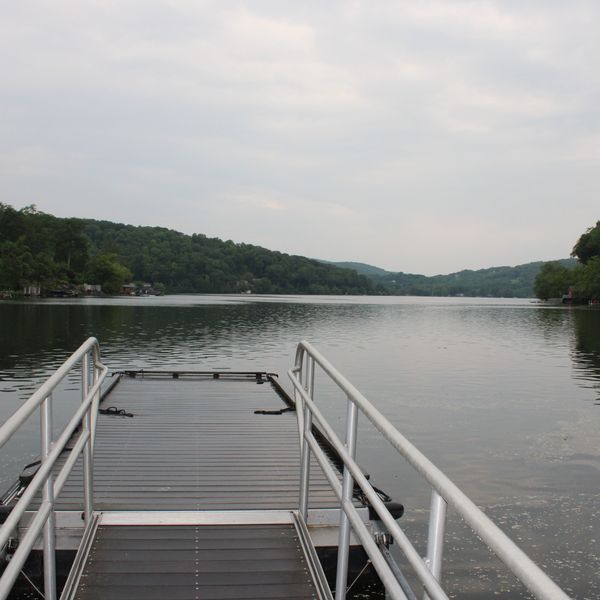
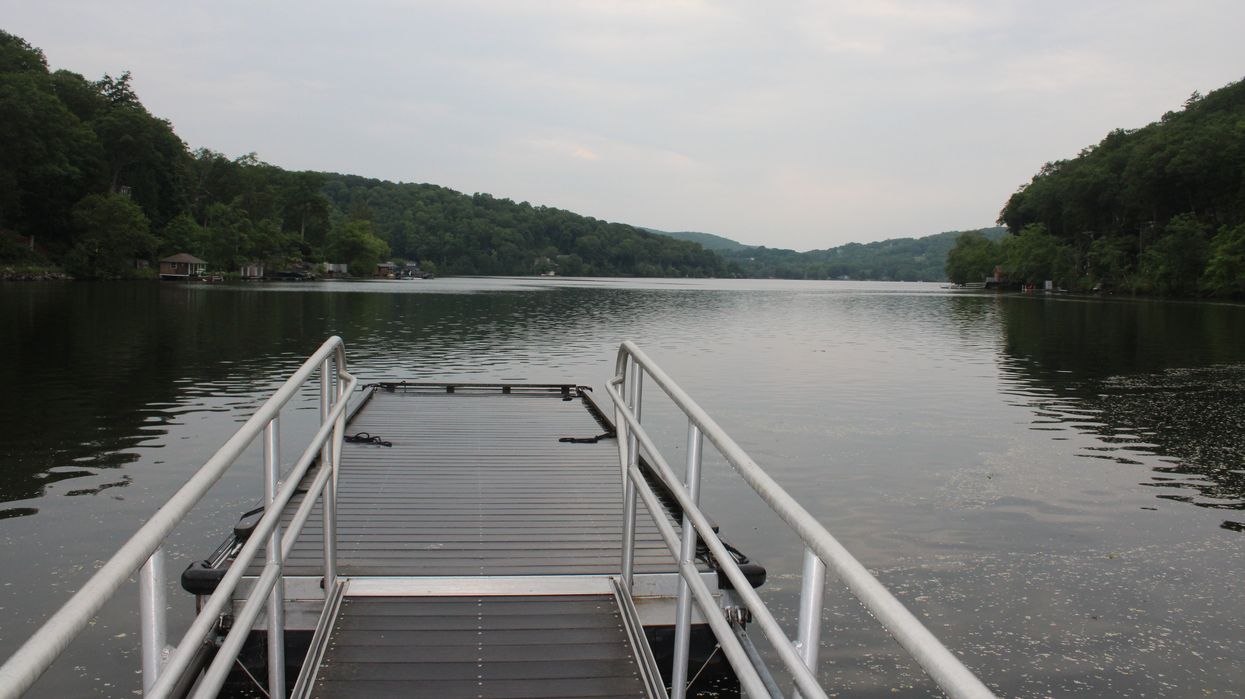
No wakes to be seen on Lake Waramaug on a stormy Friday evening in June.
Alec Linden

No wakes to be seen on Lake Waramaug on a stormy Friday evening in June.
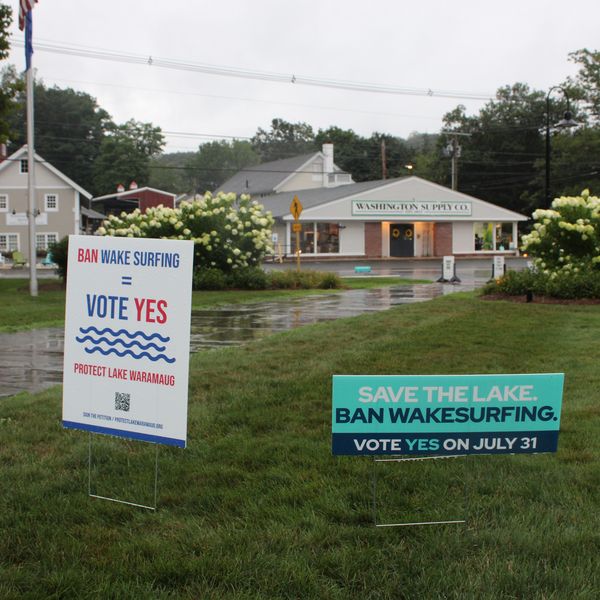
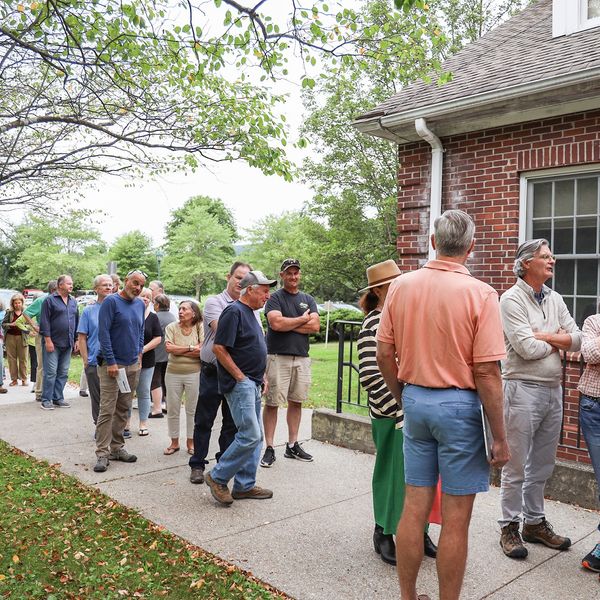
KENT — A Tuesday, June 17, public hearing to discuss banning wakesurfing on Lake Waramaug was held with relative civility compared to other recent meetings on the topic.
The proposed ordinance would prohibit all wakesurfing on the lake, as well as the use of any technologies on wake boats that are used to enlarge the wave. The ordinance calls for a $250 fine per infraction.
The boats themselves are not banned in the ordinance’s language, only the activity.
Breaking with the more split opinion demonstrated in previous public debates, Kent residents spoke largely in favor of the proposed ordinance, citing what they saw as risks to public safety and the lake’s ecology resulting from the sport.
The ordinance in question was drafted over the course of two years by the Lake Waramaug Authority and finally passed at a June 6 meeting. After the initial meeting adjourned with no opportunity for public comment, several citizens grew angry and accused the Authority of operating un-democratically in producing its proposed ordinance.
On June 17, the first two speakers, Kent residents John Amster and Amie McKay, spoke out against the proposed ordinance, suggesting that the issue be left to the state to delegate so it could perform its own research.
Amster doubted the validity of a town-commissioned study conducted by environmental consulting firm Terra Vigilis, alleging that the data from that survey was narrow in scope and didn’t adequately address the impact of wakesurfing on water quality and public safety. “It can’t possibly be the big risk everyone is making it out to be,” he said, claiming that he sees very little wakesurfing actually occurring on the lake.
McKay noted that the study didn’t actually suggest a ban, but rather recommended implementing strict depth and distance regulations when using a wake boat in surf mode.
After those testimonials, however, the remainder of the public commentary swayed largely in support of the ordinance.
Kevin Brady, a longtime member of the Lake Waramaug Association, a 110-year old stewardship organization, said that there can’t be compromise regarding the sport because it presents a “serious hazard to other lake users.” He estimated that there are approximately 40 wake boats on the lake at present.
Lakefront-homeowner Christopher Spring, another member of the Association, alleged that his family has limited use of their dock due to safety concerns from large wakes. “We don’t go on our dock on the weekends anymore because it’s just too darn dangerous frankly,” he said.
Several longtime lake-users recalled a decades-long period of poor water quality in the 1970s and 1980s and expressed the importance of keeping the lake’s ecology healthy. “I have seen the lake at its very best as a kid,” said Jim Hicks, who spoke several times throughout the meeting. “I have also seen the lake at its worst.”
Kent is the first of the three towns in the Interlocal Commission – a coalition of the first selectmen of Kent, Warren and Washington that governs the Lake – to hold a hearing on the issue. For the ordinance to be passed, it will have to pass a vote in each town.
Kent residents will vote on the proposed ban in-person only at a 7 p.m. town meeting Friday, June 27.
There’s something for everyone at the Stissing Center for Arts & Culture, the welcoming nonprofit performing arts space in the heart of Pine Plains, New York. The center’s adventurous 2026 season is designed to appeal to all audiences, with a curated mix of local and visiting artists working across a range of disciplines, from bluegrass to Beethoven, from Bollywood to burlesque.
The season opens Saturday, Jan. 31, with Spark!, a multimedia concert that will also preview the center’s fifth year of presenting performances that inspire, entertain and connect the community. Spark! features Grammy Award-winning Rosanne Cash, one of the country’s preeminent singer-songwriters, whose artistry bridges country, folk and rock with a distinctly literary strain of American songwriting.
According to Patrick Trettenero, executive director of the Stissing Center, “This year’s programming is inspired by our commitment to bring people together through the shared experience of arts and culture. It’s a lively mix of musical styles — from roots, classical, world, rock and jazz — to our always-popular singer-songwriter series, with more than 50 music events to choose from.”
In addition to music, the season includes theater and dance. Highlights include the Hudson Valley Puppet Slam and the Roundtop Burlesque Revue, along with dance performances ranging from flamenco to Irish step. A film series will showcase the indie comedy favorite Hundreds of Beavers and a live-score screening of the beloved silent Charlie Chaplin classic The Kid. The season also includes free programs for children all summer, along with community events and family-friendly fare.
The 2026 season also marks the launch of The Grace Note, an intimate venue located downstairs at the Stissing Center that will serve as an inviting and informal entry point to mainstage shows. The Grace Note will be open every Friday night and will feature singer-songwriters, stand-up comedy, jazz quartets, play readings, storytelling and more.

The venue is part of the center’s commitment to offering a place for locals and visitors alike to gather and discover new work, hear familiar voices in new ways and enjoy a great night out in the neighborhood. The Grace Note opens Feb. 13 with a performance by local singer-songwriter Natalia Zukerman, who is also the Lakeville Journal and Millerton News’ arts, lifestyle and engagement editor. Her masterful musicianship and storytelling blend folk, blues and Americana with wry humor and emotional clarity, creating an experience that feels both personal and expansive. Zukerman said, “I’m honored to be opening the season in this beautiful new room at The Stissing Center. The Grace Note opens up lots of creative opportunities for the Center, for performers and for our community. It’s thrilling.”
“We are very intentional about this season and the launch of The Grace Note,” Trettenero added. “Our goal is simple: to make the Stissing Center a place for people of all backgrounds and perspectives to come for great arts experiences, to support outstanding artists and to offer a place for connection and shared humanity through the arts.”
The full season schedule and tickets for all events are available at thestissingcenter.org or by calling 518-771-3339.
Jennifer Chrein is the new executive director of the American Mural Project.
When Jennifer Chrein first stepped inside the cavernous mill building on Whiting Street in Winsted and looked up at the towering figures of the American Mural Project, she had no idea what she was walking into.
“I had been invited by a friend to attend an event in May 2024,” Chrein recalled. That friend, she said, had a ticket they couldn’t use and thought she’d enjoy it. “I didn’t know anything about AMP. I didn’t Google it — nothing.”
What followed was immediate and visceral.
“I was just — wow!” she said. “I was awed. So excited to see something like this in this area. There isn’t anything else like it.”
That first encounter would eventually lead Chrein to her new role as executive director of the American Mural Project, where she joins founder and artistic director Ellen Griesedieck in guiding the organization into its next chapter.
Announced earlier this month, Chrein’s appointment follows the departure of Amy Wynn, who stepped down Oct. 31 after seven years as the nonprofit organization’s first executive director.
Chrein praised Wynn for her leadership in establishing the organization’s solid roots and foundation, including its children’s programming, events and talented staff.
At the heart of AMP is what is widely regarded as the world’s largest indoor collaborative work of art: a five-story, 120-foot-long, three-dimensional mural depicting American workers across trades, industries and eras.
Created by Griesedieck with the help of hundreds of community volunteers, the mural fills the former mill building with life-sized and larger-than-life figures at work, transforming the space into an immersive environment that blurs the line between art, history and lived experience.
“The first time I saw the mural, I was awed by its scale — Ellen’s artistry, and what it says about the central role of work in our lives,” said Chrein. “I was immediately captivated and felt the need to share the space, the mission, and the live performances and educational programs with as many people as possible.”
At the time, she said, AMP was still in an early phase of its development.
“They were still building its foundation. They had only been open about a year,” she said. “I wasn’t part of their immediate vision, so I stayed a friend.”
Chrein said her hope and vision for AMP, along with its board and Griesedieck, “is to expand awareness not only around Winsted and surrounding areas, but regionally, statewide and ultimately nationally.”
“AMP’s reach, awareness and impact should be as great as the mural itself,” she said. “I am energized to be coming on board at the same time as our nation’s 250th anniversary. The timing could not be better to celebrate, acknowledge and support our American workforce.”
Chrein brings more than 30 years of experience in children’s educational programming and global media development to the role, a background she sees as a natural fit for the mural project’s mission. Her career has focused on the intersection of education, entertainment and social impact, including senior leadership roles at Sesame Workshop and Common Sense Networks, as well as founding JBMW Media and partnering in Storynauts Entertainment, where she has developed purpose-driven programming for families, including the preschool animated series “Powerbirds.”
She said that experience — balancing creativity, partnerships and long-term sustainability — translates directly to nonprofit leadership.
On a personal level, Chrein’s path to northwest Connecticut has been gradual. Now a Simsbury resident, she previously lived in Sandisfield, Massachusetts, and spent much of her life in New York City, where she worked at Sesame Workshop and traveled frequently. After shifting into consulting, she and her family put down roots in Simsbury, drawn to the town for its excellent school system.
As executive director, Chrein is clear-eyed about both AMP’s potential and its challenges — particularly visibility.
“The big issue with AMP is how to get people to come here,” she said. “How do we get people to recognize Winsted as a destination?”
One goal is to introduce new elements and spaces that would provide a “happy place” for the community to gather, study, hold corporate meetings, host family events and celebrate milestones.
For Griesedieck, that evolution feels like a natural next step.
“I couldn’t be more excited that she has joined us as our new executive director and will bring some of these terrific ideas to life,” said Griesedieck.
Chrein said she is stepping into the role with urgency and humility, guided by the same sense of awe she felt on her first visit. Her aim, she said, is to make sure more people discover the space, share their stories and feel the same sense of connection she did when she first looked up at the mural.