Remember when commuting was fun because you could listen to the radio?
Earlier in my career I may have been the guy you heard, both on WHCN/Hartford and later on NBC.When I started in radio in 1967, AM Top 40 was king and FM was just getting started.
But in 1961 the FCC decreed that all radios should have both AM and FM bands…and that FM should broadcast in stereo. And no longer could station owners just simulcast their AM programs on their FM stations: FM programming had to be different.
Thus was born “Progressive Album Rock” on FM, usually programmed by long-haired LP fans.That was me, again.Within years radio listening went from predominantly AM to majority FM thanks to better audio quality and changing musical tastes.
So why save AM radio in the car when folks aren’t listening?And what will be left on FM to tune into?
Today the AM band is filled with syndicated political talk, foreign language shows and sports.Only a handful of stations have real news departments (think WTIC, WICC here in Connecticut).
Then came the all-electric car.Because of their wiring Teslas and such could not have AM radios due to interference.What to do?
Well, Congress is expected to pass a law requiring AM radios in all cars.The bill has hundreds of co-sponsors, including the entire Connecticut delegation.No wonder:pols love being interviewed on AM stations.
“But AM radio is effectively aging out, with less than a 20% market share.And many news/talk stations have transitioned to FM where there are far more listeners,” (think WINS in New York City) says former station consultant Steve Goldstein of Westport.
Goldstein left radio years ten years ago to become a podcasting consultant.He also teaches at NYU and says not one of his students listens to AM.Most don’t listen to FM, either, preferring streaming services like Pandora and Spotify or on-demand media like podcasts. “AM radio is going the way of the phone booth and fax machine,” he laments.
So why save AM radio in the car when folks aren’t listening?And what will be left on FM to tune into?
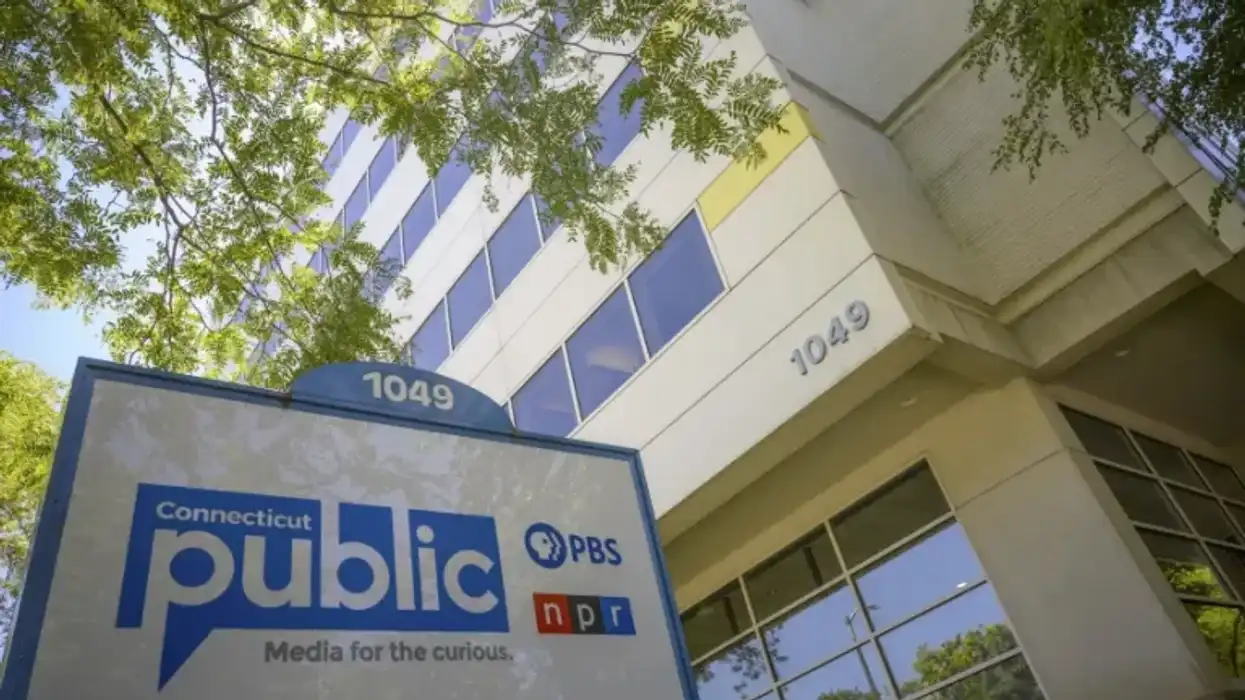
If your listening habits tend toward the NPR stations at the lower end of the FM band you’re in for disappointment.Congress has just voted to claw back (“rescind”) $1.1 billion from funds previously allocated to CPB, the Corporation for Public Broadcasting which funds both PBS television and NPR radio stations.
In the case of Connecticut Public Radio (WNPR) we’re talking about a 10+% budget cut.That will probably mean layoffs and less local programming for shows like “Colin McEnroe.”
At WSHU they say they’ll need to raise an additional $500,000 to make up for the loss.Elsewhere in the U.S. it’s estimated that as many as 80 NPR stations will just go dark.
Your mail is already crowded with funding appeals, not just from public broadcasters but from other non-profits also losing federal funding.With so many hands outstretched, how will donors prioritize their gifts?Feeding the hungry or keeping the airwaves alive?
So Congress giveth (renewed life to AM radio) and taketh away (cutting PBS and NPR). The media world (and listeners) will adapt.
Now, if only I could find my old eight-track tape player.





 Justine and Victor Valla in their studio with a painting of Victor’s,”Jonah and the Whale.” Robin Roraback


 A ceramic vase by Kathleen Heidemann.Provided
  Joy Brown’s delightful ceramic sculptures.Provided