Dugway Road: What’s in a Name?

Dugway Road: What’s in a Name?
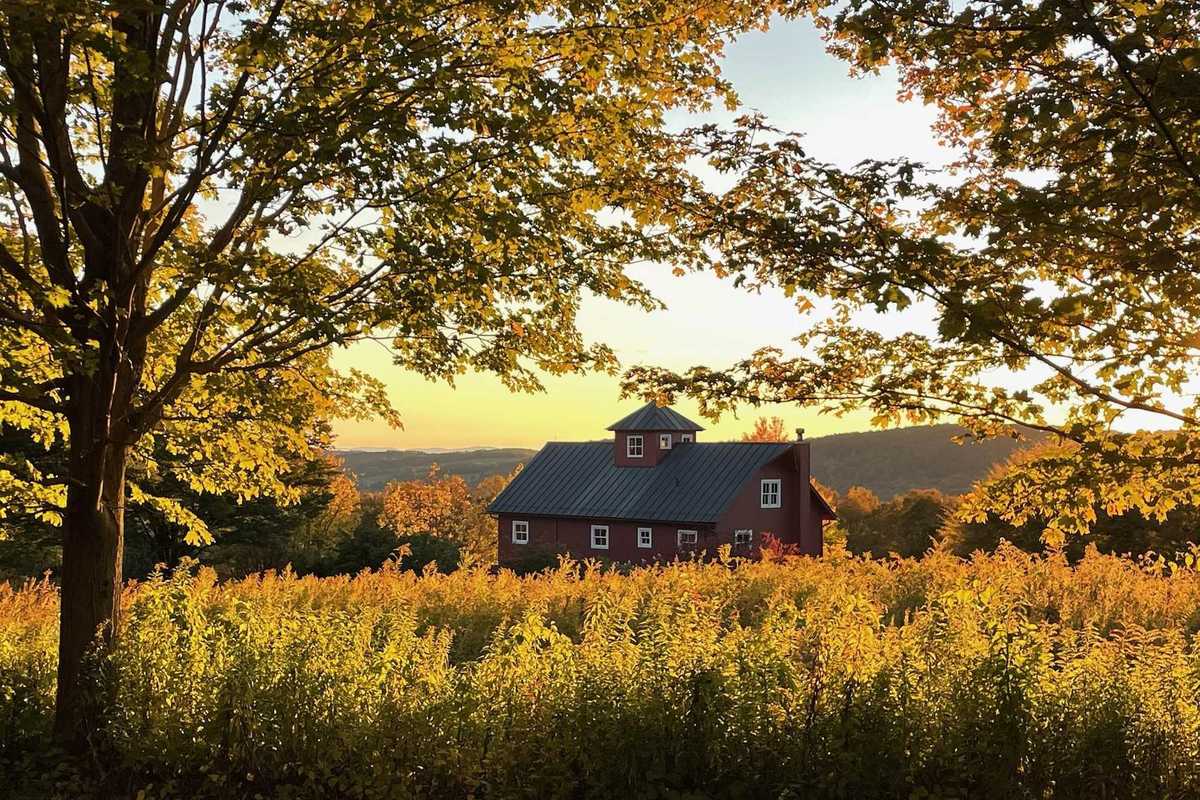
Photo by Cynthia Walsh

Ever wonder why settlers chose to name a lake Wononscopomuc? Or where is the Academy on Academy Street? The Factory on Factory Street?

The mystery of why places around us are called what they are, can be solved by a visit to the upcoming “What’s in a Name” exhibit by the Salisbury Association. Members of the Association’s Historical Society Committee spent months delving into centuries of town records, newspaper accounts, early histories, journals and oral legends to discover the history behind names of local streets, natural sites and buildings we pass every day.

The exhibit will explore origin stories, both fact and fiction. Take, for instance, the name of our town. In 1803, a Congregational minister floated a rumor that the town had been named for a

“Mr. Salisbury” whose unsavory history included the murder of a servant girl. You’ll be glad to know this was discredited on the 100th anniversary of the first town meeting by a judge who confirmed that “Salisbury” was borrowed from a cathedral town of the same name in England.

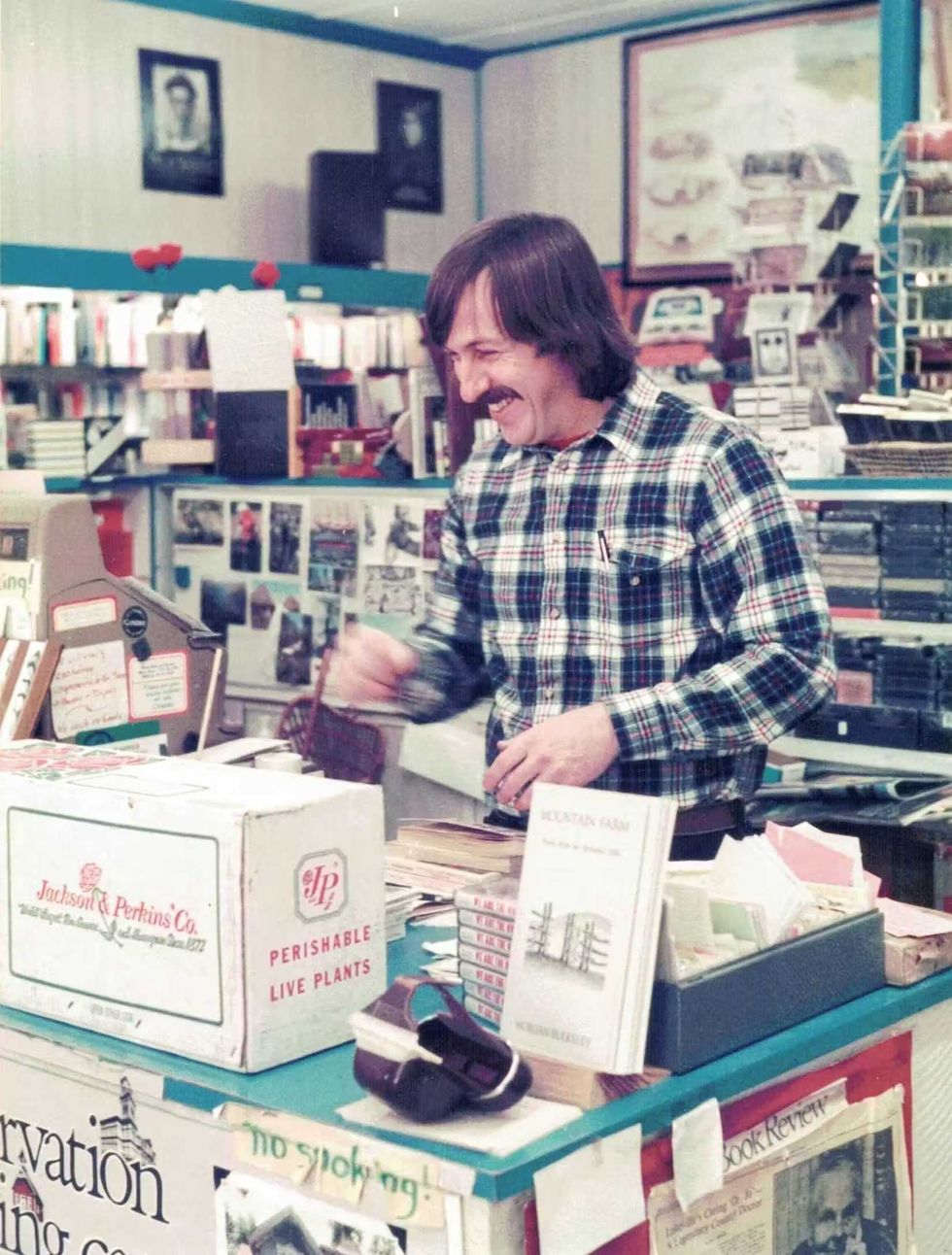
In researching street names, exhibit organizers discovered that few street signs existed until well into the twentieth century. Around 1930, Bill Barnett, later longtime First Selectman, spearheaded a campaign to raise money to erect signs labeling streets. The original signs were wooden and eventually replaced by the green and white metal signs we see today. Such as the one for “The Lock Up” just east of Town Hall, which refers to a small brick jailhouse that was torn down in 1939, no longer needed once the state police barracks opened in Canaan.

Factory Street was the site of manufactories including a grist mill, a sawmill, trip hammer forge, the Salisbury Cutlery Handle Co. and the Washinee Woolen Company. Farnum Road was named for the town’s first postmaster Peter Farnum. The Wells family settled in Lakeville in the 1700s; the road named for them runs through the land they once farmed. A branch of that family also raised Morgan horses and built a quarter mile harness racing track on what later became Racetrack Road.

And what about Lake Wononscopomuc? The name is believed to have come from a Mohican term meaning rocks at the bend of the lake. The names for Twin Lakes are thought to be Mohican names, too. West Twin Lake is called Washinee which is Mohican for smiling water. East Twin Lake is Washining, laughing water.

The exhibit will run from July 25 to September 23 at the Academy Building in Salisbury on the corner of Main and Academy Streets. There’s an interesting story behind that name, too. The brick building was erected in 1833 when a committee of local citizens raised $1,250 to build a school. Tuition at Salisbury Academy was $3 per eleven-week term for English studies, $4 for per term for Classics. After the school ceased operations, the building served as a meeting house and then as a courthouse. The spiral stairs were installed to give the judge a quick exit from the courtroom. The building became home to the Salisbury Association in 1991.


Helen Klein Ross is a writer who lives in Lakeville. She is a member of the Board of Trustees of the Salisbury Association.
The views expressed here are not necessarily those of The Lakeville Journal and The Journal does not support or oppose candidates for public office.

Latest News

To mow or not to mow?

To mow or not to mow?

A partially mowed meadow in early spring provides habitat for wildlife while helping to keep invasive plants in check.

Dee Salomon

Love it or hate it, there is no denying the several blankets of snow this winter were beautiful, especially as they visually muffled some of the damage they caused in the first place.There appears to be tree damage — some minor and some major — in many places, and now that we can move around, the pre-spring cleanup begins. Here, a heavy snow buildup on our sun porch roof crashed onto the shrubs below, snapping off branches and cleaving a boxwood in half, flattening it.

The other area that has been flattened by the snow is the meadow, now heading into its fourth year of post-lawn alterations. A short recap on its genesis: I simply stopped mowing a half-acre of lawn, planted some flowering plants, spread little bluestem seeds and, far less simply, obsessively pluck out invasive plants such as sheep sorrel and stilt grass. And while it’s not exactly enchanting, it is flourishing, so much so that I cannot bring myself to mow.

Keep ReadingShow less

Where the mat meets the market

Where the mat meets the market

Kathy Reisfeld

Elena Spellman

In a barn on Maple Avenue in Great Barrington, Kathy Reisfeld merges two unlikely worlds: wealth management and yoga, teaching clients and students alike how stability — financial and emotional — comes from practice.

Her life sits at an intersection many assume can’t exist: high finance and yoga. One world is often reduced to greed, the other to “woo-woo” stretching. Yet in conversation, she makes both feel grounded, less like opposites and more like two languages describing the same human need for stability.

Keep ReadingShow less
Capitol hosts first-ever staging of Civil War love story

Playwright Cinzi Lavin, left, poses with Kathleen Kelly, director of ‘A Goodnight Kiss.’

Jack Sheedy

Litchfield County playwright Cinzi Lavin’s “A Goodnight Kiss,” based on letters exchanged between a Civil War soldier and the woman who became his wife, premiered in 2025 to sold-out audiences in Goshen, where the couple once lived. Now the original cast, directed by Goshen resident Kathleen Kelly, will present the play beneath the gold dome of Connecticut’s Capitol in Hartford as part of the state’s America250 commemoration — marking what organizers believe may be the first such performance at the Capitol.

“I don’t believe any live performances of an actual play (at the Capitol) have happened,” said Elizabeth Conroy, administrative assistant at the Office of Legislative Management, who coordinates Capitol events.

Keep ReadingShow less
google preferred source

Want more of our stories on Google? Click here to make us a Preferred Source.

Hunt Library launches VideoWall for filmmakers

Yonah Sadeh, Falls Village filmmaker and curator of David M. Hunt Library’s new VideoWall.

Robin Roraback

The David M. Hunt Library in Falls Village, known for promoting local artists with its ArtWall, is debuting a new feature showcasing filmmakers. The VideoWall will premiere Saturday, March 28, at 6 p.m. with a screening of two short films by Brooklyn-based documentary filmmaker and animator Imogen Pranger.

The VideoWall is the idea of Falls Village filmmaker Yonah Sadeh, who also serves as curator. “I would love the VideoWall to become a place that showcases the work of local filmmakers, and I hope that other creatives in the area will submit their work to be shown,” he said.

Keep ReadingShow less

A bowl full of stars

A bowl full of stars

A bowl full of stones.

Cheryl Heller

There’s a bowl in my studio where pieces of the planet reside. I bring them home from travels, picking them up not for their beauty or distinction but for their provenance. I choose the ones that speak to me — the ones next to pyramids, along hiking trails, on city sidewalks or volcanic slopes.

I like how stones feel in my hand: weighty, grounding. I don’t mind them making my pockets and suitcase heavier. The bowl is about the size of an average carry-on. It has been years since it was light enough for me to lift.

Keep ReadingShow less
One-woman show brings Mumbet’s fight for freedom to Scoville Library

On March 29, writer, producer and director Tammy Denease will embody the life and story of Elizabeth Freeman, widely known as Mumbet, in two performances at the Scoville Library in Salisbury. Presented by Scoville Library and the Salisbury Association Historical Society, the performance is part of Salisbury READS, a community-wide engagement with literature and civic dialogue.

Mumbet was the first enslaved woman in Massachusetts to sue successfully for her freedom in 1781. Her victory helped lay the legal groundwork for the abolition of slavery in the state just two years later. In bringing Mumbet’s story to life, Denease does more than reenact history.

Keep ReadingShow less
google preferred source

Want more of our stories on Google? Click here to make us a Preferred Source.

google preferred source

Want more of our stories on Google? Click here to make us a Preferred Source.