Thank you!
Your support is sustaining the future of local news in our communities.

Lately, I've been dreaming of a crab apple spring


’ll wage my last Confederate dollar (I was saving it for the Antiques Road Show) that my name means zip, zero, nothing to George David, who I see in the papers is about to retire as CEO of United Technologies Corporation. And I’m also certain he doesn’t remember that I once grabbed a ceremonial shovel out of his hands.

So what’s this got to do with crab apple trees and why I am dreaming of them when the ground is covered with snow? Hold that thought: This is New England and you and I and the late Mark Twain wouldn’t lift an eyebrow in surprise if the Northeast was suddenly engulfed in a heat wave, you know, a global warming heat wave.

And what if the 5,000 crab apple trees that George David helped me plant throughout the state suddenly burst into bloom! Will miracles never cease?

Why, you can ask, would the chief officer of a pioneering corporation in aviation have anything to do with crab apple trees? After all, the engineers of UTC, for many, many years known as United Aircraft, because its principal products were Pratt&Whitney engines, Hamilton Standard propellers and Skikorsky helicopters, never cultivated or grew one crab apple tree.


u u u


The plot is thickening. Some 20 years ago, give or take a decade or two, when I was the chief honcho of the state’s tourism office, UTC had an $11-million annual budget for do-good projects in its home state. A department headed by a talented, and attractive, woman was set up to evaluate and choose projects to be funded. The nice lady invited me to lunch in the corporate dining room and we kicked around several ideas that could help promote tourism.

By that time, gardening was a disease with me and I spent most of my idle hours tilling, planting and cultivating. Thus my suggestion was in keeping with my combined interests: tourism and my home garden.

"How about a statewide flowering tree festival?" I suggested to the UTC lady as I started lunch with a delicious squash soup.

She picked up on the idea immediately, particularly when I pointed out how many visitors are attracted annually to the flowering dogwoods of Greenfield Hill, a beautiful village down Fairfield County way.

"A statewide dogwood festival?" she asked.

Alas, dogwood doesn’t fare well in the frigid winters that oftentimes blanket the hill country of Connecticut. "But there is one tree that grows wherever you plant it and will flower in all 169 towns in the state," I proclaimed. "The flowering crab apple."

She was delighted. I proceeded with the chicken a la francaise as she tossed her green salad. (Someone help me, why do women so often dress up to the nines to lunch in trendy restaurants and then order a salad they can easily make at home?)


u u u


I was no expert on crab apple trees but I knew that many varieties were grown because the flowers in the spring morphed into small tangy fruit that made excellent "tangy jelly." But we didn’t want trees that would be planted around civic and school buildings and in public parks, because the fruit would not be picked but fall to the ground and make a soggy mess.

So we chose the Malus Korean, a crab apple with beautiful flowers and a tiny fruit that in the main was the delight of the birds of autumn before they started their long migrations to Johnny Reb country.

My new friend immediately came up with a slogan: "Trees for Towns." T-shirts and posters followed and arrangements were made to purchase the trees, and deliver them throughout the state with an admonition to local officials that we wanted to initiate an annual crab apple tree festival.

To kick off the planting I suggested we offer five trees to the Governor’s residence. Nikki O’Neill, the governor’s wife, was delighted and had a slope cleared on the Asylum Avenue side of the property.


u u u


On the day of the ceremonial planting, I brought to the scene five shovels with gold-painted blades.

George David, then a vice president, was to represent UTC. I gave him one of the shovels. I don’t remember who else was a ceremonial planter but at the last minute, Harry Gray, legendary CEO of UTC, showed up. Alors, as the French would say, what to do?

"Sorry, Mr. David," I said, "but we need your shovel for Mr. Gray."

The rest is history. Mr. David surrendered his shovel and after Mr. Gray retired, took over the corporation and boosted its production and income to astronomical heights. Now it’s Mr. David’s turn to enjoy sweet retirement.

And to sweeten his retirement, UTC is paying him $27 million.

My, think of all the shovels he can buy, and if he really wanted to leave a lasting impression, I say, Mr. David, "Buy more crab apple trees."


Freelance writer Barnett Laschever every year welcomes the flowering of his 42-year-old crab apple tree (one of the first trees he and his wife planted when they moved to Goshen). He also is the author of five children’s books, and co-author of "Connecticut, An Explorer’s Guide," now in its sixth edition.

Latest News

‘So Little to Do,’ so much to discover at James Barron Art

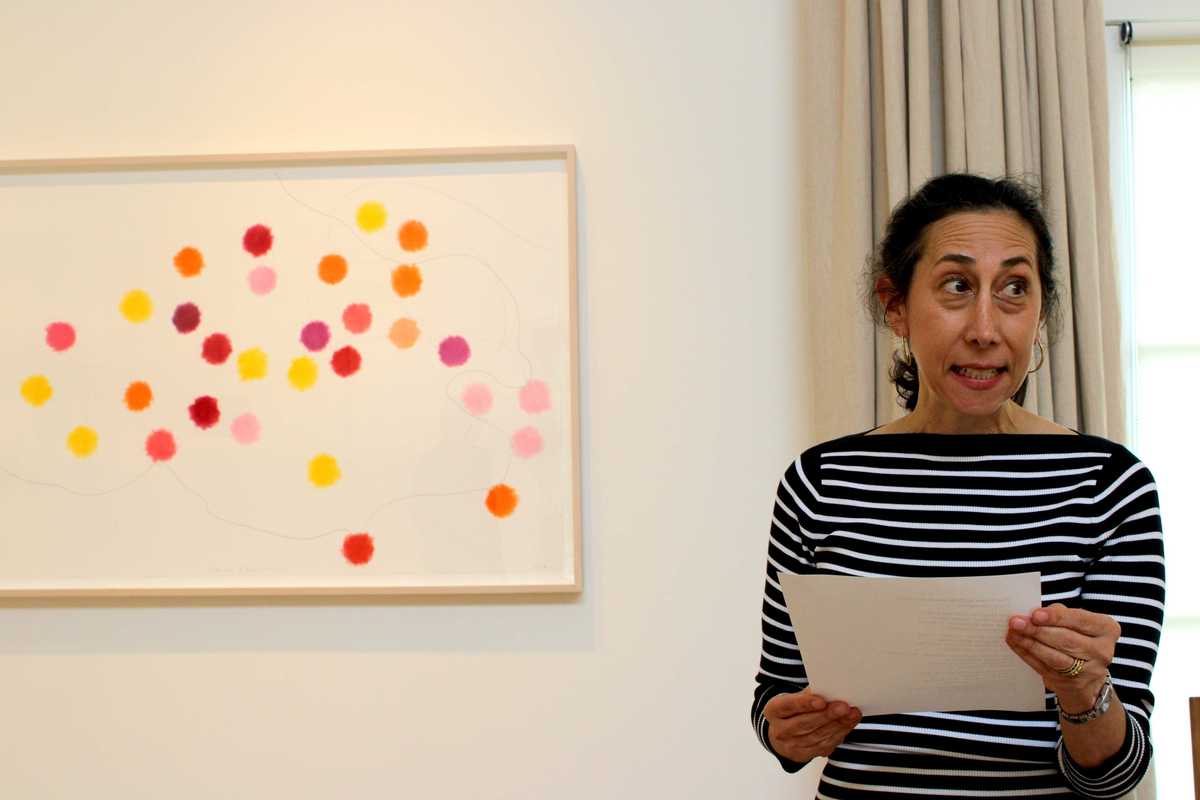
Curator Deborah Goodman Davis reads the Emily Dickinson poem “The Grass So Little Has to Do.” Spencer Finch’s “Following Three Bees (Zinnias)” buzzes in the background.

Photo by Natalia Zukerman

“The Grass Has So Little to Do,” on view at James Barron Art in Kent, takes its title from Emily Dickinson’s poem “The Grass So Little Has to Do,” written in 1862:

“The Grass so little has to do—
A Sphere of simple Green—
With only Butterflies to brood
And Bees to entertain—”

Keep ReadingShow less

Marina Kotchoubey is not a woodworker

Marina Kotchoubey is not a woodworker

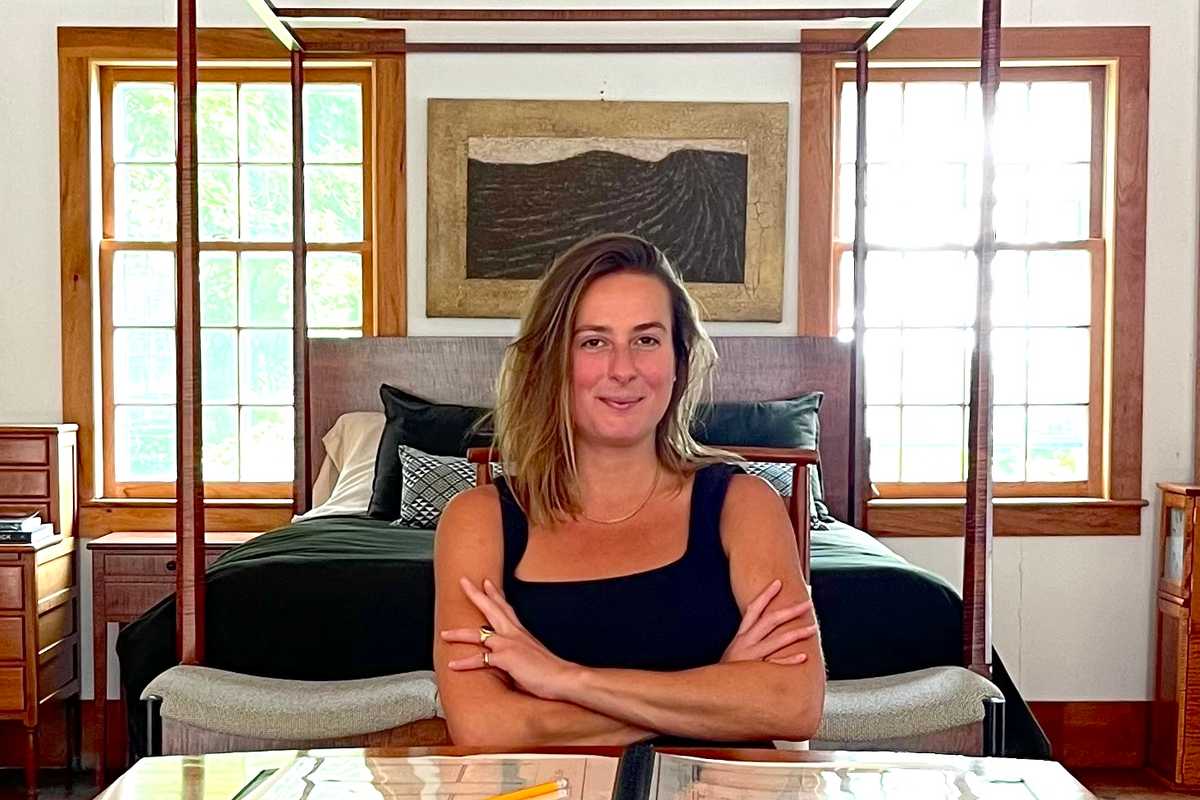
Marina Kotchoubey at the Ian Ingersoll Cabinetmakers showroom in West Cornwall.

Photo by D.H. Callahan

After 40-something years navigating the world of custom fine furniture, Ian Ingersoll was getting ready to retire. Starting off with a little dovetail stool that he sold at a shop in West Cornwall in the 1970s, he’d grown his skill and his business into something he — and the whole town — could be proud of. Shutting down that business was not an option.

Ingersoll built Ian Ingersoll Cabinetmakers, which produced mainly classical Shaker furniture, on passion: the passion he had to make a living through creative challenges and the passion of his employees, who all seem deeply in love with their craft.

Keep ReadingShow less
A legacy of giving at Norfolk Chamber Music Festival

One hundred and twenty years ago, Carl and Ellen Stoeckel commissioned New York architect E.K. Rossiter to design The Music Shed in Norfolk, Connecticut. After nearly a decade of entertaining their friends and neighbors with the finest music of the day, they built a permanent home for their beloved Litchfield County Choral Union.

The commission and full funding of the construction was not unheard of in an era when great fortunes led to public enrichment. Railroad tycoon John D. Rockefeller was instrumental in funding institutes of higher education. Steel baron Andrew Carnegie was building libraries all over the country, and famously said that a man who dies rich is a disgrace, challenging his peers to give their fortunes back to the people.

Keep ReadingShow less
google preferred source

Want more of our stories on Google? Click here to make us a Preferred Source.
Two unique exhibitions at Geary Gallery

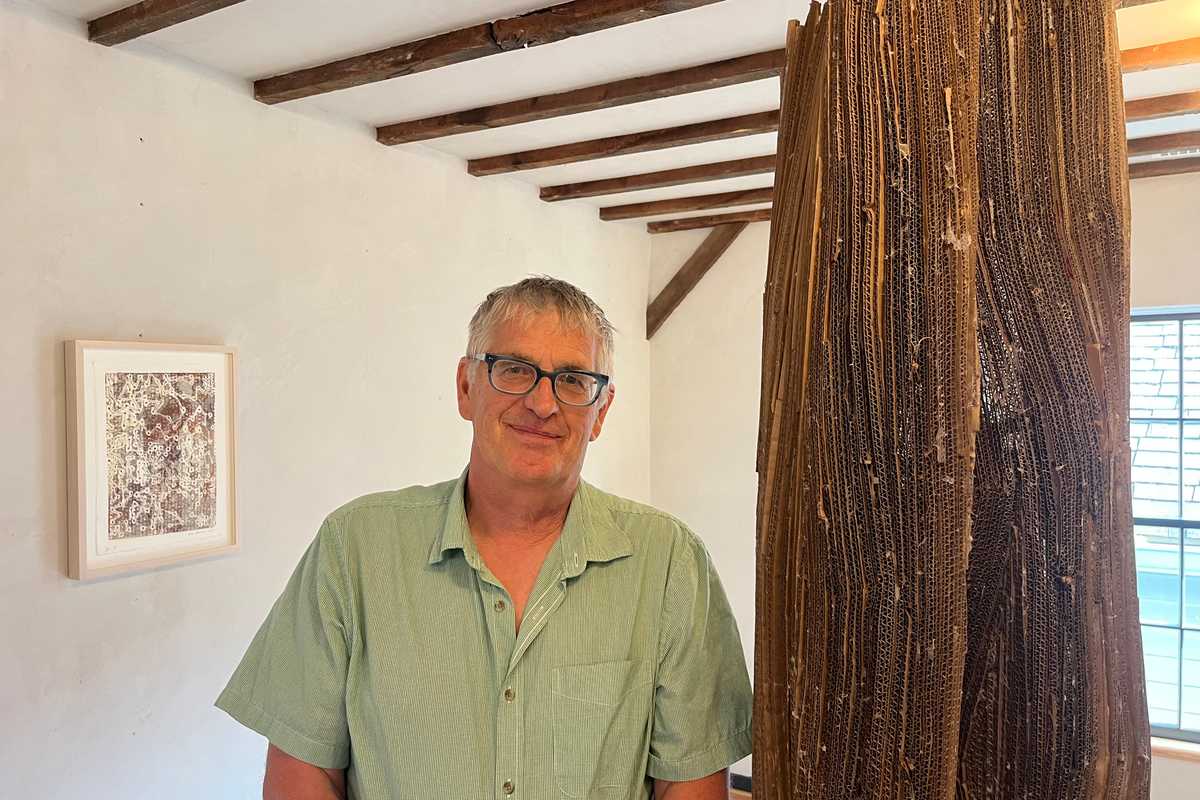
Henry Klimowicz with his sculpture, “Partial Pillar 1”

Photo by D.H. Callahan

On Saturday, Aug. 1, Geary Gallery opened its doors in Salisbury for two unique shows in its first- and second-floor gallery spaces. Art lovers flooded both floors over the course of the afternoon, giving the events a vibrant feeling that enhanced the importance of the art.

On the first floor is a show by Chicago-born, Colorado-based photographer Summers Moore, titled “Lobitos: Pueblo Fantasma,” or “Lobitos: Ghost Town.” The work centers around her daughter’s current hometown in Peru. Moore herself found a home away from home in Colorado in the mid-1980s and encouraged her children to seek out new places outside of their comfort zones.

Keep ReadingShow less

Writer’s retreat in the woods

Writer’s retreat in the woods

Participants in a 2024 Great Mountain Forest Woodland Academy workshop at Yale Camp.

Photo by Mike Zarfos

Great Mountain Forest (GMF) will host its first Nature Writing Retreat at the historic Yale Camp in Falls Village from Aug. 7-9, 2026. Writers of all levels are invited to draw inspiration from one of New England’s most notable forest landscapes. GMF envisions the retreat becoming an annual event celebrating writing, conservation and the relationship between people and forests.

This immersive three-day retreat reflects on the legacy of Hal Borland, the American writer and New York Times nature columnist whose work was deeply connected to this landscape. The retreat explores how wilderness shapes language, strengthens close observation and fosters environmental consciousness.

Keep ReadingShow less
From Cornwall to Rome, Adam Van Doren at Berkshire Botanical Garden

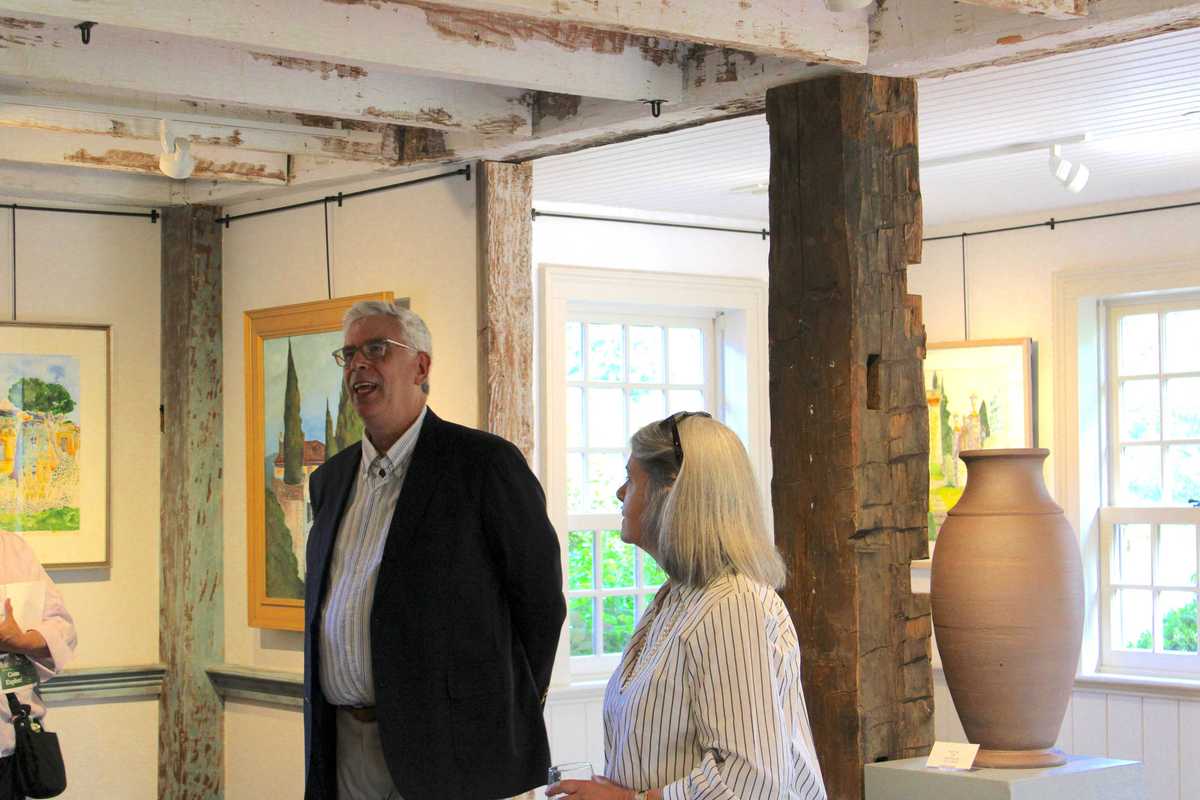
Artist Adam Van Doren and curator Donna Hassler talk to a group of visitors at the Berkshire Botanical Garden. A Stephen Proctor vessel sits to their left.

Photo by Natalia Zukerman

This summer, the Berkshire Botanical Garden in Stockbridge has hosted “Grounded in Nature: Paintings by Adam Van Doren,” an exhibition exploring the intimate relationship between architecture and the natural world.

On view for only a few more weeks in the Leonhardt Galleries, the exhibition features more than 35 watercolor and oil paintings by the New York-based artist, architect, author and Yale professor, curated by art historian Donna Hassler, director emerita of Chesterwood. The works span three distinct places that have shaped Van Doren’s artistic practice: New York City, Cornwall, Connecticut, and his travels throughout Europe.

Keep ReadingShow less
google preferred source

Want more of our stories on Google? Click here to make us a Preferred Source.
google preferred source

Want more of our stories on Google? Click here to make us a Preferred Source.