Educational structure at Housy needs to change
Housatonic Valley Regional High School (HVRHS) has become too big to fail. Sort of like Bank of America. What I mean by that is the costs have soared to such a level that civil war is breaking out among the six towns that have to fund this humongous campus for fewer and fewer students.
Just to give you some prospectus from an old Housy grad, the 1956 school newspaper, the White Oak, published the cost per student at the end of that year which was, get this, $423.76 each. My 1958 yearbook listed the 47 faculty members for the approximately 650 students. The faculty included: three janitors; five kitchen staff; one medical doctor on call; one secretary and one assistant secretary; one driver’s education teacher; one substitute teacher; four music teachers; and 30 other teachers who covered everything from homemaking to Vo-Ag, but was especially heavily staffed in the math, English and science departments, with 16 teachers.
Today’s HVRHS website lists a faculty of 73 covering 13 departments. HVRHS students are on a bi-weekly schedule to accommodate the many options offered to them to choose. Each week has a different schedule, unlike what we had to endure as we faced the dreaded Latin teacher at the same time of the day from September to June. (Please don’t text me in Latin.) Under the direction of the founding principal, Dr. Paul W. Stoddard, Region One students received their diplomas when they could demonstrate their ability to express themselves in writing and submitted their required autobiography to him, and also satisfactorily completed his mandatory Contemporary Problems course. He graded this course on the curve system and the bottom 6 percent would fail the course and not receive their diplomas. His tough love policy gave graduates the confidence that they were prepared for whatever path they would take into the world.
In order for the regional concept to survive, we need to shrink the options imposed on students (how many 14-year-old children really know what “they want to be”) and return studies back to basics and reduce the size of the faculty. Obviously the retort is the state of Connecticut mandates and the completely crazy Minimum Budget Requirement (MBR), which requires the annual district budget to be not lower than the previous year.
Until we acknowledge that the interest of the faculty and state bureaucrats, along with union rules, have prevailed over the interests of the students, we will not be helping our youth be all that they can be.
Tom Gailes
North Canaan
Yes to Wild and Scenic, with conditions
I support Salisbury joining the Wild and Scenic River coalition. I commend the Board of Selectmen for holding multiple meetings on this matter and listening carefully to their constituency. It has been a very difficult process to get factual information about the mechanics of how this process will work from the various advocacy groups that are promoting this process. My support is predicated on several conditions.
The first is not adopting the proposed regulations for increased land use restrictions on properties bordering the River. While those restrictions may be appropriate for villages such as West Cornwall, where a densely developed residential and commercial area directly abuts the Housatonic River, they are inappropriate for Salisbury, where the land use is primarily agricultural and large-lot residential. Moreover, such regulations could render the few remaining privately held building lots along the river greatly diminished in their potential for development, unfairly depriving taxpayers who have been paying full building-lot value on their municipal taxes for many years.
The second is that the towns retain control of the commission, with two delegates per town, as is the current framework. My third point concerns the to-be-formed committee, which I have heard called advisory, until Anthony Zunino referred to it as the coordinating committee in a Lakeville Journal guest commentary May 14. Advice and coordination are two very different concepts. I support the concept of a committee advising the River Commission, acting as a technical resource, as opposed to directing the activities of the River Commission.
Finally, I would encourage our elected leaders to make sure the hamlet of Amesville is represented on this advisory committee. In the future, should vacancies occur on the River Commission, preference should be given to appointing residents who reside near the Housatonic River.
I would like to address Mr. Zunino’s commentary. Repeated references to the Farmington River as the poster child of success do little to encourage my support for Wild and Scenic here in the Northwest Corner. In my professional capacity as a conservation biologist and planner, I have collaborated with the Farmington River Watershed Association on the production of the seven-town biodiversity strategy for a portion of the watershed, as well as with subsequent studies in the towns of Windsor and Barkhamsted. And while the designation of that stretch of the Farmington River has helped acquire funding for studies, it has done little to stem the overall ecological deterioration of the watershed through over-development and over-use. Most recently, a proposal by recreational advocates to create a bike pathway along the Farmington River between New Hartford and Pleasant Valley (Barkhamsted) threatens one of the most significant areas for herpetological biodiversity in Connecticut. The proposed trail would impact the nesting areas of three state-listed turtle species, and would result in irreversible population declines of these long-lived animals. It is my hope that Wild and Scenic here in the Northwest Corner will avoid making similar mistakes and be better able to ensure the ecological protection of the Housatonic River and its watershed.
Michael W. Klemens, Ph.D.
Salisbury
Grateful for all the support
The board of directors and staff of the Housatonic Youth Service Bureau (HYSB) are most grateful for the supportive editorial that appeared in the May 14 edition of The Lakeville Journal. The positive response to our need for a new home has been both heartening and inspiring. Moving to a new space was one goal of a five -year strategic plan created by the board in the early spring of 2014. The plan also included an increase in staff to enable us to expand counseling hours and programs to meet the demands of our community.
We knew that none of this could be done without raising a significant amount of money. In the late spring, when we were told that the “white house” on the campus at Housatonic Valley Regional High School was going to be torn down, we realized that we could not delay. We made the decision to begin a campaign to raise the funds first and foremost for a new home, but with equal importance on the need to expand our services and to secure the financial security of HYSB for the future.
A small group of community members has been diligently working to educate members of our community on the importance of the work of HYSB and to ask for their financial support. The response from individuals, local foundations, our towns, and the state of Connecticut speaks to the recognition of the need for our services and the desire to maintain a healthy and vibrant community in which our children can grow.
It feels miraculous that HYSB has moved into its new home in less than one year! In the next few weeks, we will be announcing the final phase of our campaign. We have lots of good news to share and know that the wonderful people who live and work in the Northwest Corner of Connecticut will help us reach our goal.
Nancy Bird
Board of Directors, HYSB
Chair of the Campaign Cabinet
Sharon
Don’t litter. Just don’t.
Someone who regularly uses Mudgetown Road in Sharon loves “Hungry Man” frozen dinners. I know this because I’ve been picking up their trash.
The idea of littering is a bit of a puzzle to me — is the packaging from your snack really so offensive that you must hurl it from the window of a moving vehicle? But the “Hungry Man” (hungry woman?) really has me confused. A frozen dinner does not seem to be the type of sustenance easily consumed in a vehicle. But I’m probably overthinking the issue.
The point is, when I walk on that lovely road at the base of Twin Oaks Field I see trees and birds and rabbits and deer, the occasional fox or bobcat … and Hungry Man trash. I probably look like someone who doesn’t have a life when I pick up trash there, but in fact life is quite busy. I don’t have time for this! So please find a trash can for your trash. Please? I would really appreciate it very, very much.From, your neighbor ...
Clare Rashkoff
Lakeville


 Tiffany Lemelin, shelter manager, brushing Marsala upon arrival.Provided
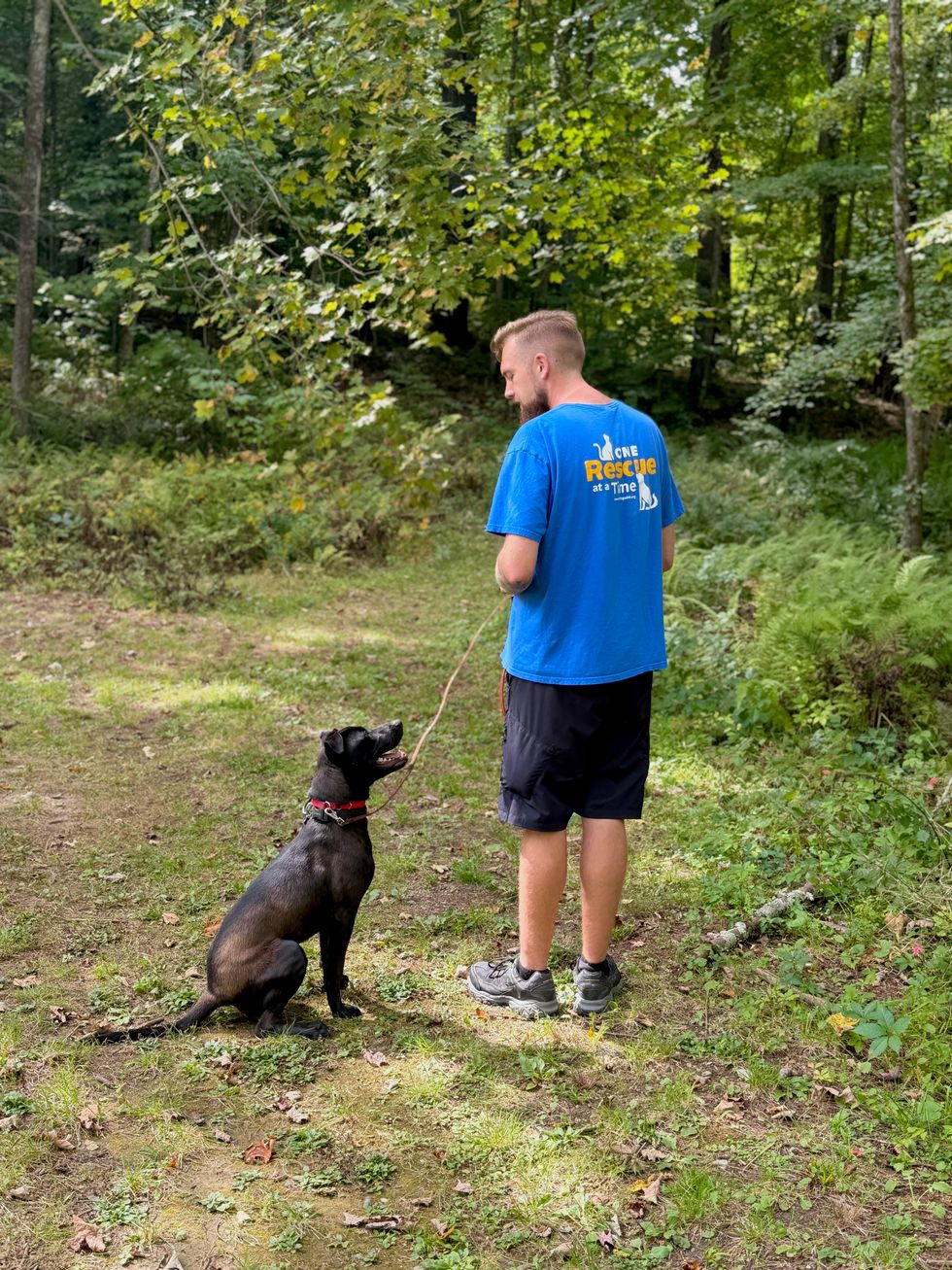 Michael DeBarba, certified dog trainer working with Marsala.Jennifer Almquist
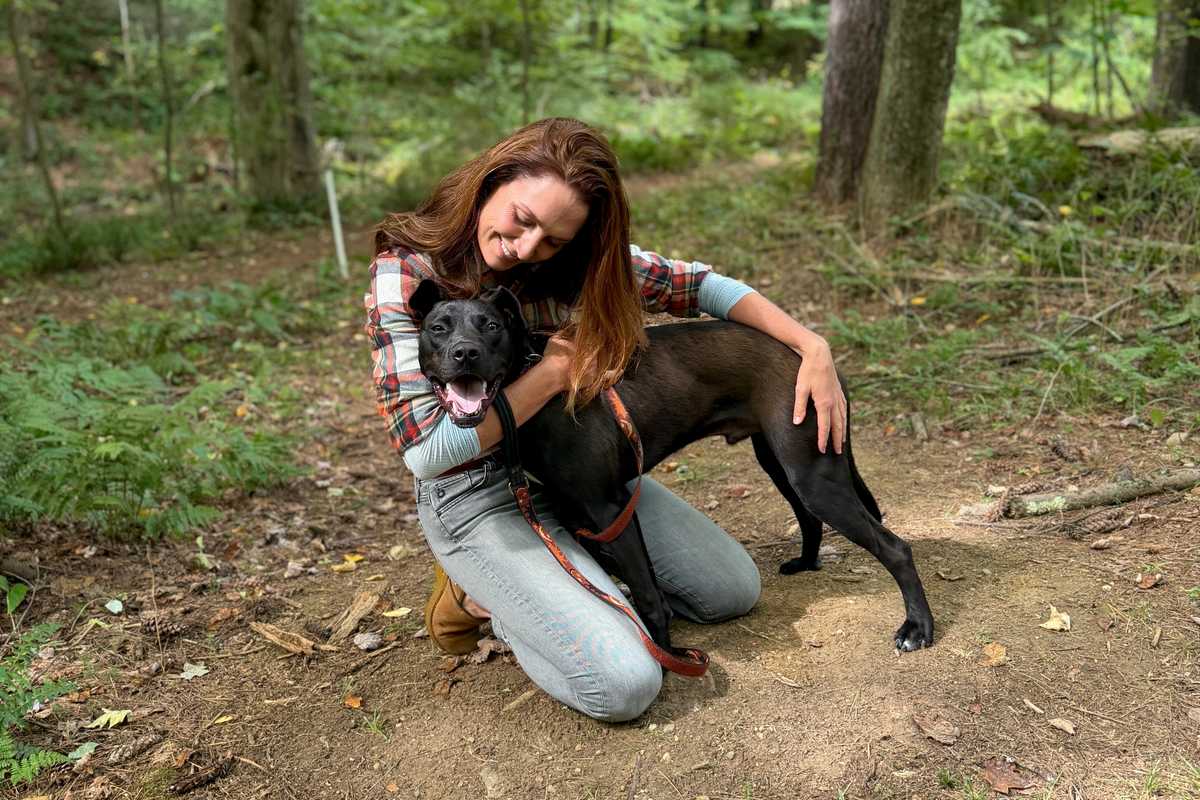 Marsala wins a heart.Jennifer Almquist


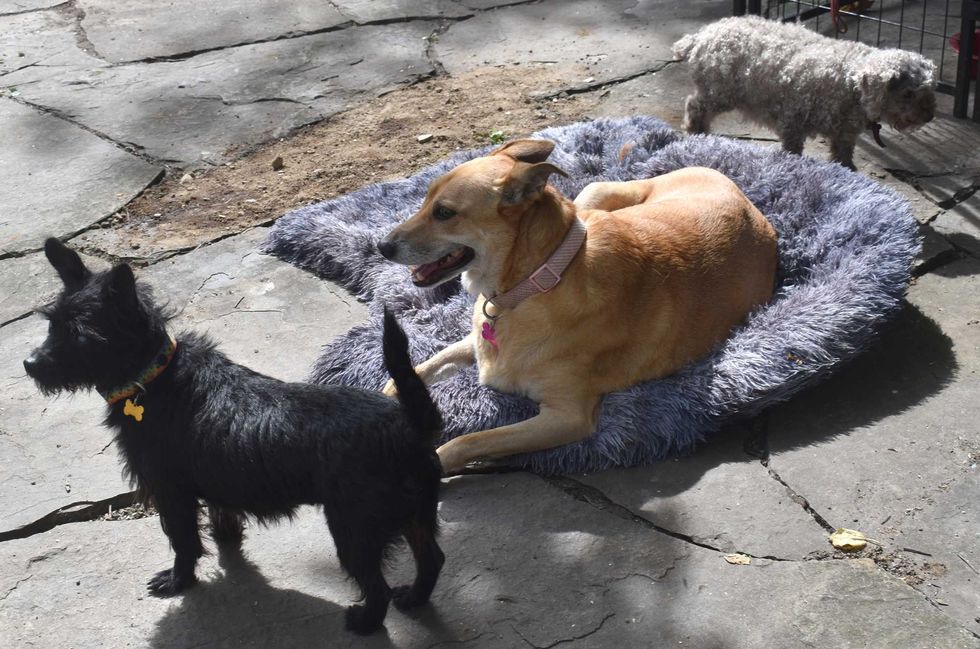 Sadie, center, a Carolina dog, plays with her friend Negra, a terrier mix. Bella Linda, the small poodle, has since been adopted.L. Tomaino
 Wesley, a young, exuberant mix, is looking for an active home.L. Tomaino
 Bonnie and Clyde, an affectionate terrier pair.L. Tomaino

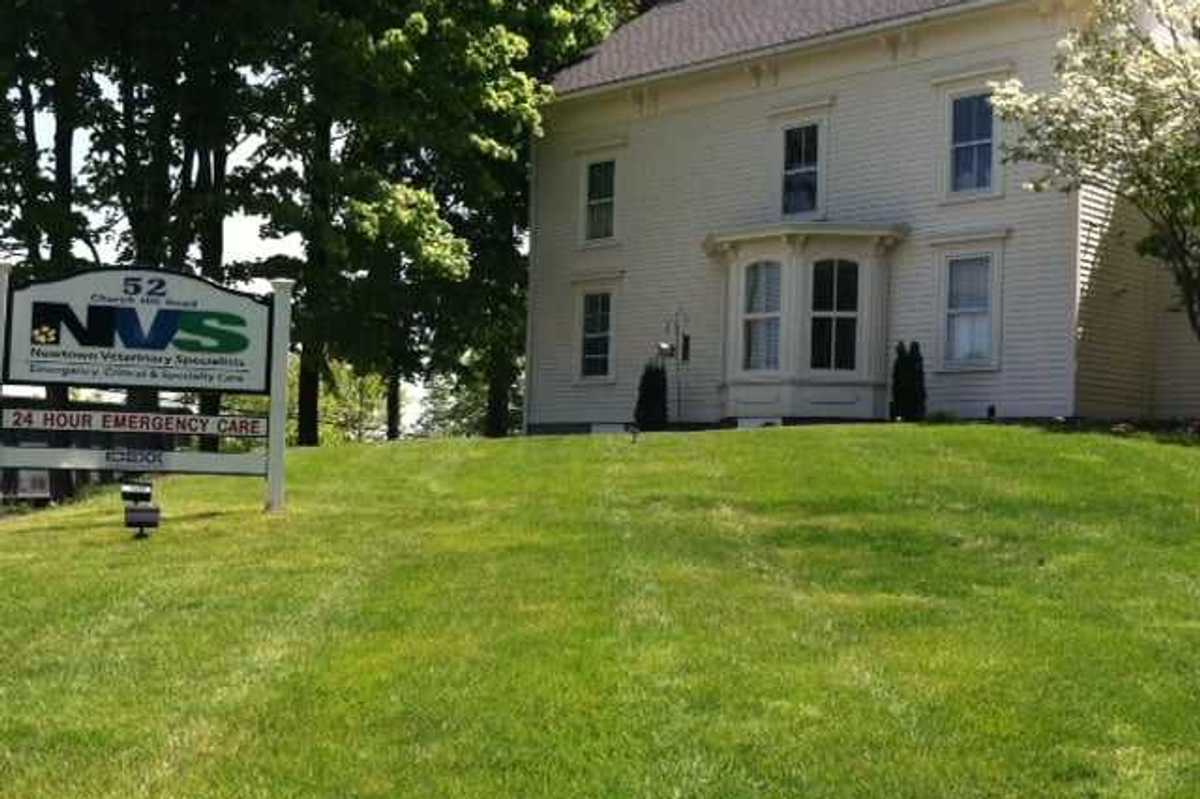
 Provided