Letters, tales bring the history of Civil War to life

SALISBURY, Conn. — The Salisbury Association Historical Society’s newest exhibit, Salisbury Soldiers in the Civil War, opened Friday, March 7, at the Academy Building on Main Street.Town Historian Katherine Chilcoat said the exhibit took the better part of two years to put together. She said it was complicated somewhat by the remodeling work in the Academy Building at the same time. “We weren’t sure what the exhibit space would look like.”The exhibit features letters to George B. Selleck, a Salisbury man who did not volunteer but was a faithful correspondent for his friends who did enlist. The exhibit’s notes state that it is believed that Selleck did not go because of ill health.The letters start with the salutation “Friend George,” and contain descriptions of battlefield conditions, news of other Salisbury men and other personal details — especially the desire to come home.Several have a heading: “Headquarters: Department of the South.”A soldier’s eye view of warThere are letters from Albert E. Barnes, who died in December 1863, and from Jeremiah Newton Dexter, who was mustered into the Union army on Sept. 7, 1861. Dexter was wounded on June 16, 1862, at the Battle of Secessionville, survived, and was discharged almost three years to the day of his enlistment, on Sept. 6, 1864. Dexter did not return to Salisbury, but settled in Barton, N.Y.Thomas Lot Norton’s account for the Congregational Church, “Our Church in War Time,” also figures prominently in the exhibit. George Lee Wells, who lived on Old Asylum Road, was mustered into the army Sept. 7, 1861, at the age of 23.Wells fought in the Bermuda Hundred campaign in May and June 1864, was captured June 2 and spent time at the infamous Andersonville prison in Georgia.He escaped, according to Norton, when the Confederate authorities moved the Union prisoners as Gen. William Tecumseh Sherman got close.“On the way, he watched his chances, slipped out of the car (rail) and gained the swamps of South Georgia.“Night after night for two long weeks, piloted by faithful, black-skinned comrades, resting in tangled everglades by day, he reached at last a river running to the sea, down which he glided, until the old flag of Uncle Sam’s gunboats assured him of life and freedom.”Wells was discharged on Sept. 12, 1864.The Ball family had three generations in the war: Charles (who signed up at age 15); his father, Harvey; and Charles’ grandfather, Whitney Ayers.Charles Bell, it is noted, had “close personal encounters with both Abraham Lincoln and General Grant.”The longest surviving Salisbury Civil War veteran was Horace Ball, who died in 1938 at the age of 91. In 1863, Ball enlisted at the age of 16 and served in Company B of the 2nd Connecticut Heavy Artillery.Overall some 353 Salisbury men are listed as serving.The invention of granolaThe exhibit gives details of army life. “Marching rations” consisted of 16 ounces of hard bread (called “hardtack”); 12 ounces of salt pork or 20 ounces of fresh meat; sugar; coffee; and salt.In camp the rations were: soft bread, flour or cornmeal; dried beans or peas; “dessicated” or dried vegetables; rice; vinegar; molasses; and a supply of soap and candles.The dessicated vegetables were similar to the freeze-dried meals modern backpackers use. “These ‘desecrated’ vegetables, as the soldiers called them, were universally disliked and were prepared by dropping the dried block into boiling water to yield a thin vegetable soup.”And, in another food-related item, granola was invented during the Civil War by one James Caleb Jackson, “who baked sheets of moistened whole wheat flour, crumbled them into bits, then baked them again, creating hard little nuggets he called ‘granola.’”The exhibit has a well-preserved poster commemorating the formation of Company B, 19th Regiment of the Connecticut Volunteer Infantry, which lists the officers and men.The unit was organized in July 1982 in Salisbury, and mustered on Sept. 11 in Litchfield.Around the eagle at the top of the poster, a banner reads, “No rebel force can rend our power. The whole United States is ours.”The exhibit is open from 9 a.m. to 1 p.m., Monday through Friday, during the next few months.

Latest News

Living art takes center stage in the Berkshires

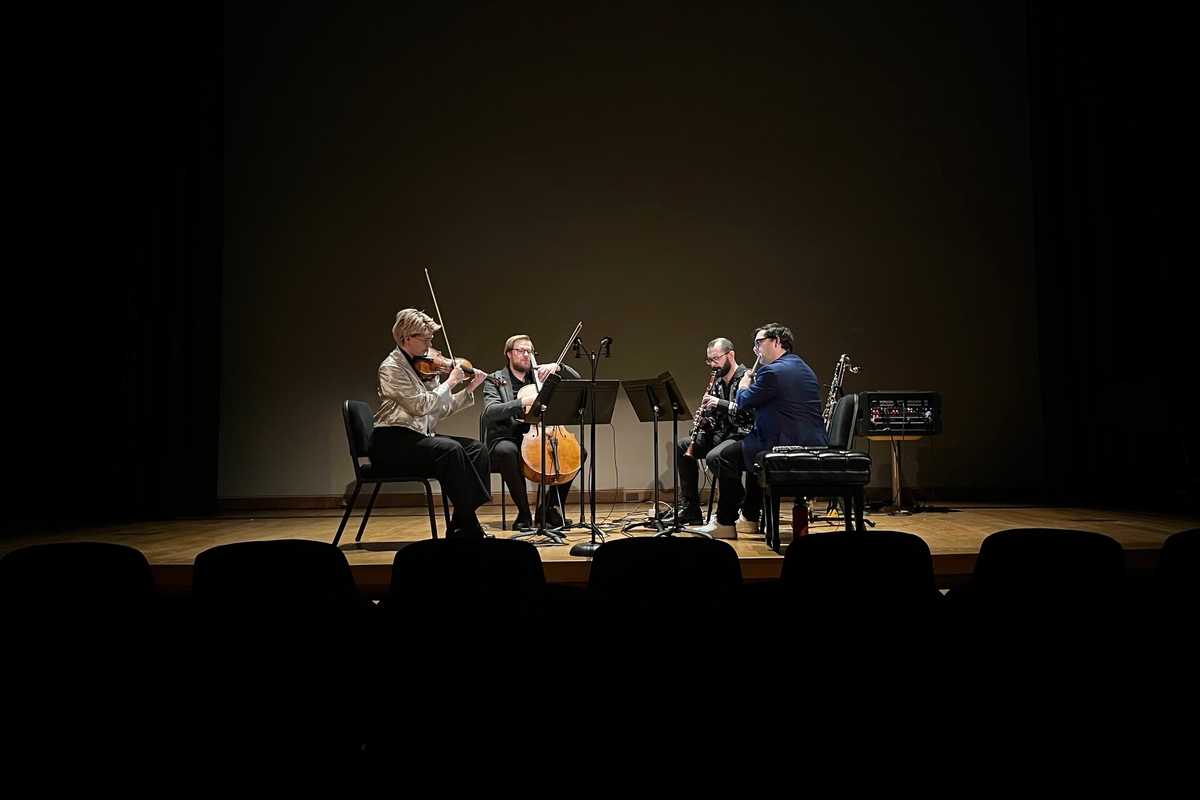
Contemporary chamber musicians, HUB, performing at The Clark.

D.H. Callahan

Northwestern Massachusetts may sometimes feel remote, but last weekend it felt like the center of the contemporary art world.

Within 15 miles of each other, MASS MoCA in North Adams and the Clark Art Institute in Williamstown showcased not only their renowned historic collections, but an impressive range of living artists pushing boundaries in technology, identity and sound.

Keep ReadingShow less
Persistently amplifying women’s voices

Francesca Donner, founder and editor of The Persistent. Subscribe at thepersistent.com.

Aly Morrissey

Francesca Donner pours a cup of tea in the cozy library of Troutbeck’s Manor House in Amenia, likely a habit she picked up during her formative years in the United Kingdom. Flanked by old books and a roaring fire, Donner feels at home in the quiet room, where she spends much of her time working as founder, editor and CEO of The Persistent, a journalism platform created to amplify women’s voices.

Although her parents are American and she spent her earliest years in New York City and Litchfield County — even attending Washington Montessori School as a preschooler — Donner moved to England at around five years old and completed most of her education there. Her accent still bears the imprint of what she describes as a traditional English schooling.

Keep ReadingShow less
Jarrett Porter on the enduring power of Schubert’s ‘Winterreise’
Baritone Jarrett Porter to perform Schubert’s “Winterreise”
Tim Gersten

On March 7, Berkshire Opera Festival will bring “Winterreise” to Studio E at Tanglewood’s Linde Center for Music and Learning, with baritone Jarrett Porter and BOF Artistic Director and pianist Brian Garman performing Franz Schubert’s haunting 24-song setting of poems by Wilhelm Müller.

A rejected lover. A frozen landscape. A mind unraveling in real time. Nearly 200 years after its premiere, “Winterreise” remains unnervingly current in its psychological portrait of isolation, heartbreak and existential drift.

Keep ReadingShow less
google preferred source

Want more of our stories on Google? Click here to make us a Preferred Source.
A grand finale for Crescendo’s 22nd season

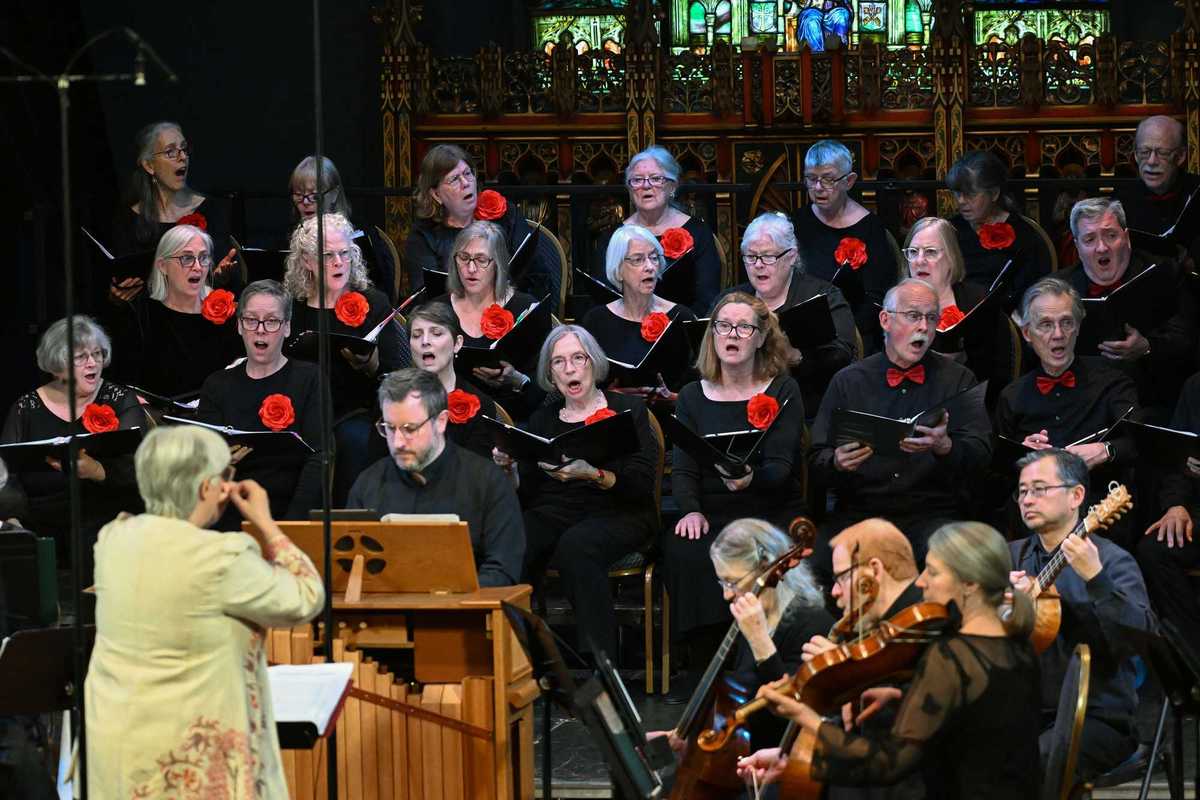
Christine Gevert, artistic director, brings together international and local musicians for a season of rare works.

Stephen Potter

Crescendo, the Lakeville-based nonprofit specializing in early and rarely performed classical music, will close its 22nd season with a slate of spring concerts featuring international performers, local musicians and works by pioneering composers from the Baroque era to the 20th century.

Christine Gevert, the organization’s artistic director, has gathered international vocal and instrumental talent, blending it with local voices to provide Berkshire audiences with rare musical treats.

Keep ReadingShow less

Leopold Week honors land and legacy

Leopold Week honors land and legacy

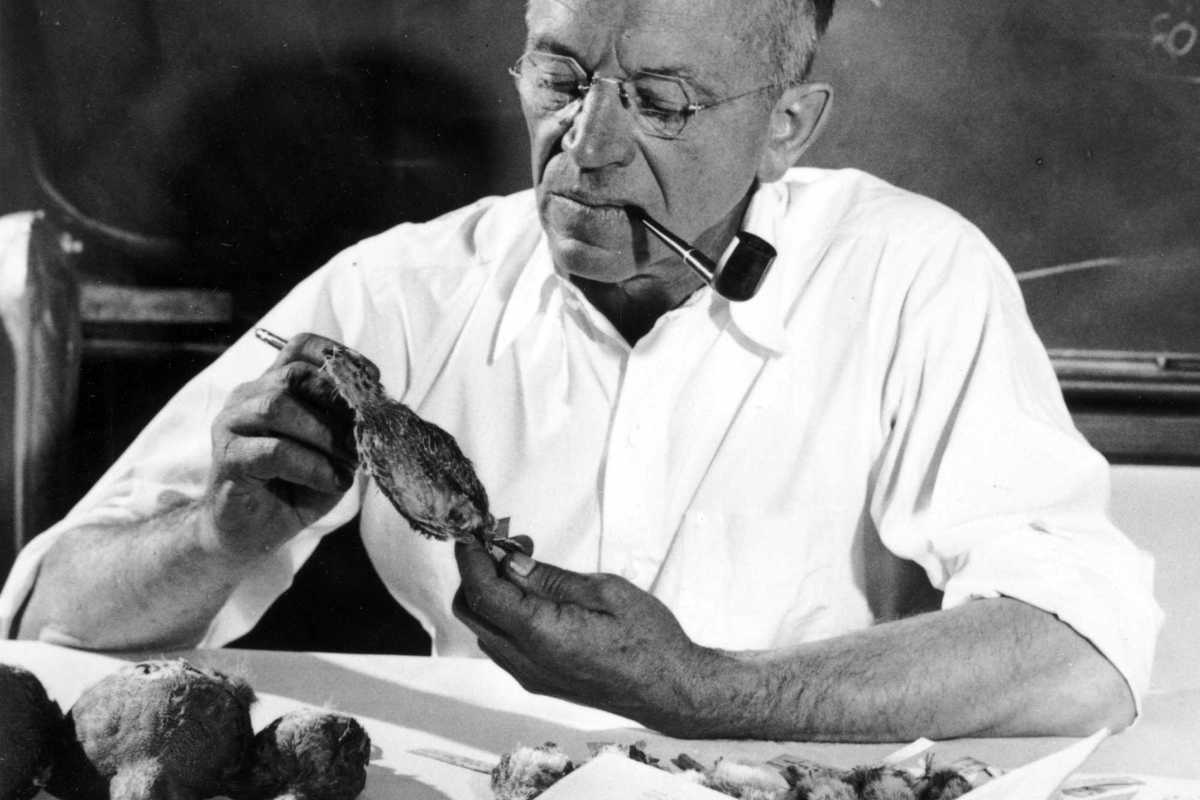
Aldo Leopold in 1942, seated at his desk examining a gray partridge specimen.

Robert C. Oetking

In his 1949 seminal work, “A Sand County Almanac,” Aldo Leopold, regarded by many conservationists as the father of wildlife ecology and modern conservation, wrote, “There are some who can live without wild things and some who cannot.” Leopold was a forester, philosopher, conservationist, educator, writer and outdoor enthusiast.

Originally published by Oxford University Press, “A Sand County Almanac” has sold 2 million copies and been translated into 15 languages. On Sunday, March 8, from 3 to 5 p.m. in the Great Hall of the Norfolk Library, the public is invited to a community reading of selections from the book followed by a moderated discussion with Steve Dunsky, director of “Green Fire,” an Emmy Award-winning documentary film exploring the origins of Leopold’s “land ethic.” Similar reading events take place each year across the country during “Leopold Week” in early March. Planning for this Litchfield County reading began when the Norfolk Library received a grant from the Aldo Leopold Foundation, which provided copies of “A Sand County Almanac” to distribute during the event.

Keep ReadingShow less

Erica Child Prud’homme

Erica Child Prud’homme

WEST CORNWALL — Erica Child Prud’homme died peacefully in her sleep on Jan. 9, 2026, at home in West Cornwall, Connecticut, at 93.

Erica was born on April 27, 1932, in Doylestown, Pennsylvania, the eldest of three children of Charles and Fredericka Child. With her siblings Rachel and Jonathan, Erica was raised in Lumberville, a town in the creative enclave of Bucks County where she began to sketch and paint as a child.

Keep ReadingShow less
google preferred source

Want more of our stories on Google? Click here to make us a Preferred Source.
google preferred source

Want more of our stories on Google? Click here to make us a Preferred Source.