Latest News
Classifieds - August 25, 2026
Lakeville Journal
Aug 26, 2026

HOUSE FOR RENT
MT RIGA LAKEFRONT CABIN. Private beach, canoe, kayaks, fishing. $1,275/week. 585-355-5245.
2 Bedroom House. Millerton, NY. Quiet. 4 miles from town. No Dogs. $2475 monthly, plus utilities. 518-567-8277.
SERVICES OFFERED
Hector Pacay Landscaping, LLC. Residential & Commercial. Tree service, Painting, Masonry, Stone Walls, Lawn Mowing, Gardens, Construction. 845-636-3212. CT and NY.
LOJA CLEANING AND JANITORIAL Home and Apartment Cleaning. Commercial Janitorial and Maintenance. Offices & Commercial Spaces. Move In/Move Out. Customized Deep Cleaning Projects. Licensed & Insured. 475-746-8621 or 475-529-6484. lojacleaningservices@gmail.com
Julieth Cleaning Pro. Spotless Homes at Competitive Prices! House Cleaning. Apartment Cleaning. Office Cleaning. Move-In/Move-Out Cleaning. Post Construction Cleaning. Basement & Attic Cleaning. General Cleaning. Reliable, Professional & Friendly Service. Proudly serving Torrington, Canaan, Litchfield, Winsted, Norfolk, New Hartford, and surrounding areas. Call today for your FREE estimate! 860-806-2110. JuliethCleaningPra@gmail.com
REAL ESTATE FOR SALE
PUBLISHER'S NOTICE: Equal Housing Opportunity. All real estate advertised in this newspaper is subject to the Federal Fair Housing Act of 1966 revised March 12, 1989 which makes it illegal to advertise any preference, limitation, or discrimination based on race, color religion, sex, handicap or familial status or national origin or intention to make any such preference, limitation or discrimination. All residential property advertised in the State of Connecticut General Statutes 46a-64c which prohibit the making, printing or publishing or causing to be made, printed or published any notice, statement or advertisement with respect to the sale or:rental of a dwelling that indicates any preference, limitation or discrimination based on race, creed, color, national origin, ancestry, sex, marital status, age, lawful source of income, familial status, physical or mental disability or an intention to make any such preference, limitation or discrimination
HELP WANTED
Weekend Worker Needed. Weed whacking, Brush clearing, Firewood, Lawn and Garden work, plus more. Good work ethics required. Pay according to skill. Call 518-567-8277.
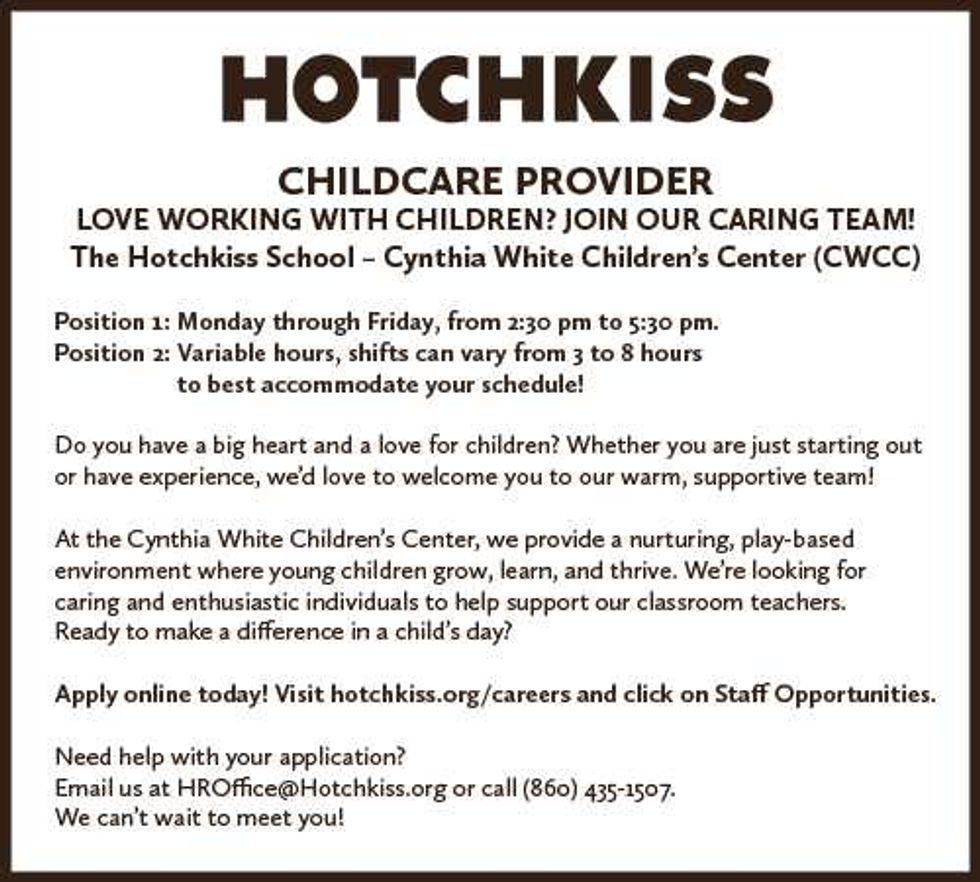
Wyantenuck Country Club is seeking waitstaff. Lunch shifts available for weekdays with flexible shift options for weekends and some dinners as well. Call 413-528-0350 or send resumes to brandon@wyantenuck.org
BOOKKEEPER WANTED. Part time. Sharon. 407-620-7777.
Konkapot Tree and Timber based in Ashley Falls is looking for a Sawmill Assistant. Part or full time. Experience with chainsaws, tractors, and machinery preferred but not required. Will train the right candidate. Pay: depending on experience. 413-229-2182.
APARTMENTS FOR RENT
1Bd/1b apartment in Amenia. $900 a month. 860-309-4482.
TAG SALES LITCHFIELD, CT
HUGE ESTATE TAG SALE 8/28 10-5, 8/29 10-3. Antiques, Vintage + More. 425 Bantam Rd. Litchfield.




Keep ReadingShow less
Legal Notices - August 25, 2026
Lakeville Journal
Aug 26, 2026
Legal Notice
The Zoning Board of Appeals of the Town of Salisbury will hold a Public Hearing on Application ZBA-26-1 by Emily Vail for a variance of Section 304 and 300.2 of the Salisbury Zoning Regulations pertaining to a property owned by 145 Farnum Road LLC located at 145 Farnum Road Lakeville, CT 06039, map 48 lot 15. The hearing will be held on September 8, 2026 immediately after the regularly scheduled business of the 5:00PM meeting. There is no physical location for this meeting. This meeting will be held virtually via Zoom where interested persons can listen to and speak on the matter. Instructions for attending this virtual meeting will be listed on the agenda and at https://www.salisburyct.us/agendas/. The application materials will be listed at https://www.salisburyct.us/zoning-board-of-appeals.... Attendance is encouraged but written comments may be submitted to the Land Use Office, Salisbury Town Hall, 27 Main Street, P.O. Box 548, Salisbury, CT or via email to landuse@salisburyct.us. The agenda, meeting instructions, and application materials may also be reviewed in the Land Use Office, Monday through Thursday between the hours of 8:00 AM and 3:30 PM.
Salisbury Zoning Board of Appeals
Lee Greenhouse, Secretary
08-27-26
09-03-26
Legal Notice
Notice of Decision
Town of Salisbury Planning & Zoning Commission
Notice is hereby given that the following action was taken by the Planning & Zoning Commission of the Town of Salisbury, Connecticut on March 7, 2022: Approved - Regulation Amendment Application #2026-0315 by Lime Rock Park II, LLC amending section 221 of the Salisbury Zoning Regulations "Additional Requirements for Uses in the RE Zone" as amended by the Commission through and including its meeting of August 17, 2026 with the finding that the amendment is consistent with the plan of conservation and development, and in accordance with the Comprehensive Plan of Zoning with an effective date of September 7, 2026. Any aggrieved person may appeal these decisions to the Connecticut Superior Court in accordance with the provisions of Connecticut General Statutes 8-8. Town of Salisbury Planning & Zoning Commission Robert Riva, Secretary
08-27-26
Legal Notice
Legal Notice The Planning & Zoning Commission of the Town of Salisbury will hold a Public Hearing on Special Permit Application #2026-0328 by Patrick Mulberry for establishment of a single-family residential use in the Inner Corridor of the Housatonic River Overlay District and the Flood Plain Overlay District, with associated site work, at 11 Route 7, Salisbury, Map 04, Lot 31-1 per Sections 401 and 402 of the Salisbury Zoning Regulations. The hearing will be held on Tuesday, September 8, 2026 at 6:45 PM. There is no physical location for this meeting. This meeting will be held virtually via Zoom where interested persons can listen to & speak on the matter. The application, agenda and meeting instructions will be listed at www.salisburyct.us/agendas/. The application materials will be listed at www.salisburyct.us/planning-zoning-meeting-documents/. Written comments may be submitted to the Land Use Office, Salisbury Town Hall, 27 Main Street, P.O. Box 548, Salisbury, CT or via email to landuse@salisburyct.us. Paper copies of the agenda, meeting instructions, and application materials may be reviewed Monday through Thursday between the hours of 8:00 AM and 3:30 PM at the Land Use Office, Salisbury Town Hall, 27 Main Street, Salisbury CT.
Salisbury Planning & Zoning Commission
Robert Riva, Secretary
08-27-26
09-03-26
NOTICE TO CREDITORS
ESTATE OF GREGORY THOMAS MCAVOY,
Late of Cornwall Bridge (26-00311)
The Hon. Jordan M. Richards, Judge of the Court of Probate, District of Litchfield Hills Probate Court, by decree dated August 10, 2026, ordered that all claims must be presented to the fiduciary at the address below. Failure to promptly present any such claim may result in the loss of rights to recover on such claim. The fiduciary is: Mark McAvoy 17 Brookside Drive Plainfield, CT 06374 Jordan Bergs, Clerk
08-27-26
NOTICE TO CREDITORS
ESTATE OF DONA L. ALEXANDER,
Late of Lakeville
AKA Dona Olinger (26-00319)
The Hon. Jordan M. Richards, Judge of the Court of Probate, District of Litchfield Hills Probate Court, by decree dated August 10, 2026, ordered that all claims must be presented to the fiduciary at the address below. Failure to promptly present any such claim may result in the loss of rights to recover on such claim. The fiduciary is: Sarah H. Hadoulis c/o William O Riiska William O. Riiska 3 Farnam Road PO Box 1340 Lakeville, CT 06039
Jordan Bergs, Clerk
08-27-26
Keep ReadingShow less
Allen Degreenia
Lakeville Journal
Aug 25, 2026
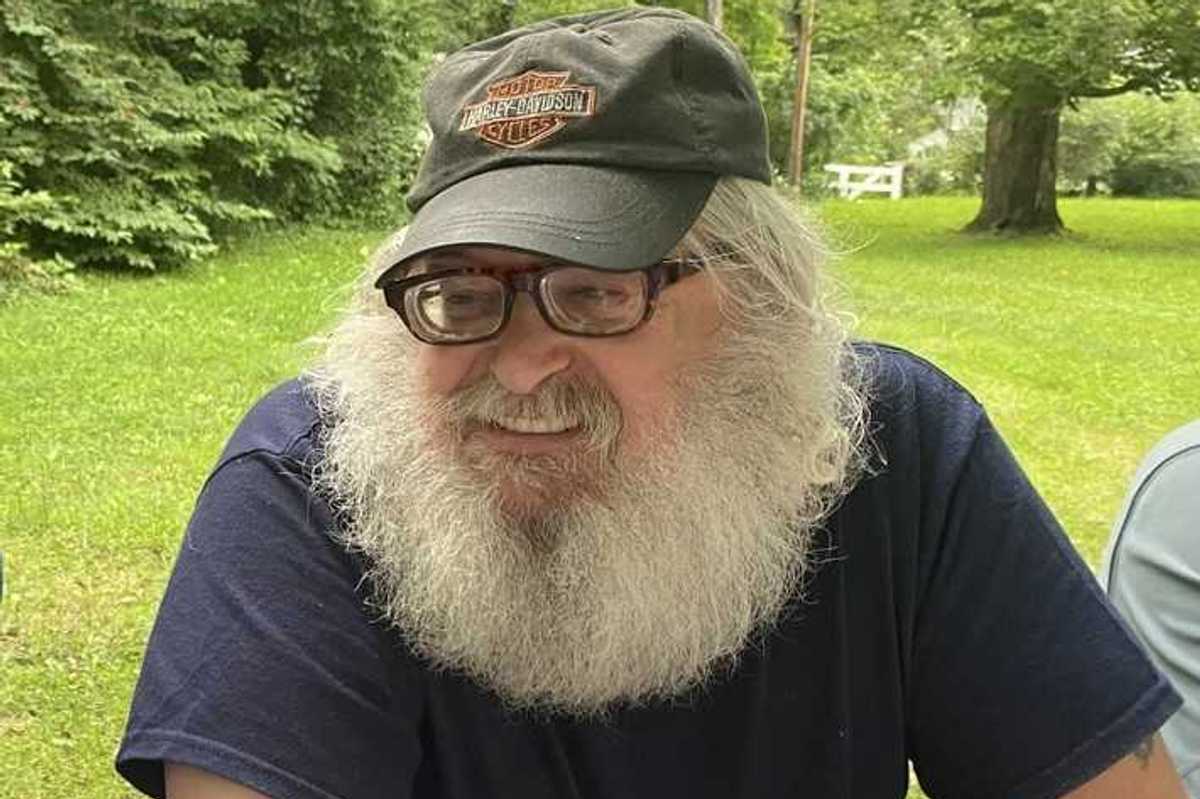
WEST CORNWALL — Allen “Al” Degreenia, 70, of West Cornwall, Connecticut, passed away on Aug. 14, 2026 at Hartford Hospital.
Al was born on Sept. 10, 1955, in Torrington, Connecticut, the son of the late Ovel and Olive Degreenia of West Cornwall.
A man of many talents, Al was an artist in every sense of the word. He was a gifted musician and had a lifelong love of old cars. For many years, through his business, Textile Graphics in Torrington, Al shared his artistic talents with the community, printing hundreds of T-shirts and hand painting signs for local businesses.
One of the joys of traveling through the surrounding towns with Al was hearing him proudly point out his work, saying, “I painted that sign” , or “I printed T-shirts for that business, summer camp or Little League team”. His creativity and craftsmanship can be found throughout the area and will remain a lasting reminder of his talent.
Al was preceded in death by his brother, Melvyn and his sister, Patricia.
He is survived by his sister Susan (Degreenia) Murray and her husband Roger, as well as many nieces and nephews, of whom he was very proud and whose accomplishments he greatly admired.
One of Al’s greatest joys was family gatherings, holiday meals, birthday celebrations or a simple spontaneous picnic at Housatonic Meadows.
A graveside service will be held on Saturday, Aug. 29, 2026, at 1:00 p.m. at Ellsworth Cemetery in Sharon, Connecticut. A reception will follow at the Taughannock Grange Hall, 7 Dunbar Rd., Ellsworth (Sharon).
Please bring a story or memory about Al to share!
Al will be remembered for his creativity, his many accomplishments, his love of music and old cars, and the unique mark he left on the communities around him. He will be deeply missed by his family, friends and all who knew him.
The Kenny Funeral Home has care of arrangements.
Keep ReadingShow less

Want more of our stories on Google? Click here to make us a Preferred Source.
Lynn Korbel
Lakeville Journal
Aug 25, 2026
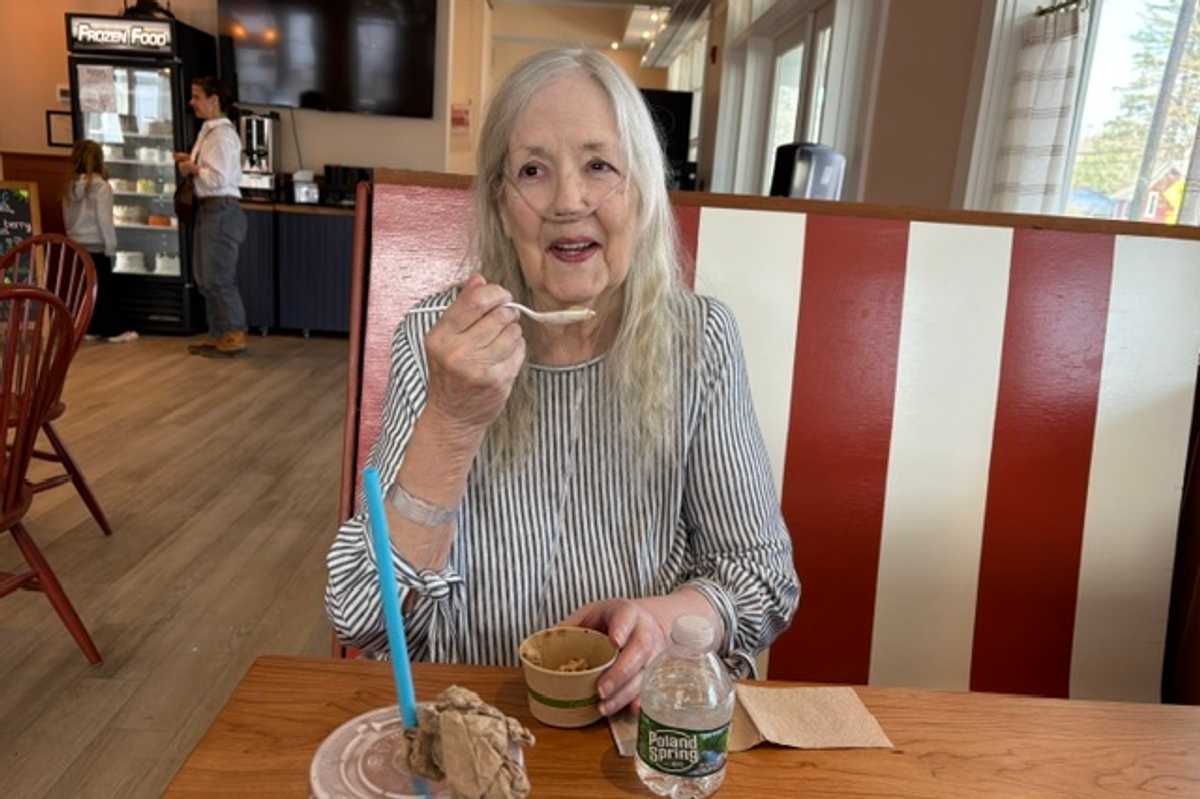
CANAAN — Lynn Korbel passed away peacefully with her son, Eric by her side, at Geer nursing on Aug. 19, 2026, due to complications of cancer and kidney failure. She is remembered and celebrated by her two sons, Eric and David Korbel of Lakeville and Middleboro, Massachusetts, her two grandchildren, Dylan Korbel and Brittany Korbel, her niece Jennifer Cotte and her grandnieces Jaden Cotte and Jamison Cotte. She is survived by her brother Edward ‘Ted’ Korbel of West Yarmouth, Massachusetts.
Lynn was born in Pittsburgh, Pennsylvania on June 1, 1943. She resided in Wilmette, Illinois before moving to New Canaan, Connecticut in 1955. She attended New Canaan High School where she learned to play the flute and speak French. She was active in the drama department as well. Graduating in 1961, she then went on to attend Virginia Wesleyan College studying the Russian language and was actively involved in the production of several plays both as an artist as well as working on set design and as a director. Further education found her attending the Catherine Gibbs school in NYC and also working at that time as a fashion model. Lynn then went on to work for the Famous Artists School in Westport, Connecticut where she received several promotions rising to oversee the nascent computer division side of the business.
Lynn married and gave birth to her two sons, Eric in 1966 and David in 1971. Residing in New Jersey for several years before moving to central Ohio in 1975, where she then came to realize that she was an artist studying art at the Columbus College of Art and Design, growing and refining her skills with a wide variety of media mostly working in acrylics and oils. She would go on to utilize all mediums in her artistic expression. She was also an accomplished calligrapher and photographer.
It was in the late 70’s that she began to work seriously as a fine artist and her command of composition and technique were highly regarded and respected in the art community. She would go on to win many awards with her artworks including second place at the Ohio State Fair in 1978. She painted boldly and fearlessly, pushing boundaries to create works of exquisite and ecstatic beauty and wonder. Throughout her life she was always expressing her inner spirit and passion with many forms of media including collage. Lynn was also an avid journal writer and wrote and filled many volumes with her thoughts on life and dreams. Later in her life she would begin to work with textiles and many family members and dear friends have at least one of her crotched animals or mittens to remember her by.
Lynn moved to Falls Village, in 1982 residing in the locally famous Pine Grove community until 2008. Working life in the 80’s found her at the Jug End resort in Egremont, Massachusetts and the Marvelwood school where she worked with the head of the school. She also worked with the Emersons at their bookstore in Falls Village. Lynn also became an accomplished astrologer and created astrological charts for people all over the country by advertising in print media. She always had a keen psychic ability and was adept with the Tarot and other tools of divination.
Eventually music beckoned and she took up the flute once again and refined her talents joining the Torrington Symphony and playing with them in the capacity of flutist and violinist, as well as the classical guitar. She was especially fond of the works of Vivaldi.
Our mom cherished the companionship of cats all of her life, her loving heart and sensitive nature allowing her to create deep bonds with her feline companions with Moses, Dennis, Allegro and Sophie being just a few.
It was later in her life that Lynn would find a new career path as a caregiver eventually becoming a CNA. She was employed by Geron and by SVNA in Salisbury where she was a highly respected and sought after caregiver who always rose to the occasion no matter the time of day or the weather conditions. Known for her deep compassion and her upbeat and often humorous spirit, she retired in 2024.
Moms wit, grace, intelligence and inquisitiveness will be missed by everyone who had the pleasure of knowing her and her absence is a hole in my heart that cannot be mended. She loved books, movies and music, she loved life and laughter enjoying comedies like ‘Vacation’ in particular. She was my window on the world, my Mother and confidant. I miss her dearly.
However, her greatest journey has only begun...
Keep ReadingShow less
Ronald C. Watson
Lakeville Journal
Aug 25, 2026

MILLERTON — Ronald C. Watson, a devoted father, grandfather, great-grandfather, brother, friend, and beloved member of his community, passed away leaving behind a lifetime of memories and a family who will forever carry his love with them.
Ronald was born on Dec. 3, 1948, at Charlotte Hungerford Hospital in Torrington, Connecticut, to Roy Watson and Theresa Linderman. Throughout his life, Ronald was a man who valued the things that mattered most—family, loyalty, friendship, and time spent doing the things he loved.
Ronald was predeceased by his parents, Roy Watson and Theresa Linderman; his brother, Roy Watson II; his sisters, Patty Watson and Theresa Eiserman; his beloved granddaughter, Ellie Dunlop; and the love of his life, Audrey Watson. The love Ronald and Audrey shared was a defining part of his life, and there is comfort in knowing that after enduring the heartbreak of her absence, they are together once again.
Ronald’s greatest legacy can be found in the family he loved so deeply. His memory will live on through his two daughters, Rene (Rob) and Jody Watson; his grandchildren, Reneisha Vielman, Robert Haskell, Tatyana Watson, Christian Haskell, Kenya Castillo, William Haskell, Daja Williams, and Shantasia Thompson; their spouses; and his many cherished great-grandchildren. Each of them carries a piece of Ronald with them—in the stories they will tell, the traditions they will continue, and the memories they will hold close for generations to come.
He is also survived by his siblings, Edward Watson Sr., Al Watson, Thomas Watson, Larry Watson, Kathy Ahearn, Jackie Mangarillo, Wendy Wilms, Timothy Watson, and Richard Watson, Otto Eiserman, as well as many nieces and nephews who truly made his life better.
Ronald was a true outdoorsman and an avid hunter who found peace and happiness in nature. He was an active member of the Millerton Gun Club, where he enjoyed spending time among friends who shared his interests. And when it came to fishing, those who knew Ronald would tell you there was simply no one better. Whether he was hunting, casting a line, or sharing a story about the one that did—or didn’t—get away, those were the moments when Ronald was truly in his element.
He also loved a good flea market. There was something special about wandering through tables filled with old treasures, never knowing what he might find or what story might come along with it. The simple things in life brought Ronald happiness, especially when they could be shared with the people he loved.
Above everything else, Poppy was a family man. He was loyal to his core, loved deeply, and stood by the people who mattered to him. His family was his greatest pride, and his presence created the kind of memories that time can never erase. He was someone you could count on, someone whose stories will continue to be repeated around kitchen tables and family gatherings, and someone whose absence will be felt in countless moments.
To know Poppy was to know a man who lived life in his own way, loved his family fiercely, and left his mark on generations of people who were fortunate enough to call him Dad, Poppy, Uncle Ron, Sir, family, or friend.
Although saying goodbye to Poppy brings an immeasurable sadness, his life was so much bigger than this goodbye. It lives on in every fishing story, every hunting memory, every flea-market treasure, every family gathering, every laugh shared in his honor, and every piece of wisdom passed from one generation to the next.
Those who loved Ronald will miss his presence more than words can express, but the love he gave them does not end here. It remains in his children, grandchildren, great-grandchildren, siblings, family, and friends.
May Ronald rest peacefully, reunited with Audrey, Ellie, and all those he loved who went before him. His work here is finished, but his stories, his love, and his legacy will live on forever in the hearts of the family he treasured most.
A Celebration of Life will take place on Sunday, August 30, 2026 at 12:30 p.m. at Millerton American Legion Post # 178, 155 Route 44, Millerton, NY. Memorial contributions may be made to the Millerton Gun Club, P.O. Box 720, Millerton, NY 12546. To send an online condolence to the family, flowers to the Celebration of Life or to plant a tree in Ronnie’s memory, please visit www.conklinfuneralhome.com Arrangements have been entrusted to Scott D. Conklin Funeral Home, 37 Park Avenue, Millerton, NY 12546.
Keep ReadingShow less
Stephen Michael Brandt
Lakeville Journal
Aug 25, 2026
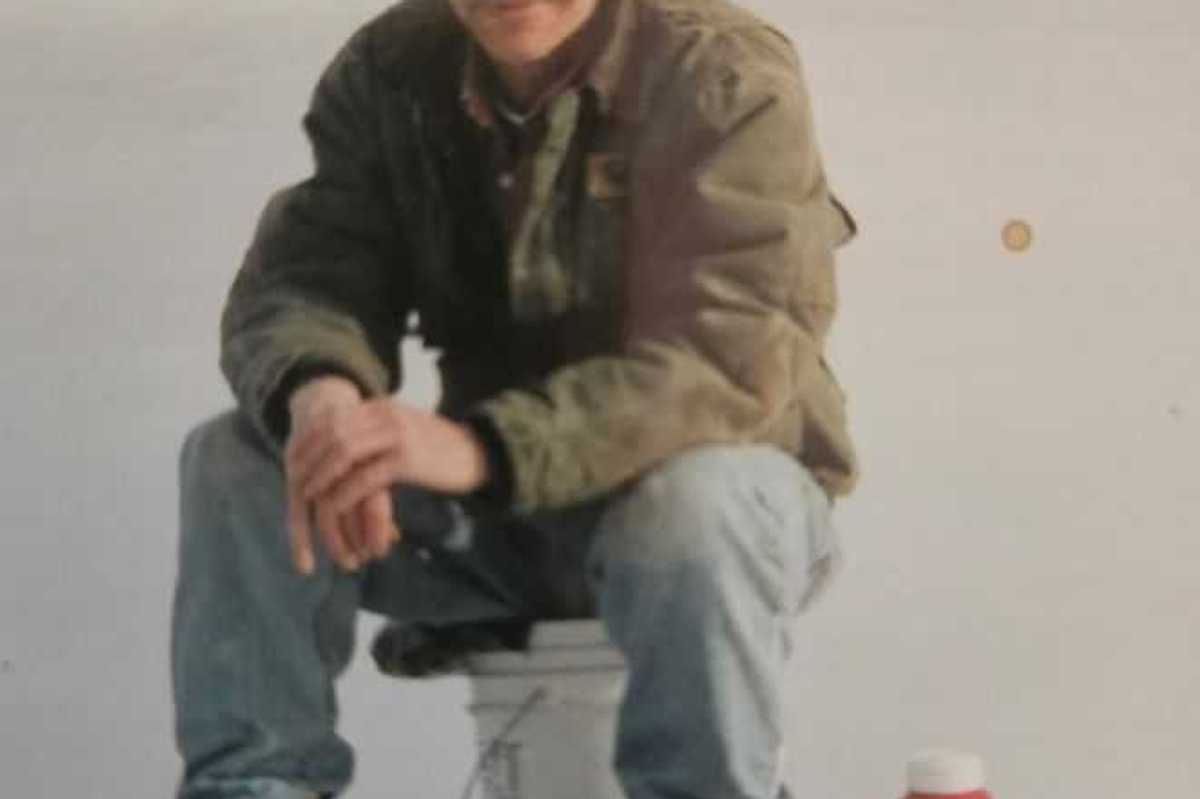
LAKEVILLE — With heavy hearts we are saddened to report that Stephen passed away at Sharon Hospital after a long illness at age 62. He lived in Sharon early on and then resided in Lakeville later in life.
He was an accomplished and well-respected painting contractor. He had a huge heart, was a great friend to everyone (always there to help) and had the quickest wit and greatest sense of humor ever.
He was predeceased by his beloved grandparents, Katherine MacNeil Brandt, his parents Dolores and Robert Brandt, a stepmother Elizabeth (Peg) Brandt, sister Linda and brother David.
He leaves behind his sisters, Debbie Holtman (Dave), Barbara Brandt (Patrick Goff) and Dina Brandt.
He also leaves his two nephews, Jared Holtman (Renae) and Tyler Holtman (Ashley Ganon) as well as a long list of good friends and especially his best cat friend “Cupcake cat.”
In addition to always being the life of the party, he loved to fish, hunt, collect coins and antiques and play Bluegrass music with his musical friends.
He was also a member of the Masonic Lodge No. 13 in Lakeville.
Friends and family are welcome to join a Masonic service at the Montgomery Lodge #13, 41 Sharon Road, Lakeville, CT on FRIDAY AUGUST 28. Service at 6 PM with dinner and music and conversation to follow. Doors will be open at 5:30 PM. ALL WELCOME.
Donations in Stephens’ honor can be made, if you wish to: Salisbury Family Services, PO Box 379, Salisbury, CT 06068 or the Salisbury Volunteer Ambulance Service, PO Box 582, Salisbury, CT 06068.
Keep ReadingShow less
Want more of our stories on Google? Click here to make us a Preferred Source.
loading