Library is a major topic of discussion at last Town Board meeting of 2012

Special to The Millerton NewsPINE PLAINS ­­— During the Town Board meeting on Thursday, Dec. 20, board member Sandra David read a statement on behalf of the board concerning the Pine Plains Free Library.It stated the board needed to address “concern that there may be much public confusion and misunderstanding concerning this situation and [must] clarify the current situation, explain the Town Board’s role, provide information and share our dilemmas with the public.”After getting the nearly 40 people gathered in the Town Hall up-to-speed, the statement noted the Bank of Millbrook, which holds two-thirds of the library’s debt (after merging with the former Stissing National Bank, and in conjunction with Salisbury Bank and Trust, which holds the remaining one-third) has foreclosed on the library. The foreclosure sale is to take place on Jan. 9. The statement continued that the Odd Fellows deed had written into the original contract (the library was built on land donated to the library foundation by the Odd Fellows) that “the Odd Fellows have perpetual and exclusive use of 1,000 square feet of prime space within the building as long as it is used for municipal purposes.” The town, therefore, is trying to learn if it is legal for it to purchase the library building with the Odd Fellows’ contractual reservation.When the library was originally going to be donated to the town, Attorney to the Town Warren Replansky confirmed with both the Association of Towns and the State Comptroller’s Office that this reservation would not pose any problem to the town’s acquisition of the building. Now that the town is looking at the possibility of purchasing the building, the board has been advised if it tries to acquire the building, a reservation of rights could present a challenge.The second question the town must answer is whether it can justify buying the library building for use as a library and other municipal purposes if some of the space cannot be utilized.The statement read by David continued to address this question.“After reviewing this matter with its town attorney, town accountant and town engineer, the Town Board has concluded that it could not justify the purchase of this building unless the entire building could be used by the town. As a result, the Bank of Millbrook has been advised the first condition of any purchase of this building [by the town] would be the legal renouncing of any exclusive reservation of rights of the Odd Fellows to use a portion of the building.”Additionally, “In order to justify the acquisition of this building, we must consider how to make the building usable for library and municipal purposes. The Town Board is presently conducting its due diligence to determine the feasibility, and the possible cost of retrofitting the building for such uses.”The statement went on to consider the potential impact to taxpayers, including the cost of purchasing the building, legal fees, bonding costs, operational and maintenance costs, as well as the potential cost for retrofitting the building for municipal uses.The town estimated operating and maintenance costs will run about $50,000 annually. The cost to service the $1.5 million debt would be $100,000 annually. The $150,000 increase to the town budget would result in a 15 percent increase in the town’s budget, which is well over the 2 percent tax cap imposed by the state. The 15 percent increase would raise taxes $150 per $100,000 of assessed value of a given property. The statement said if the town is able to reduce the purchase price, sell other municipal buildings (i.e. the current Town Hall or the former library) and/or fundraise, it should be able to chop away at the tax hike. In all likelihood, the scenario will be put on the ballot, board members agreed.During public comment, a number of residents spoke out.Doug Cramer asked if “the Town Board had given any consideration to alternate locations for the library in the advent that the town is unable to negotiate a reasonable solution with the bank?”Town Supervisor Brian Coons said yes. “Despite the fact we don’t like the size of it, we would move back to the old library. That is our number one choice,” he said, “even though we don’t like it.”Linda Wisdo asked “What happens on Jan. 9 with all the books? Have we been looking at the cost to the town to renovate and operate the old building compared to the new?”“The town has been looking at those figures and comparing them, as well as looking at the relative space issues,” Coons said.Wisdo followed up, asking, “On Jan. 9, do we have to be prepared to go over with wheelbarrows to help move the library out?”Replansky indicated from his discussions with the bank’s attorney “in all likelihood the bank will own the building after Jan. 9, and the bank has indicated that it may evict, but we have anticipated that problem.”George Whalen, president of the Bank of Millbrook, addressed the Town Board and those in attendance.He delivered to the Town Board a letter from the bank regarding the history of the situation and where the bank currently stands on this issue. “One of the frustrations is the lack of communication and dialogue with the town. Frankly the town has not acted like it wants the building. We [the bank] have made attempts at talking but have heard nothing back,” Whalen said. “Unfortunately on Jan. 9, we will have to go forward with the foreclosure unless we have a dialogue between now and then and we feel that we are close. If we are miles apart then we will go forward with the foreclosure sale and more than likely we will be the owners of the building unless someone outbids us.” Whalen said the bank is not interested in a lease, but is willing to stall the foreclosure “if there can be a dialogue that would indicate that we could come to terms on the price of the property.” He added if the bank had to evict, “it wouldn’t be that day.” Notice would be given and the library would be given “days or weeks, but not months.”Cramer spoke again, and asked if anyone knew who might be interested in buying that building.” He added the bank should consider donating the building and if not “perhaps we [its customers] should take our business somewhere else.”Whalen responded. “It’s your choice if you chose to continue to use the services offered by the bank,” adding “the bank has an obligation to its shareholders,” as, “it’s not our money to lend out.” He added the bank has not gone looking for potential buyers since it had hoped the town would buy the library. Whalen also noted the library was recently appraised at $1,450,000.“It’s a community building now, you [the town] are the logical buyers, but if you don’t want it that’s OK,” he said.Coons concluded the evening’s discussion on the matter reviewing what the town has been doing and indicating that the town has been speaking with other parties, but that now “the town is ready to talk to the bank” in hopes of reaching a resolution.

Latest News

Living art takes center stage in the Berkshires

Contemporary chamber musicians, HUB, performing at The Clark.

D.H. Callahan

Northwestern Massachusetts may sometimes feel remote, but last weekend it felt like the center of the contemporary art world.

Within 15 miles of each other, MASS MoCA in North Adams and the Clark Art Institute in Williamstown showcased not only their renowned historic collections, but an impressive range of living artists pushing boundaries in technology, identity and sound.

Keep ReadingShow less
Persistently amplifying women’s voices

Francesca Donner, founder and editor of The Persistent. Subscribe at thepersistent.com.

Aly Morrissey

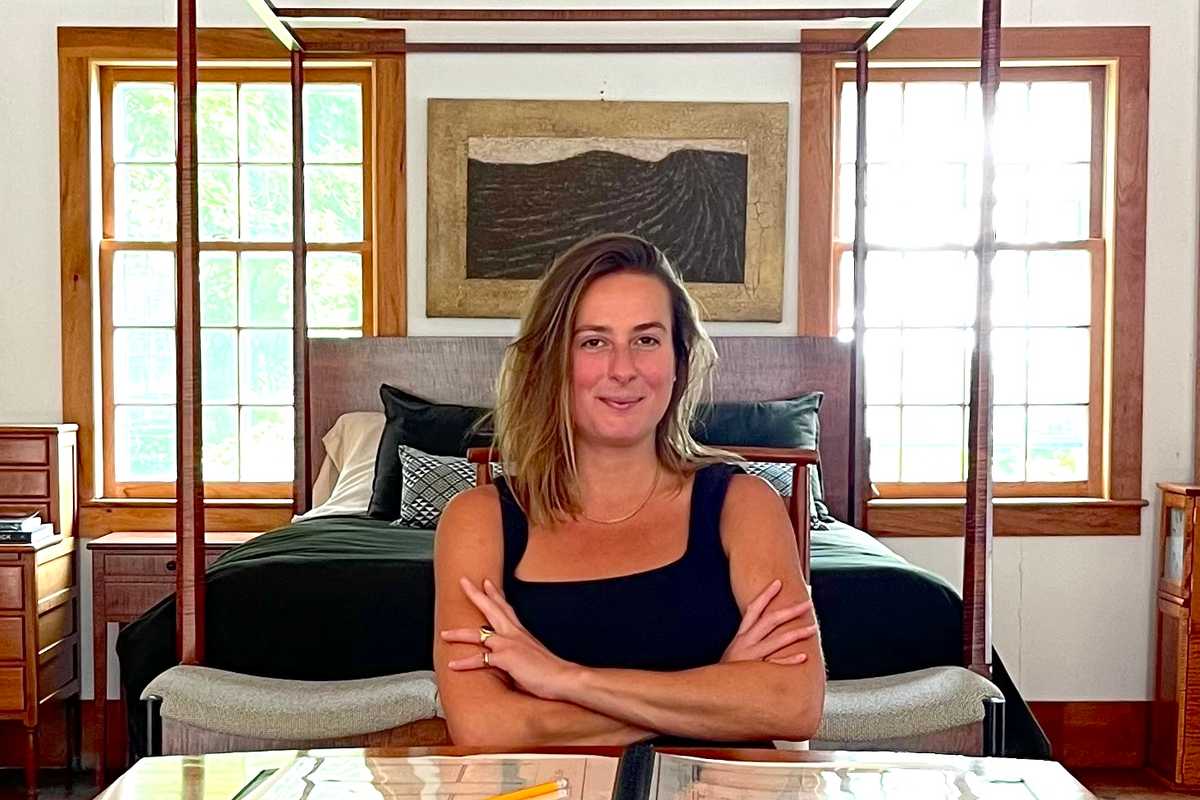
Francesca Donner pours a cup of tea in the cozy library of Troutbeck’s Manor House in Amenia, likely a habit she picked up during her formative years in the United Kingdom. Flanked by old books and a roaring fire, Donner feels at home in the quiet room, where she spends much of her time working as founder, editor and CEO of The Persistent, a journalism platform created to amplify women’s voices.

Although her parents are American and she spent her earliest years in New York City and Litchfield County — even attending Washington Montessori School as a preschooler — Donner moved to England at around five years old and completed most of her education there. Her accent still bears the imprint of what she describes as a traditional English schooling.

Keep ReadingShow less
Jarrett Porter on the enduring power of Schubert’s ‘Winterreise’
Baritone Jarrett Porter to perform Schubert’s “Winterreise”
Tim Gersten

On March 7, Berkshire Opera Festival will bring “Winterreise” to Studio E at Tanglewood’s Linde Center for Music and Learning, with baritone Jarrett Porter and BOF Artistic Director and pianist Brian Garman performing Franz Schubert’s haunting 24-song setting of poems by Wilhelm Müller.

A rejected lover. A frozen landscape. A mind unraveling in real time. Nearly 200 years after its premiere, “Winterreise” remains unnervingly current in its psychological portrait of isolation, heartbreak and existential drift.

Keep ReadingShow less
google preferred source

Want more of our stories on Google? Click here to make us a Preferred Source.
A grand finale for Crescendo’s 22nd season

Christine Gevert, artistic director, brings together international and local musicians for a season of rare works.

Stephen Potter

Crescendo, the Lakeville-based nonprofit specializing in early and rarely performed classical music, will close its 22nd season with a slate of spring concerts featuring international performers, local musicians and works by pioneering composers from the Baroque era to the 20th century.

Christine Gevert, the organization’s artistic director, has gathered international vocal and instrumental talent, blending it with local voices to provide Berkshire audiences with rare musical treats.

Keep ReadingShow less

Leopold Week honors land and legacy

Leopold Week honors land and legacy

Aldo Leopold in 1942, seated at his desk examining a gray partridge specimen.

Robert C. Oetking

In his 1949 seminal work, “A Sand County Almanac,” Aldo Leopold, regarded by many conservationists as the father of wildlife ecology and modern conservation, wrote, “There are some who can live without wild things and some who cannot.” Leopold was a forester, philosopher, conservationist, educator, writer and outdoor enthusiast.

Originally published by Oxford University Press, “A Sand County Almanac” has sold 2 million copies and been translated into 15 languages. On Sunday, March 8, from 3 to 5 p.m. in the Great Hall of the Norfolk Library, the public is invited to a community reading of selections from the book followed by a moderated discussion with Steve Dunsky, director of “Green Fire,” an Emmy Award-winning documentary film exploring the origins of Leopold’s “land ethic.” Similar reading events take place each year across the country during “Leopold Week” in early March. Planning for this Litchfield County reading began when the Norfolk Library received a grant from the Aldo Leopold Foundation, which provided copies of “A Sand County Almanac” to distribute during the event.

Keep ReadingShow less

Erica Child Prud’homme

Erica Child Prud’homme

WEST CORNWALL — Erica Child Prud’homme died peacefully in her sleep on Jan. 9, 2026, at home in West Cornwall, Connecticut, at 93.

Erica was born on April 27, 1932, in Doylestown, Pennsylvania, the eldest of three children of Charles and Fredericka Child. With her siblings Rachel and Jonathan, Erica was raised in Lumberville, a town in the creative enclave of Bucks County where she began to sketch and paint as a child.

Keep ReadingShow less
google preferred source

Want more of our stories on Google? Click here to make us a Preferred Source.
google preferred source

Want more of our stories on Google? Click here to make us a Preferred Source.