Here we go again. The daily drumbeat of disclosures about supposed misdeeds of Iran is ominously similar to the neocon campaign that inflicted the nightmare of the Iraq war upon the world. It may be that Iran has supplied some weapons used against us. But does no one recall the poison gas and intelligence information we supplied to Saddam Hussein over his eight-year war against Iran? Double standard. If President Bush contrives to use this to justify a direct conflict with Iran, he will deserve impeachment and Vice President Cheney with him.
We must get out of Iraq, the sooner the better. Until now I had thought that we needed to keep forces there to attain some sort of order until we could persuade others to join in responsibility through the United Nations. Now I am convinced that the "surge" in our troop strength will not bring "victory," and that the problem will grow worse the longer our troops are there. If our withdrawal is followed by a bloodbath — well, there is a bloodbath now that we seem unable to halt.
u u u
There were a good many home truths in what Vladimir Putin said the other day about the role of the United States in world affairs. Recent Russian actions have left Mr. Putin with quite a few warts of his own, but that is not the point. He was quite right in his complaint about our excessive readiness to use military force unilaterally. And he also had a valid objection to our efforts to obtain military bases and seek alliances with countries around the Russian periphery — some of them former constituent members of the Soviet Union.
It started with the expansion of NATO. The extension of the western alliance to include Poland, the Czech Republic and Hungary seemed to have a point because before World War II they had been essentially western in orientation. But the inclusion of the Baltic countries over Russian objections was a needless poke in the eye; there were other ways to assure their security. The extension to Bulgaria, Romania, Slovakia and Slovenia looked from the Kremlin like a deliberate effort to wall out Russia.
This process was started, it must be added, during the Clinton presidency and must be counted as a regrettable mistake that played upon Russian paranoia. More recently the Bush administration’s infatuation with inculcating democracy has overlooked some pretty despotic regimes in South Asia that we have cultivated as potential allies. No wonder Mr. Putin feels surrounded by an American colossus.
u u u
It has been a long time since Supreme Court Justice Oliver Wendell Holmes told a visitor: "I like to pay taxes, young man. They’re my investment in civilization." Taxes take a lot larger percentage of income from citizens now than Justice Holmes could have imagined, and the size of government at all levels must seem like a herd or pod of dinosaurs. But the point about taxes civilization is still valid.
In recent years there has been a concerted effort to make all taxation seem evil. President Bush has consistently focused on cutting taxes, especially those that affect the wealthy. Of course the real criterion is not the percentage of tax — at least within a reasonable limit — but what citizens get for the taxes they pay.
In Scandinavian countries citizens pay high taxes, sometimes approaching 50 percent of their income — but they have a lifestyle in which there are few if any really poor people, the highest income is perhaps 10 times the lowest by comparison to a thousand or more times in this country, cradle-to-grave health coverage and retirement care are guaranteed, higher education based on merit is free, there is government support for the arts and so on.
That is not going to happen here anytime soon. But it is refreshing to have the destructive view of taxation challenged — especially by the Republican governor of Connecticut. Gov. Jodi Rell has proposed a 1⁄2 of 1 percent increase in the state income tax to help pay for a $3.4 billion program of increased aid to education over five years. The program is designed to have the state paying half the costs of education at the end of that period, with local governments paying the other half.
The most aid would go to the places of greatest need — the larger cities. Towns in the Northwest Corner would receive modest boosts in state education funding except for North Canaan, where the need is proportionally larger. That is only fair as a contribution to the quality of life in the state as a whole. Most Northwest Corner towns have benefited substantially from the increases in the grand list brought about by increased real estate valuations.
Critics of course have found fault with parts of the governor’s proposal. Elimination of the local property tax on automobiles may not be the best idea in view of other needs. Likewise, elimination of the estate tax as a means of keeping wealthier residents in the state is a questionable lever; if they choose to move out of the state, it likely will be for other reasons than the estate tax. That tax, incidentally, is an important factor in encouraging contributions that help sustain music and other cultural activities as well as charitable causes in general.
But in the net the new approach is much to be welcomed. So have at it, Governor!
u u u
Probably not many residents of the New York state snow belt near Lake Ontario are complaining about global warming. Yet paradoxically the climate changes associated with global warming may well be part of the reason why the swing of the jet stream has caused so much snow to be dumped on our long-suffering neighbors. Indeed, those changes may also partly explain our own topsy-turvy winter.
In any case, I have some little understanding of what it must be like to move about the inundated communities. Thirty-five years ago I was invited to give a talk about the United Nations at a Canadian armed forces base near Chicoutimi, Quebec. As I remember, the snow on the ground was said to total 12 feet, and the roads were canyons. At each intersection it was necessary for drivers to stop and get out to ascertain that no cars were approaching in the cross street. But our Canadian friends endured the snow in good humor because they were used to it. Let’s hope global warming will give us enough time to make similar adjustments in our own attitudes.
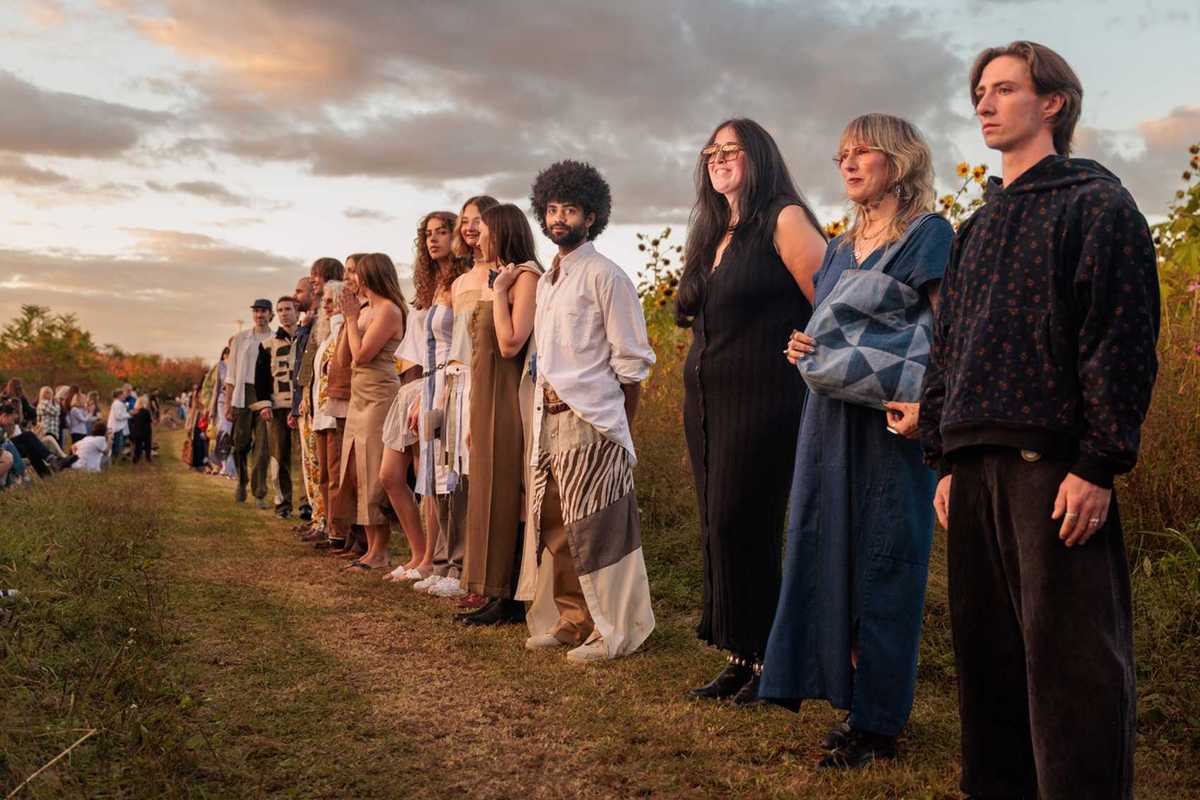
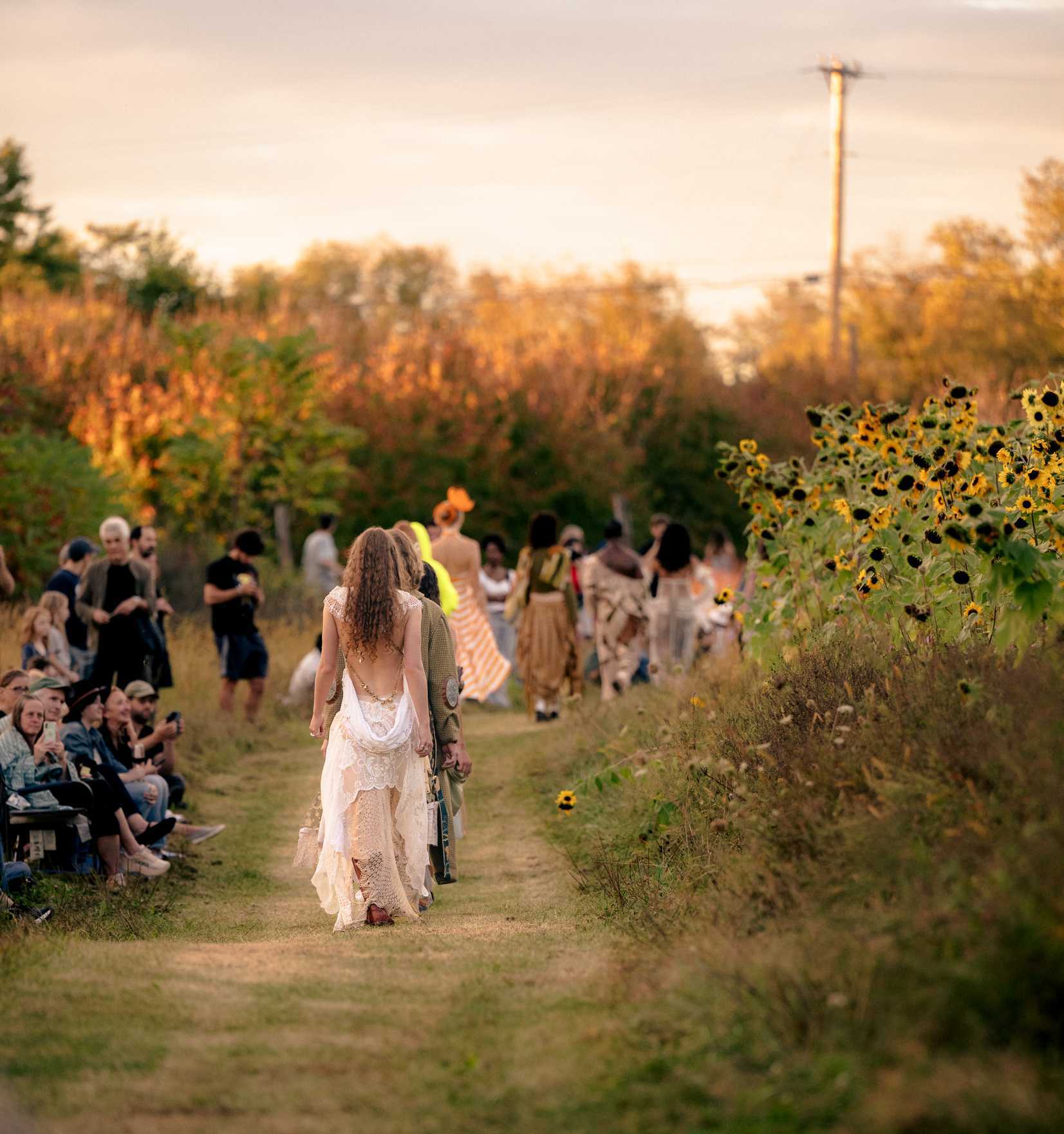 Models walk the organic runway at HVSFW. Ilan Harel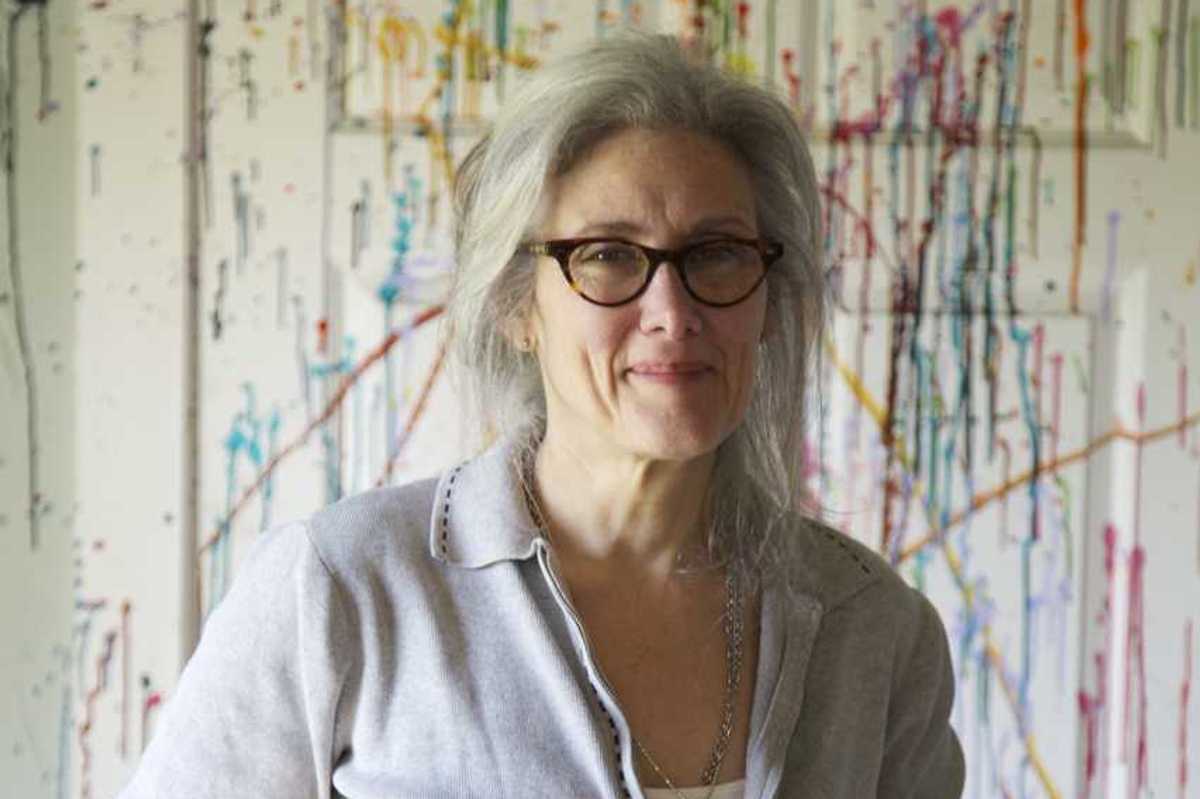
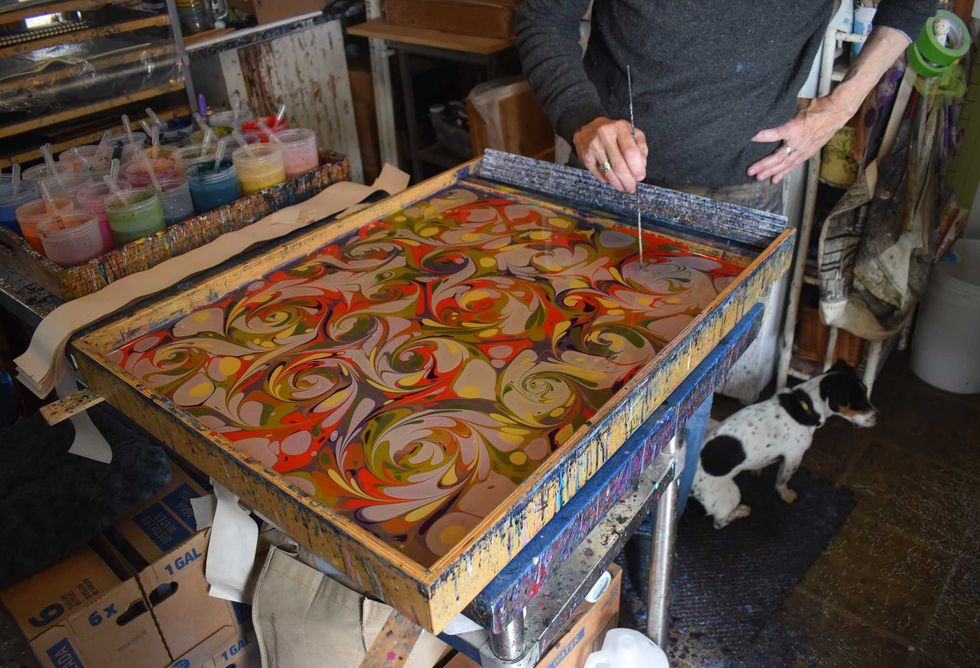 Susan Schneider, owner of Shandell’s, creates a variety of products with marbleized surfaces in her Ashley Falls studio.L. Tomaino

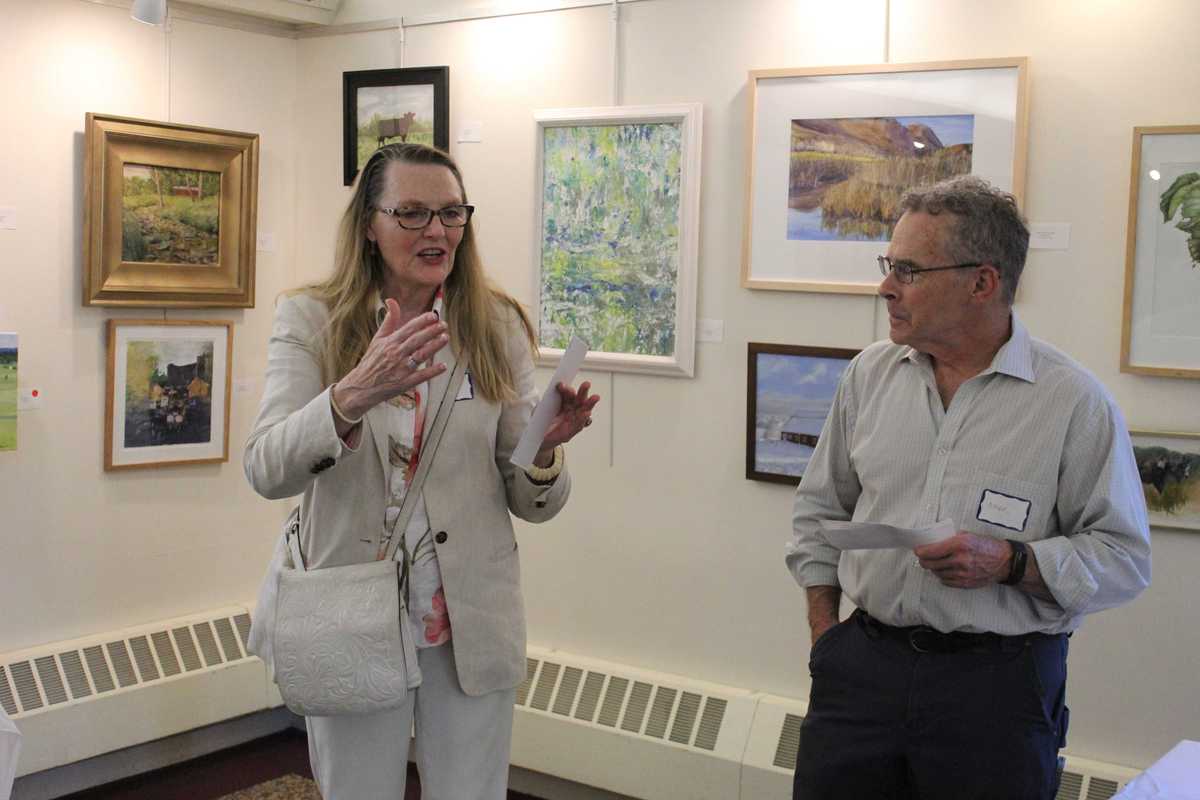
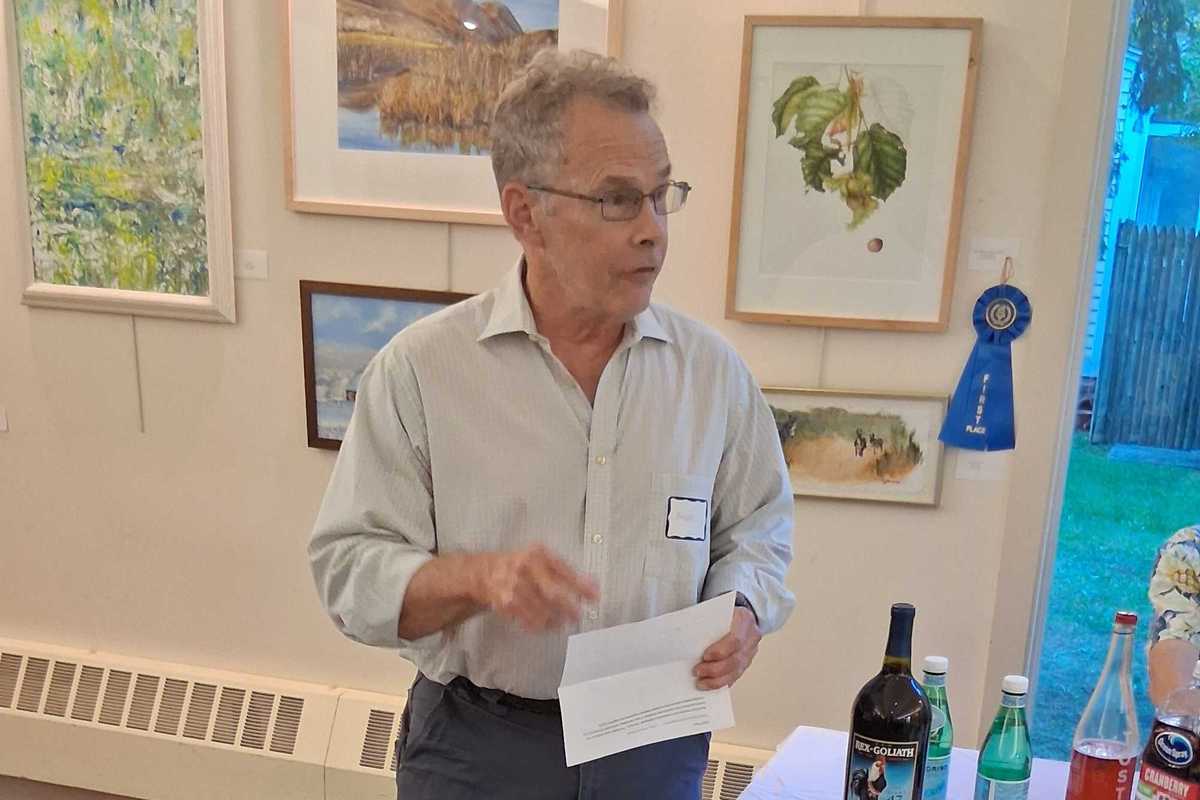 Roger McKee naming the winners with the first place entry over his left shoulder. Patrick L. Sullivan
 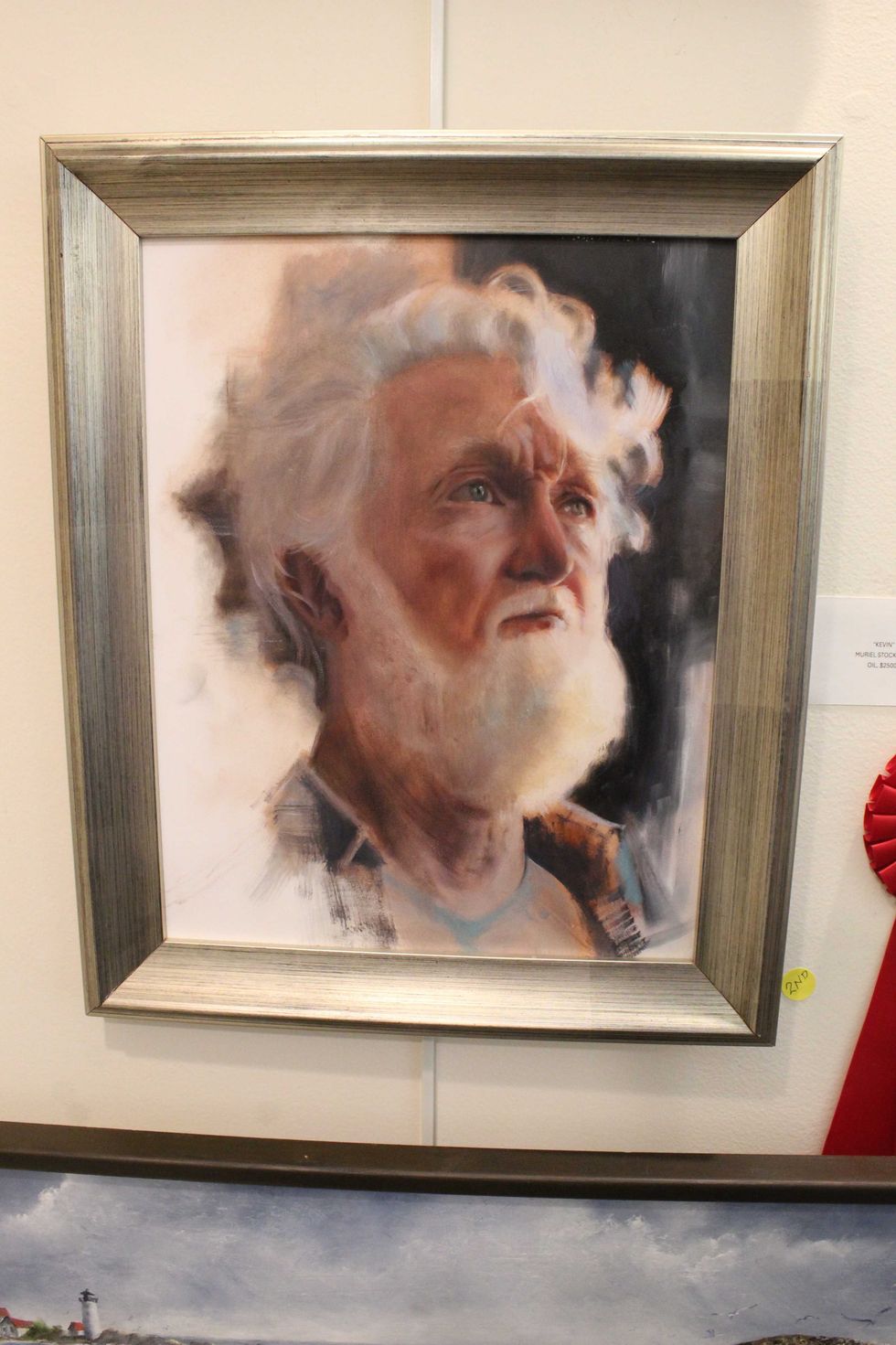 Muriel Stockdale’s “Kevin” took second place in the juried art show at Trinity Episcopal Church.Patrick L. Sullivan