KENT — Delano Williams and Nino Hernandez spend their summers researching media, film and broadcasting programs at high schools throughout the country. It’s not because they’re looking to transfer — the two high school juniors just want to make sure that their program at South Kent School is still the only one of its kind.
Williams and Hernandez are the president and vice president, respectively, of the Advanced Media Group at South Kent. The program, which has thrived under the guidance of director Gonzalo “Gonzo†Garcia-Pedroso (who is also the school’s dean of student affairs and director of technology), began as more of a film appreciation class. It has morphed over the years into an innovative media collective focusing on live broadcasting, digital editing and software development.
The program got its start when the media class started taping school sporting events. They would tape the games and matches, edit the footage, and distribute DVDs to students, parents and college recruiters.
The group, which has a home in the former boiler room in a campus building known as the Old Building, then found a way to broadcast the games live through the Internet.
Garcia-Pedroso is quick to name the date of the first broadcast, which he has memorized: Sept. 13, 2007.
The broadcasts allow anyone who can’t make it to the games in person to watch them as they are happening. South Kent’s director of communications, Mark Berghold, recalled one especially thankful parent who was overjoyed that her 97-year-old father was able to watch his grandson play in a football game.
It used to be that games could only be transmitted if they were played at a site with easy access to a cable hook-up. Thanks to new wireless technology, the students can now transmit the games from any stadium, rink or field.
Another obstacle that has recently been overcome is the Advanced Media Group’s mode of transportation.
The group used to broadcast out of an old school bus that they would park outside the events. The bus was deemed unfit for road travel and was required to stay on the South Kent campus. A large donation in the summer of 2010 allowed the group to buy a large van that will not only house the broadcasting equipment, but will also allow the group to travel to away games.
Last summer’s donation also allowed for the purchase of a scissor lift, which can raise a cameraman high above the action, and two new professional-grade cameras, tripods, a generator and digital editing software.
“Getting this donation felt like winning the lottery,†Garcia-Pedroso said.
Students are responsible for all aspects of production, from camerawork, live commentary, broadcasting, editing and producing.
Older students also get to take on a teaching role, helping new additions to the group learn the craft.
“We’ve learned a lot of leadership and responsibility. Some students may not be able to grasp the material, so there’s a lot of helping other students,†Williams said.
Some of the members of the group say they have always had an interest in media and technology, while others are looking for an opportunity to experience something they’ve never tried before.
“The Advanced Media Group was something new to the school. I joined because I found it interesting. It’s something different, and I took a liking to it,†Hernandez said.
While similar programs have begun to sprout up across the country, there are none quite like the one at South Kent. The group has even been approached by other schools for help in setting up media programs of their own.
“No one has topped us yet,†Hernandez said.
Broadcasts can be watched on the school’s website, southkentschool.org.
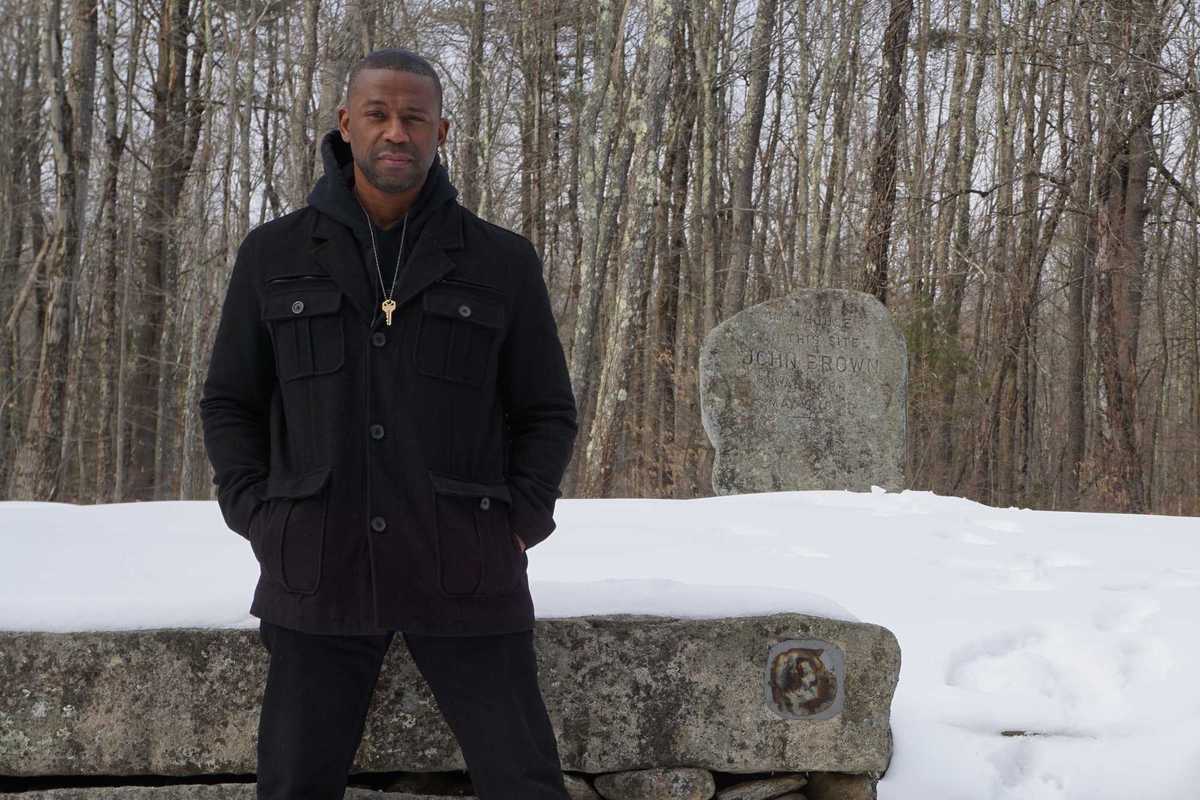
 Pay Bill for Robin Starr’s service in the Continental Army.Courtesy the Alex Breanne Corporation
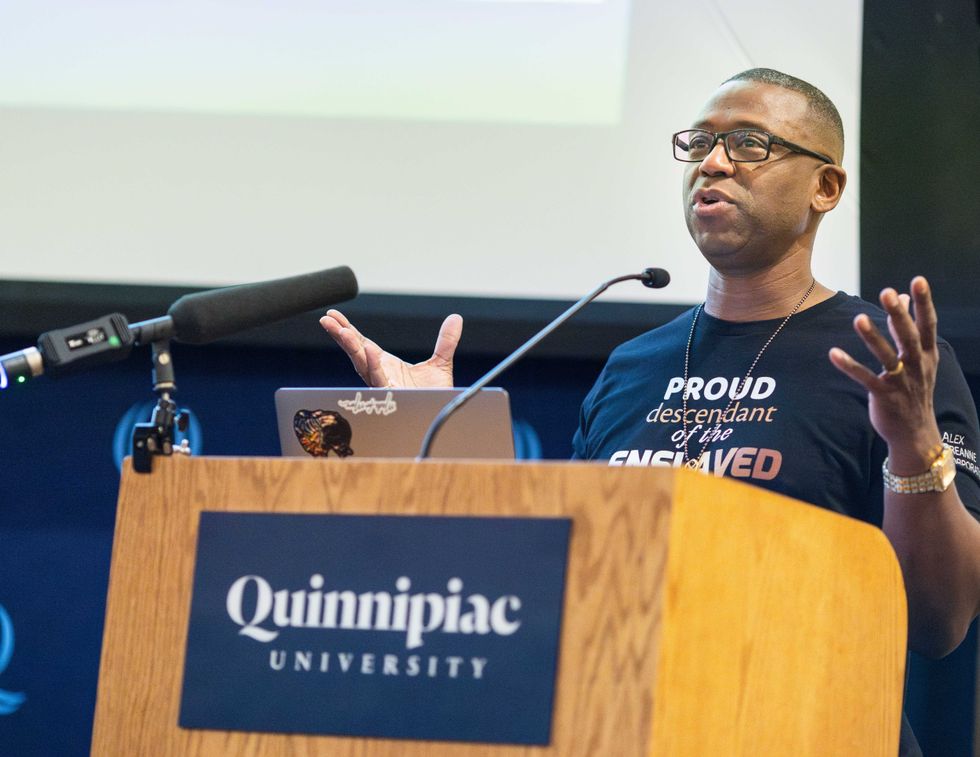 John Mills speaking at Quinnipiac University.Courtesy the Alex Breanne Corporation
 Stephanie Saetta,with her rescue dog George and Blue (left), a shepherd mix awaiting his forever home.Madi Long
 Blue, a 7 year-old Shepard mix, is waiting for his forever home. Madi Long