The real path to triumph in the war on terrorism

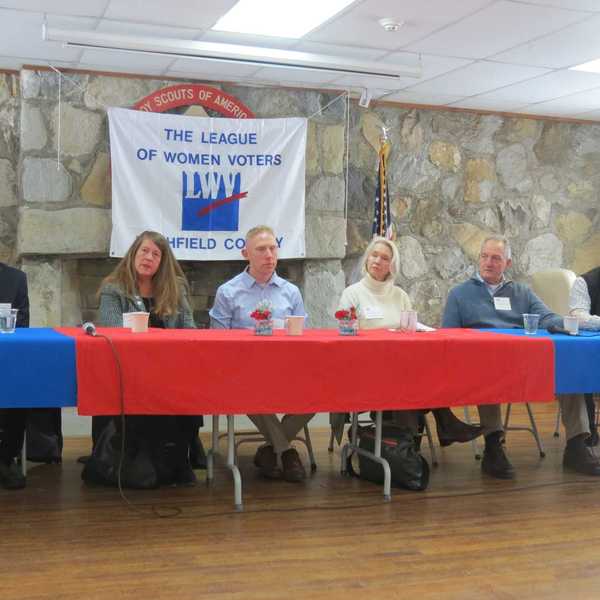
I have just finished reading Eric Schmitt’s and Thom Shanker’s new “Counter Strike: The Untold Story of America’s Secret Campaign against al-Qaeda,” a worthy book in every way. But no, I am not going to write a book review.Rather, I wish to discuss something far more important. The authors interviewed the Obama administration’s key counterterrorism players, some of whom started their vital work during the Bush years. Their verdict is unanimous. Every one made clear that we will be hit again by terrorists on our homeland. We have vastly improved our counterterrorism abilities, but even with that we still will be hurt again — somewhere, somehow, some time. For the task simply is too difficult, far too difficult.As Herman Kahn so trenchantly wrote in his famous “On Thermonuclear War” in 1960, “The aggressor has to find only one crucial weakness; the defender has to find all of them, and in advance.” (On account of his coldly brilliant rationality, some have wondered whether Kahn — the most famous nuclear theorist of his day — was the model for Stanley Kubrick’s Dr. Strangelove).All of us should understand already that we are still vulnerable. After all, the “Underwear Bomber,” Umar Farouq Abdulmutallab, who sought to explode the jetliner he was flying in over Detroit on Christmas Day 2009, only failed because the bomb designed by one of al-Qaeda of the Arabian Peninsula’s ace bomb makers did not go off. It was just good luck. And when the young Pakistani American, Faisal Shahzad, parked his SUV filled with fireworks and propane gas in Times Square in May 2010, only his lack of skill in bomb making saved us.But we will not always be so lucky. So what do we do when an attack succeeds? And what if it’s as catastrophic as the destruction of the World Trade Center and partial ruin of the Pentagon, with all those lost lives? Or even more so? Well, we don’t do what we did after 9/11. We don’t torture, we don’t grab people in the dark of night and throw them into an airplane for transport to Egypt or some other country that will torture them; we don’t write the infernal Yoo/Bybee memos to provide laughably inept legal justifications for torture and legal cover for those inflicting it; and we don’t have the CIA operate black sites in Europe to do its own torturing.And our president should not go around fatuously attempting to sound tough. Like this pearl from George W. Bush: “The other day, we hauled in a guy named Abu Zubaydah. He’s one of the top operatives plotting and planning death and destruction in the United States. He’s not plotting and planning anymore. He’s where he belongs.” (For the record, after more than 10 years in detention, Zubaydah has yet to be convicted of any of those things, and well-respected people have expressed grave doubts that he ever could be.) No, we will not try to sound like pathetically fake cowboys.What we will need to do is to be resilient. Like the Israelis and the Brits, when they have suffered attacks. For if we are not, and if we return to the excesses of the Bush years, we will have given up the best part of ourselves: the part that insists that we are too strong, too resolute and, yes, too resilient to fall into that abyss again. We are not the same as those killers. For if we get to be the same as they are, the terrorists truly will have won, and we will have lost — perhaps irredeemably.I wish all the presidential candidates would read “Counter Strike,” if only for this:“America must learn to offer a shrug to terror attack that denies the effect being sought. That should be front and center in every major speech by the nation’s leadership on national security, but it is politically risky, as any president’s opponents will charge that the government is offering an implicit acceptance of inevitable attack.”It certainly makes the strong case against bluster, and for authentic strength. Charles R. Church is an attorney practicing in Salisbury, Conn., who for years has studied Guantanamo Bay detention, torture, habeas corpus and related issues.

Latest News

Living art takes center stage in the Berkshires

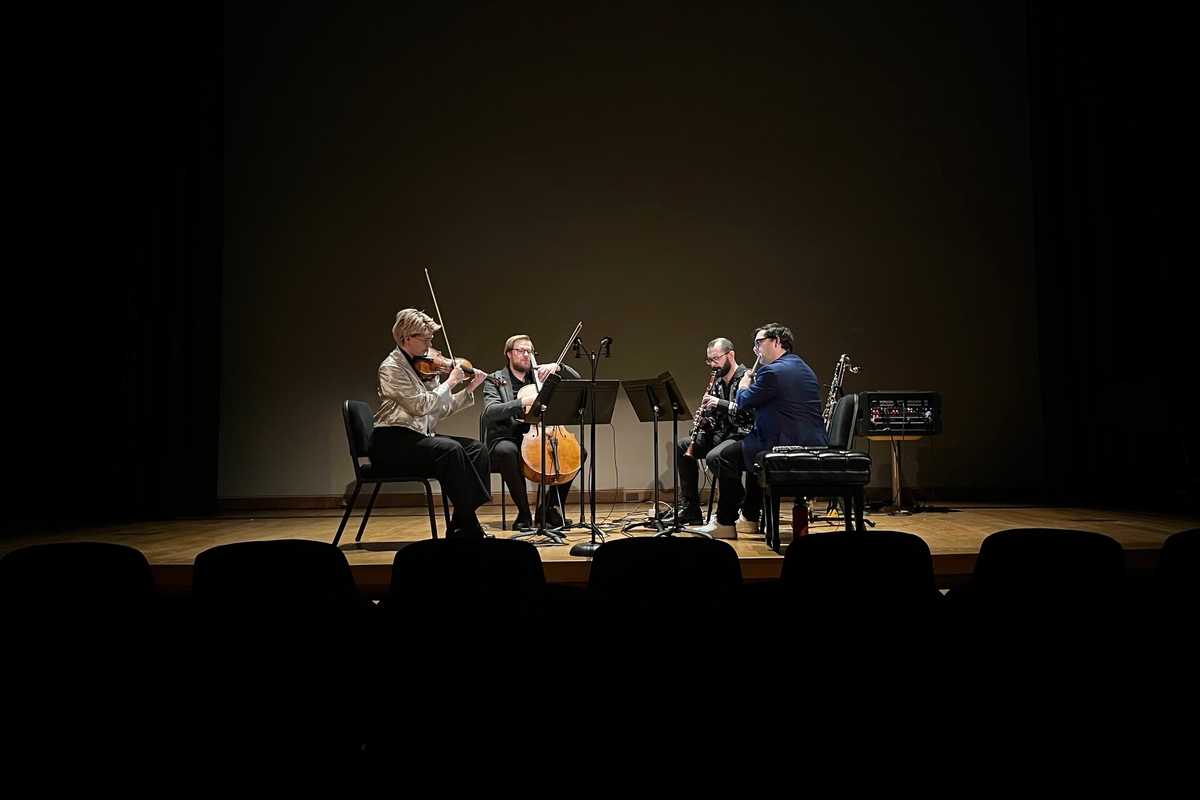
Contemporary chamber musicians, HUB, performing at The Clark.

D.H. Callahan

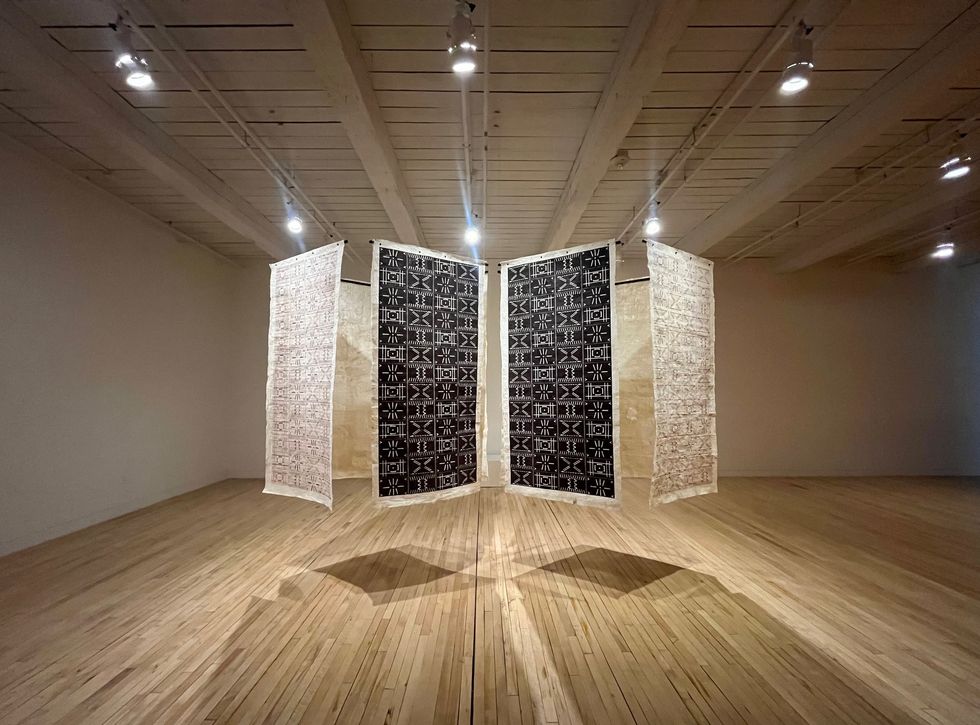
Northwestern Massachusetts may sometimes feel remote, but last weekend it felt like the center of the contemporary art world.

Within 15 miles of each other, MASS MoCA in North Adams and the Clark Art Institute in Williamstown showcased not only their renowned historic collections, but an impressive range of living artists pushing boundaries in technology, identity and sound.

Keep ReadingShow less
Persistently amplifying women’s voices

Francesca Donner, founder and editor of The Persistent. Subscribe at thepersistent.com.

Aly Morrissey

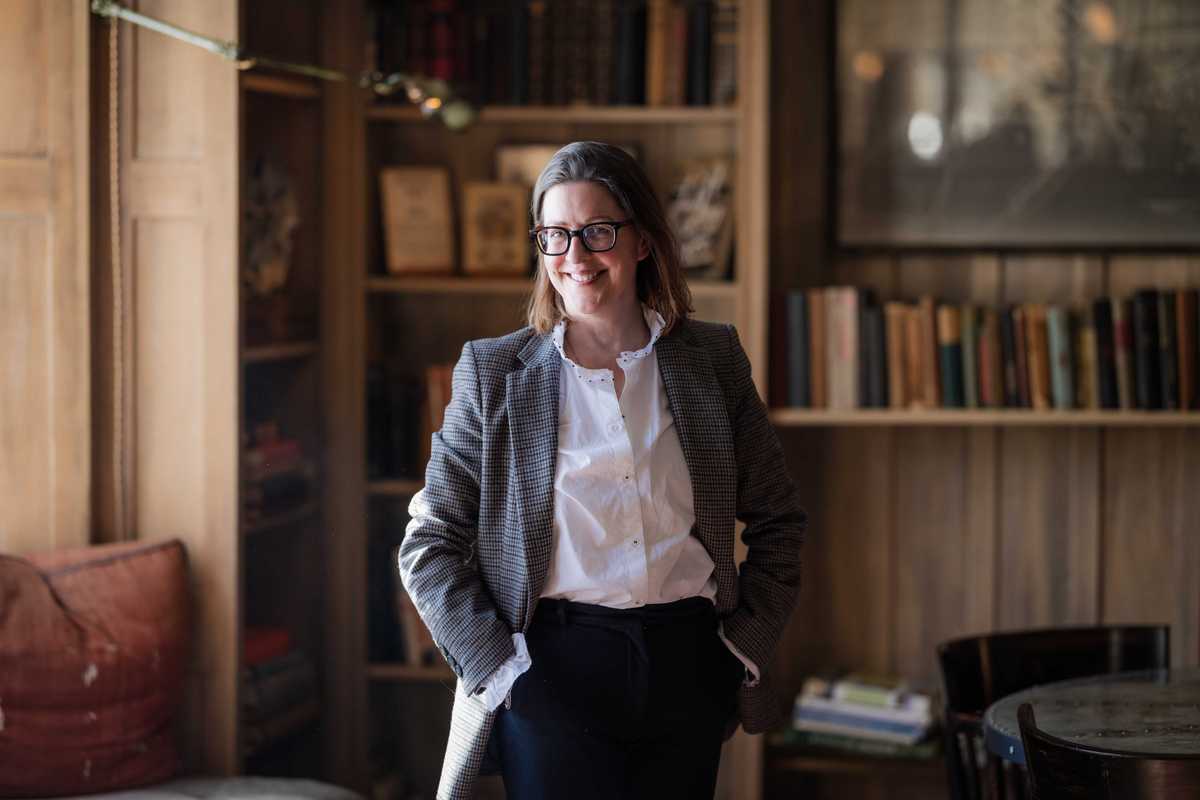
Francesca Donner pours a cup of tea in the cozy library of Troutbeck’s Manor House in Amenia, likely a habit she picked up during her formative years in the United Kingdom. Flanked by old books and a roaring fire, Donner feels at home in the quiet room, where she spends much of her time working as founder, editor and CEO of The Persistent, a journalism platform created to amplify women’s voices.

Although her parents are American and she spent her earliest years in New York City and Litchfield County — even attending Washington Montessori School as a preschooler — Donner moved to England at around five years old and completed most of her education there. Her accent still bears the imprint of what she describes as a traditional English schooling.

Keep ReadingShow less
Jarrett Porter on the enduring power of Schubert’s ‘Winterreise’
Baritone Jarrett Porter to perform Schubert’s “Winterreise”
Tim Gersten

On March 7, Berkshire Opera Festival will bring “Winterreise” to Studio E at Tanglewood’s Linde Center for Music and Learning, with baritone Jarrett Porter and BOF Artistic Director and pianist Brian Garman performing Franz Schubert’s haunting 24-song setting of poems by Wilhelm Müller.

A rejected lover. A frozen landscape. A mind unraveling in real time. Nearly 200 years after its premiere, “Winterreise” remains unnervingly current in its psychological portrait of isolation, heartbreak and existential drift.

Keep ReadingShow less
google preferred source

Want more of our stories on Google? Click here to make us a Preferred Source.
A grand finale for Crescendo’s 22nd season

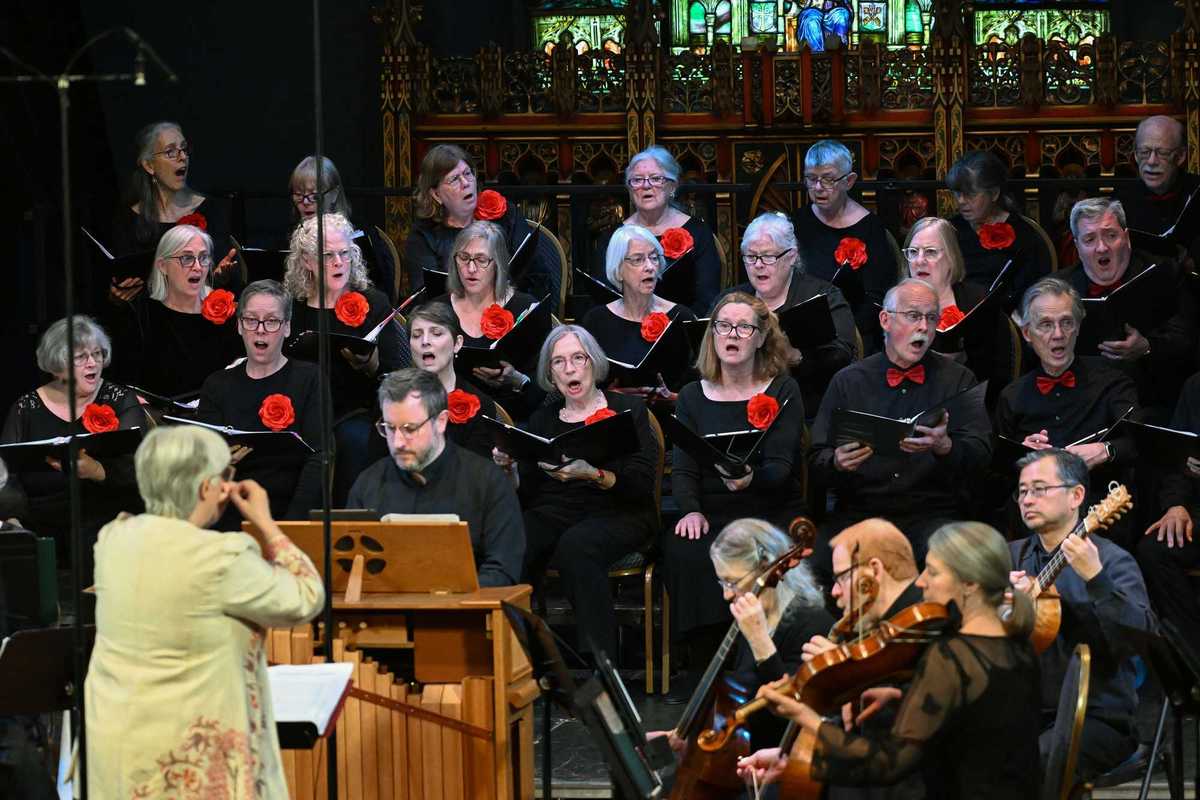
Christine Gevert, artistic director, brings together international and local musicians for a season of rare works.

Stephen Potter

Crescendo, the Lakeville-based nonprofit specializing in early and rarely performed classical music, will close its 22nd season with a slate of spring concerts featuring international performers, local musicians and works by pioneering composers from the Baroque era to the 20th century.

Christine Gevert, the organization’s artistic director, has gathered international vocal and instrumental talent, blending it with local voices to provide Berkshire audiences with rare musical treats.

Keep ReadingShow less

Leopold Week honors land and legacy

Leopold Week honors land and legacy

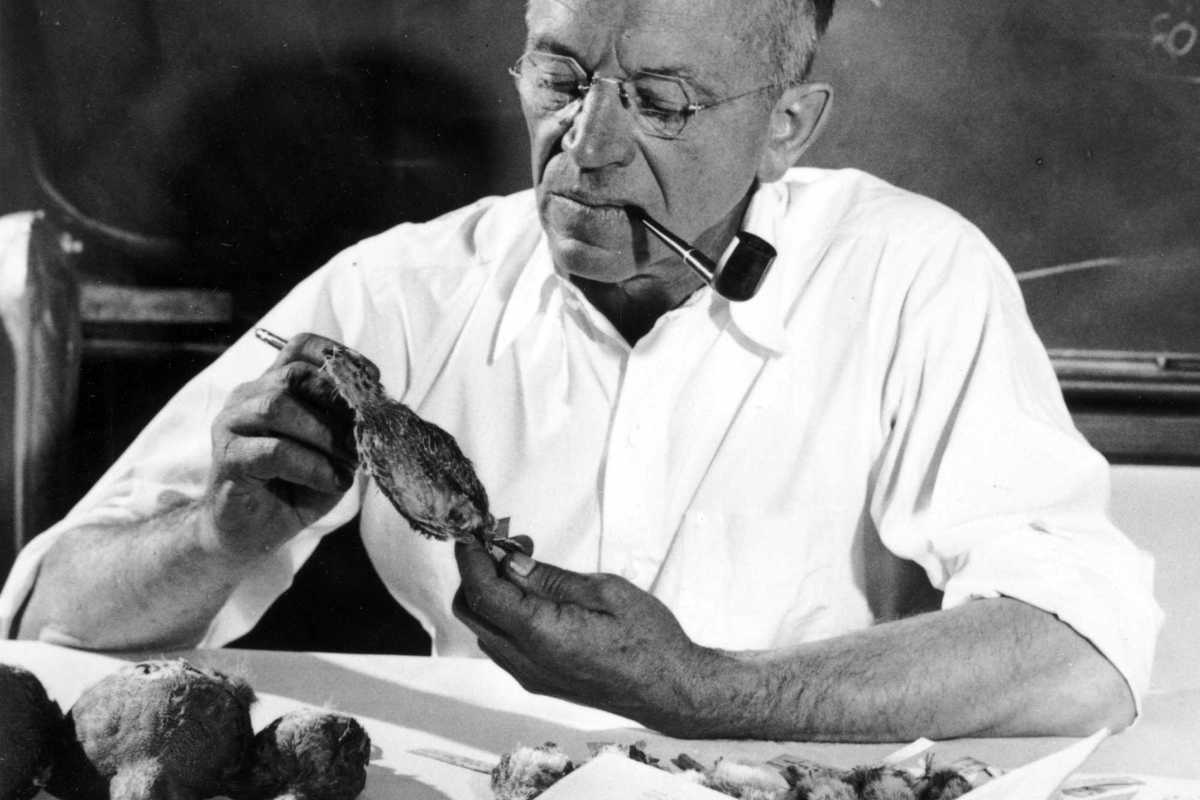
Aldo Leopold in 1942, seated at his desk examining a gray partridge specimen.

Robert C. Oetking

In his 1949 seminal work, “A Sand County Almanac,” Aldo Leopold, regarded by many conservationists as the father of wildlife ecology and modern conservation, wrote, “There are some who can live without wild things and some who cannot.” Leopold was a forester, philosopher, conservationist, educator, writer and outdoor enthusiast.

Originally published by Oxford University Press, “A Sand County Almanac” has sold 2 million copies and been translated into 15 languages. On Sunday, March 8, from 3 to 5 p.m. in the Great Hall of the Norfolk Library, the public is invited to a community reading of selections from the book followed by a moderated discussion with Steve Dunsky, director of “Green Fire,” an Emmy Award-winning documentary film exploring the origins of Leopold’s “land ethic.” Similar reading events take place each year across the country during “Leopold Week” in early March. Planning for this Litchfield County reading began when the Norfolk Library received a grant from the Aldo Leopold Foundation, which provided copies of “A Sand County Almanac” to distribute during the event.

Keep ReadingShow less

Erica Child Prud’homme

Erica Child Prud’homme

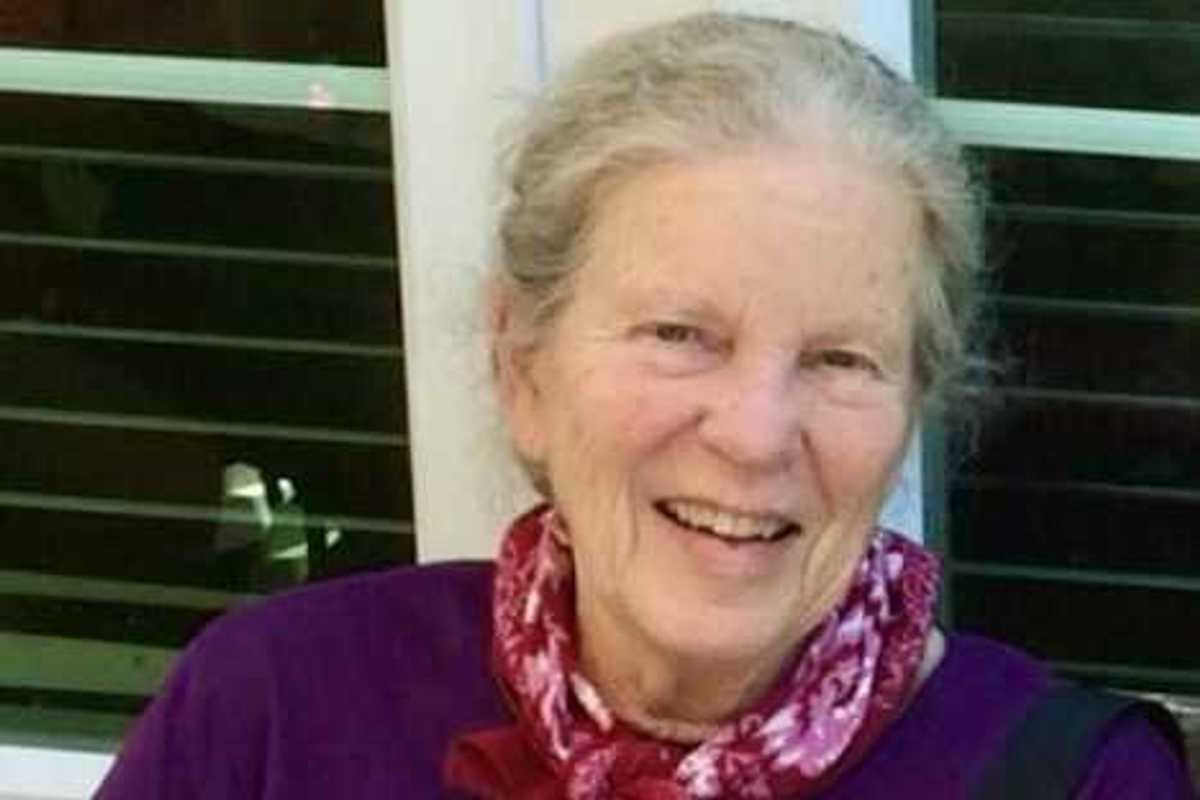
WEST CORNWALL — Erica Child Prud’homme died peacefully in her sleep on Jan. 9, 2026, at home in West Cornwall, Connecticut, at 93.

Erica was born on April 27, 1932, in Doylestown, Pennsylvania, the eldest of three children of Charles and Fredericka Child. With her siblings Rachel and Jonathan, Erica was raised in Lumberville, a town in the creative enclave of Bucks County where she began to sketch and paint as a child.

Keep ReadingShow less
google preferred source

Want more of our stories on Google? Click here to make us a Preferred Source.
google preferred source

Want more of our stories on Google? Click here to make us a Preferred Source.