Thank you!
Your support is sustaining the future of local news in our communities.

Painting pets at Hunt Library

Painting pets at Hunt Library

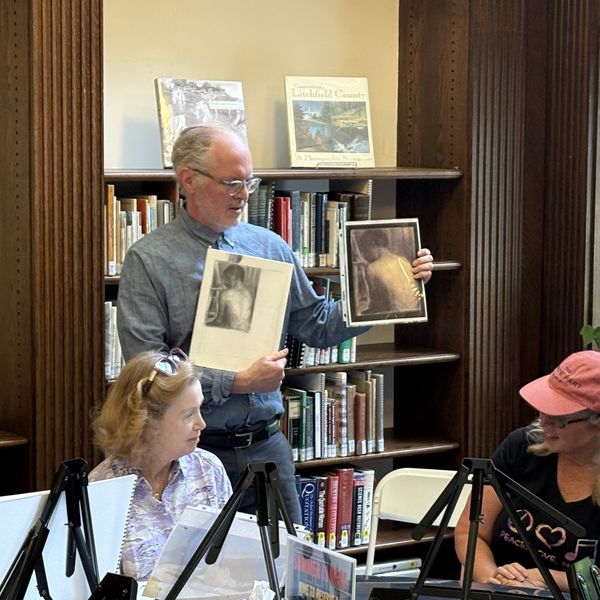
Nancy Roman explained how to trace the image of a pet before making a watercolor portrait.

Patrick L. Sullivan

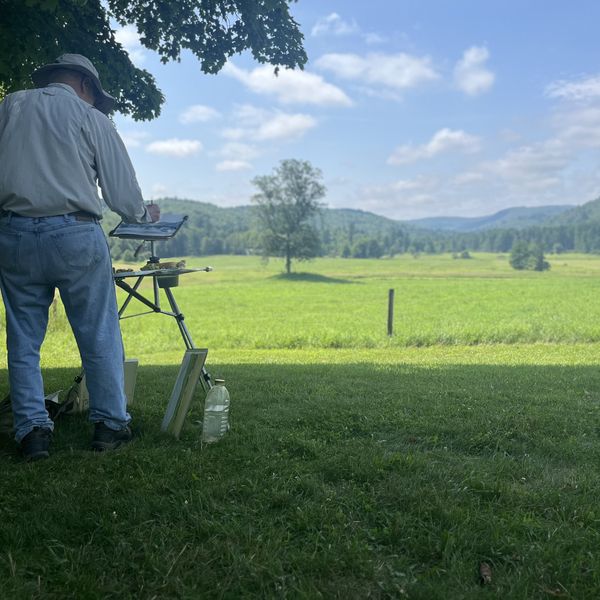
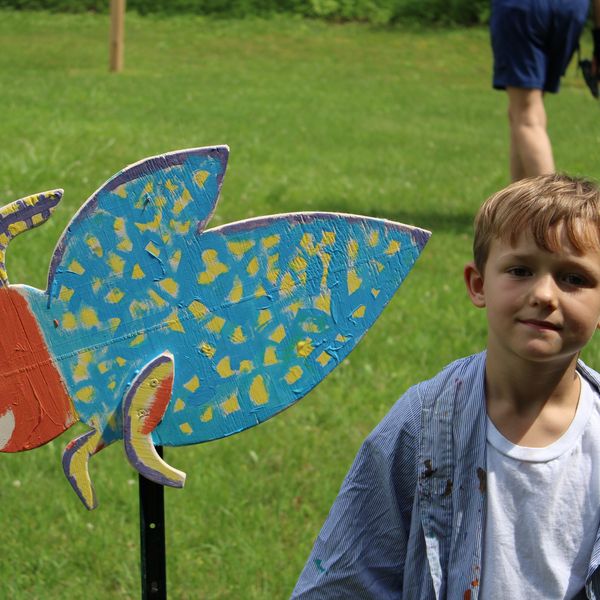
FALLS VILLAGE — Nancy Roman, an artist and educator, led a watercolor workshop at the David M. Hunt Library Saturday morning, Sept. 21.

It was a little unusual, in that the idea was for children (mostly) to work from a photo of their pet to make a watercolor portrait.

Roman, from Litchfield, summed up the process. Starting with a small (say five inches by seven inches) photo, the artists trace the pet’s face from the photo.

Using the tracing, they then create the watercolor.
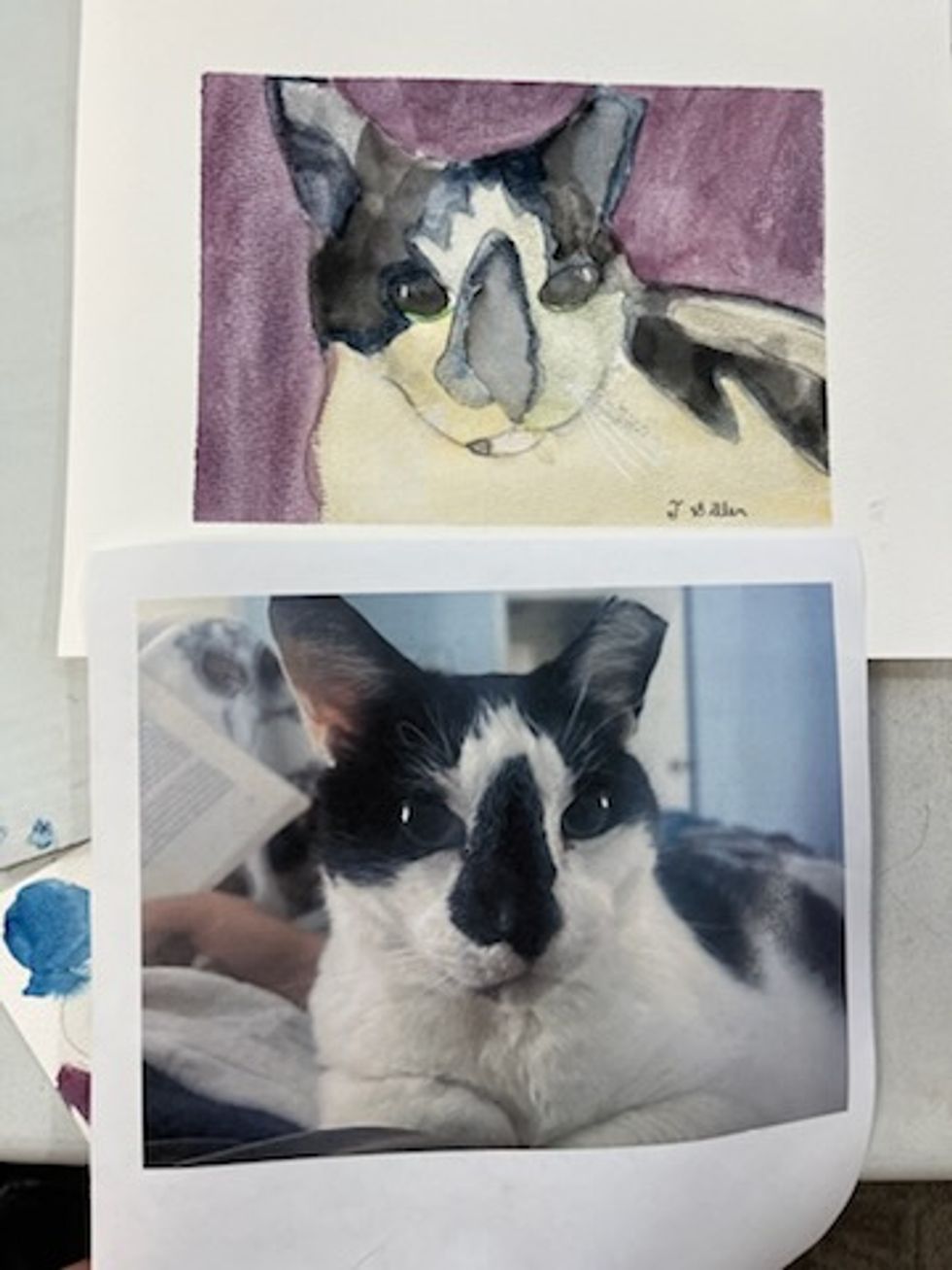
Tzuf Siller of Falls Village came up with this portrait.Patrick L. Sullivan

Roman said she observes closely, offering a tip here, a suggestion there.

But she nevers touches the work in progress.

“That way they do it all themselves.”

The first step was technical. Several of the children and mothers had biggish photos (eight by 10 inches) printed on copier paper, and these needed to be reduced. The Hunt’s Brittany Spear-Baron handled that chore with the library’s copier.

For those who only had electronic images, Spear-Baron printed them out.

The workshop took about 90 minutes, and by the end, everyone had a good result.
Latest News

A rare look inside Connecticut’s Colonial-era homes

The Hollister House, aka Whitbeck Estate, is believed to have been built circa 1780.

Provided

For anyone who has ever stopped to admire an old house and wonder what it looks like inside, HisTOURy’s Colonial Home Tour on June 20 offers a rare opportunity.

The four-hour guided tour will take participants inside four private colonial-era homes in Salisbury and Falls Village while highlighting another 20 historic properties along the route. Presented as part of HisTOURy’s series marking America’s 250th anniversary, the tour explores the architecture and history of northwestern Connecticut’s colonial settlement period.

Keep ReadingShow less
Local garden centers spotlight keystone plants

Eric Mendelson, owner of Salisbury Garden Center, stands with a selection of keystone native plants now available through a partnership with Homegrown National Park.

Michelle Alfandari

The Ungardener from May 13 was about a specific group of native plants called keystone plants. These are the ecosystem workhorses of our environment; they are essential to the survival of many animals that rely on them for food. Nutrition in this case includes, but goes beyond, nuts and pollen. It is the leaves of keystone native plants that make them superheroes. These leaves are essential to the survival of butterfly and moth caterpillars that, in their larval state, will eat only the leaves of very specific native plants.

And in this case, eating leaves is a good thing because caterpillars are relied upon by birds to feed their hatchlings. A single baby bird will be fed approximately 3,000 caterpillars from hatching to fledging; for most species, caterpillars are the sole source of food until they leave the nest. As native plants decrease, which they rapidly are, so do the numbers of caterpillars that rely on them. And as caterpillars decrease, so do the numbers of birds that rely on them.

Keep ReadingShow less
Books & Blooms returns with gardens, poetry and a summer evening party

A Cornwall garden featured on the Books & Blooms self-guided tour.

Provided

One of Cornwall’s most anticipated summer traditions returns June 20 and 21 when the Cornwall Library presents the 11th annual Books & Blooms, a two-day celebration of gardens, literature and community.

Part garden tour, part literary event and part neighborhood gathering, Books & Blooms begins Friday evening with a talk by acclaimed editor, poet and author Jonathan Galassi at Cornwall Town Hall. Galassi, former president and publisher of Farrar, Straus and Giroux and one of the most influential figures in American publishing, will speak on “Writing about Place and Living with a Garden.”

Keep ReadingShow less
google preferred source

Want more of our stories on Google? Click here to make us a Preferred Source.

'Swingtime Canteen'

'Swingtime Canteen'

Swingtime Canteen cast in rehearsal. Left to right, Lucy Rhoades (“Katie”), Claire Marie Spencer (“Topeka”), Michelle Lemon (“Lilly”), Margaret Dudasik (“Marian”), and Sarah Beth Palmer (“Jo”)

Ellie McKissick

The Sharon Playhouse opens its 2026 MainStage season June 19, with “Swingtime Canteen,” a rousing celebration of the songs, spirit and resilience of WWII. Created by Linda Thorsen Bond, William Repicci and Charles Busch, the production features popular hit songs from the 1940’s and is directed by Playhouse Artistic Director Carl Andress, with choreography by Krystyna Resavy and music direction by Eric Thomas Johnson. Runs through July 5. Tickets at sharonplayhouse.org

House of Books Celebrates 50 Years in Kent
Cathy Hoffman Miller, whose parents opened House of Books 50 years ago, holds pictures of her family.
D.H. Callahan

KENT – In 1976, John Miller, a teacher at the Berkshire School, quit his job, moved his family to Kent, Connecticut, and opened up a little book store. Fifty years later, the House of Books is still thriving as a small independent book store, and community hub.

To celebrate the rare feat of small business endurance, the House of Books invited customers, employees, and even a few Appalachian Trail through-hikers to celebrate with gentle jazz guitar, a full spread from beloved local eatery, Swyft, and of course, a whole house of books.

Keep ReadingShow less
North Canaan resident launches online hub linking shoppers with local farms

Ford Farm on Route 44 in East Canaan offers a variety of highway-side farm products.

Alec Linden

NORTH CANAAN – As consumers in the Northwest Corner often piece together groceries from a mix of grocery stores, farm stands and seasonal markets, a North Canaan mother is trying to make shopping a little easier. Sonya Reeve, a mother with a background in technology and sales, said she hopes to ease the interface between local farmers and buyers.

“If you do a two mile loop, you're going to have probably 60% to 70% of your grocery order filled right from your neighbors,” Reeve said. “That's kind of cool.”

Keep ReadingShow less
google preferred source

Want more of our stories on Google? Click here to make us a Preferred Source.

google preferred source

Want more of our stories on Google? Click here to make us a Preferred Source.