Paving the way for more parking in Millerton

MILLERTON — Ask anyone who has ever driven the streets of Millerton and they’re sure to agree — parking is at a premium in the village proper. That’s not to say there aren’t spaces if one is willing to veer off Main Street and do a little bit of walking (take Century Boulevard for example). But when Millerton is at its busiest, even the so-called “secret spots� get filled, leaving drivers with no where to turn.

That’s why Millerton Mayor John Scutieri was so pleased to announce the destruction of a couple of buildings on South Center Street, at the old Peter Woods property, near the town’s highway garage. The work paved the way for the creation of a new parking lot, next to the Harlem Valley Rail Trail — a parking lot that has been years in the making.

“It basically started four or five years ago, when the property was taken by the county because of a tax situation and the village had obviously been confronted by businesses, residents and visitors because there was never a place to park,� the mayor said, “That property became available by the Rail Trail and we thought if we could help alleviate the Rail Trail’s needs [for more parking, which in turn would free up more parking in the village], that seemed the most likely spot to do it. It’s just taken forever because of the legal issues with the county, because it was a potential Brownfields site, and there were issues with the soil.�

Once it was determined the soil was not contaminated and there was no need to treat the property as a Brownfields project, things became simpler. According to the EPA (Environmental Protection Agency), “with certain legal exclusions and additions, the term brownfield site means real property, the expansion, redevelopment, or reuse of which may be complicated by the presence or potential presence of a hazardous substance, pollutant, or contaminant.�

The village decided it was best to lease the roughly half-acre property from the county, clean up and make use of the grounds and then eventually take ownership of the site. Last Tuesday that process began, when all but one of the existing buildings were torn down. Next the site will be completely cleared and the land will be capped off with stone and paving. Blockade fencing will also be installed around a drainage area close to the Rail Trail, to protect people from soft soil in the area.

There will also be a small pedestrian bridge built to link the parking lot to the Rail Trail, which the mayor predicted will be “quite attractive.� The village’s engineers are getting the specifications prepared to go out to bid for the paving presently. Meanwhile, highway departments from both the village and the town are doing as much of the work in-house as possible to save taxpayers’ money.

The one building on the site that was not demolished is a large one, which will remain standing. Scutieri said he has hopes that building will ultimately be converted into a space for the village police department.

“It’s got huge, beautiful old garage doors and it’s the perfect location for the police station in my opinion,� he said. “It’s got lots of exposure on a smaller, quiet side road that has some issues. All in all, when compared to where the police station is now on the second floor of the Village Hall, it really does make a whole lot of sense to me.

“Certain people also have a slight issue of using the Rail Trail by themselves, they’re uncomfortable,� he added. “The presence of the police on the Rail Trail would be a more friendly environment that would help. A couple of our officers like to cycle and we could patrol the Rail Trail with the county and there could be quite a wonderful little situation down there.�

Despite the new lot’s proximity to the Rail Trail, parking will not be exclusively for the linear park. The lot will offer free municipal parking to all drivers. Signs will be posted throughout the village directing cars there.

Scutieri said he was initially concerned that parking away from the nucleus of the village, that is, Main Street, could deter potential shoppers from finding their way to village shops. He’s since stopped worrying about that.

“My original thought was that this would draw parking away from Main Street and the merchants might object because it might draw people away from the stores,� he said. “But I’ve come to think the more parking for the village the better, and the more cleaning up down there the better.

“This is really a great project, but I don’t think our parking problem is going to be solved by this. I don’t think this is the ultimate solution,� he said. “I’m still more passionate about Century Boulevard, and the opportunities there. That will help out merchants even more so.�

The cost of the South Center Street parking lot is estimated at $80,000. The money is coming out of a community development block grant the village was awarded by the county in 2005.

The block grant amount given to Millerton was actually $150,000, because it was thought at the time that the village would have to buy the property, do remediation and then pave it. For various and sundry legal reasons it hasn’t worked out that way, which has worked in the favor of all involved. According to the mayor the property got a “clean bill of health,� and already passed phase one of the required environmental testing.

It’s expected the project will be completed by Memorial Day. That’s an optimistic projection, according to the mayor, who said he’s gunning for that completion date.

“The fact is there is a mind-set in Millerton that there’s no place to park, so people avoid coming here,� Scutieri said. “If we can alleviate that I think it will really give the village quite a boost.�

Latest News

Living art takes center stage in the Berkshires

Contemporary chamber musicians, HUB, performing at The Clark.

D.H. Callahan

Northwestern Massachusetts may sometimes feel remote, but last weekend it felt like the center of the contemporary art world.

Within 15 miles of each other, MASS MoCA in North Adams and the Clark Art Institute in Williamstown showcased not only their renowned historic collections, but an impressive range of living artists pushing boundaries in technology, identity and sound.

Keep ReadingShow less
Persistently amplifying women’s voices

Francesca Donner, founder and editor of The Persistent. Subscribe at thepersistent.com.

Aly Morrissey

Francesca Donner pours a cup of tea in the cozy library of Troutbeck’s Manor House in Amenia, likely a habit she picked up during her formative years in the United Kingdom. Flanked by old books and a roaring fire, Donner feels at home in the quiet room, where she spends much of her time working as founder, editor and CEO of The Persistent, a journalism platform created to amplify women’s voices.

Although her parents are American and she spent her earliest years in New York City and Litchfield County — even attending Washington Montessori School as a preschooler — Donner moved to England at around five years old and completed most of her education there. Her accent still bears the imprint of what she describes as a traditional English schooling.

Keep ReadingShow less
Jarrett Porter on the enduring power of Schubert’s ‘Winterreise’
Baritone Jarrett Porter to perform Schubert’s “Winterreise”
Tim Gersten

On March 7, Berkshire Opera Festival will bring “Winterreise” to Studio E at Tanglewood’s Linde Center for Music and Learning, with baritone Jarrett Porter and BOF Artistic Director and pianist Brian Garman performing Franz Schubert’s haunting 24-song setting of poems by Wilhelm Müller.

A rejected lover. A frozen landscape. A mind unraveling in real time. Nearly 200 years after its premiere, “Winterreise” remains unnervingly current in its psychological portrait of isolation, heartbreak and existential drift.

Keep ReadingShow less
google preferred source

Want more of our stories on Google? Click here to make us a Preferred Source.
A grand finale for Crescendo’s 22nd season

Christine Gevert, artistic director, brings together international and local musicians for a season of rare works.

Stephen Potter

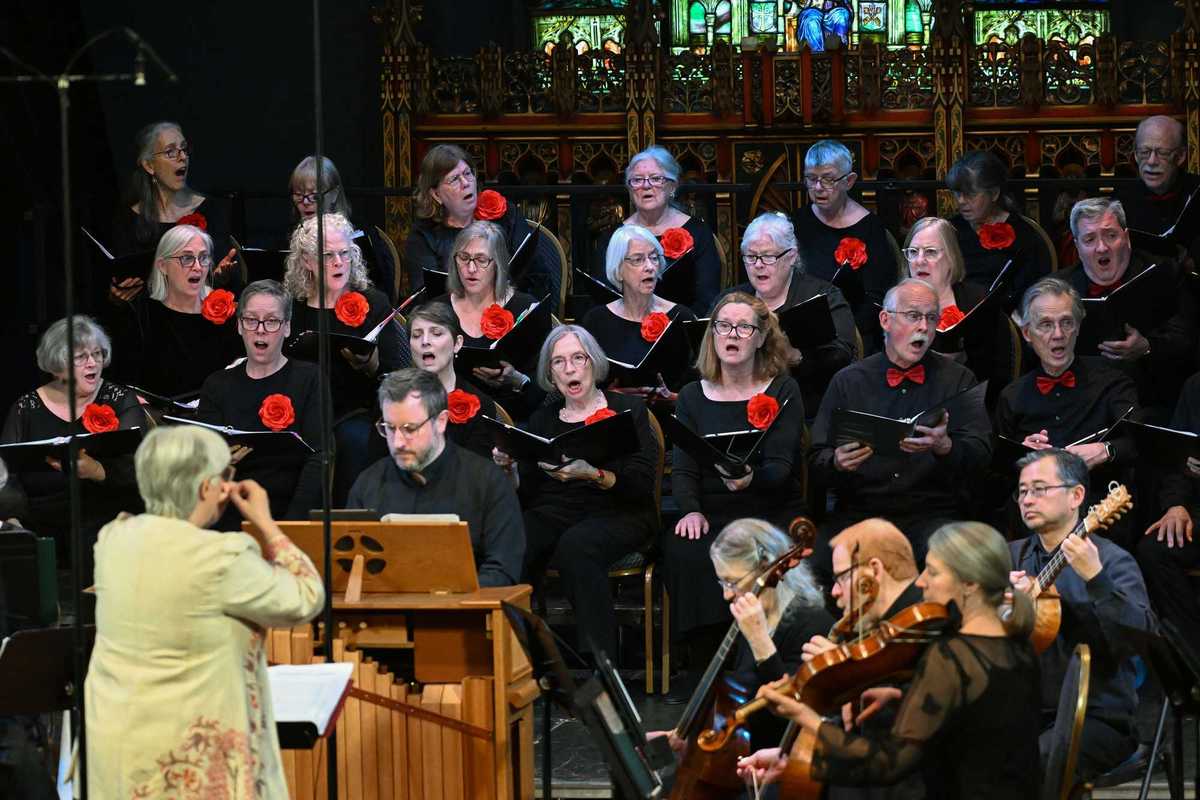
Crescendo, the Lakeville-based nonprofit specializing in early and rarely performed classical music, will close its 22nd season with a slate of spring concerts featuring international performers, local musicians and works by pioneering composers from the Baroque era to the 20th century.

Christine Gevert, the organization’s artistic director, has gathered international vocal and instrumental talent, blending it with local voices to provide Berkshire audiences with rare musical treats.

Keep ReadingShow less

Leopold Week honors land and legacy

Leopold Week honors land and legacy

Aldo Leopold in 1942, seated at his desk examining a gray partridge specimen.

Robert C. Oetking

In his 1949 seminal work, “A Sand County Almanac,” Aldo Leopold, regarded by many conservationists as the father of wildlife ecology and modern conservation, wrote, “There are some who can live without wild things and some who cannot.” Leopold was a forester, philosopher, conservationist, educator, writer and outdoor enthusiast.

Originally published by Oxford University Press, “A Sand County Almanac” has sold 2 million copies and been translated into 15 languages. On Sunday, March 8, from 3 to 5 p.m. in the Great Hall of the Norfolk Library, the public is invited to a community reading of selections from the book followed by a moderated discussion with Steve Dunsky, director of “Green Fire,” an Emmy Award-winning documentary film exploring the origins of Leopold’s “land ethic.” Similar reading events take place each year across the country during “Leopold Week” in early March. Planning for this Litchfield County reading began when the Norfolk Library received a grant from the Aldo Leopold Foundation, which provided copies of “A Sand County Almanac” to distribute during the event.

Keep ReadingShow less

Erica Child Prud’homme

Erica Child Prud’homme

WEST CORNWALL — Erica Child Prud’homme died peacefully in her sleep on Jan. 9, 2026, at home in West Cornwall, Connecticut, at 93.

Erica was born on April 27, 1932, in Doylestown, Pennsylvania, the eldest of three children of Charles and Fredericka Child. With her siblings Rachel and Jonathan, Erica was raised in Lumberville, a town in the creative enclave of Bucks County where she began to sketch and paint as a child.

Keep ReadingShow less
google preferred source

Want more of our stories on Google? Click here to make us a Preferred Source.

google preferred source

Want more of our stories on Google? Click here to make us a Preferred Source.